Three Days In Munich With A Bike Day
Three days is the classic Munich city break length, and a bike is the fastest way to make it count. Here is a day-by-day structure that slots one guided ride, one museum day and one day trip into a single long weekend.
Short answer
Three days is enough for Munich's old town, the English Garden and one day trip if you ride. Day one: a 3.5-hour guided bike tour for orientation. Day two: the Kunstareal museums. Day three: an e-bike ride down the Isar valley toward the Alpine foothills.
Munich answers the three-day question better than almost any German city, because its best material sits in a ring you can cross by bike in under an hour. The old town, the English Garden, the Isar banks and the museum quarter all touch each other. What trips visitors up is not distance, it is sequencing: walking day one wastes the legs you will want on day three. Where you sleep shapes that sequence too, so start with our area by area guide to choosing where to stay in Munich before you lock in the itinerary.
This plan fixes that. Day one is a guided ride, roughly three and a half hours, that touches the old town, the river surfers and a beer garden. Day two is a museum day on foot and transit, because the Kunstareal rewards slow looking. Day three leaves the city on an e-bike or a train-plus-bike run down the Isar or out to a lake. Each day uses the bike differently, and each one answers a question the previous day raises.
The plan stays deliberately loose on clock times. Opening hours and prices below come from the official pages of the venues and services named; tour details come from the operators' own listings. Anything a booking page states better than a guide can, this article sends you there for.
Is 3 Days In Munich Enough?
Yes, three days is enough for the core Munich experience: the old town squares, the English Garden, one major museum cluster, a beer garden evening and one half-day excursion. It is not enough for Dachau plus Neuschwanstein plus all the palaces, so the plan below picks one day trip and leaves the rest for a return visit.
The honest way to size a city break is to count anchors, not attractions. Munich has four: Marienplatz and the old town core, the English Garden, the Kunstareal museum quarter around Königsplatz, and the Isar corridor that stitches the city together north to south. A cyclist can reach all four from a central hotel in well under thirty minutes, which is why a bike compresses three days so effectively.
What three days cannot absorb: a sober and respectful visit to the Dachau Memorial (roughly half a day with travel, and it deserves the full time), the palaces of Nymphenburg and Schleissheim both, a lake day at Starnberg or Tegernsee, and Neuschwanstein, which sits far to the southwest. Choose one. The day-three section below lays out the bike-friendly options.
One structural note: Munich's bike modal share is 21 percent of daily trips, the highest among German large cities, and the city's signed Radlnetz totals 1,200 km of routes. You will not ride most of that in three days, but it means the infrastructure you do ride is real, marked and maintained, with 103 bicycle streets totalling 47 km where bikes have priority and cars are the guests.
How Many Days In Munich Is Enough For A First Visit?
For a first visit, plan four days if you want both a museum interior and two excursions, and three if you accept one excursion. Two days covers the old town and the English Garden at a walk, or the same ground faster by bike with an evening to spare. Five days is the point of diminishing returns unless day trips carry the extra time.
The break-even points are unusually clear here because Munich's outer sights are far apart. Nymphenburg Palace sits west, the Dachau Memorial northwest, the lakes south. Each is a separate half-day block of travel, so each added day buys exactly one more block, not a fraction of several.
| Trip length | What fits comfortably | What gets cut |
|---|---|---|
| 2 days | Old town, English Garden, one beer garden, Viktualienmarkt | All museums except one quick stop, every day trip |
| 3 days | The above plus the Kunstareal and one half-day excursion | A second excursion, Nymphenburg interiors at leisure |
| 4 days | The above plus Dachau Memorial or a second lake or palace | Neuschwanstein still rushed as a same-day add-on |
| 5 days or more | Two excursions plus unstructured Isar and beer garden time | Nothing structural; extra days are weather insurance |
Season matters more than day count at the margins. The Christkindlmarkt on Marienplatz runs 20 November to 24 December 2026, and the Tollwood Winter Festival fills the Theresienwiese from 24 November to 23 December 2026; a December visitor should weight the plan toward evenings in the centre. A September or early October visitor inherits the post-Oktoberfest city: the 2026 festival drew about 7.4 million guests between 19 September and 4 October, and the weeks around it push hotel prices and centre crowds up. The sister piece on choosing the best time for a Munich bike tour breaks the months down in detail.
For a shorter stay, the question flips: can you see Munich by bike in a compressed window, and the answer is yes, with a guided ride doing the heavy lifting on day one. The overview at what a Munich bike tour covers explains what a typical route includes.
What Does The Ideal Three-Day Split Look Like?
The strongest split is ride, look, leave: day one a guided bike tour of the city core for orientation, day two the Kunstareal museums and old town interiors on foot, day three a bike day trip down the Isar valley or out to a lake or palace. One bike-heavy day up front teaches you the geography the other two days spend.
| Day | Mode | Core of the day | Evening anchor |
|---|---|---|---|
| Day 1 | Guided bike tour, 3 to 4 hours | Old town, English Garden, Eisbach, beer garden stop | Seehaus or Chinesischer Turm beer garden |
| Day 2 | On foot and U-Bahn | NS-Dokumentationszentrum, Lenbachhaus or Glyptothek, Residenz | Viktualienmarkt area or Hofbräukeller |
| Day 3 | E-bike or train plus bike | Isar valley toward the Alpine foothills, or Starnberg, or Nymphenburg | Isar bank picnic or a central beer garden |
The logic of the order is simple. A guided ride on day one hands you a mental map: where the English Garden starts, how the Isar cuts the city, how far the Olympic Park really is from Marienplatz. Museum day then needs no navigation, and day three's longer ride uses the confidence and the legs the first two days built.
Prices and current dates sit on each operator's booking page.
A note on what the days assume: dry, above-freezing weather and daylight into the evening, which is the April to October default. Winter visits bend the plan, and Munich in winter on a bike covers how; the city clears bike paths from 3 cm of snow, with winter routes serviced within two hours, so riding does not stop, it just slows.
Day One: The Guided Ride And The Old Town
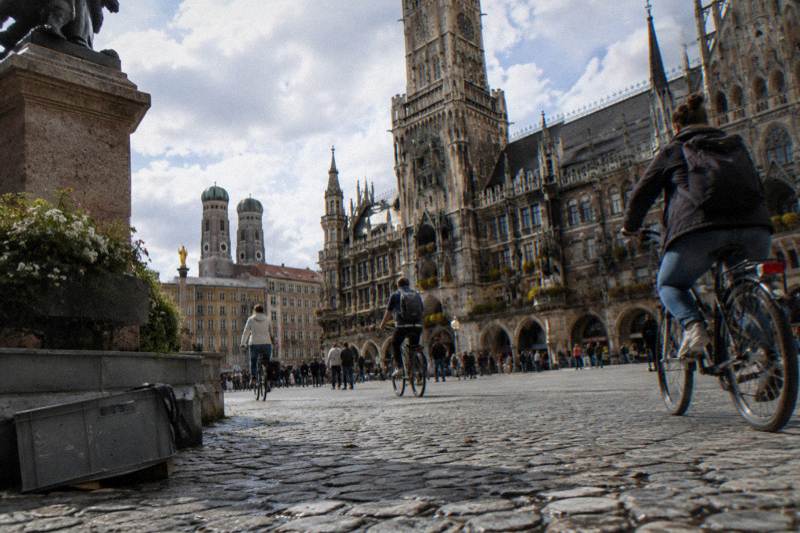
Book a guided city bike tour for the first morning, roughly 3.5 hours, built around the old town, the English Garden and a beer garden stop. The 3-Hour Guided Bike Tour is the anchor here: a shared classic-bike ride that orients you before you orient yourself. The booking page lists current dates, the meeting point and what is included. Once the ride has you oriented, the how many days to give Munich guide helps you fit the rest of the city into a realistic schedule.
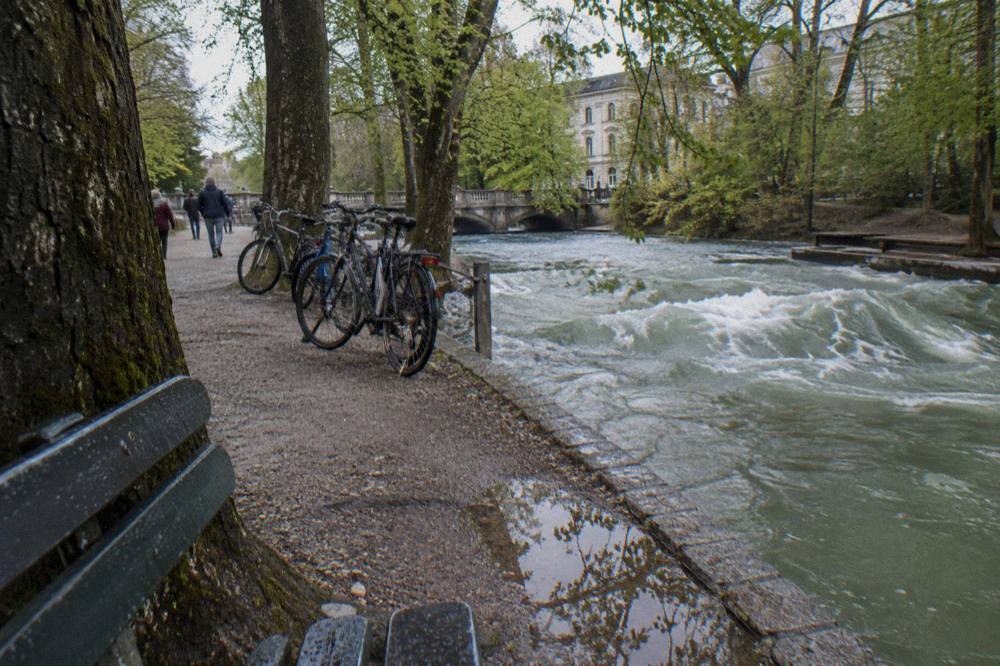
The case for guided-over-independent on day one is efficiency, not knowledge. A guide rides you through the car-free seams of the old town that a first-time visitor circles on foot, and the classic routes pass the Marienplatz core, the Hofbräuhaus stretch, the Maximilianstrasse showpiece street and the river, usually pausing at the Eisbach wave where surfers ride standing waves in a man-made channel. The Eisbach wave and the surfers run under their own set of rules: an amended general decree governs the wave, a self-releasing leash is mandatory, and surfing is banned from 22:00.
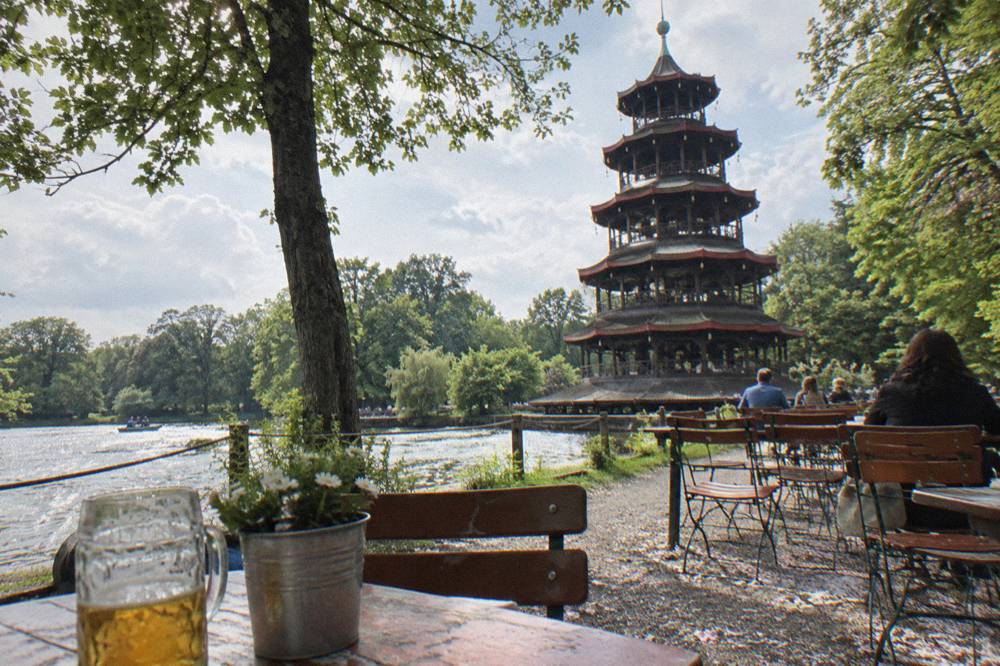
The English Garden is the centrepiece. It is one of the largest city parks in the world, 376 hectares, open year-round and free, with 78 km of paths shared by cyclists and joggers per the city's own figures. The Chinesischer Turm, a 25 m wooden pagoda from the 1789 design, anchors its middle, with a large beer garden at its foot, opening in the late morning whenever the weather cooperates. On warm weekdays the garden's beer service opens at 11:00, weekends at 10:00, brass bands playing Wednesday from 16:00 and Sunday from 12:00.
If the parks-and-palaces variant calls more than the classic core, the English Garden, Olympic Park and Nymphenburg Palace by Bike tour covers, in three hours, three anchors that would eat a full independent day. Note one caveat: the Olympic Stadium interior has been closed to visitors since September 2025 for a renovation expected to last two to three years, though the park grounds and the Olympiaberg hill stay open. Full details sit on the booking page.
Afternoon and evening of day one need almost no planning. Ride or walk to the Viktualienmarkt, whose stalls hold minimum selling hours of 10:00 to 18:00 Monday to Friday from April to October, Saturdays to 15:00, with most stalls closed Sundays. For the evening, the Hofbräukeller on the Wiener Platz side of the Isar opens daily 12:00 to 22:00. One genuinely Munich detail worth knowing: in true beer gardens you may bring your own food and eat it with beer bought on site, a tradition the city's own pages confirm. The dedicated Munich beer gardens by bike guide maps the full circuit.
Day Two: The Museum Day
Spend day two in the Kunstareal and the Residenz quarter, on foot: the NS-Dokumentationszentrum in the morning, one art museum at midday, and the Residenz or Nymphenburg interiors in the afternoon. Every venue named below posts its hours and prices publicly, and the bike rests, parked, while your legs recover.
The Kunstareal is a walkable cluster of museums around Königsplatz, and it carries the weight of the city's Nazi-era history as well as its older collections. The NS-Dokumentationszentrum, on the edge of the square, documents the city's role under National Socialism with free entry, no booking needed, open Tuesday to Sunday 10:00 to 19:00; a free English-language tour of the permanent exhibition runs Sundays at 13:00. Treat it with the seriousness the subject demands: this is a documentation centre, not an attraction to race through.
Two doors away, the options split by taste. The Lenbachhaus, open Tuesday to Sunday 10:00 to 18:00 and Thursdays to 20:00, costs 10 euros regular, with free entry the first Thursday of the month from 18:00 to 22:00. The Glyptothek, the neoclassical sculpture temple on the square itself, runs a 6 euro combined ticket with the Antikensammlung opposite, and charges just 1 euro per museum on Sundays; it is closed Mondays. Under-18s enter free at both city art houses.
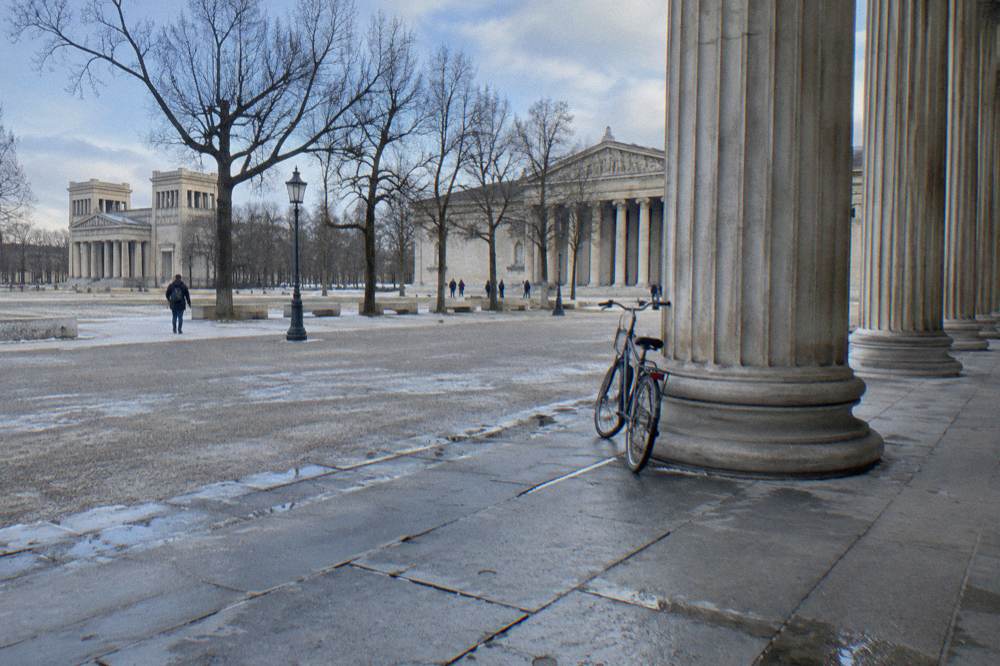
The afternoon holds two honest choices. The Residenz, the Wittelsbach palace in the old town, opens daily 9:00 to 18:00 from April to 19 October, 10:00 to 17:00 in winter, with the museum at 10 euros regular and under-18s free. Nymphenburg Palace, a short ride or tram west, runs a combined ticket at 20 euros regular in summer, 16 euros from mid-October to 31 March, covering the palace, the Marstallmuseum and porcelain museum, and the park palaces in summer; the park fountains play Easter to mid-October, mornings and afternoons. If Nymphenburg wins the afternoon, the detailed Nymphenburg Palace by bike guide covers the canal approach, which is the loveliest way to arrive. And if you would rather let someone else handle the logistics, the guide to cycling from Munich to Nymphenburg Palace also covers park cycling rules and which guided bike tours include the stop.
| Venue | Hours | Entry | Note |
|---|---|---|---|
| NS-Dokumentationszentrum | Tue to Sun 10:00 to 19:00 | Free | Free English tour Sundays 13:00 |
| Lenbachhaus | Tue to Sun 10:00 to 18:00, Thu to 20:00 | 10 euros | Free first Thursday 18:00 to 22:00 |
| Glyptothek | Tue to Sun 10:00 to 17:00, Thu to 20:00 | 6 euros combined | 1 euro on Sundays, closed Mondays |
| Residenz | Apr to 19 Oct 9:00 to 18:00, winter 10:00 to 17:00 | 10 euros, under-18s free | Closed 1 Jan, Shrove Tuesday, 24 to 25 and 31 Dec |
| Nymphenburg combined | Apr to 15 Oct 9:00 to 18:00, winter 10:00 to 16:00 | 20 euros summer, 16 euros winter | Lacquer Cabinet closed for restoration |
Evening: the Haus der Kunst at the English Garden's southern edge stays open Wednesdays to Mondays 10:00 to 20:00, with free entry the last Friday of the month from 16:00 to 22:00, if a temporary exhibition tempts. Otherwise day two ends early, because day three is the long one.
Day Three: The Bike Day Trip
Use day three to leave the city by bike or by train plus bike: the strongest option for fit riders is a full-day e-bike tour down the Isar valley toward the Alpine foothills, roughly five hours; the strongest independent option is the S-Bahn with a bike day ticket to the Starnberger See, about 50 km to ride around the lake. Pick one and protect the whole day for it. If you would rather spend the day somewhere with deeper history, our guide to visiting the Dachau Memorial from Munich by bike and train explains the S-Bahn carriage rules, the bus connection, and how a city bike ride fits the schedule.
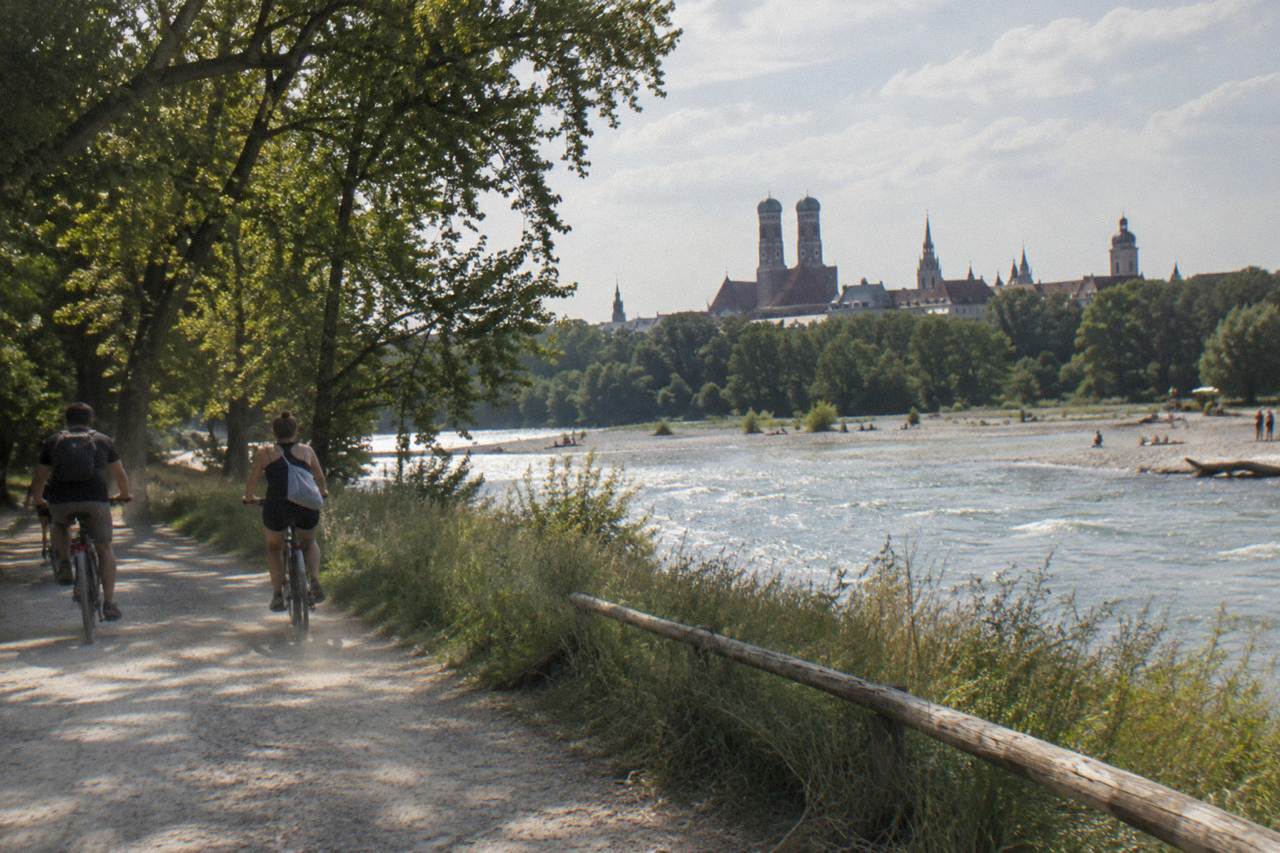
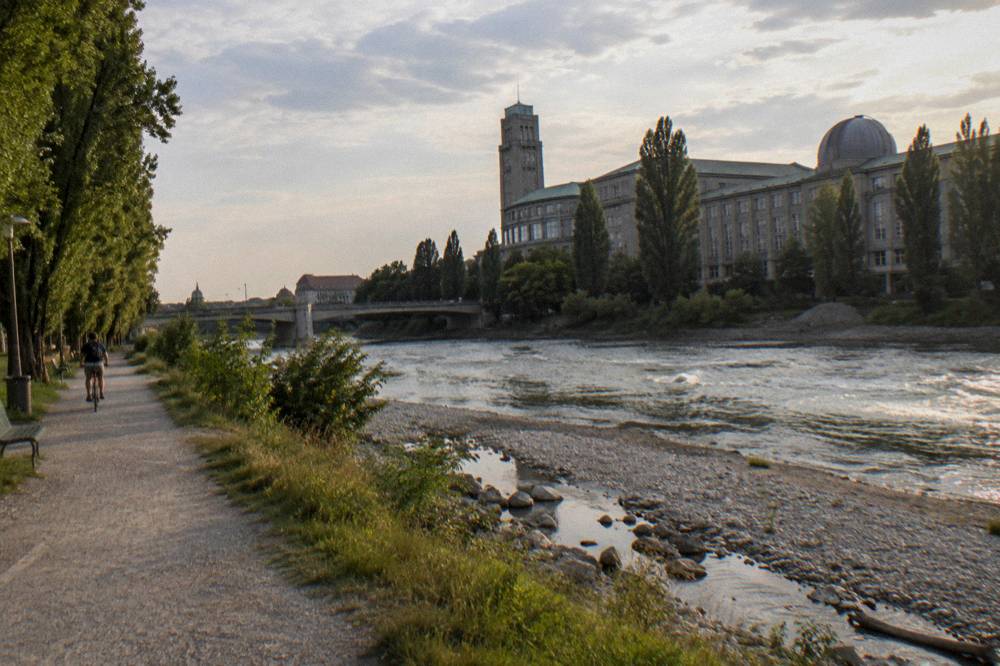
The Isar option is the one that surprises visitors. Munich sits at the top of a glacial valley, and the river's gravel banks run south toward the mountains through forest and meadow. A five-hour guided e-bike ride, the Munich E-Bike Tour through the Isar valley, forests and panoramic Alpine views, takes in exactly this corridor with an electric motor flattening the return. The Isar cycle route itself, at full length, runs 299 km from Scharnitz in Tyrol to the Danube near Deggendorf, so a day trip samples a famous long-distance route rather than inventing one.
The Starnberger See option suits riders who want water. The lake's official tourism body puts the full round at 50 to 59 km depending on route, with 3 to 4 hours of pure riding time and 150 to 300 m of elevation, and a documented Munich to Starnberg approach of just under 40 km. Riding there is pleasant; taking the S-Bahn out with the bike and riding either direction along the shore is better for most, and the Starnberger See bike day trip guide details the stations and the shore segments.
Two rules govern bikes on the S-Bahn, both from the transit authority's own conditions. A bicycle day ticket is required in S-Bahn, U-Bahn and approved regional trains, valid across all zones from validation until 6 a.m. the next day; check mvv-muenchen.de for the current price. S-Bahn carriage with that ticket is blocked Monday to Friday 6:00 to 9:00, no restriction during Bavarian school holidays, and buses and trams do not take bikes at all except children's and folded bikes. The full mechanics live in bikes on trains and S-Bahn in Munich.
A somber alternative belongs here rather than in a sightseeing list: the Dachau Memorial, about half a day including travel, is open daily 9:00 to 17:00 with free admission to grounds and exhibitions, closed only 24 December, and guided tours for individuals run about 2.5 hours for 4 euros with a minimum age of 13. The Dachau from Munich by bike and train guide covers the approach. It is a meaningful day three for some visitors, and a legitimate one.

Is 4 Days In Munich Too Much?
No, four days is not too much; it is the comfortable version of the same trip, adding a full second excursion or a slow palace day. It only feels long if you spend the fourth day inside the old town again. Give day four a destination: Dachau, a second lake, or Neuschwanstein by train, and the extra day pays for itself.
The failure mode of a fourth Munich day is repetition: another loop of Marienplatz, another beer garden within 500 m of the last one. The fix is distance. Every anchor beyond the ring described above, Dachau, Starnberg, Tegernsee, Ammersee, Schleissheim, Neuschwanstein, needs the better part of a day, and four days is the first length at which two of them fit without gutting the city core.
One planning trap: Neuschwanstein is not a bike day trip in any practical sense. It sits far southwest beyond the MVV area, and the Neuschwanstein from Munich guide is honest about where a bike fits in that journey, which is barely. If castles draw you and you would rather ride to them, the Fairy-Tale Castles tour, despite its title, is a guided ride on regular cross bikes through nearer palace country in four hours, though it carries no reviews yet, so judge it on its route description and the booking page rather than on social proof.
What Should You Know About Riding Between The Days?
You should know three things before pedalling anywhere in Munich: signed cycle paths with the blue bike sign are compulsory, bikes need a light set and a bell by law, and taking a bike on the U-Bahn or S-Bahn needs its own day ticket with weekday rush-hour blocks. Everything else is courtesy and the city's cycling culture.
The traffic law basics, drawn from the road traffic regulations: ride with constant caution, side by side only when you do not obstruct others, and use a cycle path when signs 237, 240 or 241 order it. Children up to 8 must ride on pavements, up to 10 may. Lights must be type-approved, front white and rear red, and a clearly audible bell is required equipment. Helmets are not legally required for adults, and several operators supply one anyway; check the booking page for what is included with any tour. The cycling rules for visitors guide walks through all of it in plain language.
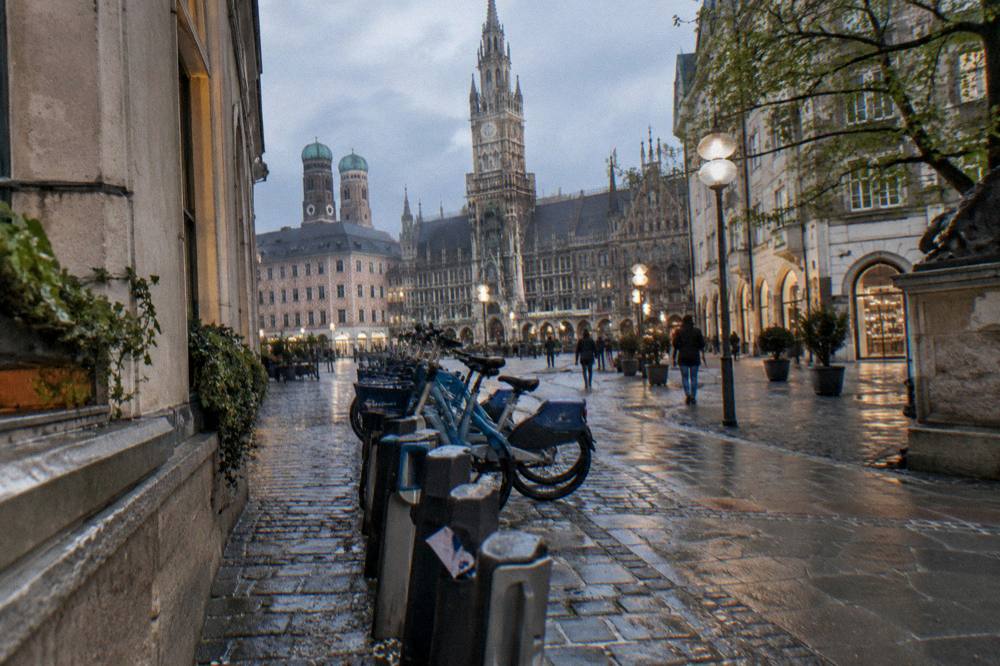
Riding without a guide at any point in the three days is easy with the MyRadl share system, which replaced the old MVG Rad in May 2026 with about 1,000 stations and more than 6,700 bikes planned across the region. Tariffs: classic bikes at 1 euro per 30 minutes capped at 9 euros a day, e-bikes at 3 euros per 30 minutes capped at 18 euros, with the first 30 minutes free on a classic bike if you hold an eligible transit subscription. Returns must happen at a fixed station or a 20 euro service fee applies. The Munich bike rental prices and pickup guide compares sharing with conventional shops.
Weather planning needs only the seasonal shape: July, the warmest month, averages highs around 24 to 25 degrees Celsius; January sits near 2 to 4; May is the wettest at roughly 92 to 108 mm of rain across 16 to 17 rain days, so a rain layer earns its space in late spring. Tours do run in rain, and the operator states its own cutoffs. For the deeper question of whether to commit to guided or independent riding across the whole stay, rent a bike or take a guided tour in Munich sets out the trade-offs.
Three days, one guided ride, one museum day, one ride out of town. It is a plan you can hold in your head, which is the test of a good city break. The selection below carries the three tours that fit the three days.
For more on routes, rules and everything Munich by bike, start at Bike Tours Munich and explore from there.
Common Questions About Three Days In Munich By Bike
Is 3 Days In Munich Enough?
Yes. Three days covers the old town, the English Garden, the Kunstareal museums and one half-day excursion, especially with a bike compressing the distances. What it cannot cover is Dachau, Neuschwanstein and the lakes all at once; pick one excursion.
How Many Days In Munich Is Enough?
Three days is enough for a first visit centred on the city itself. Four days adds a second excursion comfortably. Five or more only pays off if day trips like the lakes, Nymphenburg at leisure or the Dachau Memorial carry the extra time.
Is 4 Days In Munich Too Much?
No, provided day four leaves the old town. A second excursion such as Starnberger See, the Dachau Memorial or Nymphenburg and Schleissheim fills it well. A fourth day spent re-walking the centre is the version that feels too long.
Should The Guided Bike Tour Go On Day One?
Mostly yes. Riding with a guide on the first morning builds the mental map, old town to English Garden to Isar, that the rest of the trip uses. If the weather forecast is better later in the stay, swap the days; most bookings allow free cancellation up to a stated window.
Can You Do Munich In 3 Days Without A Bike?
You can, but the plan slows down. The English Garden and the Isar corridor in particular reward wheels, and a three-hour guided ride typically covers more ground than a full walking day. Transit fills the gaps well where you do not ride.
What Is The Best Day Trip From Munich By Bike?
The Isar valley toward the Alpine foothills by e-bike for scenery, or the S-Bahn with a bike day ticket to the Starnberger See, where the lake round runs 50 to 59 km with modest elevation. Both are covered in detail in the day-three section above.