Dachau From Munich By Bike And Train
The Dachau Memorial sits about 20 km northwest of central Munich, reachable by S-Bahn and a short bus ride, and bikes complicate the plan in specific, avoidable ways. Here is what the transport rules, the memorial's own visitor information and a workable day plan actually say.
Short answer
The Dachau Memorial is open daily 9:00 to 17:00, closed only 24 December, and entry to the grounds, visitor centre and exhibitions is free. From Munich you take the S-Bahn toward Dachau and then a bus; a bike needs the MVV bicycle day ticket on S-Bahn and U-Bahn, cannot ride buses or trams, and is not part of any guided memorial visit.
The Dachau Concentration Camp Memorial is one of the most visited remembrance sites in Germany, and most people reaching it from Munich do so by public transport rather than by car or bicycle. The site is a place of mourning and education, not a leisure attraction, and this guide treats it that way: transport facts, opening rules and behaviour guidance, with no tour sold to the memorial itself and no promotional framing around it.
What the bike question adds is narrow but real. Munich's S-Bahn carries bicycles, the regional cycle network reaches the Dachau direction, and the city's bike-share and rental systems make a combined day, train out and ride back, technically possible. But the rules around bike tickets, blocked commuter hours and the final bus leg shape that plan more than most visitors expect. Munich's local rules shape sightseeing well beyond Dachau, and if a stop at the river surfers tempts you, the story of why the Eisbachwelle closed and what the rules allow now explains how to see the wave from the saddle.
How Do You Get From Munich To The Dachau Memorial?
The standard route from central Munich to the Dachau Memorial combines an S-Bahn train and a local bus: ride a train toward Dachau station, then transfer to a bus that takes you to the memorial. The whole connection sits inside the MVV network, so no leg of the journey requires a car. The memorial itself sits on the edge of the town of Dachau, a short bus hop from the station, and signage guides visitors from both. Travel time depends on where in Munich you start and on connection waits, so treat any single figure cautiously and check the connection in the MVV journey planner before setting out.
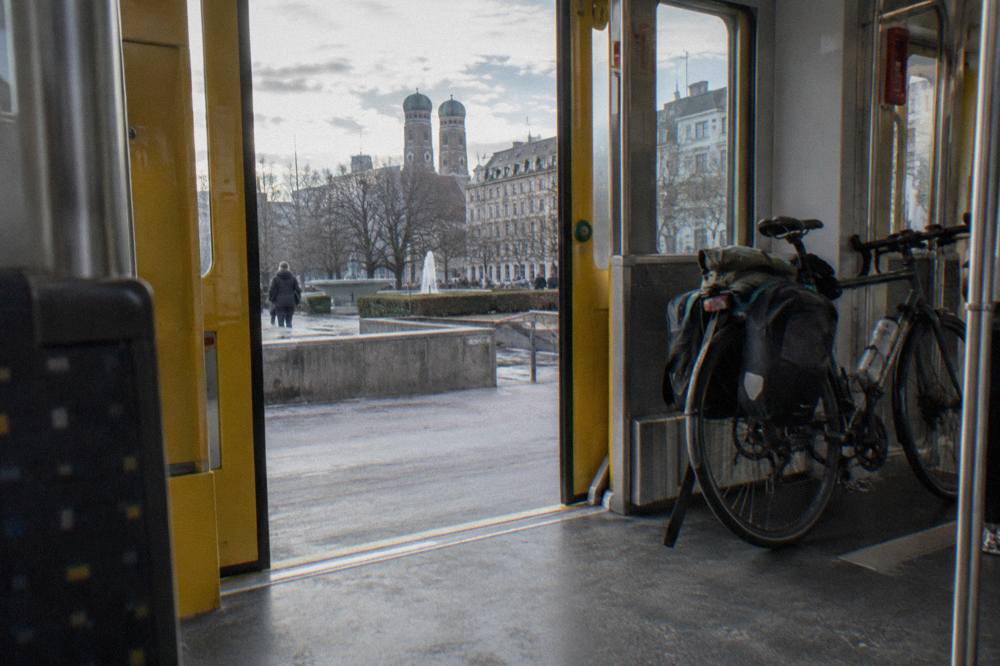
Buy a normal MVV ticket for yourself covering the zones you cross. The bike question is separate: a bicycle carried on S-Bahn, U-Bahn or approved regional trains inside the MVV area needs its own bicycle day ticket in addition to your own fare, valid across zones M to 12 from validation until 6 a.m. the next day.
If you travel without a bike, the plan is simply S-Bahn plus bus, and the bus runs frequently enough that most visitors do not plan around it. If you travel with a bike, the bus is the problem: bicycles are not permitted on MVV buses and trams at all, with narrow exceptions for folded folding bikes and children's bikes. That single rule decides whether the bike comes along for the whole trip or waits in Munich. If that rule makes you second-guess bringing a bike at all, our Munich itinerary built around a bike day trip shows how to mix riding days with museum days.
| Leg | Bike allowed? | What to know |
|---|---|---|
| Munich S-Bahn toward Dachau | Yes, with bicycle day ticket | Blocked to bikes Monday to Friday 6:00 to 9:00 outside Bavarian school holidays |
| Dachau station to memorial bus | No | Bikes not permitted on buses; folding and children's bikes excepted |
| Walking from Dachau station | N/A | A walkable option for visitors who prefer not to wait for the bus; check the distance in a map before committing |
| Taxi or on foot locally | N/A | Local signage directs visitors to the memorial |
For most travellers the honest recommendation is to leave the bike in Munich, take the S-Bahn and bus, and ride in the city before or after. That keeps the memorial visit unhurried and avoids the awkward combination of a bike you cannot take on the last leg. The Munich half of the day is where cycling genuinely helps, and a planned city ride, like the one described in what a guided city ride covers, slots neatly into a morning or late afternoon.
Can You Take A Bike On The S‑Bahn To Dachau?
Yes, with the MVV bicycle day ticket, outside the blocked morning hours: bikes ride free of time restrictions in Bavarian school holidays, and the S-Bahn block applies Monday to Friday 6:00 to 9:00, with no evening block on the S-Bahn itself. The U-Bahn, if your route to the S-Bahn uses it, has both a morning and an afternoon block, Monday to Friday 6:00 to 9:00 and 16:00 to 18:00, though the afternoon block is lifted during Bavarian school holidays. These hours matter because the natural Dachau day trip starts mid-morning, which conveniently sits after the morning block ends.
Three practical points follow from the rules. First, space and safety decide: the tariff conditions say carriage depends on space being available, so a crowded summer S-Bahn may simply not have room, and staff have the final word. Second, the bicycle day ticket covers the whole MVV network for the day, so a same-day return and even a detour ride elsewhere in the network work on the same ticket. Third, if you plan to return by regional train rather than S-Bahn, approved regional trains accept the same ticket with no restricted times at all.
Visitors weighing train-plus-bike against other day-trip plans often end up comparing it with rides that stay closer to the city. Three guided options illustrate the spread of what a Munich day on two wheels can look like:
Each of these is a Munich city or valley ride; none goes to Dachau, and no guided bike tour of the memorial exists or should. Their role in a Dachau day is the bookend: a morning ride through the old town and along the Isar, then the train out, or the reverse. Prices and current availability are on each booking page.
A reader with a bike who wants the full picture on tickets, blocked hours and folding-bike exceptions will find the complete rules in taking bikes on trains and the S-Bahn, which also covers the regional train options beyond the MVV area.
Is There A Cycle Route From Munich To Dachau?
Yes in principle: the signed Munich cycle network, the Münchner Radlnetz, totals about 1,200 km of signed routes including radial routes out of the centre, and the Dachau direction is reachable on ordinary roads and farm tracks northwest of the city. There is no official dedicated Munich-to-Dachau memorial cycle route, so you will be piecing the route together yourself. The Isar cycle path, the region's flagship route, runs 299 km from Scharnitz to the Danube with a Munich-to-Landshut section of roughly 77 km, largely flat. Its alignment follows the Isar valley east of the Dachau corridor, so it is a different direction rather than the way there.
Cycling the whole way is therefore a routing exercise rather than a signed itinerary. Riders comfortable with GPS navigation and mixed traffic can string together the northwest radial routes and canal-side tracks toward Dachau, but this guide will not invent a distance, a riding time or a surface description for that corridor, because the season opens with the weather, not the calendar. Plan it in a cycling map, carry water, and treat the final approach through the town of Dachau as ordinary urban riding.
The memorial's car park and surroundings are built for visitors arriving by bus, car and train, and there is no indication in official visitor information of dedicated long-stay cycle infrastructure beyond what any public site has.
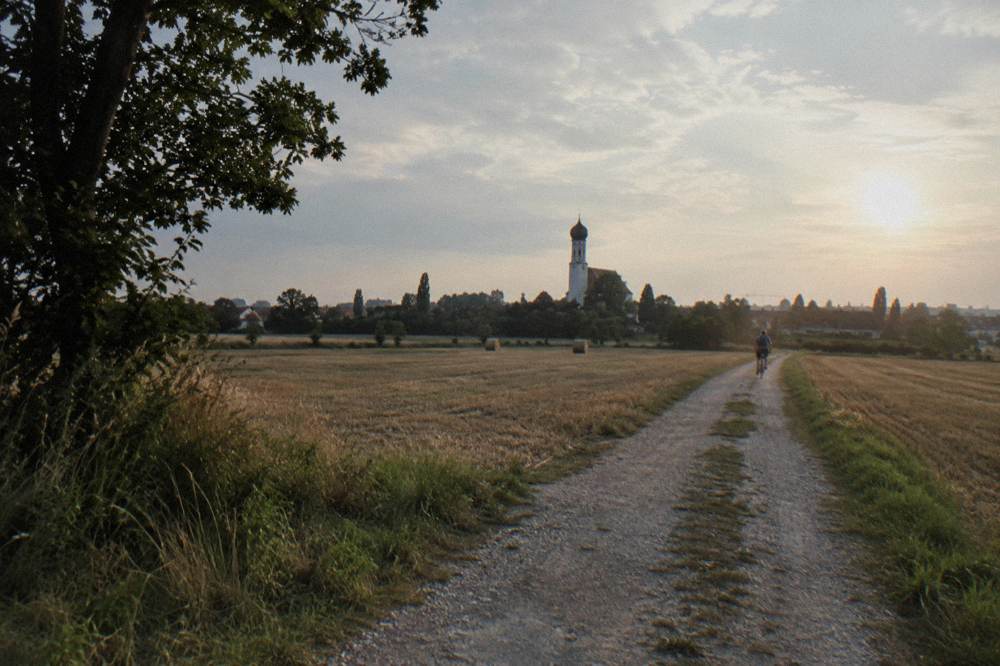
Riders who would rather follow a waymarked long route than plan their own should look at the Isar. The stretch from Munich toward Landshut runs largely flat and free of intersections, and a full-day e-bike ride through the Isar valley toward the Alpine foothills is one of the few guided options that covers real distance while the guide handles the route.
The listing for that full-day Isar e-bike ride describes five hours through the Isar valley, forests and panoramic Alpine viewpoints, and the booking page states the price, the meeting arrangements and what is included. For a visitor pairing a solemn morning at the memorial with a landscape afternoon, it is the strongest contrast the city's options offer: quiet valley paths rather than city streets, and an electric motor rather than a race against the S-Bahn.
What Are The Dachau Memorial Opening Times And Entry Rules?
The memorial is open daily from 9:00 to 17:00, with last entry to the former crematorium area at 16:30, and it closes only on 24 December; entry to the grounds, the visitor centre and the exhibitions is free, with no advance booking required. Those hours are the memorial's own published visitor information, and they shape the day: a Munich start after the morning S-Bahn bike block ends still leaves a comfortable window, and the 16:30 crematorium cutoff is the real deadline, not the 17:00 close.
Two paid services exist inside an otherwise free site. A guided tour for individual visitors costs EUR 4.00 per person, runs about two and a half hours, has a minimum age of 13, and tickets are sold on site at least 30 minutes before the tour starts, with no reservations. An audio guide costs EUR 5.00 and is available in several languages at the visitor centre. Both figures are in euros because they are charged by the memorial itself, not by any tour operator.
| Option | Cost | Practical details |
|---|---|---|
| Grounds, visitor centre, exhibitions | Free | No booking, open daily 9:00 to 17:00 |
| Guided tour for individuals | EUR 4.00 per person | About 2.5 hours, minimum age 13, buy on site 30 minutes ahead, no reservations |
| Audio guide | EUR 5.00 | Several languages, from the visitor centre |
| Crematorium area | Included in free entry | Last entry 16:30 |
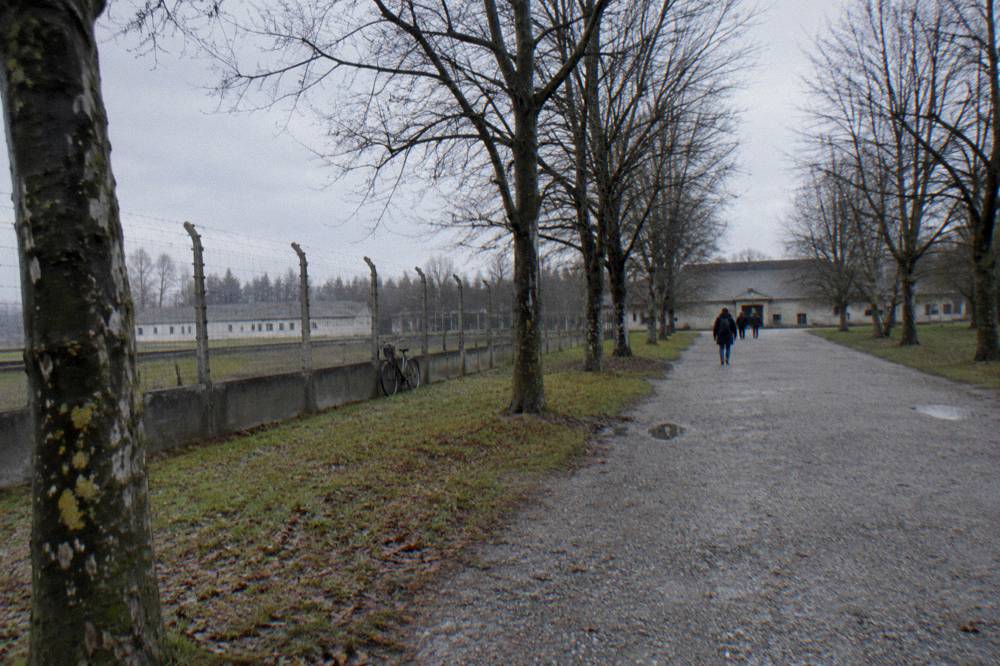
The official source for hours, tours and accessibility is the memorial's own visitor page, and it is the right place to confirm anything time-sensitive before you travel, from tour times to temporary closures. Photography is generally possible on the grounds, but the memorial's conduct guidance, not any touring instinct, governs behaviour, and the next section covers it.
Season matters less here than at most Munich sights: the memorial keeps the same daily hours year-round and closes for one day. Weather still affects the visit itself, because much of the site is outdoors and the walk between the entrance, exhibitions and crematorium area is uncovered. Winter visitors should note the city's own cycling context, riding in Munich in winter, if a bike is part of the wider day.
Guided Tour, Audio Guide Or Exploring Independently?
For most first-time visitors the guided tour is the memorial's own recommended depth: EUR 4.00, about two and a half hours with a trained guide, versus an audio guide at EUR 5.00 for self-paced coverage, versus free independent walking for those short on time; the choice is about depth, not access, since everything essential is free to enter. The exhibitions in the former maintenance building are extensive and carry the historical narrative on their own, which is why independent visiting works for a compressed schedule.
The 30-minute advance purchase rule for guided tours means you should build buffer into your arrival, especially if the bus connection from Dachau station is busy. English-language tours run at set times, typically around 11:00 and 13:00, but times shift, so confirm on the day at the visitor centre rather than planning to the minute from this page. The minimum age of 13 reflects the subject matter, and families with younger children should plan the visit around that limit rather than around transport.
Visitors who want historical context for the Munich half of the day, rather than the memorial itself, can look at the city's Third Reich sites, several of which are reachable by bike; the Third Reich sites by bike guide covers what exists, what is authentic and what is reconstruction. The distinction matters: the city sites interpret, the memorial commemorates, and mixing the two into a single sightseeing framing does neither justice.
How Should You Behave At A Memorial Site?
The memorial asks visitors to dress and behave appropriately, follow the instructions of staff and signage, and treat the grounds as a cemetery: no picnics, no smoking in sensitive areas, no loud behaviour, and photography without posing or trivialising what happened there. These expectations are the site's own, published in its visitor guidance, and they exist because the grounds hold the graves and memory of victims. Visitors who follow the posted rules and the staff's directions will not go wrong.
A few bike-specific notes follow from the same respect principle. Arrive without cycling gear you would not wear to any place of mourning; lycra and a memorial do not belong in the same sentence. Do not plan to bring a bike onto the grounds at all; there is no suggestion anywhere in official information that cycling inside the memorial is permitted, and the assumption should be the opposite. Food, drink and phone calls belong outside the exhibition areas.
Time and emotional energy are the real constraints. The guided tour alone runs about two and a half hours, and many visitors stay longer in the exhibitions. A day that pairs Dachau with a light-hearted Munich activity afterwards is workable, but a day that pairs it with a rushed checklist is not. Plan the ride, the beer garden or the evening walk as decompression, not as a continuation of sightseeing.
That is also why the guided rides belong on the Munich side of the day and nowhere near it. The 3-hour guided city tour covers Munich's centre and river sights with a local guide, and the booking page states the meeting arrangements, price and inclusions; it is a city ride, full stop.
Where Does A City Bike Ride Fit Into A Dachau Day?
The clean plan is ride in Munich in the morning, S-Bahn and bus to the memorial after the morning bike block ends, visit through the afternoon, and return by S-Bahn in the evening; or reverse it, memorial first, ride after, using the fact that the S-Bahn has no evening bike block. The afternoon U-Bahn block, 16:00 to 18:00 Monday to Friday outside school holidays, only bites if your return route crosses the U-Bahn with a bike, and the S-Bahn from Dachau avoids it entirely. For more on shaping the day around hours and seasons, see choosing the best time for a ride. If you want a food stop on the Munich side of the day, the guide to eating at Viktualienmarkt covers what's best in the morning and where to park the bike nearby.
| Day shape | Morning | Memorial visit | Afternoon or evening |
|---|---|---|---|
| Ride first | Guided city ride or self-guided loop from the centre | S-Bahn and bus out after the 9:00 bike block ends | Return by S-Bahn, no evening S-Bahn bike block applies |
| Memorial first | Early S-Bahn and bus out, on-site guided tour around 11:00 | Exhibitions and grounds through the early afternoon | City ride or beer garden stop after returning |
| No bike at all | S-Bahn and bus directly | Full afternoon at the site, audio guide optional | Evening walk through the old town |
The featured ride for this article is the half-day city tour with a local guide, three hours by the listing, a shared city-highlights ride through Munich rather than anything connected to Dachau. The booking page carries the price, the meeting arrangements and the inclusions. Read the guide to renting versus taking a tour if you are deciding whether a guided ride or a rental bike suits your day better. You can also check availability directly, or read the half-day tour with a local guide page first.
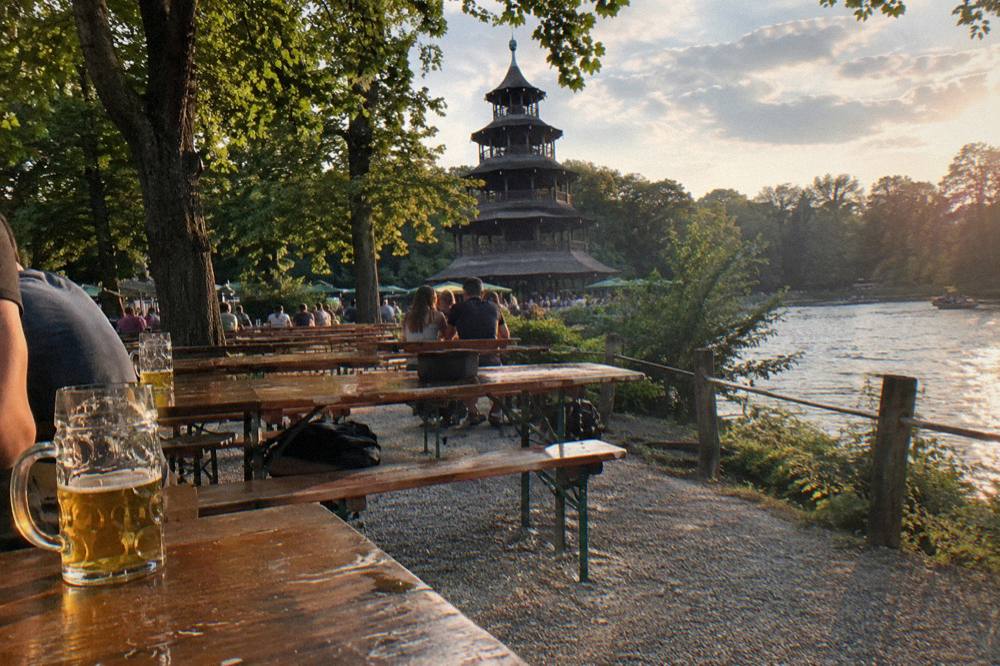
A different structure suits riders who want the day's cycling to be the relaxation after the memorial: return by early afternoon, then join a slower, food-anchored ride. The beer garden break tour runs four hours and pairs city sights with a stop under chestnut trees, which is about as far from the morning's gravity as Munich offers. The beer gardens by bike guide explains the scene, the seasonality and the bring-your-own-Brotzeit rule that true beer gardens allow.
One planning caution closes the logistics: the MVV network expands on 1 January 2027, when Ostallgäu and Kaufbeuren join, but that does not change Dachau, which is already inside the network. What does change, and regularly, are tariffs and conditions of carriage, so the day before you travel, confirm the bike ticket price and the current blocked hours on the MVV pages rather than relying on any article, including this guide from Bike Tours Munich.

However you build the day, the memorial deserves the larger share of it. The rides, the beer garden and the evening walk through the old town are the parts of Munich that restore; the visit is the part that remembers, and the transport plan above exists only so the second does not crowd out the first.
If a guided ride around the city is how you want to bookend the day, these are the three options that pair best with a Dachau itinerary:
Common Questions About Dachau From Munich
How Do You Get From Munich To The Dachau Memorial?
Take the S-Bahn toward Dachau, then the local bus from Dachau station to the memorial; the whole route is inside the MVV network and needs only a normal MVV ticket for yourself. Check the connection in the MVV journey planner before you travel.
Is The Dachau Memorial Free To Visit?
Yes. Entry to the grounds, visitor centre and exhibitions is free, with no advance booking. The optional guided tour costs EUR 4.00 per person and the audio guide EUR 5.00.
Can You Take A Bike On The S-Bahn To Dachau?
Yes, with the MVV bicycle day ticket, outside the blocked hours of Monday to Friday 6:00 to 9:00. Bikes cannot ride the bus from Dachau station to the memorial, so most visitors leave the bike in Munich.
When Is The Dachau Memorial Open?
Daily from 9:00 to 17:00, with last entry to the former crematorium area at 16:30, and closed only on 24 December.
Is There A Bike Tour Of The Dachau Memorial?
No. No guided bike tour of the memorial exists, and the memorial is a place of remembrance rather than a touring destination. Guided bike rides in Munich can bookend the day but do not go there.
How Long Should You Spend At The Dachau Memorial?
The memorial's own guided tour runs about two and a half hours, and many visitors stay longer in the exhibitions. Plan most of a half-day, and avoid squeezing it between other booked activities.