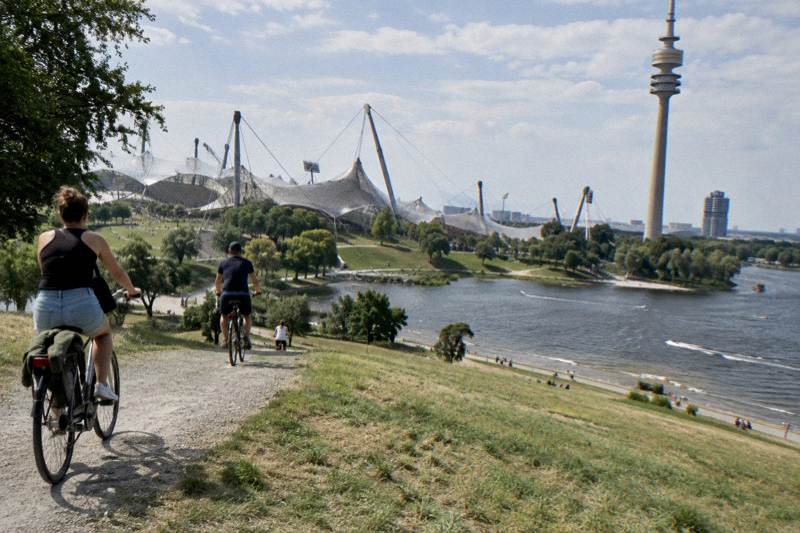
Munich In Winter: Can You Still Ride A Bike Tour?
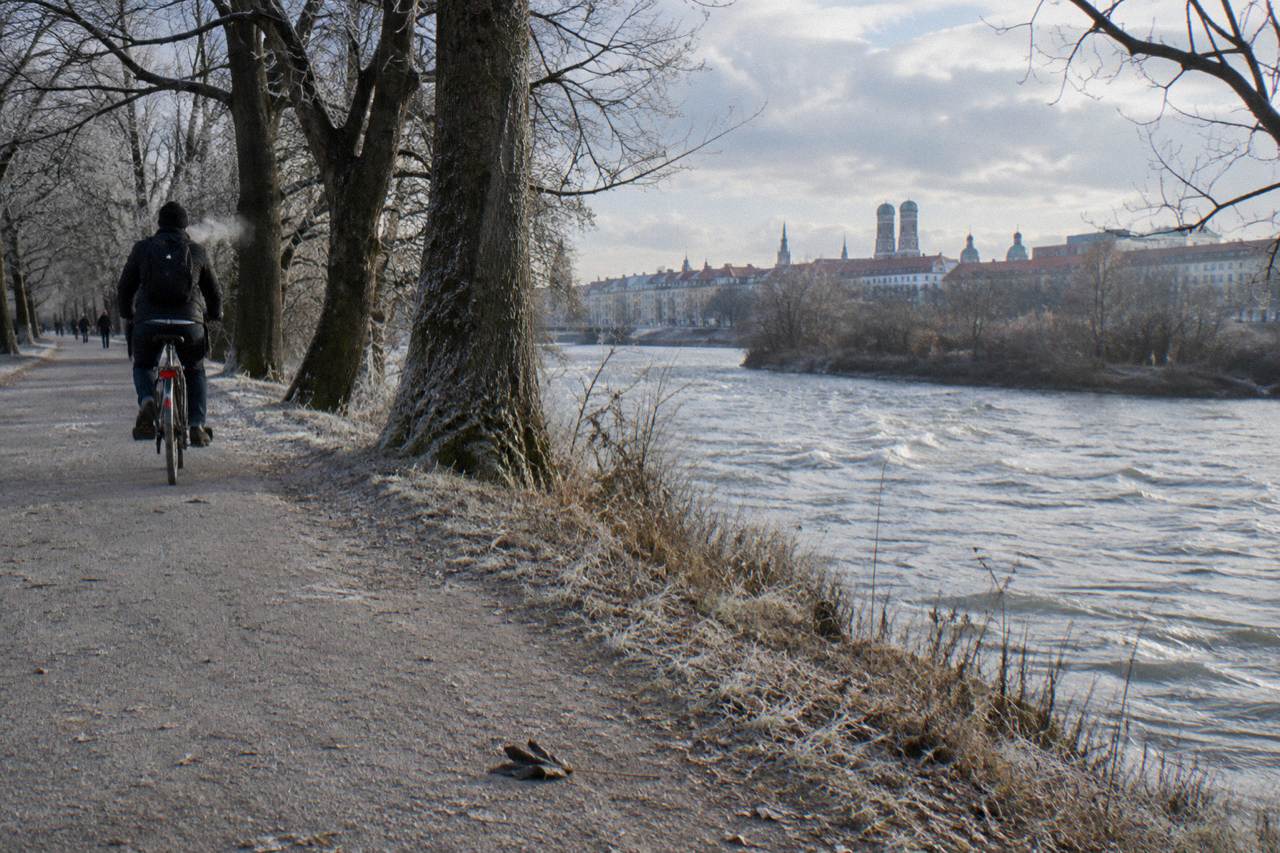
Munich in winter is a different city on two wheels: frost on the Isar paths, earlier darkness, fewer tourists on the routes, and a cycling culture that simply puts on gloves and keeps riding.
Short answer
Yes, winter riding in Munich is normal and workable. January averages a high of 2 to 4 C with lows of -2 to -5 C and about 4.3 to 4.7 sunshine hours a day. The city clears bike paths from 3 cm of snow, guided tours still run, and lights are legally required at dusk. Check each tour's booking page for winter departures.
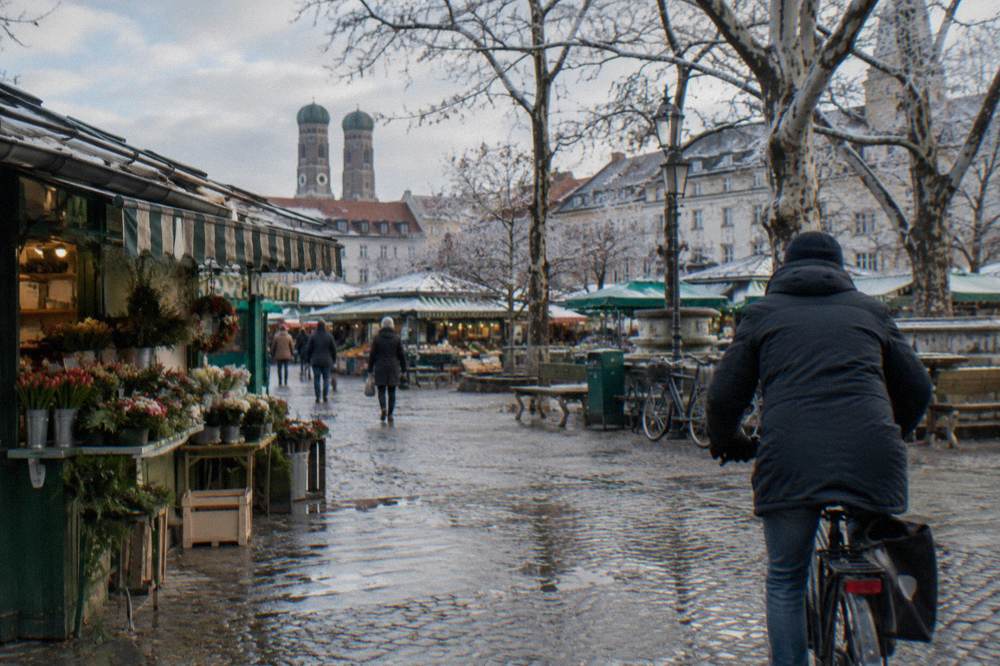
Munich never stops cycling. A fifth of all daily trips in the city happen by bike, the highest share among German large cities, and that figure is an annual average, not a summer one. Come January the chestnut avenues of the English Garden stand bare, the Isar runs cold and quick, and the bike paths carry a thinner, better-dressed stream of commuters and visitors all the same. Winter here is not an obstacle to riding; it is a season with its own rules, its own light and, honestly, its own advantages: emptier beer gardens, quieter squares and Christmas markets strung through the Old Town. Riders curious about how Munich stacks up against Copenhagen and Amsterdam can start with the case for the true cycling capital of the world.
This guide covers the practical side of a winter visit. What the cold actually feels like on a bike, which guided rides keep running, what to wear, how the city deals with ice and snow, where the seasonal law bites, and how a short daylight window reshapes a day of sightseeing. Where a detail is not settled fact, the honest answer is always the same one a local would give you: check the booking page before you plan around it. The same approach works on Bike Tours Munich rides in every season of the year.
What Is Winter Actually Like For Cycling In Munich?
Munich winters are cold, grey and short, but rarely extreme. January, the coldest month, averages a high of 2 to 4 C and a low of -2 to -5 C, with roughly 4.3 to 4.7 sunshine hours and 8.4 to 8.8 daylight hours per day. Compare that with July, the warmest month, at average highs near 24 to 25 C, and you can see the whole shape of the year in two numbers.
The practical consequence of those January figures is timing. With under nine hours of daylight, a morning departure is not a stylistic choice; it is how you fit a three-hour ride and a market wander into the light. Riders who start at ten or eleven still get the full loop through the Old Town and along the Isar before dusk settles around late afternoon. If you want a longer outing, such as a ride up the English Garden to Aumeister, plan it for the middle of the day rather than the edge.
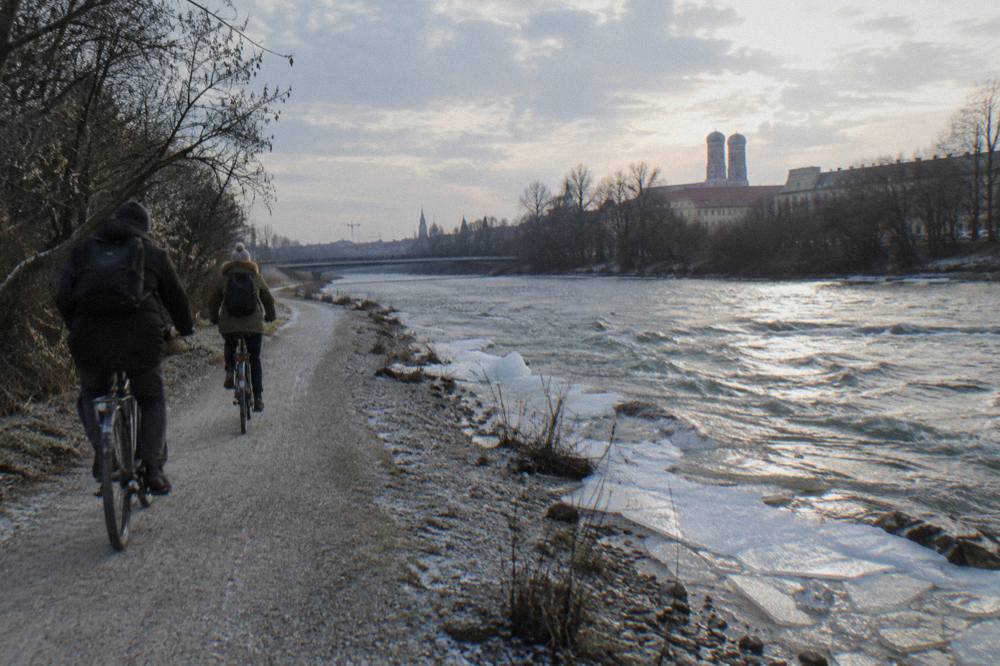
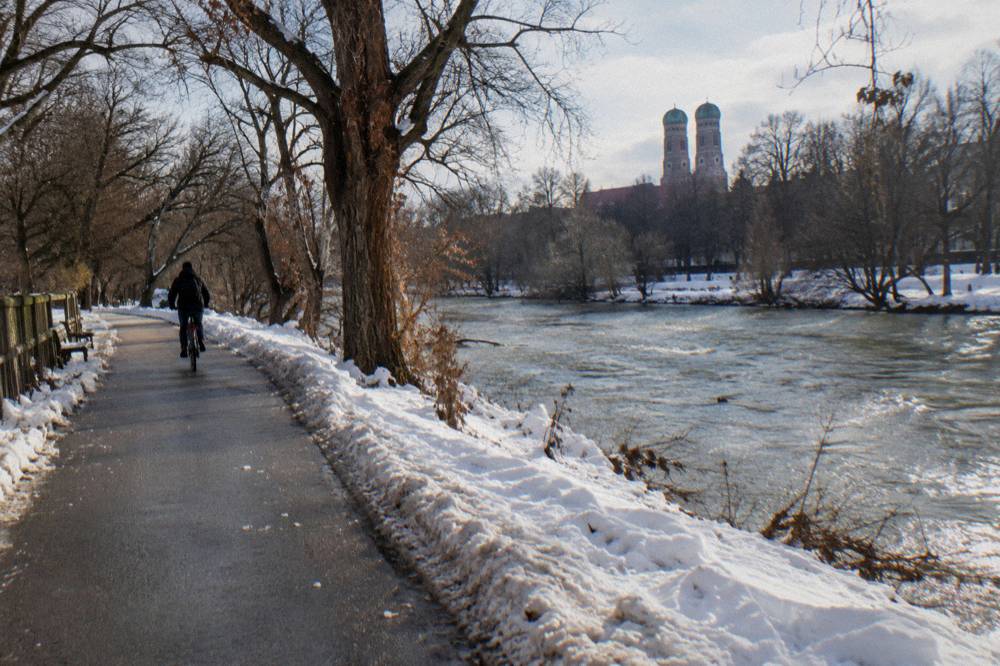
Cold-weather riding also changes what the city looks like from a saddle. The English Garden, 376 hectares of park designed in 1789, keeps its 78 km of paths open year-round and free of charge, and winter strips it back to geometry: the 25 m Chinese Tower, long sightlines down the meadows, and the Eisbach running fast between bare banks. The famous wave still carries surfers in winter too, since the water flows too fast to freeze, though the amended city decree bans surfing from 22:00 and requires a self-releasing leash. Watching from the bank costs nothing, and our piece on the Eisbach wave and its surfers goes deeper on the rules.

One honest caveat: the climate figures above are long-term averages, not forecasts. A given January week can sit well below the average or, increasingly, well above it, and the riding experience swings with it. The city's own English Garden page is the right place to check park conditions and rules before a cold-snap ride, since barbecues, open fires and swimming in the Eisbach stay prohibited no matter the season.
Do Guided Bike Tours Still Run In Munich In Winter?
Yes, guided rides run through winter, but the pattern changes: city-highlights routes keep going because they stay on cleared central streets and paths, while longer countryside and e-bike options may cut back or pause, and only the individual booking page confirms a specific date. Some seasonal departures drop to weekends only in the quieter weeks of November, so treat every winter date as check-first.
The core shared city rides are the winter workhorses. The classic option is the 3.5-hour guided city ride, a shared standard-bike tour that covers the centre's essentials in a window that fits inside winter daylight with room to spare. Its shorter sibling, the 3-hour half-day ride with a local guide, does the same job in a tighter loop, useful when the afternoon light is precious. A third format, the morning classic ride with surfers and a beer garden stop, leans on the 11:30 departure slot, which in winter means you finish close to dusk rather than deep into a long summer evening.
Beer garden stops need tempering in winter. Several gardens in and around the English Garden operate weather-dependent hours, with kiosk-only service when it turns cold, so the stop on any given December ride may be a warm indoor hall rather than a chestnut-shaded bench. The tour descriptions keep the stop in the itinerary; what it looks like on the day follows the weather. That is the city being honest, not the operator overpromising.
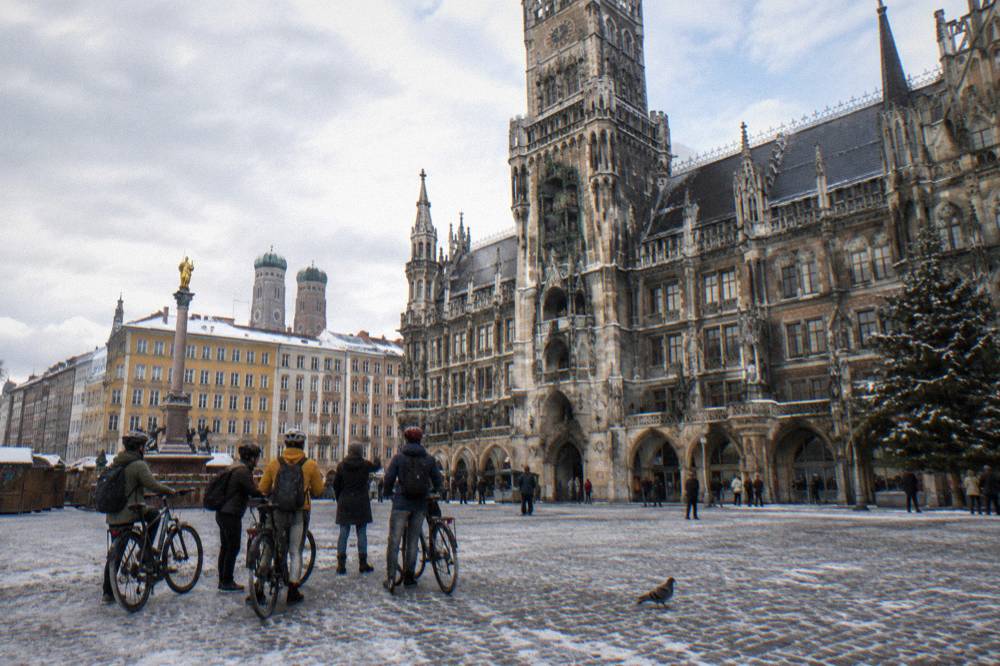
Private rides are the winter wildcard. A private highlights ride with a licensed guide compresses the essentials into two hours in the warmest part of the day, and private groups can set their own pace when fingers go numb. Guided touring also earns its keep in winter for a simple reason: a local guide reads the day, shortens stops and knows which stretches stay clear, which matters more on a frosty January afternoon than on a warm June one.
What winter genuinely adds is space. Riders who know Munich in July, when routes fill with tourist groups, describe December rides as almost private: the same squares, a fraction of the crowd, and the guide with more time for questions. If your dates are flexible, the weeks between the Christmas market opening and New Year are busy; the quietest riding of the season tends to fall in January and February, once the markets close.
What Should You Wear For A Winter Ride In Munich?
Dress in layers you can shed, protect hands and head first, and assume you will feel warmer after twenty minutes of pedalling than at the meeting point. There is no helmet law for standard bikes or pedelecs in Germany, so headwear is a comfort decision, but gloves are not optional below about 5 C: hands on handlebars get cold faster than any other part of a rider.
The layering logic is simple. A breathable base layer, an insulating middle and a wind-blocking outer give you three settings for one ride: cold at the start, comfortable in the middle, adjustable when you stop in the sun outside a market hall. Legs do better than you expect because they are doing the work; a normal pair of trousers plus wind protection handles anything the January average of 2 to 4 C daytime throws at you. Feet are the usual failure point, so warm socks and shoes that block the wind earn their place in the packing list.
| Body zone | Summer approach | Winter approach | Why it matters on a bike |
|---|---|---|---|
| Hands | Nothing | Insulated full gloves | Constant wind over bare bars numbs fingers fast |
| Head | Cap or nothing | Warm hat or thin balaclava under helmet | Heat loss and wind chill concentrate here |
| Torso | One shirt | Base, insulation, windproof shell | Three layers let you shed as effort warms you |
| Legs | Shorts | Trousers plus wind front | Working muscles generate their own heat |
| Feet | Sandals | Warm socks, wind-blocking shoes | Toes are static on pedals and freeze first |
Tours supply the bike, and many listings flag a helmet as included or available; whether a tour provides gloves is not standard, so pack your own rather than assuming. Rental shops in the city run through winter as well, and the pricing picture for both classic bikes and e-bikes is laid out in our rental prices and pickup guide. One winter-specific note: the public MyRadl share bikes, classic at EUR 1 per 30 minutes with an EUR 9 day tariff, e-bikes at EUR 3 per 30 minutes with an EUR 18 day tariff, run around the clock at fixed stations all season, which makes them a fine spontaneous option on a milder winter afternoon.
E-bikes deserve a winter word. The two e-bike rides in the city, including the 4-hour Best of Munich electric option above, take the sweat out of riding in heavy clothes, which is precisely the winter problem: a standard bike in a winter coat means arriving damp. Pedalling assistance keeps effort, and therefore sweat, low. Battery performance in deep cold is a question for the operator on the day, not a fact to promise here; ask when booking.
How Does Munich Handle Ice And Snow On The Bike Paths?
Munich runs a declared winter service for bike paths: clearing starts from 3 cm of snow, roughly 155 km of priority winter routes are cleared within two hours, the rest within three, and the service operates between 2:00 and 22:00. Cyclists also have a legal fallback, since if a signed bike path is uncleared or ungritted, riding on the road instead is permitted.
That fallback rule comes from the German cyclists' association and reflects the StVO's basic principle of constant caution: you adapt to conditions rather than forcing a dangerous line. In practice, the central routes a visitor rides, the Old Town approaches, the Isar embankments, the main radials, are the ones the winter service hits first, because they are the ones commuters use. Outlying paths in the English Garden may hold frost or compacted snow longer after a bad night.
| Winter path condition | What the rule or service does | What a visitor should do |
|---|---|---|
| Snowfall of 3 cm or more | Winter service clears bike paths from that threshold | Expect cleared main routes within hours |
| Priority winter routes, about 155 km | Cleared within two hours | Prefer main radials on snowy days |
| Remaining cleared network | Cleared within three hours | Allow extra time on side routes |
| Signed bike path uncleared | Riding on the road is permitted | Take the clear lane, stay visible |
| Frost or black ice | No specific bike rule beyond general caution | Slow down, avoid painted lines and metal |
Two honest limits frame all of this. First, "cleared" is not "dry": refreeze overnight can put ice on a path that was clean at six in the evening, and the 2:00 to 22:00 service window means the earliest riders meet the coldest surfaces. Second, no clearing service promises safety, and neither does this guide; conditions vary street by street. The city's own winter service page on stadt.muenchen.de sets out the policy in full if you want the operational detail.
Can You Ride To The Christmas Markets In Winter?
Yes, and it is one of the season's best moves: the Marienplatz Christkindlmarkt runs 20 November to 24 December 2026, open Monday to Saturday 10:00 to 21:00 and Sundays 10:00 to 20:00, and the whole market core sits inside the pedestrian zone, so you ride to its edge, park the bike and walk in. Riding inside the pedestrian zone itself is not permitted in daytime hours.
The Old Town rules matter here. Cycling in Munich's pedestrian zones is generally prohibited, with a specific allowance in the Altstadt zone and Sendlinger Strasse only between 21:00 and 9:00, and even then pedestrians have priority across the whole area. For market visits that translates to a simple habit: ride to the edge, lock up, walk. Several market locations cluster near sensible parking, and a guided ride that passes the Old Town in the afternoon drops you within a short walk of the lights anyway.
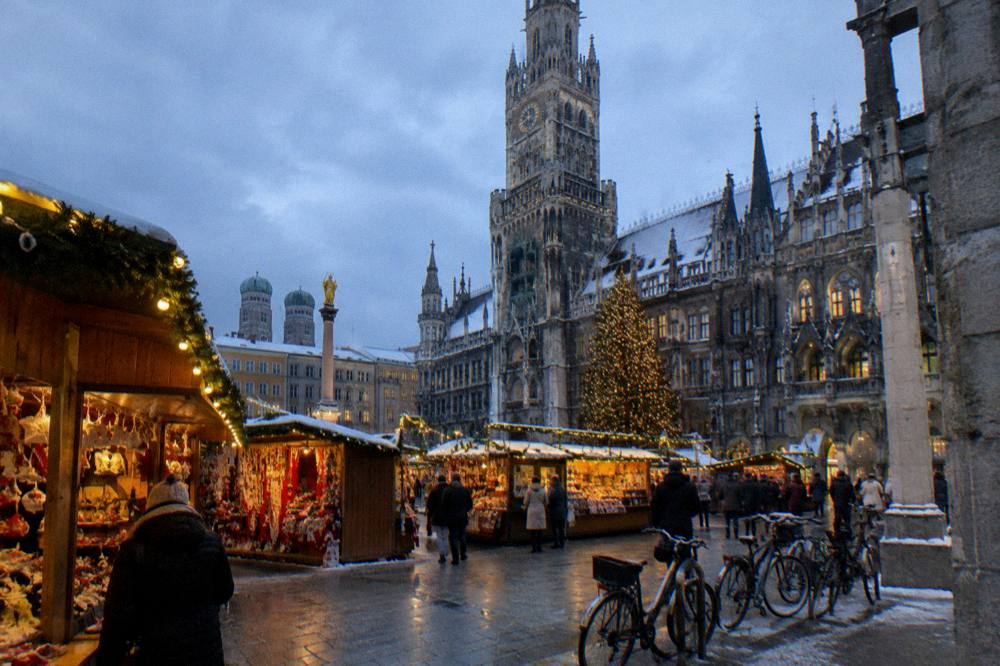
The 2026 winter calendar gives you a second anchor beyond Marienplatz. The Tollwood Winter Festival runs 24 November to 23 December 2026 on the Theresienwiese with free market access, and its hours run later into the evening on many days, which pairs well with a dusk ride home through the west of the centre. Combine the two and a winter day writes itself: a guided ride in the daylight window, a market at the edge of dark, and the S-Bahn or U-Bahn home. Bikes need the MVV bike day ticket on S-Bahn, U-Bahn and approved regional trains; check mvv-muenchen.de for the current price and the rush-hour restrictions, which our bikes on trains guide explains in full.
One planning note: market days draw big evening crowds into the Old Town's edge streets, and the Thursday and Friday evenings are the busiest of the season. A rider who finishes a tour by 16:00 beats both the crowd crush and the coldest hour, then lets the market do the warming.
What About Daylight, Lights And The Law On A Winter Ride?
Winter riders in Germany need legally compliant lights after dark: a white front headlamp, a red rear lamp and matching reflectors, all of type-approved design, plus a bell on the bike. Helmets remain optional for adults, children up to 8 must ride on the pavement (and up to 10 may), and the short December day means any late ride happens in darkness, so lights are a fact of the season, not a corner to cut.
The lighting rules come from StVZO section 67, and they apply to every bike in public traffic, rental or own. Detachable clip lights are acceptable when properly mounted. For a visitor on a guided tour this is mostly solved for you: operators ride standard city bikes kept to local rules, and a winter departure that runs past dusk is the operator's responsibility to equip for. For a self-guided rental, check the lights at pickup before you need them, because dusk in December arrives before 17:00 and a lightless bike suddenly becomes a legal problem rather than a preference.
| Winter riding rule | What applies | Source of the duty |
|---|---|---|
| Lights after dark | White front lamp, red rear lamp, reflectors, type-approved | StVZO section 67 |
| Bell | At least one clear-toned bell on the bike | StVZO |
| Helmet | No general obligation for bikes or pedelecs | StVO |
| Children on pavement | Up to 8 must, up to 10 may, with an accompanying adult allowed | StVO section 2 |
| Pedestrian zones | No riding, Altstadt exception 21:00 to 9:00 only | City cycling rules |
| Alcohol | Riding unfit is a criminal offence; no visitor-friendly limit exists, so ride sober | German law |
On alcohol: do not drink and ride. Enjoy the beer garden stops with the bike safely parked for the day., at any level, in any season. The law for cyclists works differently than for car drivers, with offences triggered by impairment rather than a single simple threshold, and the consequences can include criminal charges. A beer at a market is a fine thing; it belongs after the bike is locked up for the night. Families riding with children will find the pavement rules and the rest of the basics covered by the city's published cycling rules. If you're still deciding when to plan the trip, our month by month guide to choosing the best time to visit Munich weighs the weather, crowds and cycling conditions for every season.
Is Winter Actually A Good Time To Ride In Munich?
For most visitors, yes, with two conditions: dress for 2 to 4 C rather than hoping for better, and put your ride in the daylight window between roughly 10:00 and 15:00. In exchange you get the quietest roads of the year, smaller tour groups, unchanged ticketed sights that are easier to enter, and a city that looks its most theatrical under early lights and possible snow.
The trade is real on both sides. Against winter stand the cold, the short days, the weather-dependent beer garden stops and the need to plan around daylight rather than energy. For it stand the crowds: July's tour groups thin to a handful of riders in January, guides linger, and the central routes that feel like a procession in summer feel like a discovery in winter. Sights along the standard routes keep winter hours; the English Garden stays open and free year-round, and indoor landmarks such as the Residenz simply shift to winter opening times.
Choosing between the main winter-friendly formats is easier with them side by side:
| Ride | Length | Type | Winter fit |
|---|---|---|---|
| Guided city ride | 3.5 hours | Shared, classic bike | Fits the daylight window with margin |
| Morning classic with beer garden stop | 3 to 4 hours | Shared, classic bike | Late start still finishes near dusk |
| Half-day with local guide | 3 hours | Shared, classic bike | Tightest loop, good on cold days |
| Private highlights with licensed guide | 2 hours | Private, classic bike | Shortest, most flexible in bad weather |
| Best of Munich electric | 4 hours | Shared, e-bike | Assistance offsets heavy winter clothing |
Prices for each live on the booking page, and every one of these tours comes with free cancellation, so plans can shift without losing the fare. Whatever you choose, book with the daylight window in mind and the forecast open in another tab, and Munich's quietest riding season will do the rest.
Common Questions About Munich In Winter
Munich In Winter: Can You Still Ride A Bike Tour?
Yes. Shared city rides run through winter, and the routes that work best stay on cleared central streets and paths. Departure patterns can shift, with some seasonal slots dropping to weekends only, so confirm your date on the tour's booking page before planning the day around it.
How Cold Does Munich Get For Cycling?
January, the coldest month, averages a high of 2 to 4 C and a low of -2 to -5 C, with about 4.3 to 4.7 sunshine hours per day. Those are long-term averages, not forecasts, so a given week can sit either side of them.
What Should I Wear On A Winter Bike Ride In Munich?
Layered clothing with a windproof outer shell, insulated gloves, a warm hat and wind-blocking shoes. Hands and feet get cold first on a bike because they stay still on the bars and pedals, while your working legs generate their own heat.
Do Munich's Bike Paths Get Cleared Of Snow?
Yes. The city clears bike paths from 3 cm of snow, with about 155 km of priority routes cleared within two hours and the rest within three, running between 2:00 and 22:00. If a signed path is uncleared, cyclists may ride on the road instead.
Can You Cycle To The Christmas Markets?
Ride to the edge and walk in. Cycling inside the pedestrian zone is prohibited in daytime, with an allowance only between 21:00 and 9:00 in the Altstadt zone, so lock the bike near the perimeter and continue on foot.
Do I Need Lights On A Bike In Munich In Winter?
Yes after dark: a white front lamp, a red rear lamp and reflectors, all type-approved, plus a bell. December dusk arrives before 17:00, so any late-afternoon ride happens in darkness and lights are legally required.