What Is The Cycling Capital Of The World?
No single city holds the title outright, but the case for a cycling capital usually lands on Copenhagen or Amsterdam. Here is why Munich belongs in the same conversation.
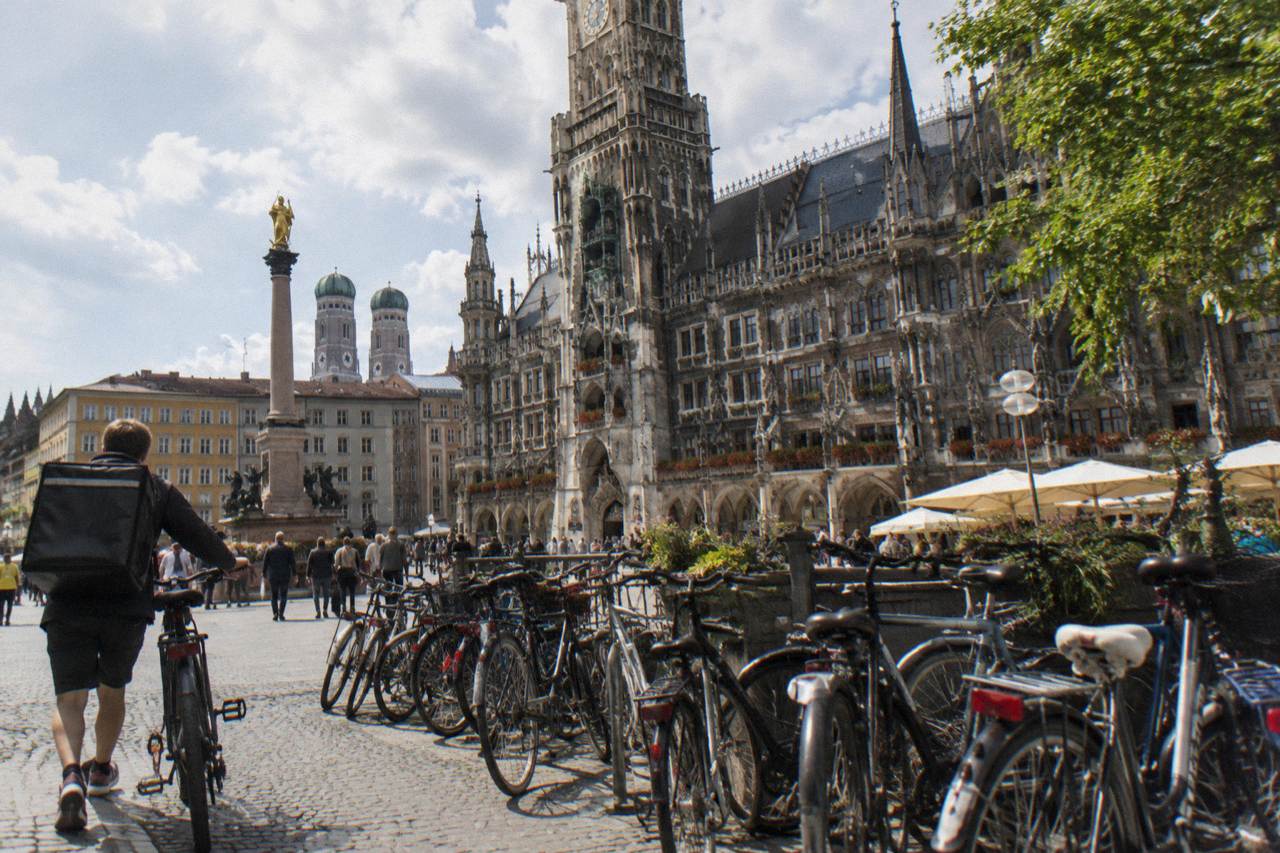
There is no single cycling capital of the world, because no official body awards the title. The label is informal, and it is most often attached to Copenhagen and Amsterdam, two cities widely described as the gold standard of everyday cycling. Contenders like Utrecht, Strasbourg and Munich all appear in the debate, and each one measures the claim differently, by bike share, by infrastructure or by culture.
The question sounds simple until you try to answer it. What would a capital need: the most bikes per resident, the highest share of trips made by bike, the densest protected network, or simply a culture where a bicycle is the default way to move? Different yardsticks crown different cities, which is why travel writers and cycling advocates have argued about this for decades without settling it.
Copenhagen gets the label most often in travel media. Amsterdam gets it almost as often in everyday conversation. Both are widely described as places where cycling is not a sport or a statement but simply how people get to work, and both have spent decades building the infrastructure to make that normal. Neither claim depends on a single statistic, and no ranking you will read, including this one, is an official verdict.
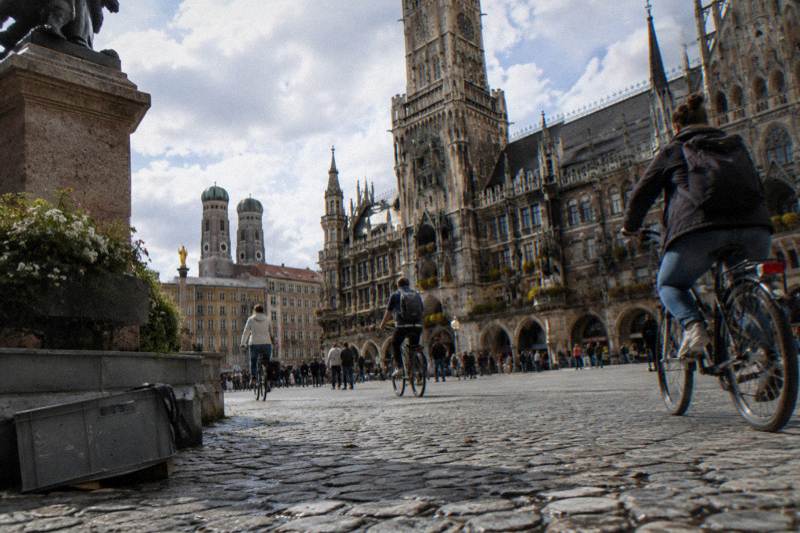
What makes the question worth asking on a Munich cycling site is that this city belongs in the conversation on its own numbers. Munich brands itself as the Radlhauptstadt, the cycling capital in German, and the city's own figures back the ambition. A fifth of daily trips here are made by bike, the highest share among German large cities, and the signed cycling network runs to 1,200 kilometres. Those are the kinds of numbers that put a city on the shortlist, even if no committee ever hands out a trophy.
If you want to judge the network for yourself rather than take anyone's word for it, a guided ride is the fastest introduction.
Why Do Copenhagen And Amsterdam Get The Title?
Copenhagen and Amsterdam are called the cycling capitals because cycling there is mass transportation, not a hobby. Both cities are widely described as having more bicycles than residents, with protected bike lanes, dedicated traffic signals and street design that treats a bike as a normal vehicle. The label reflects decades of policy, not a formal award, and no statistic ranks them against each other definitively.
The Copenhagen story usually starts with the oil crises of the last century's later decades, when Denmark chose to rebuild its streets around people rather than cars. Amsterdam took a parallel path after citizen campaigns forced the city to prioritise bikes and safety. Over many years both produced the same visible result: separated cycle tracks on major streets, bike parking at every station, and schoolchildren riding to class unaccompanied, which is the detail locals tend to mention first.
What the two cities share is normality. In Amsterdam and Copenhagen you see lawyers in suits, parents with cargo bikes full of children, and elderly riders on upright frames, all moving through traffic that expects them. That everyday quality, more than any single number, is what travel writers mean when they use the word capital. The infrastructure exists to make cycling boring, in the best sense.
The honest caveat is that the title is contested and always has been. Utrecht claims the world's largest bike parking facility. Strasbourg carries the flag for France. Seville built a network from almost nothing in a few years and doubled its bike share. Beijing and other Asian megacities move more cyclists in absolute terms than any European city. None of this is ranking, just evidence that the debate has real contenders, and that the crown is a matter of opinion.
Munich's argument, and the reason it appears in this debate more often than outsiders expect, rests on measurable local facts rather than branding. The city's own reporting puts bike modal share at 21 percent of daily trips, the highest among German large cities, and credits Munich's Radlhauptstadt status openly.
Should you test the claim on a guided ride while you weigh the argument? The classic option runs 3.5 hours and links the old town, the river and the beer gardens in one loop, with free cancellation up to 24 hours before departure, so a change of plans costs nothing.
What Makes Munich A Radlhauptstadt?
Munich calls itself the Radlhauptstadt, the cycling capital, and backs it with a 21 percent bike share of daily trips, the highest of any German large city, a 1,200 kilometre signed route network, and 103 dedicated bicycle streets covering 47 kilometres. The city keeps investing, adding 1,500 new bike parking spaces across 66 locations in 2025 alone.
The German word Radl is Bavarian for bicycle, and Munich has turned it into an identity. The Münchner Radlnetz, the city's signed cycling network, totals 1,200 kilometres of routes: fourteen radial routes radiating from Marienplatz, an inner and outer ring, and green corridors that follow the Isar, the Würm and the canals out of the centre. A rider can leave the main square and follow signed paths almost continuously to the edge of the city and beyond.
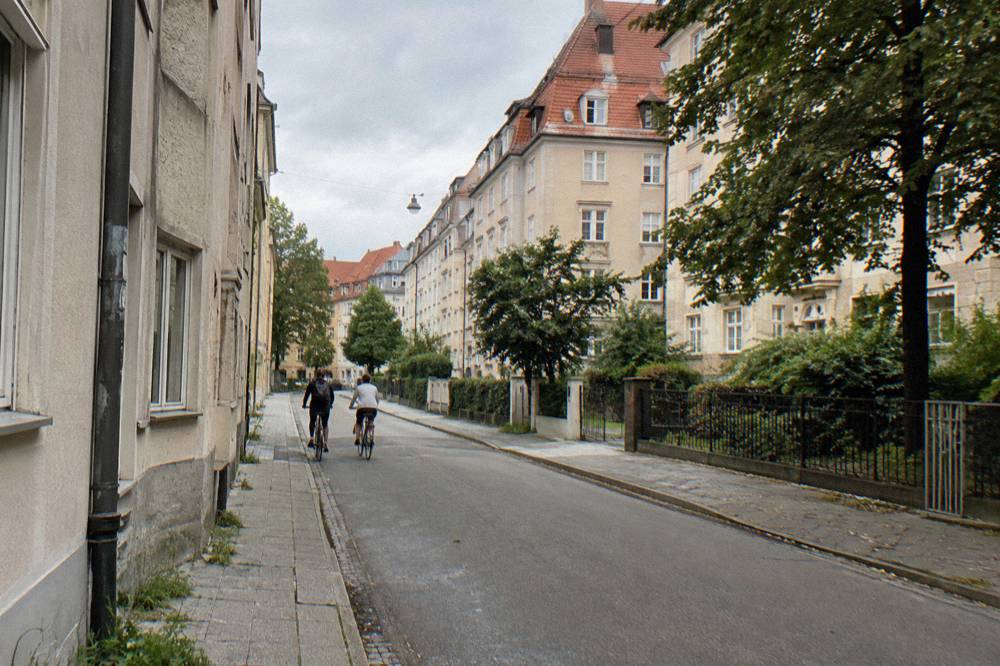
The bicycle street, the Fahrradstraße, is the sharpest symbol of the status. On these 103 streets, totalling just over 47 kilometres, the entire roadway is legally a bike path: cyclists have priority, may ride side by side, and motor traffic is limited to 30 km/h and only permitted where signed. The count comes from the city's own mobility reporting.
Then there is the equipment. The old MVG Rad share scheme ended in September 2025, and in May 2026 the region launched MyRadl, a station-based system with roughly 1,000 stations and more than 6,700 bikes planned across Munich and 36 neighbouring municipalities. Classic bikes cost 1 euro per 30 minutes, capped at a 9 euro day tariff, with e-bikes at 3 euros per 30 minutes and an 18 euro day cap. By mid-June 2026 the city reported about 116,200 journeys already completed.
The city does not stop at quantity. The Altstadtring Nordwest project delivered 1.85 kilometres of wide, separated bike paths with clear separation from pedestrian areas, and the winter service clears all bike paths, including bicycle streets, from 3 centimetres of snow, with the roughly 155 kilometres of priority winter routes cleared within two hours. Few cities treat a bike lane as core infrastructure quite this literally.
How Does Munich's Network Actually Feel To Ride?
Riding Munich feels less like a showcase and more like a working network: flat riverside corridors, a car-free streak through the English Garden's 78 kilometres of paths, and quiet canal routes west to Nymphenburg. The classic highlights ride runs 3.5 hours; a half-day local-guide version runs 3 hours; both include a bike and helmet per the listings.
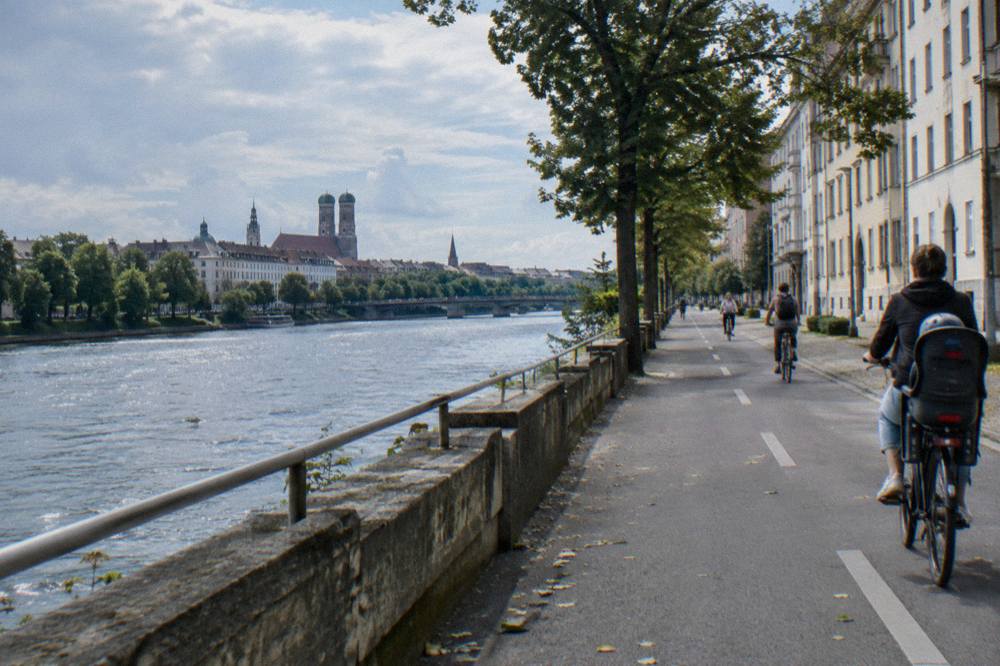
The centrepiece is the Isar. The river cuts south to north through the whole city, and its banks carry a signed corridor that families, commuters and tourists share all day. The city tourism office describes an official English Garden tour of roughly 15 kilometres and 2 hours from Marienplatz, following the Isar downstream, then through the garden to Aumeister and back. That single loop is the best argument for Munich's case: a visitor can ride from the main square to open meadows and back without ever mixing with fast traffic.
For riders who want to go further, the Isar cycle path proper runs 299 kilometres from Scharnitz in Tyrol to the Danube confluence near Deggendorf, with the Munich to Landshut section about 77 kilometres and largely flat and intersection-free. Few self-styled cycling capitals can put a long-distance route on the doorstep of the central square.
To the west, a canal route runs from Olympiapark along the Nymphenburg and Biedersteiner canals, 10 kilometres one way to Schloss Blutenburg or 16 kilometres to the Hirschgarten beer garden. Those corridors are the local secret: straight, tree-lined and almost free of crossings, they are where Munich residents actually ride on weekends.
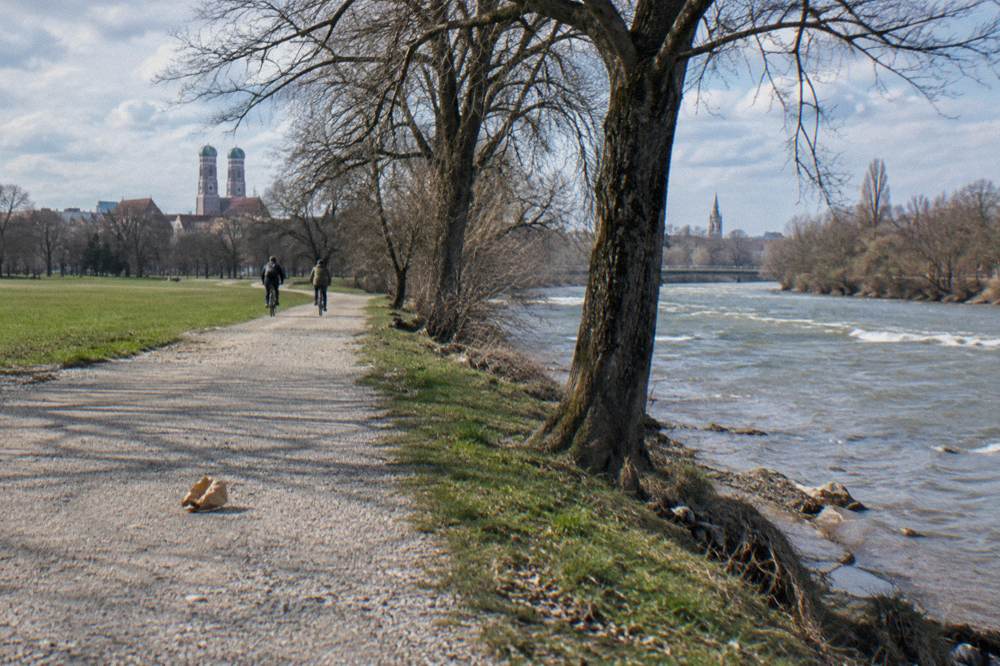
A guided ride turns that geography into a single narrative, which is the practical advantage for a short visit. The 3.5 hour guided city tour pairs the old town core with the river and the surfers' wave on the Eisbach, where the famous standing wave runs under rules set by a city decree: a self-releasing leash is mandatory and surfing is banned from 22:00. The e-bike alternative covers similar ground with electric assist over 4 hours, useful if the 1,200 kilometre network sounds more inviting than your legs do on day three of a trip.
If you would rather ride the same streets independently, the basics are easy. Start with a read on whether Munich is bike friendly, which covers the day-to-day reality, then take the first-timer's city cycling route, a sensible loop that mirrors what the guided tours ride.
| Way of riding | Time | What you get | Best for |
|---|---|---|---|
| Guided classic ride, 3.5 hours | Half a day | Old town, Isar, English Garden, a beer garden stop; bike and helmet included | First visit, context and stories |
| Guided e-bike ride, 4 hours | Half a day | The same arc with electric assist | Riders saving legs, longer comfort range |
| Half-day local guide ride, 3 hours | Morning or afternoon | A tighter city loop with a local guide | Short stops, second-time visitors |
| Independent ride on the Radlnetz | Your call | Free, unlimited, 1,200 km of signed routes | Confidence, repeat visitors, locals |
Can A Cycling Capital Also Be A Beer Garden City?
Yes, and Munich may be the only place where the two identities reinforce each other. The English Garden alone holds the Chinese Tower beer garden, about 7,000 seats under a 25 metre tower of 1789 design, and the true beer gardens allow you to bring your own food. Cycling is how locals reach them, and the beer garden stop is built into several guided rides.
This is the cultural layer that Copenhagen and Amsterdam cannot copy. A beer garden is not a bar; it is a park with chestnut trees, long tables and a rule that in the true Bavarian beer gardens you may bring your own Brotzeit, your snack, and buy only the beer. The Chinesischer Turm garden at the foot of the tower opens at 11:00 on weekdays and 10:00 on weekends in beer garden weather, with brass bands several afternoons a week. The Hirschgarten, reachable on the canal route, seats about 8,000 and is the largest in Bavaria.
The link to cycling is physical, not just thematic. The biggest gardens sit at the end of the pleasant rides: the Chinese Tower deep in the English Garden, the Seehaus on the lake in the north of the park, the Hirschgarten on the western canal corridor. Several guided rides, among them the 4 hour beer garden break version and the classic tours with a stop built in, treat the pause as part of the route rather than a detour. For more on that circuit, see the dedicated guide to Munich's beer gardens by bike.
One honest note on rules, because every cycling capital polices behaviour differently: German traffic law applies to cyclists as to anyone else, riding two abreast is allowed when you do not obstruct traffic, and drinking and riding is treated seriously. Before you plan a garden-hopping afternoon, get clear on what is actually legal when beer and biking mix.
Which City Should You Ride To Judge For Yourself?
If the question is which cycling capital to ride, the answer is whichever you can reach, because each makes its case on the street. But if your trip already includes Munich, the case is unusually easy to test: 21 percent of daily trips by bike, a 1,200 km signed network, riverside corridors and a 299 km long-distance route on the doorstep. One guided afternoon gives you the core of it.
The fairest test is not a statistic but a simple experiment. Ride across a candidate city at eight in the morning and count who is on the road: commuters, children, deliveries, retirees. In Copenhagen and Amsterdam you will see all of them. In Munich you will see them too, streaming down the Isar banks and along the bicycle streets, in numbers the city measures at a fifth of all daily trips.
For visitors, Munich has one practical advantage over the famous capitals: it is compact and flat where it counts. The old town, the river, the English Garden and the museums sit inside a loop a reasonably fit rider covers in an afternoon. The 3 hour half-day tour with a local guide exists precisely for that geometry, and a typical loop mixes landmark stops with stretches of the Isar riverbank, often ending at a beer garden.
Beyond the city limits the argument keeps going. Day rides along the Isar toward Landshut, a loop of the Starnberger See at roughly 50 kilometres of lakeshore, and the canal routes out to Nymphenburg and Blutenburg extend the same network for anyone with a full day to ride. A capital, in the end, is partly about what lies beyond the palace walls.
So the next time someone asks what the cycling capital of the world is, the honest answer starts with "it depends", mentions Copenhagen and Amsterdam as the usual names, and then, if you have ridden here, adds Munich with its own numbers. Whether you arrive on a classic guided loop or on a MyRadl bike from one of the new stations, you will be riding a network the city measures, funds and clears of snow. That is what a contender looks like.
Common Questions About The Cycling Capital Of The World
What Is The Cycling Capital Of The World?
There is no official cycling capital. The label is most often given to Copenhagen and Amsterdam, both widely described as places where cycling is everyday transport. Munich, Utrecht and Strasbourg appear in the debate too, each with strong infrastructure and high bike use, so the answer depends on which measure you value.
Why Is Munich Called The Radlhauptstadt?
Radlhauptstadt is German for cycling capital, a title Munich uses for itself. The city backs it with a 21 percent bike share of daily trips, the highest among German large cities, plus a 1,200 kilometre signed cycling network and 103 bicycle streets where bikes have legal priority.
Is Munich Good For Cycling As A Tourist?
Yes. The centre is compact and largely flat, the Isar banks and the English Garden offer near traffic-free riding, and guided tours of roughly 3 to 4 hours cover the highlights with a bike and helmet included. Independent riders can use the MyRadl share scheme or rental shops.
Do More People Cycle In Copenhagen Or Munich?
No single measure settles the rivalry between the two. What is documented is Munich's own number: 21 percent of daily trips in the city are made by bike, which the city reports as the highest share among Germany's large cities.
Can You Cycle From Munich To Somewhere Outside The City?
Yes. The Isar cycle path runs 299 kilometres from Scharnitz to the Danube, with the Munich to Landshut section about 77 kilometres and largely flat. Closer options include the roughly 15 kilometre English Garden loop and canal routes to Nymphenburg and Blutenburg.
Do I Need A Guided Tour To Enjoy Cycling In Munich?
No, but a guided ride is the fastest way to learn the network on a short visit. Tours such as the 3.5 hour guided city ride cover the old town, the Isar and the English Garden in one loop with a local guide, after which riding independently on the signed routes is straightforward.