Is Munich Bike Friendly?
A straight answer to whether Munich is bike friendly, with the city's own infrastructure numbers, the cycling rules visitors must know, and how a guided ride fits in.
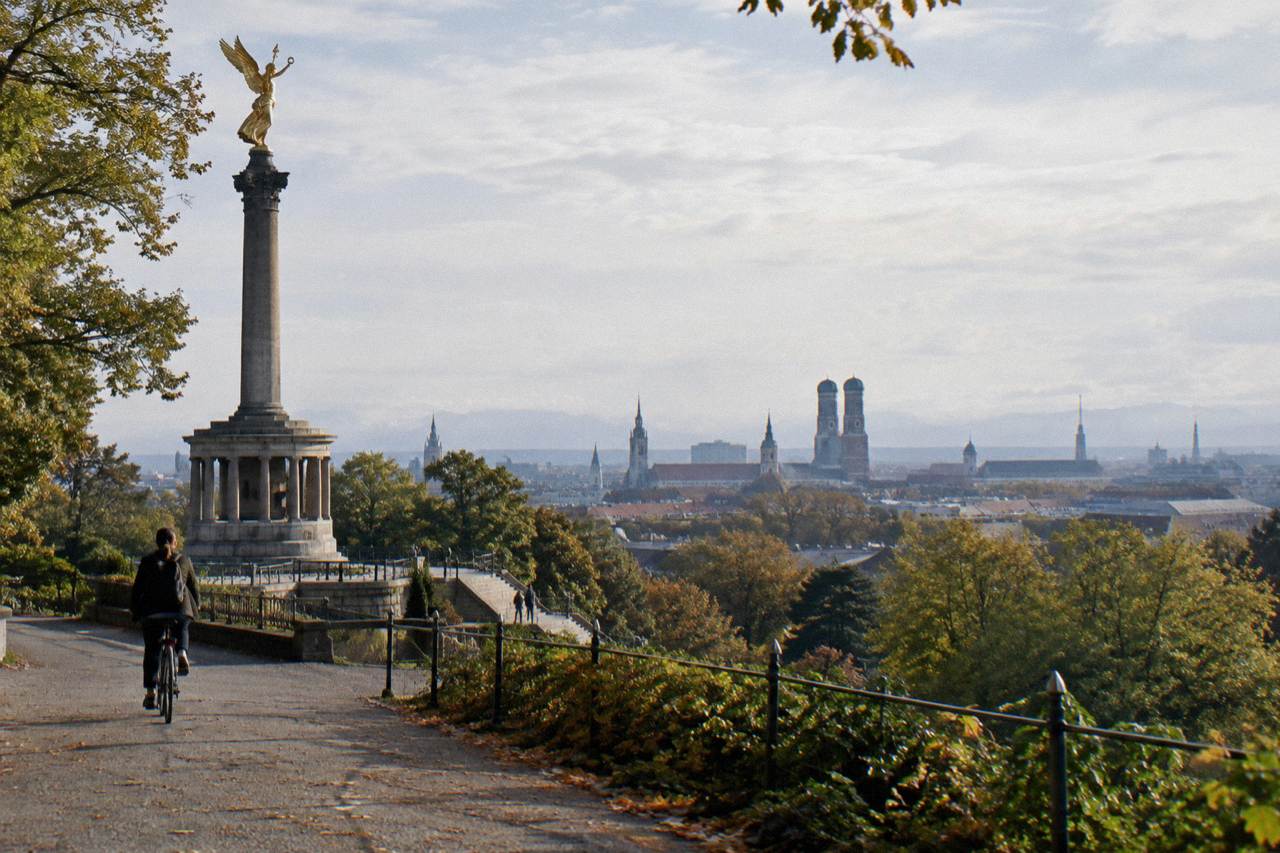
Yes, by German standards Munich is genuinely bike friendly. The city records a 21 percent bike share of daily trips, the highest among German large cities, and its signed Radlnetz covers 1,200 km of routes. The honest caveats are tram rails in the old town, busy shared paths in the English Garden, and rules that differ from home.
That 21 percent figure, published by the city in November 2025, is the single best measure of a bike-friendly city: it counts what people actually do, not what a marketing brochure promises. One in five daily trips in Munich happens on a bike, which puts the city in the top tier of German cycling towns. The network behind that number is real too: the Münchner Radlnetz totals 1,200 km of signed routes, built from 14 radial routes radiating out of Marienplatz, an inner and outer Radlring, and green corridor paths along the Isar, the Würm and the Nymphenburg canal.
The infrastructure keeps improving. In 2025 the city installed 1,500 new bike parking spaces across 66 locations, and in January 2026 a free, video-surveilled 24-hour bike garage opened on Hirtenstraße near the Hauptbahnhof. The Altstadtring Nordwest project delivered 1.85 km of wide, separated bike paths with clear separation from pedestrian areas. These are small numbers in a big city, but the direction is consistent.
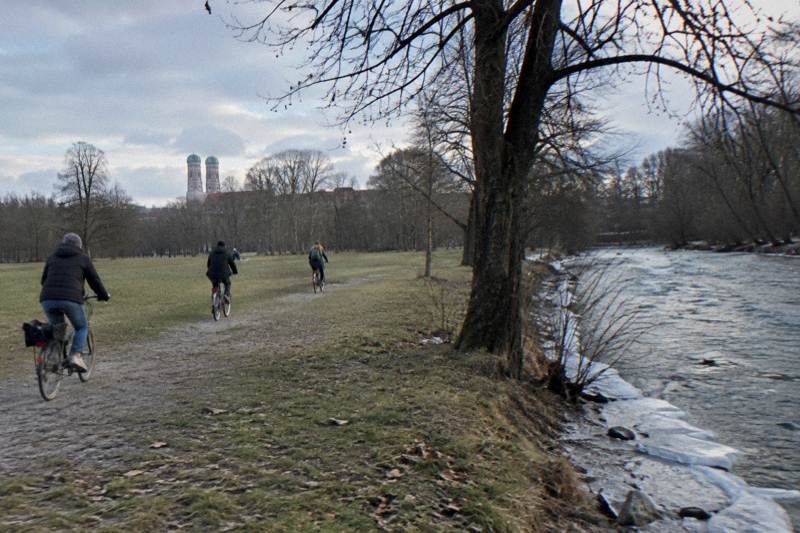
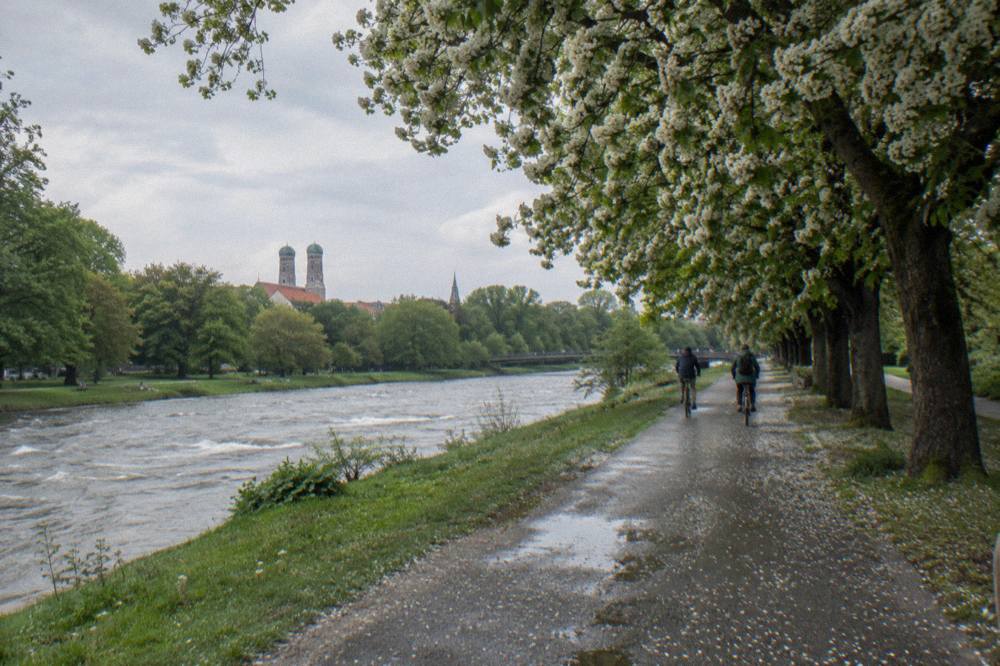
For a visitor, the practical translation is simple. The riverside and park riding, above all along the Isar and through the English Garden with its 78 km of paths, is relaxed and genuinely pleasant. The dense old town is where attention is needed: tram rails to cross, pedestrian zones with time-limited bike access, and crowds.
How Much Cycling Infrastructure Does Munich Have?
Munich has 103 designated Fahrradstraßen covering just over 47 km, a 1,200 km signed route network, and 78 km of paths in the English Garden alone. The city cleared 1,500 new bike parking spots across 66 sites in 2025 and opened a free surveilled bike garage near the Hauptbahnhof in January 2026.
Fahrradstraßen, or bike streets, are the piece of German infrastructure worth knowing about as a visitor. On these streets the entire roadway counts as a bike path: cyclists have priority, riding side by side is allowed, cars are limited to 30 km/h and may only enter where a supplementary sign permits, which is the case almost everywhere in Munich. Drivers must leave at least 1.5 m when overtaking. Munich counted 103 of these streets with a total length of a good 47 km as of late 2025, and the number grows steadily.
The network layer above the streets is the Münchner Radlnetz: 14 radial routes that all start at Marienplatz, plus the inner and outer ring routes and the green corridors along the Isar, the Würm and the Nymphenburg canal. Signposting is consistent, so finding your way without a phone is realistic once you have understood the ring logic. The city publishes the details on its official Radlnetz page.
| Infrastructure | Figure | What it means for a visitor |
|---|---|---|
| Radlnetz signed routes | 1,200 km | Rideable without GPS once you read the ring signs |
| Fahrradstraßen | 103 streets, 47 km | Cyclists have priority, cars capped at 30 km/h |
| English Garden paths | 78 km | Car-free park riding, shared with joggers |
| New parking spaces 2025 | 1,500 at 66 locations | Secure parking is getting easier to find |
| Bike share stations | About 1,000 planned | MyRadl covers Munich and 36 neighbouring municipalities |
Winter service is part of the picture too. Munich's municipal winter service clears all bike paths, including bike streets, from 3 cm of snow, with about 155 km of winter routes cleared within two hours and the rest within three, operating between 2:00 and 22:00. If a signed bike path is uncleared or ungritted, the ADFC notes that cyclists may lawfully ride on the road instead. That is a level of institutional support most cities never reach, and it is why riding here in the colder months is more normal than visitors expect. The specifics of riding through winter are covered in Munich in winter on a bike.
What Are The Cycling Rules Visitors Need To Know?
The core rules come from German traffic law: ride with constant caution, use a signed cycle path only where signs 237, 240 or 241 order it, keep lights and a bell on the bike, and walk your bike in pedestrian zones outside the permitted night hours. Children up to 8 must ride on the pavement.
The basic rule of the German road traffic ordinance, section 1, is mutual consideration, and section 2 adds the detail visitors trip over most: side-by-side riding is allowed when traffic is not obstructed, otherwise single file. Cycle-path use is compulsory only where the blue signs 237, 240 or 241 order it; a right-hand path without those signs is optional. Children up to 8 must, and up to 10 may, use the pavement. The full wording sits in section 2 of the StVO on the official German legislation site.
Equipment matters more than many visitors assume. Bikes must carry type-approved lighting powered by a dynamo, battery or rechargeable store, plus a red rear reflector, and at least one clear-toned bell. Detachable lights are legal under conditions. Helmets, by contrast, are not legally required for adults on standard bikes or pedelecs, though many operators supply them and recommend use.
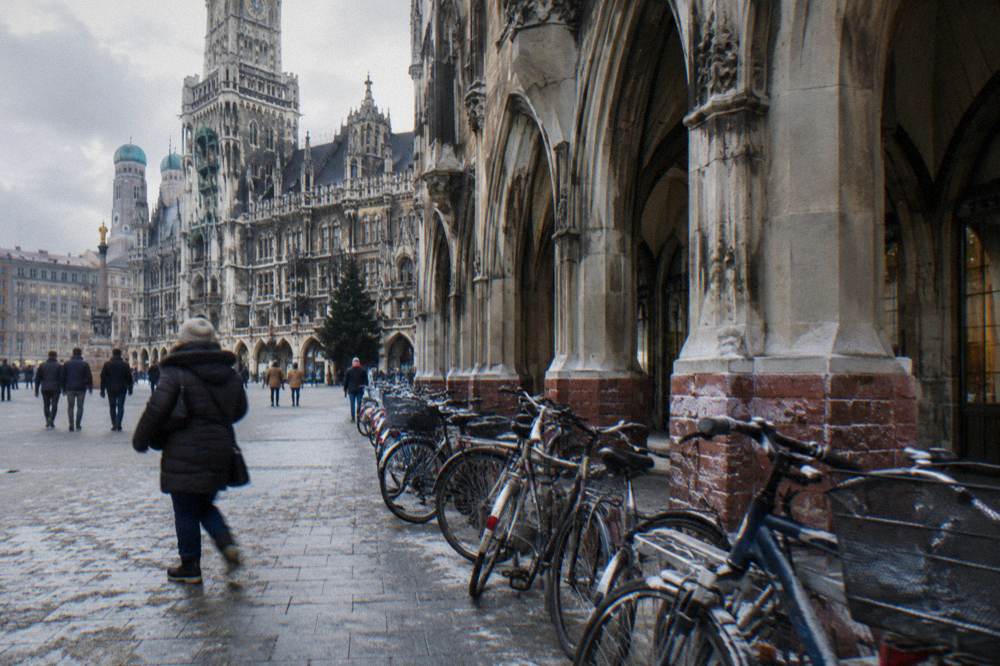
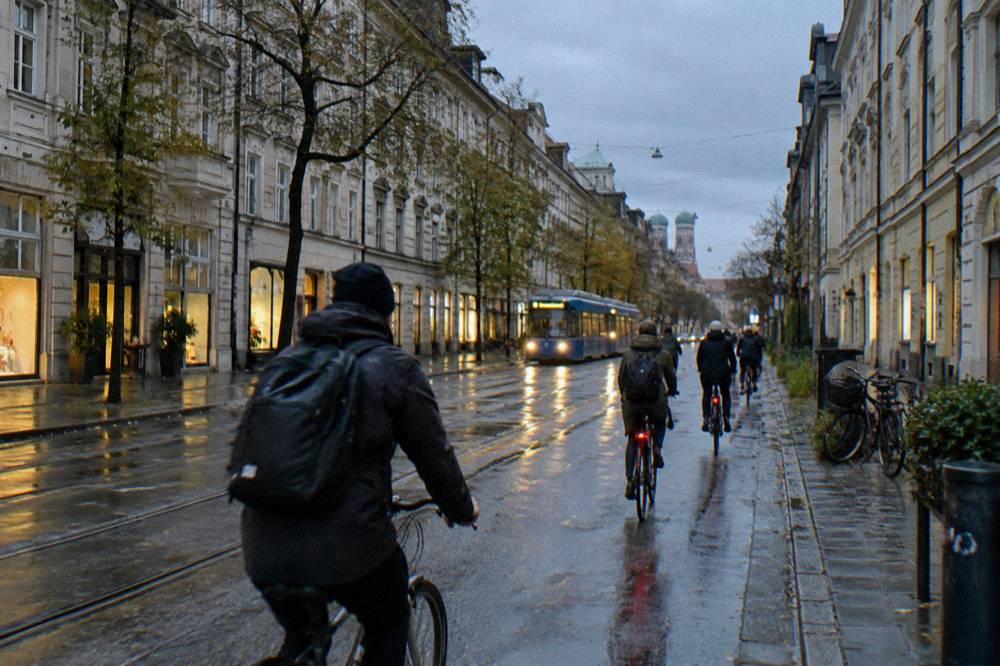
The old town has its own twist. In pedestrian zones cycling is generally prohibited, but in Munich's Altstadt pedestrian zone and in Sendlinger Straße it is permitted between 21:00 and 9:00. During the day, walk your bike. Tram rails deserve respect anywhere in the city: the general safety advice is to cross rails at as close to a right angle as possible so the front wheel cannot slip into the groove.
If you would rather have someone else handle the rules, the navigation and the bike in one package, a guided half-day ride is the low-friction route. Munich by Bike: half-day tour with a local guide runs 3 hours on classic bikes, and you can check availability on the booking page.
Is Munich Safe For Cyclists?
Munich is regarded as a safe cycling city in structural terms, with separated paths, priority bike streets and a mature network. Watch tram rails, ride at walking pace where pedestrians have priority, and follow the posted signs. Curious how Munich measures up against its neighbours? A guide to Europe's best city for cycling ranks the contenders and suggests a guided ride for seeing the local network up close.
What can be said is structural. A city where a fifth of all daily trips happen by bike, including large numbers of children and older riders, is a city whose streets are engineered for coexistence. The 1.5 m minimum overtaking distance on bike streets, the 30 km/h cap for cars there, and the separated paths of projects like Altstadtring Nordwest all push in the same direction.
The behaviours that matter most for a visitor are few. Cross tram rails at a right angle. In the English Garden, the paths are shared with joggers and pedestrians, so pace yourself down in busy stretches; the park has 78 km of them, so there is room to spread out. Swimming in the Eisbach is prohibited and life-threatening, barbecues and open fires are banned in the park, and dogs must stay leashed. None of this is bike-specific, but a cyclist moving fast through a park crowd is the classic visitor mistake.
For a fuller treatment, read is cycling in Munich safe and the rule-by-rule breakdown in cycling rules for visitors in Munich. Both go deeper than this page can.
A beer-garden ride is the classic way to experience the relaxed side of Munich cycling, and one natural option pairs the riverside with a proper break.
What About Hills, Weather And Seasons?
Munich is effectively flat for casual riding, and the seasons matter more than the terrain. July averages a high of about 24 to 25 C, January a high of about 2 to 4 C, and May is the wettest month with roughly 92 to 108 mm of rain. Winter riding is normal and the city clears bike paths from 3 cm of snow.
Those climate figures are long-term averages, not forecasts, and they describe a city where summer riding is comfortable and winter riding is a choice rather than an ordeal. The Isar valley gives the region its gentle profile; the official Isar cycle route runs 299 km from Scharnitz in Tyrol to the Danube, and the Munich to Landshut section of about 77 km is described as largely flat and intersection-free. Nothing inside the city itself offers serious climbing.
The event calendar shapes the riding year. Oktoberfest 2026 ran 19 September to 4 October and drew about 7.4 million guests, which means the weeks around it put heavy foot traffic on the approaches to Theresienwiese. The Christkindlmarkt on Marienplatz runs 20 November to 24 December 2026, and Tollwood Winter Festival occupies the Theresienwiese from 24 November to 23 December. None of this stops cycling; it just shifts the pleasant riding toward the parks and the river when the centre is crowded. The seasonal detail lives in best time for a Munich bike tour.
The regional bike share system MyRadl launched on 7 May 2026. with roughly 1,000 stations and more than 6,700 bikes planned across Munich and 36 neighbouring municipalities, replacing the old MVG Rad, which ended on 30 September 2025. Classic bikes cost 1 euro per 30 minutes or 9 euros per day, e-bikes 3 euros per 30 minutes or 18 euros per day. That is public transit pricing, not free, and it makes short hops between neighbourhoods easy. The rental landscape is covered properly in Munich bike rental prices and pickup.
Should You Rent A Bike Or Take A Guided Ride In Munich?
Renting suits confident riders who want to plan their own loop, above all along the Isar and through the English Garden. A guided ride suits first-time visitors, families and anyone who wants the rules, the route and the stories handled, with a bike included, in a fixed three to four hour window. If the park itself is the main draw, our guide to cycling through the English Garden covers where to ride and which rules to keep in mind.
The self-guided case is strong here. The network is signed, the terrain is flat, the river corridor is obvious, and MyRadl plus the traditional rental shops make a bike easy to obtain. If your question is simply whether you can get around Munich under your own pedal power, the answer is yes, and can you cycle around Munich maps out how.
The guided case is about compression. Three hours with a local guide covers the old town, the river and a slice of the English Garden without you once checking a map or wondering whether a path is compulsory. The Munich by Bike half-day tour with a local guide does exactly that on classic bikes. The 3-hour guided bike tour covers a similar brief, and the small-group option keeps groups tighter. For riders who want assistance on the hills that Munich mostly lacks, an e-bike changes the arithmetic on range instead.
| Option | Best for | Trade-off |
|---|---|---|
| MyRadl bike share | Short hops, flexible days | Priced per 30 minutes, station-bound returns |
| Classic rental shop | Self-guided loops, full-day rides | You plan the route and carry the lock |
| Shared guided tour, 3 to 4 hours | First visit, stories, route handled | Fixed start time and group pace |
| E-bike guided tour | Covering more ground comfortably | Higher price tier on the booking page |
Costs for the guided options sit on the respective booking pages, and they move with season and demand, so check them there rather than trusting a cached number. What the booking pages do state plainly is duration and format: the half-day tour runs 3 hours, the standard guided tour 3.5 hours, and each includes the bike for the ride. Whether a shared or private format fits you is a separate question, treated in rent a bike or take a guided tour in Munich.
For riders who want motor assistance while still covering the city's highlights in one loop:
So, is Munich bike friendly? Measured by behaviour, infrastructure and institutional support, the short answer is a qualified yes: qualified not because the city falls short, but because friendliness here assumes you know the small print, and every rule in it is learnable in an afternoon, ideally on a guided ride before you set off alone. Comparing cities? The broader discussion is in what is the cycling capital of the world, which puts Munich's bike culture in a wider international context.
Common Questions About Munich Bike Friendliness
Is Munich Bike Friendly
Yes. Munich has a 21 percent bike modal share of daily trips, the highest among German large cities, plus 1,200 km of signed routes and 103 Fahrradstraßen where cyclists have priority. The caveats are tram rails in the old town and shared paths in the English Garden.
Bike Rides Munich
Guided bike rides in Munich typically run 3 to 4 hours and cover the old town, the Isar banks and parts of the English Garden. Options include classic shared tours, a small-group format, e-bike tours and private rides; durations and inclusions are stated on each booking page.
Renting Bikes In Munich
Two main routes: the MyRadl share system, launched 7 May 2026, charging 1 euro per 30 minutes for a classic bike or 9 euros per day, or a traditional rental shop for full-day self-guided riding. Bring photo ID; shops typically hold it or a card as deposit.
Bike Ride Munich
A first bike ride in Munich is best built around the Isar corridor and the English Garden, which together offer 78 km of park paths and largely car-free riverside riding. A guided half-day tour handles the navigation and the local rules while covering the same ground.
Can You Ride A Bike In The English Garden?
Yes, cycling is permitted on the park's 78 km of paths, shared with joggers and pedestrians. Barbecues and open fires are prohibited, swimming in the Eisbach is banned, and dogs must be leashed.
Do You Need A Helmet To Cycle In Munich?
No law requires a helmet for adults on standard bikes or pedelecs in Germany. Many tour operators supply helmets and recommend wearing one; check the booking page for what is included.