Can You Ride A Bike In The English Garden?
Yes, cycling is allowed in Munich's English Garden. Here is where to ride, which rules apply, and how a guided tour fits the park into a city loop.
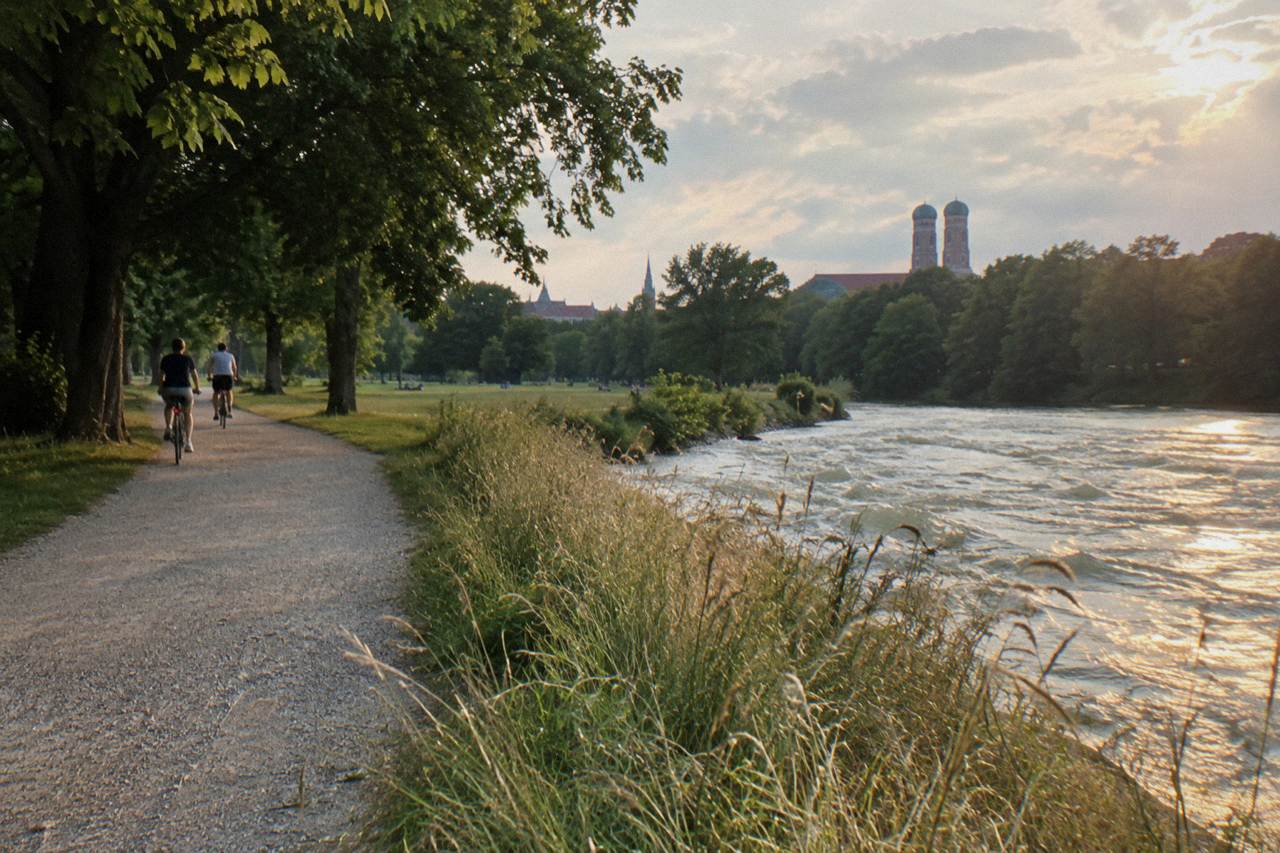
Yes, riding a bike in the English Garden is allowed. The park covers 376 hectares and, per the official city description, offers around 78 km of paths shared by cyclists and joggers, open year-round with free entry. There is no blanket cycling ban and no entry gate; you simply ride in from the surrounding streets and follow the paths, giving way where the park gets busy near the southern end. If free entry makes you wonder what actually costs money once you're inside, our guide to what the English Garden really costs spells it out.
That single fact surprises a lot of first-time visitors. Munich's English Garden is larger than New York's Central Park by most comparisons people draw, and it functions less like a formal garden and more like a ribbon of semi-wild landscape threading from the city centre at the Hofgarten almost all the way north to the Aumeister at the forest edge. Walking its full length takes hours. Riding it takes a fraction of that, which is exactly why the park anchors so many of the city's classic guided rides.
The practical picture is straightforward. The southern half, from the Prinzregentenstrasse end up to the Chinese Tower, is where the paths fill with pedestrians, surf watchers at the Eisbach wave, sunbathers and tour groups. The northern half is quieter, more wooded, and better suited to actually covering ground on two wheels. Riders who want the postcard stops ride the south; riders who want the ride itself keep going north.
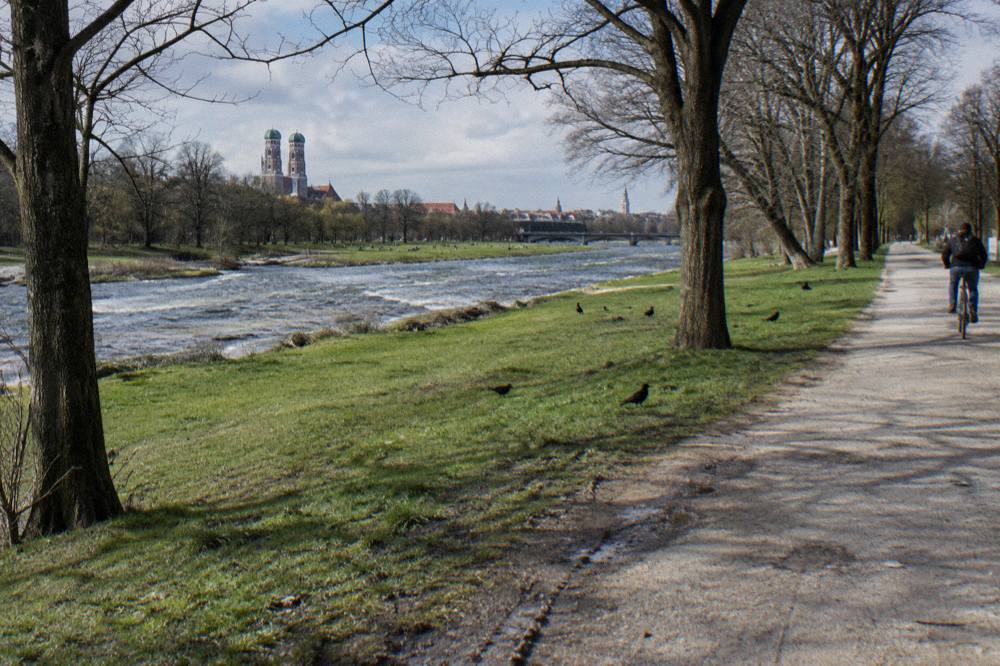
A guided ride is the easiest way to see the park without route-planning, and several options fit it into a wider city loop:
Still deciding between doing it yourself and joining a group? The guide on whether to rent a bike or take a guided tour covers the trade-offs in detail, including where the English Garden sits in each approach.
Where Are You Allowed To Cycle Inside The Park?
Cycling is permitted on the park's path network, which the city describes as roughly 78 km of paths for cyclists and joggers, but not everywhere at all times. The busiest central zones around the Eisbach wave and the beer garden areas fill with pedestrians, and the sensible, expected behaviour is to slow to walking pace and yield. Grass areas, the stream banks and the meadows themselves are not cycle paths.
The park is a protected garden monument and landscape protection area, which is why the rules lean toward preservation rather than prohibition. There is no fence, no ticket and no fixed opening hours to plan around; the city's official English Garden page states the park is open year-round with free entry and that dogs are allowed but must be kept on a leash. Barbecues, open fires and camping are prohibited, and swimming in the Eisbach is expressly forbidden because it is life-threatening. The rules shift again once you head into town for the festival, and the full list of Oktoberfest restrictions explains which beer garden habits do not carry over to the tents.
For a cyclist, the practical reading is this. The tarmac and gravel paths are the shared arteries of the park, and the city's own suggested English Garden ride, published on the official tourism site, starts at Marienplatz, follows the Isar downstream and then loops through the garden to the Aumeister and back, around 15 km and roughly two hours. That route is the template most guided city rides borrow from, and it is a good reality check: the garden is not a circuit you lap in ten minutes, it is a corridor you ride up and back.
| Zone of the park | What to expect on a bike | Best suited for |
|---|---|---|
| South end (Hofgarten to Eisbach wave) | Heavy pedestrian traffic, surf spectators, narrow sections | Slow sightseeing, walking pace |
| Middle (Chinese Tower to Seehaus) | Busy but rideable, beer garden stops, lake paths | A break with a brake |
| North (above the Kleinhesseloher See) | Quieter, wooded, long straight paths | Actual riding, covering distance |
| Aumeister end | Forest edge, links to the Isar paths | Loop extensions |
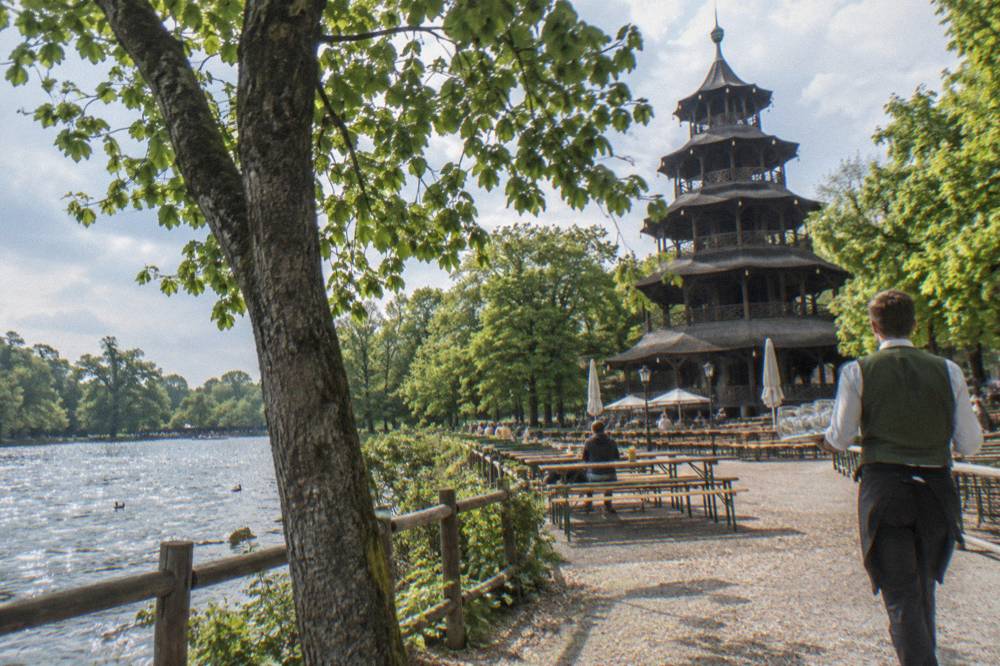
The Chinese Tower, a 25 m wooden structure built to an 1789 design with the beer garden at its foot, is the natural halfway marker on any northbound ride. Its beer garden, one of the largest in the city, opens in dry warm weather from 11:00 on weekdays and 10:00 at weekends, with only a kiosk running in cold or uncertain weather, per the operator's own page. Bring-your-own-food is a genuine Munich beer garden tradition in true beer gardens, so a bakery stop before the ride is not a hack, it is the local way.
If you would rather hand the route to someone who rides it weekly, the guided option that pairs the park with two of Munich's other big green landmarks is worth a look:
Which Rules Actually Apply To Cyclists There?
German road traffic law applies inside the park, plus park-specific house rules: mutual consideration is the basic legal duty, bikes may ride side by side only when not obstructing others, and children up to 8 must, and up to 10 may, use pavements. The park bans open fires and barbecues and requires dogs to be leashed; where signage gives direction, the posted signs govern. None of it singles cyclists out for special restriction.
The legal basis is worth a sentence because it explains the atmosphere. Section 1 of the German Road Traffic Ordinance sets out constant caution and mutual consideration as the underlying rule for everyone on paths and roads, and section 2 allows bikes to ride abreast only where traffic is not obstructed. Compulsory cycle-path use exists in German law only where the specific blue signs order it; on a shared park path with no such sign, you are simply a vehicle among people, expected to behave accordingly. For the road-law side, see the cycling rules for visitors in Munich guide, which covers lighting requirements under StVZO section 67 if you plan to ride after dark.
Park-side, the published rules from the city are about protecting the landscape: no barbecues or open fires, no camping, no swimming in the Eisbach, dogs on leashes, and no unnecessary walking on meadows or in woods. Nothing in that list prohibits bicycles. The natural sections of the park's stream corridor and the designated nude sunbathing zones, the Schoenfeldwiese behind the Haus der Kunst and the Schwabinger Bucht further north, are simply passed through, not avoided; they are marked and ordinary parts of the park.
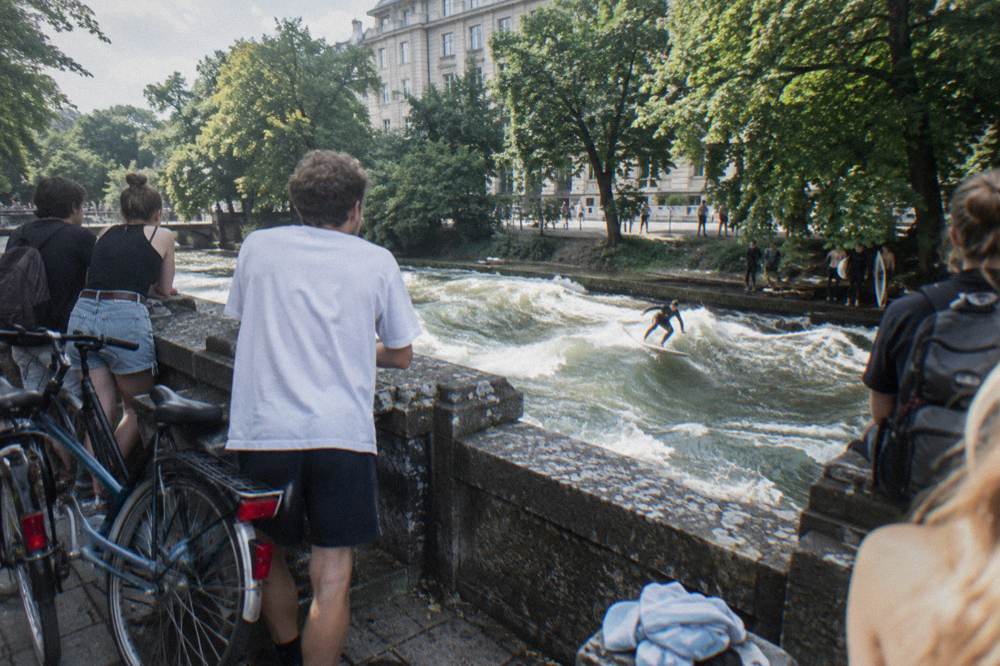
The one place where signage genuinely governs is the Eisbach wave itself. The city permits surfing again under an amended general decree: a self-releasing leash is mandatory, surfing is banned from 22:00, and surfers must follow the posted signs. Cyclists are spectators here, and the bridge over the wave at Prinzregentenstrasse is one of the most reliable people-watching stops in Munich. For the full story of the wave and its closures, see the Eisbach wave and surfers.
One genuinely useful piece of German cycling law for the park approach ride: children up to 8 years old must use the pavement, and children up to 10 may. Families riding in with small kids should plan on pavement riding near the centre, then the park paths, which is why the question of a Munich bike tour with kids has its own considerations. The park's own traffic, prams, dogs on long leads and unpredictable toddlers, rewards a bell and a slow approach anywhere south of the Kleinhesseloher See.
How Far Can You Ride, And Where Do The Paths Lead?
The park's internal network is around 78 km of paths, and its long axis runs several kilometres from the Hofgarten to the Aumeister, so a full north-south ride and back is a genuine half-day outing on foot but a comfortable couple of hours by bike. At the northern end the park connects into the Isar river paths, which is where most riders extend the loop southward again toward the city.
The official English Garden bike tour published by Munich's tourism office describes the canonical shape: start at Marienplatz, follow the Isar downstream, enter the garden, ride to the Aumeister, return through the park. It lists about 15 km and roughly two hours. That is a self-guided template anyone with a rental bike and a map can follow, and it is also, broadly, the spine that guided city rides trace when they cut through the garden with a stop or two. Compare all 18 Munich bike tours on Bike Tours Munich.
The network around the park deserves mention too. Munich's signed cycling network, the Radlnetz, totals 1,200 km of routes, including the Isar corridor that brackets the garden's eastern edge, per the city's cycling-network pages. The practical consequence for a visitor is that the English Garden is rarely ridden in isolation; it is the green middle of a loop that usually touches the Isar embankments, the Deutsches Museum reach of the river, or the Lehel district streets on the way back into town.
For riders who want the park plus more of the city in one guided outing, a half-day loop with a local guide is the common format:
Riders who prefer to keep it self-guided will find the park forgiving. It is essentially flat, the surfaces are a mix of tarmac and compacted gravel, and getting lost is difficult because the park is bounded by the Isar on one side and by streets on the other. The route guide for the English Garden by bike breaks the loop down stop by stop, including where the best beer garden pauses fall on the northern half.
Do You Need Your Own Bike To Ride There?
No. Rental bikes, the city's MyRadl share bikes and guided-tour bikes all work for the park, and a guided tour supplies the bike as part of the package. MyRadl, the MVV-area share system launched on 7 May 2026 with about 1,000 planned stations, rents classic bikes at 1 euro per 30 minutes with a 9 euro day tariff, and e-bikes at 3 euros per 30 minutes with an 18 euro day tariff.
The share-bike math matters for the park specifically because the garden's distances reward a full-day or half-day hold rather than a quick hop. A MyRadl day tariff at 9 euros for a classic bike compares well against shop rentals, and the system's fixed-station model means you unlock with a QR code at the rear wheel and return the bike at an official station or pay a service fee. The old MVG Rad system ended on 30 September 2025; MyRadl is its successor, and details live in the MVV app or at myradl.de. Compare Munich bike rental prices and pickup options side by side.
Guided tours, by contrast, bundle the bike. The three-destination ride that links the English Garden with the Olympic Park and Nymphenburg Palace states 3 hours on its listing and covers ground that would take a self-guided rider most of a day to plan. Its review pool is still small, fewer than 15 reviews, so there is no honest rating claim to make here; read the recent reviews on the booking page instead. What the listing does promise on its face is the pairing of three of Munich's biggest green spaces in a single outing, exactly what the tour title promises. Before committing that much of your day to one park, the look at whether the English Garden is worth visiting covers the free entry, seasonal quirks, and what a guided ride adds.
The small-group alternative is the other common format:
One planning note for any option: the Olympic Stadium itself has been closed to visitors since September 2025 for a renovation expected to last two to three years, though the Olympic Park grounds and the Olympiaberg viewpoint remain accessible, per the park's official pages. A tour that includes the Olympic Park still delivers the park and its landscape; just do not expect to walk into the stadium.
When Is The Best Time Of Day To Ride The Garden?
Early morning and late afternoon are the calm windows. The southern half is busiest through the middle of the day, especially on weekends and in summer, while the northern half stays comparatively quiet at nearly all hours. Seasonally, the park is open year-round, and Munich's July climate averages a high of roughly 24 to 25 degrees, while January averages a high of only 2 to 4 degrees.
The morning case is strong. The Eisbach surfers are an early fixture, the beer gardens open around midday, and the meadows fill by early afternoon on warm days. A rider starting from the centre at 9:00 can be at the Chinese Tower before the paths crowd, pause at a beer garden as it opens, and be back in the Altstadt by early afternoon. Riders joining the 11:30-departure city rides, a common slot in Munich, reach the garden right as it peaks, which is fine at riding pace and slow near the wave.
Seasons change the character rather than the permission. The park is open in winter, the city clears bike paths from around 3 cm of snowfall, and winter riding guidance from the German cycling club ADFC notes no winter-tyre obligation for bikes and that cyclists may use the road if a signed bike path is uncleared. Rain is the real variable for tours: operators generally run in wet weather, providing rain gear or offering rescheduling, so a light jacket and a flexible morning go a long way. May is statistically Munich's wettest month at roughly 92 to 108 mm of precipitation on average, worth knowing for spring planning.
Common Questions About Riding A Bike In The English Garden
Can You Ride A Bike In The English Garden?
Yes. The park offers roughly 78 km of shared paths for cyclists and joggers, is open year-round with free entry, and has no blanket cycling ban. Ride the paths, give way to pedestrians in busy sections, and follow posted signs.
Is The English Garden In Munich Worth Visiting?
For most visitors, yes. The park combines the Eisbach surf wave, the Chinese Tower and its beer garden, the Kleinhesseloher See and long wooded paths in one free space, and it is one of the largest city parks in the world. The companion piece on whether the English Garden is worth visiting weighs both sides.
Can You Cycle From The English Garden To The Isar?
Yes, easily. The park's eastern edge meets the Isar river paths, and the official city bike tour template follows the Isar downstream from the centre before looping back through the garden, about 15 km in total.
Are There Bike Paths In The English Garden?
The park has a network of around 78 km of paths shared by cyclists and joggers rather than dedicated, separated bike lanes. Cycling is permitted on the path network; the meadows and stream banks are not for riding.
Can You Watch The Eisbach Surfers From A Bike?
Yes, the wave sits just inside the park's southern edge at Prinzregentenstrasse, and the bridge above it is the classic viewing spot. Surfing is permitted again under the city's amended decree, with a mandatory self-releasing leash and a ban from 22:00.