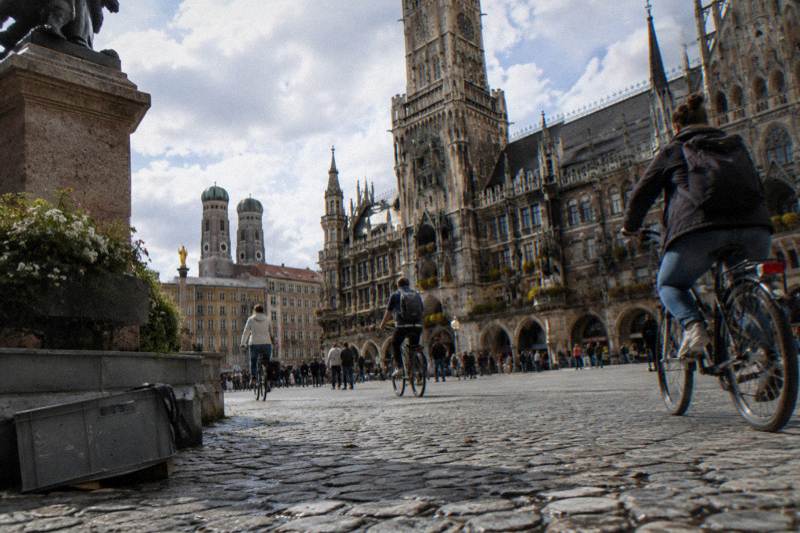
What Is Not Allowed At Oktoberfest?
The honest list of Oktoberfest prohibitions and limits: what the official festival information covers, which beer garden rules do not carry over to the tents, and where a bike fits into the visit.
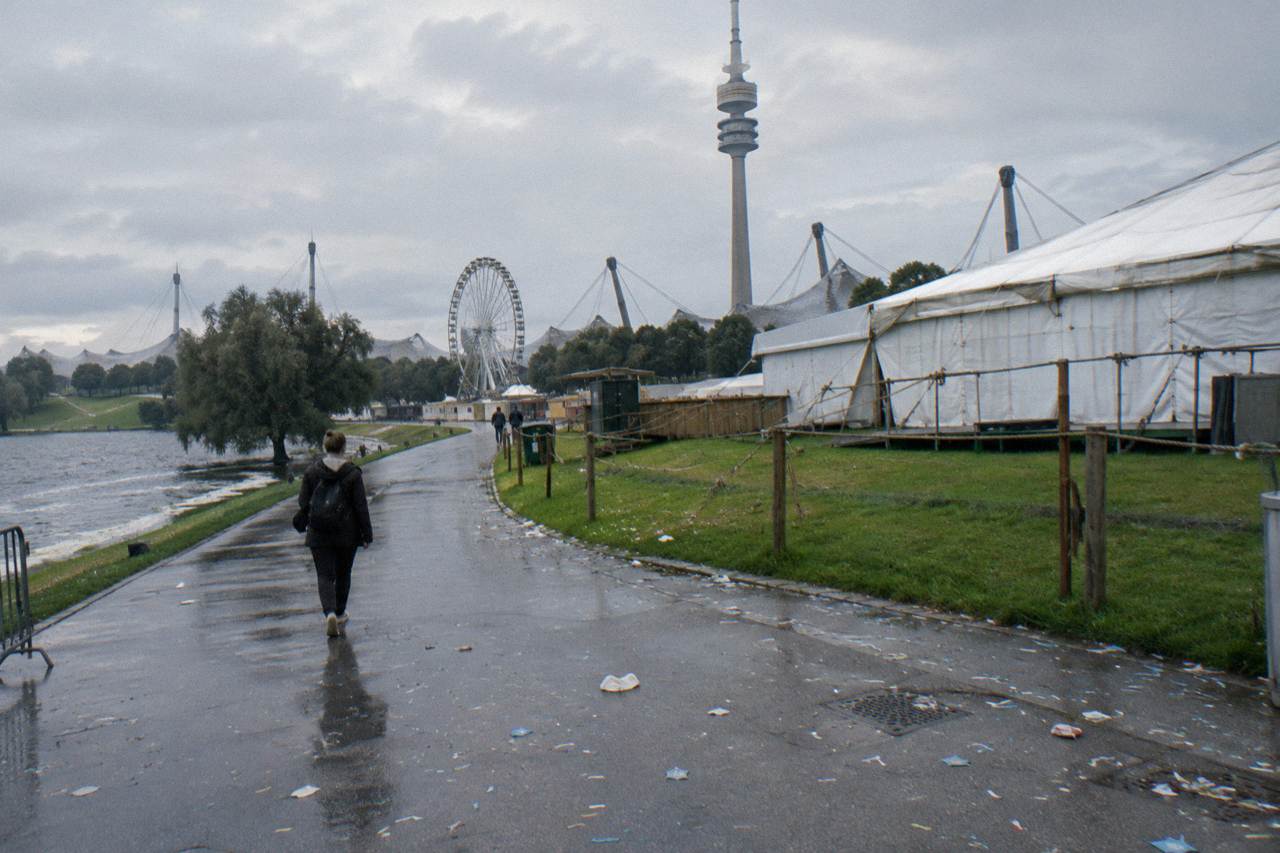
The festival's official information centres on hours and order rather than a long list of bans: the 191st Oktoberfest ran 19 September to 4 October 2026 on the Theresienwiese, and its published rules govern tent behaviour, closing times and entry practice rather than obscure prohibitions. Anything beyond that, from bag policies to dress code questions, is best confirmed directly on the festival's official site before you travel. The 2026 edition drew approximately 7.4 million guests, including 447,000 at the Oide Wiesn heritage section, per the festival's preliminary final report. Crowds on that scale mean the rules that exist are enforced seriously, and the ones that matter most are the ones people assume away.
Visitors often mix up three different rulebooks. The first is the festival's own tent and ground rules. The second is the everyday Bavarian beer garden customs. The third is Munich's citywide public rules, covering everything from pedestrian zones to the Isar. They overlap far less than people expect, and treating one as the others is the fastest way to be turned away at a tent door, or worse, to end up arguing with security at midnight over a backpack nobody said you could not bring.
Here is how each set of rules works in practice, and where a bike fits into an Oktoberfest trip., which is a lighter connection than you might think. The festival is not a cycling event, and nothing here suggests riding through it. But the city around the Wiesn is one of Germany's most bikeable, and the days before or after a festival visit are when a guided ride earns its keep.
If a guided ride in the days around your festival visit sounds useful, these three city options are the natural pairing:
Do Beer Garden Rules Apply Inside The Festival Tents?
No, and the difference matters. In a true Munich beer garden you may bring your own food, your Brotzeit, to eat alongside beer you buy on site, a custom muenchen.de states plainly for proper beer gardens. Inside the Oktoberfest tents that arrangement does not exist: the tents are festival businesses with seated service, and bringing your own food or drink in is not part of how they operate. The beer garden tradition traces back to a royal decree of 1812, and the city's own guidance presents the bring-your-own-food rule as the defining trait of an "echter Biergarten", a real beer garden. The Wiesn tents are a different animal entirely. They are temporary festival halls, staffed and catered, with beer served by the Maß, the standard one-litre mug used across Munich's beer gardens and festival tents alike.
A useful way to hold the distinction in your head: the beer garden is a park with beer, the tent is a restaurant under canvas. Restaurant norms, not park norms, apply. You would not carry a picnic into a restaurant, and the tents work the same way. Reservations, table sharing with strangers at busy times, and the rhythm of a seated meal all follow the restaurant logic rather than the loose, self-service openness of a garden.
Our Bike Tours Munich guide to Munich beer gardens by bike covers the garden side in depth. That world includes the Chinese Tower garden at the foot of the 25 m tower in the English Garden, with roughly 7,000 seats and weather-dependent opening: Monday to Friday from 11:00 and weekends from 10:00 in good conditions, with only a kiosk in uncertain weather. Hirschgarten is the largest of them all at about 8,000 seats, typically opening around 11:30 in good weather. At that scale the gardens feel like public parks that happen to serve beer, which is exactly why their rules differ from the tents.
| Question | True beer garden | Oktoberfest tent |
|---|---|---|
| Bring your own food (Brotzeit) | Allowed, official custom per muenchen.de | Not part of tent service |
| Buy beer by the Maß | Yes, one-litre standard | Yes, one-litre standard |
| Seating | Self-service benches, often unreserved | Reserved tables and seated service |
| Weather dependency | Gardens open at "Biergarten weather" | Festival runs on fixed dates |
Beer prices also live in different worlds. The Oktoberfest 2026 tent price range was 14.80 to 15.90 euros per Maß, and those festival prices apply only to the tents on the Theresienwiese, not to the city's standing beer gardens. Current garden prices are not published on the preferred official pages, so check each venue before assuming parity. What is certain is that festival pricing is its own tier, a fact worth knowing before you budget a full evening of tent visits.
Should a city ride with a beer garden stop appeal for the days around your festival visit, the 4-hour Munich: Bike Tour with Beer Garden Break pairs central sights with a proper garden stop, and the full tour page lists what the four hours include. The per-person price is on the operator's booking page.
When Is The Festival Closed And When Do Tents Shut?
The festival exists only on its published dates: the 191st Oktoberfest ran 19 September to 4 October 2026, and the 192nd runs 18 September to 3 October 2027, both on the Theresienwiese. Outside those windows there is no festival to be banned from, and inside them the tents follow posted closing hours that the official site publishes each year, with last calls well before the grounds empty. The 2026 edition is already over, so everything practical on this page points either at your memories of it or at planning for 2027. Anyone holding a hotel booking for mid-September 2027 should check the dates against the official calendar rather than assuming the festival lands the same weekends each year, because it does not.
Tent hours are published on the festival's official opening-hours page, oktoberfest.de, and that page is the source to trust for the exact serving times in a given year. The preliminary final report for 2026, roughly 7.4 million guests, is also on the official site. Both documents are primary sources, which matters on this topic: secondhand lists of festival rules age badly and often invent prohibitions the festival never issued.
Two neighbouring events fill the same ground at other times of year and have their own rules. The 60th Frühlingsfest spring festival ran 17 April to 10 May 2026, extended by a week for its anniversary, with beer tents open Monday to Thursday and Sunday from 11:00 to 23:00 and adjusted weekend hours. The Tollwood Winter Festival runs 24 November to 23 December 2026 with free market access and a New Year's Eve party on 31 December. Neither is Oktoberfest, and neither inherits the tent system, so do not carry festival expectations to either.
Can You Swim In The Isar When The Festival Is On?
Swimming in the Isar is allowed only in seven designated sections, is always at your own risk, and is prohibited outright when the water level at the Munich measuring point exceeds 1.20 m, per the city's official guidance. The Eisbach in the English Garden is a separate matter: swimming there is prohibited, full stop. September visitors escaping the tents for the river need to know both rules, because the Isar in late summer looks inviting in a way the regulation language does not.
The designated sections, including the stretch from Großhesseloher Brücke to the Braunauer Eisenbahnbrücke on both banks, are mapped in the city's Isar app, and the level readings come from the Bavarian Flood Information Service. Exceptions around weirs and bridges are listed with the sections, so a glance at the map saves a dangerous guess. Typical summer water temperature sits between 14 and 22 C, cold enough to matter even on a warm festival afternoon, with a maximum of 22.4 C recorded since 2011. There is no official EU bathing-water monitoring, which is part of why the "own risk" wording is so emphatic on the city's Isar page.
The Eisbach wave nearby reopened to surfers on 8 May 2026 under an amended general decree from Lord Mayor Dominik Krause: a self-releasing leash is mandatory, surfing is banned from 22:00, and posted signs govern the rest. Spectating from the bank costs nothing, and watching surfers hold a standing wave in the middle of a city is one of Munich's better free half hours. The Eisbach wave and surfers guide covers the full story of the closure and reopening.
Can You Arrive At Oktoberfest By Bike?
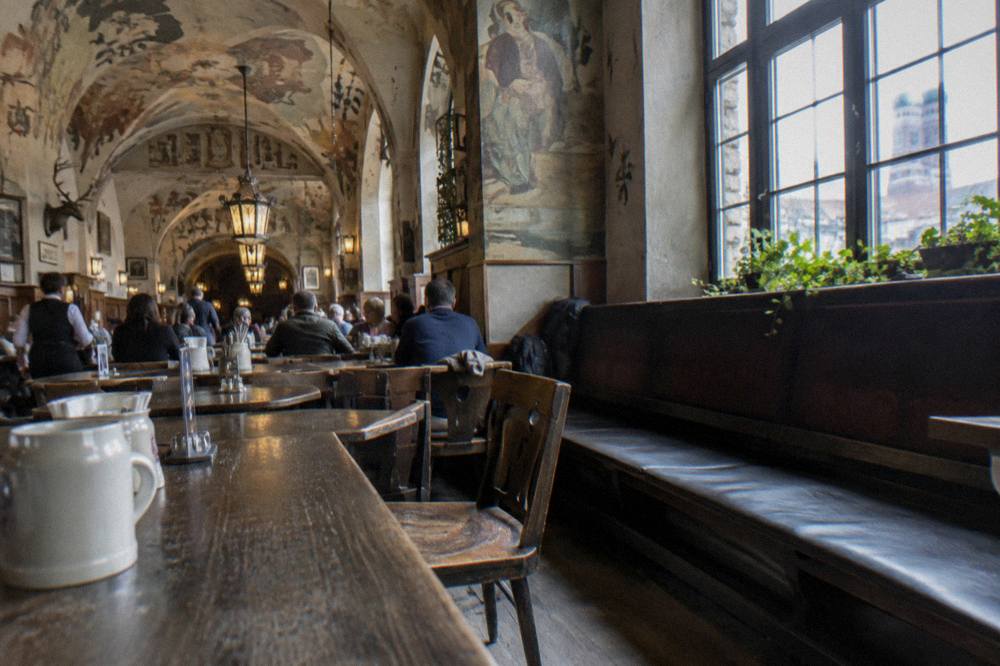
You can cycle to the festival area, and plenty of locals do, but Munich's standard cycling rules apply the whole way and the festival grounds themselves are pedestrian territory. Bikes belong at racks and parking outside the Wiesn, not ridden between the tents, and normal traffic law, including the rules on pedestrian zones, governs the streets around it. Munich is Germany's leading cycling city by modal share, 21 percent of daily trips, and the city's signed route network totals 1,200 km across 14 radial routes from Marienplatz plus inner and outer rings, so reaching the Theresienwiese on two wheels is routine for residents.
A few law points from the official record are worth knowing before you set off. Cycling is generally prohibited in pedestrian zones, permitted only where a sign allows it and then at walking pace with pedestrians having priority; in the Altstadt pedestrian zone and Sendlinger Straße, riding is allowed only between 21:00 and 9:00. Bikes may ride side by side only when traffic is not obstructed, and children up to 8 must, and up to 10 may, use pavements. Lights must be type-approved and powered by dynamo, battery or rechargeable store, with detachable lamps allowed under conditions set out in the equipment rules. The city's 103 bicycle streets, totalling 47 km, give bikes priority with a 30 km/h cap for everyone, and the minimum overtaking distance is 1.5 m. The full picture is in the cycling rules for visitors guide.
Parking has improved markedly. A free, video-surveilled 24-hour bike garage opened in January 2026 in the Hirtenstraße near the Hauptbahnhof, with a larger facility of more than 300 spaces planned for 2027, so locking up before walking to the Wiesn is easier than it has been in years.
If you would rather have a guide handle the city half of the day, a 3.5-hour shared ride such as Munich: 3-Hour Guided Bike Tour covers the standard sights with a guide's commentary; the per-person price and meeting details are on the booking page.
For a morning format before an afternoon in the tents, the Munich Classic Bike Tour at 11.30am with surfers and a beer garden stop runs 3 to 4 hours and has the review base to back it up; the shared per-person rate is on its booking page.
The deeper question of whether a guided ride beats renting is covered in a comparison of renting versus guided touring in Munich, and the seasonal angles, including weather, sit in the best time for a Munich ride guide.
What Should You Confirm On The Official Site Before You Go?
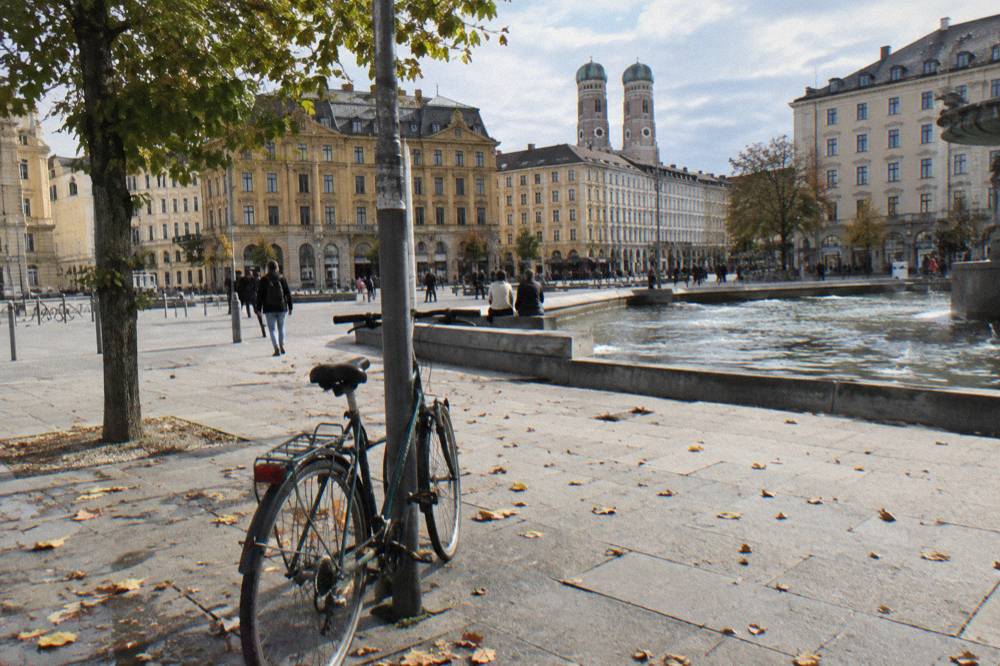
Confirm three things on the official festival site for your specific year: the exact tent opening and closing hours, any bag or entry policy in force that season, and the current tent beer prices. None of these are fixed across years, and none are reliably published anywhere else first. Bag size limits change from year to year, so check the official Oktoberfest site before you travel and treat older centimetre figures you see online with caution. The same caution applies to dress code questions: traditional dress is worn widely but is not a requirement stated in the official material cited here, and nobody official is turning people away for jeans.
What is certain is that the festival dates shift the whole city's rhythm. Hotel areas fill, the where to stay in Munich question answers differently in late September than in any other month, and the transit system runs at its annual peak. Rain is another honest unknown: how tours handle weather is covered in what happens to Munich rides in the rain, and September evenings can turn cool even after a warm afternoon.
One thing you can plan around with confidence is the city's winter service, should your 2027 visit run long: Munich clears bike paths from 3 cm of snow, with about 155 km of winter routes cleared within two hours, so late-season cycling keeps functioning even when the weather turns.
What Can You Do Around The Festival Without Breaking Rules?
Plenty: the English Garden is free and open year round across 376 hectares, the Viktualienmarkt operates on its regulated stall hours, and the city's museums run their normal schedules, so the festival is one layer of Munich rather than the whole of it. The English Garden's own rules are short and worth knowing: dogs must be leashed, barbecues and open fires are prohibited, camping is prohibited, swimming in the Eisbach is prohibited, and the park's 78 km of paths are shared with joggers. Nude sunbathing is permitted in two designated zones, the Schönfeldwiese and the Schwabinger Bucht, and nowhere else in the park.
The NS-Dokumentationszentrum, the city's documentation centre for the National Socialist period, is free to enter, open Tuesday to Sunday 10:00 to 19:00, with a free English-language tour of the permanent exhibition every Sunday at 13:00 and no registration needed. It is a sober, worthwhile counterweight to a festival weekend. Viktualienmarkt's stalls follow minimum selling hours set by market regulations, roughly 10:00 to 18:00 weekdays in the summer half of the year, closing Sundays, with individual stalls free to set their own hours within that frame.
None of this requires a festival ticket or a tent reservation, and all of it sits within easy cycling distance, which is where the city's bicycle streets and the Isar riverside paths make moving between sights genuinely pleasant. For a wider itinerary built around two wheels, the three days in Munich with a bike plan and the free things to do in Munich guide both hold up well in September.
Common Questions About Oktoberfest Rules
What Is Not Allowed At Oktoberfest?
The official festival information governs tent behaviour, closing hours and entry practice; everyday questions such as bag sizes and dress codes should be confirmed on the official festival site, since no specific dimensions or dress requirements appear in the official sources cited here.
What Is Not Allowed In Oktoberfest?
Bringing your own food or drink into the tents is not part of how they operate, the beer garden bring-your-own-Brotzeit custom does not apply inside them, and the tents close at posted hours published each year on the official site.
What Is Not Allowed In Oktoberfest
The same core limits apply: no self-catered food or drink in the tents, no entry outside the festival dates, and swimming prohibitions on the Isar above a 1.20 m water level and in the Eisbach at any time.
What Is Not Allowed At Oktoberfest
Outside the tents, ordinary Munich rules govern everything around the Wiesn: cycling is not permitted in pedestrian zones except where signed, and the festival grounds themselves are walked, not ridden.
Can You Bring Your Own Beer To Oktoberfest?
No. The tents serve beer by the one-litre Maß, at festival prices of 14.80 to 15.90 euros in 2026, and the beer garden custom of bringing your own food to eat with purchased beer applies to true beer gardens, not to the festival tents.
When Does Oktoberfest 2027 Run?
The 192nd Oktoberfest runs 18 September to 3 October 2027 on the Theresienwiese, per muenchen.de and the official festival site.
If the city half of the trip needs a plan, these three rides are the natural fit around a festival visit: