Is The English Garden In Munich Worth Visiting?
A grounded answer to whether Munich's English Garden is worth your time, with park facts, free-entry details, seasonal notes, and how a guided bike ride fits in.
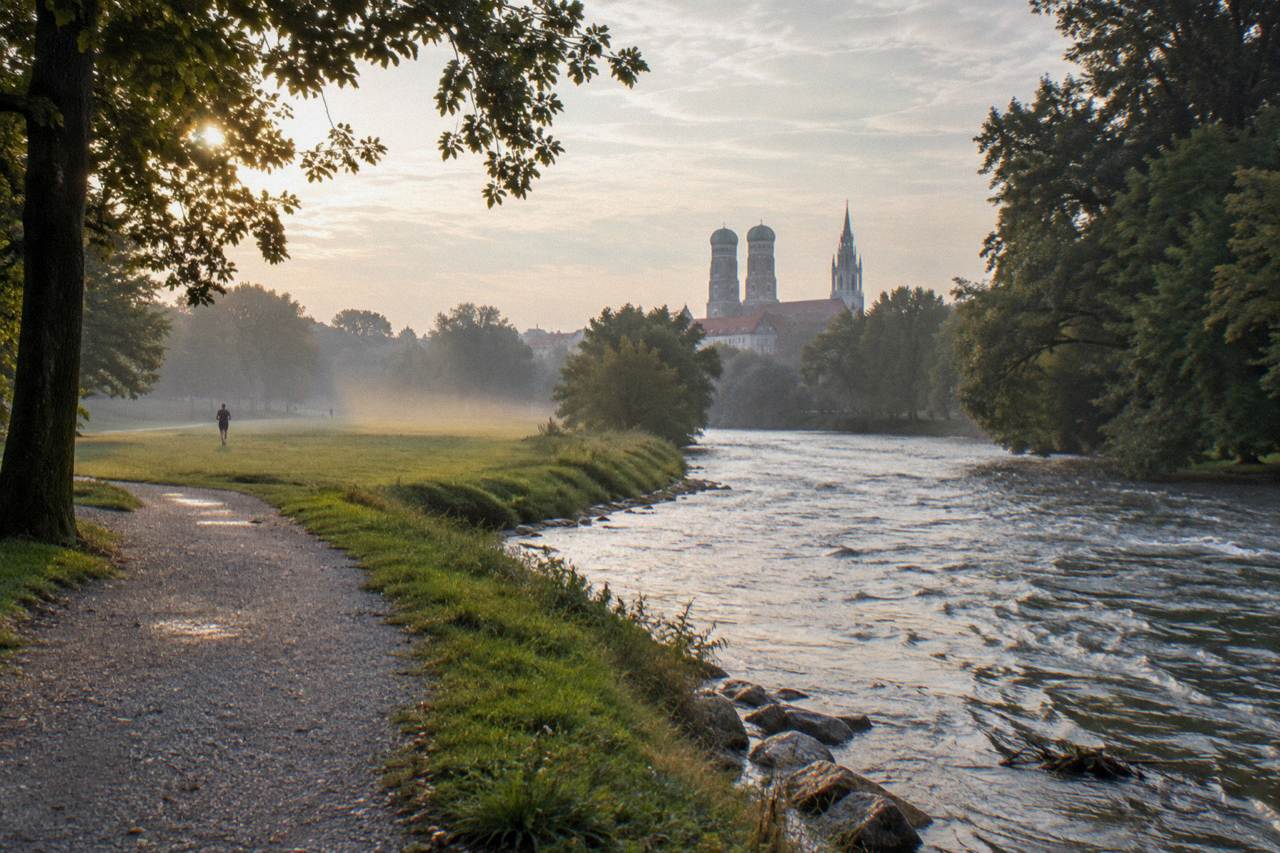
Yes, for most visitors the English Garden is worth visiting, and the reasons are concrete rather than sentimental. It is free, open year-round, covers 376 hectares, and stacks several genuinely distinct experiences, a river with a standing surf wave, a 25 m Chinese Tower with a roughly 7,000-seat beer garden at its foot, and 78 km of paths reported across the park, into one walkable or rideable space.
That is the short version. The longer version depends on what kind of visit you want, because the garden rewards two very different approaches. On foot from Marienplatz or the university district, you get the southern half: the Eisbach wave, the Kleinhesseloher See with the Seehaus beer garden, and the Chinese Tower. By bike, the park opens up completely, and the official city tourism route from Marienplatz, roughly 15 km and about two hours, follows the Isar downstream and then threads the garden north toward Aumeister before looping back.
The park's own history matters to why it feels the way it does. The Chinese Tower area follows a design of 1789, which makes this one of the oldest large landscape parks on the continent, older than most of the buildings tourists photograph in the city centre. It was laid out as a public ground from the start, not a palace garden later opened to visitors, and that shows in the sheer amount of ordinary Munich life moving through it: joggers, cyclists, nudists in the designated zones, families, surfers.
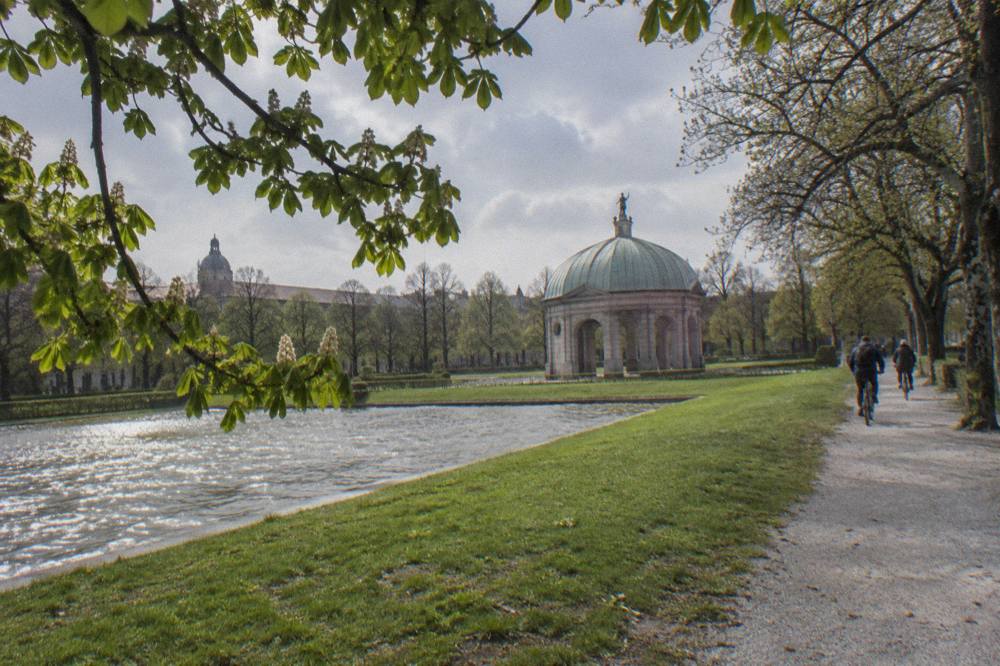
If you are deciding how to fit the garden into a short trip, the honest framing is this: walking it takes half a day and covers the southern third well; riding it takes two to three hours and covers the whole thing, including the quieter northern half most visitors never see. A shared guided ride such as the garden, Olympic Park and Nymphenburg route bundles three major sights into a three-hour loop, which suits a first visit with limited time. To see how the garden slots into the rest of your itinerary, read how many days you actually need in Munich, which builds a realistic plan around real opening hours and tour lengths.
What Do You Actually See In The English Garden?
The park's headline sights, in rough south-to-north order, are the Eisbach surf wave at the southern edge, the Schönfeldwiese and Schwabinger Bucht designated nude-sunbathing zones, the Kleinhesseloher See lake with the Seehaus beer garden, the 25 m Chinese Tower with its beer garden, and the Aumeister area at the northern end. All of it is free to enter, and the park is open year-round.
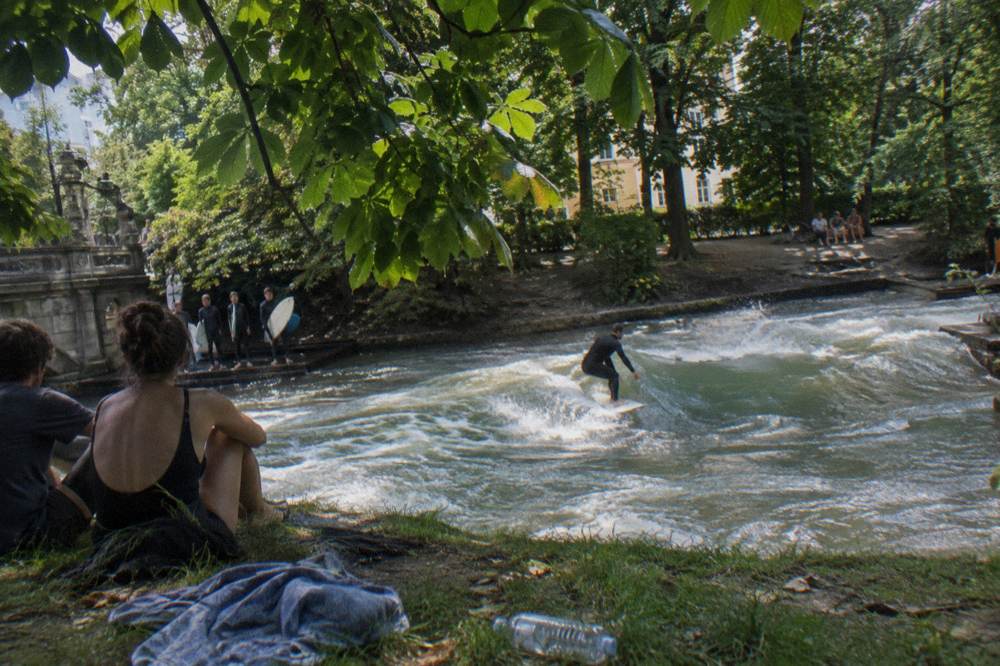
The Eisbach wave is the sight most people did not expect from Munich. Surfing on the small river that bounds the park's south-west edge is allowed again under an amended general decree of Lord Mayor Dominik Krause, with a mandatory self-releasing leash and a surfing ban from 22:00; surfers follow the posted signs at the bank. Watching from the bridge or the bank costs nothing and, on a warm day, the crowd there is its own attraction. Swimming in the Eisbach itself is prohibited and the park authorities describe it as dangerous, so the wave is for watching unless you are one of the surfers. Our dedicated page on the Eisbach wave and its surfers goes deeper.
The two nude-sunbathing zones are official and mapped, not folklore: the Schönfeldwiese behind the Haus der Kunst, and the Schwabinger Bucht in the northern part of the park. You will not stumble into them accidentally with your eyes closed, but you should know they exist before taking children on a meadow route.
Further north, the Kleinhesseloher See is a small lake with the Seehaus beer garden on its shore, open daily from 12:00 on weekdays and 11:30 on weekends and holidays, though hours are the operator's to change and the kitchen keeps separate times. The Chinese Tower, a 25 m wooden structure to a 1789 design, stands nearby with the second-largest beer garden in the city at its foot, about 7,000 seats, behind only the Hirschgarten's roughly 8,000.
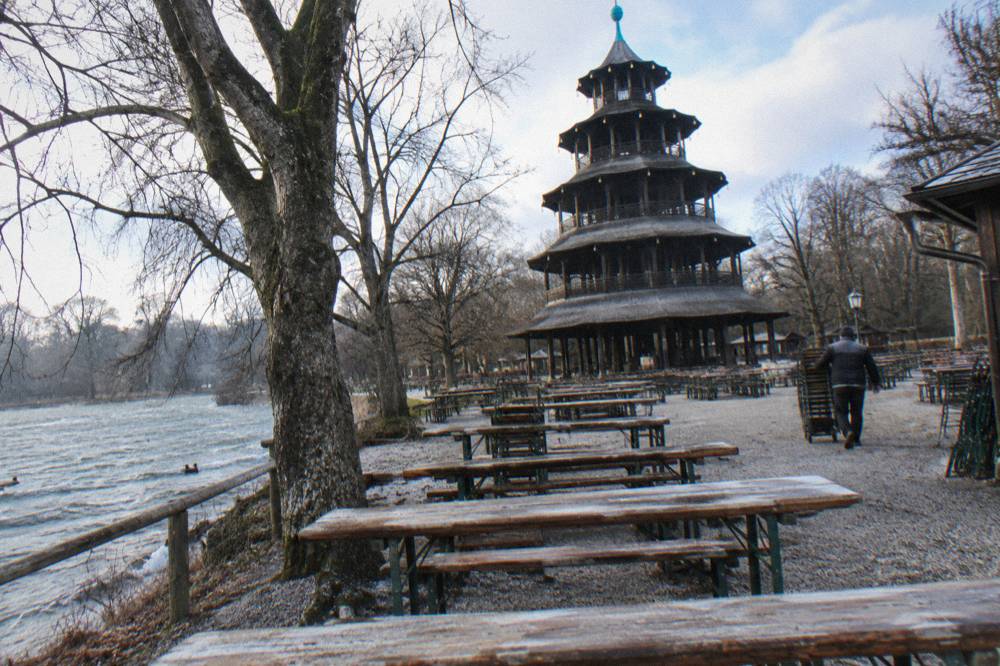
The beer garden at the Chinese Tower runs by weather rather than by a fixed calendar. In proper beer-garden weather the operator opens from 11:00 on weekdays and 10:00 on weekends, and a brass band plays Wednesday from 16:00, Friday from 15:00, Saturday from 14:00 and Sunday from 12:00. In cold or uncertain weather only the kiosk opens, daily from 12:00. One genuinely useful detail: in a true Munich beer garden you may bring your own food, the Brotzeit, and buy only the beer, a tradition the city's own official pages confirm.
How Big Is The English Garden, Really?
The park covers 376 hectares, stretching from the Haus der Kunst at its southern tip to Aumeister in the north, and reports give it about 78 km of paths shared by cyclists and joggers. On foot, centre to north, it is a serious walk; on a bike, the same distance is a relaxed morning, which is the single biggest factor in whether the full garden feels worth it.
Numbers help here. Central Munich's old town would fit into the garden several times over, and the northern half, above the Chinese Tower, is where the park stops feeling like a tourist sight and starts feeling like a forest with meadows. Many visitors turn around at the tower and never see it. That is a defensible choice on a tight schedule, but it means you have seen perhaps a third of the park.
The city's official tourism site documents a garden and Isar loop by bike from Marienplatz of roughly 15 km and about two hours, running down the Isar and back through the garden to Aumeister. There is also a canal-side option west of the park: a route of about 10 km one way from the Olympiapark area along the Nymphenburg-Biedersteiner-Kanal toward Schloss Blutenburg, or 16 km to the Hirschgarten. Both figures come from the city's own route suggestions.
For context on how the garden fits the wider cycling picture, Munich's signed Radlnetz totals 1,200 km, with 14 radial routes starting at Marienplatz plus inner and outer ring routes and green corridors along the Isar and the Nymphenburg canal. The garden sits directly on that web, which is why so many guided rides route through it.
| Park fact | Figure | Note |
|---|---|---|
| Area | 376 hectares | Free entry, open year-round |
| Path network | About 78 km | Shared by cyclists and joggers |
| Chinese Tower | 25 m tall | Design of 1789 |
| Beer garden at the tower | About 7,000 seats | Second-largest in the city |
| Largest beer garden | Hirschgarten, about 8,000 seats | West of the park |
| Official bike loop from Marienplatz | Roughly 15 km, about 2 hours | Isar and garden route |
What Are The Rules You Should Know Before You Go?
The rules that matter most: dogs must be kept on a leash, barbecues, open fires and camping are prohibited, swimming in the Eisbach and the park's waters is prohibited and described as life-threatening, and cycling is allowed on the park's paths. Nude sunbathing is permitted only in the two designated zones. None of this is policed heavily, but all of it is official park policy.
Cycling in the garden is not a grey area. The park's paths are open to riders, and the general park rules apply rather than any special cycling ban. That said, this is a landscape park full of pedestrians, not a race track, and the city's wider traffic rules hold: ride with constant caution and mutual consideration, and only where signs order it is a cycle path's use compulsory. Our guide to cycling rules for visitors in Munich covers the legal detail.
Two practical footnotes. First, the beer-garden tradition of bringing your own food applies in true beer gardens, so a picnic plus a bought beer is a legitimate lunch plan at the Chinese Tower. Second, the park is a state park under the Bavarian palace and garden administration, which is why the rules read like a heritage site's rather than a city square's: no unnecessary walking on meadows, dogs leashed, waste removed.
If you are weighing a visit against other green options in the city, the garden's advantage is scale and variety; the Isar banks just outside it offer the river-and-gravel atmosphere with fewer crowds, and our Isar cycle path guide maps how the two connect.
When Is The Best Time To Visit?
Late spring through early autumn is the comfortable window: beer gardens are running at proper weather, the Eisbach surfers are active, and daylight is long. Munich's warmest month, July, averages a high of about 24 to 25 C and a low of 14 to 15 C, while January, the coldest, averages a high of 2 to 4 C and lows down to around -2 to -5 C. May is the wettest month, with roughly 92 to 108 mm of rain.
Those are long-term averages, not forecasts, but they frame the decision well. The park itself never closes and costs nothing, so a winter walk is entirely reasonable, and the city clears bike paths from 3 cm of snow, with winter routes serviced within about two hours. Beer gardens, though, run on weather: the Chinese Tower's full garden opens in dry, warm conditions and shrinks to a kiosk otherwise.
Event-wise, the seasons around your visit change the city more than the park. Oktoberfest 2026 has already run, from 19 September to 4 October, drawing about 7.4 million guests; the 2027 edition runs 18 September to 3 October. In late November and December the Christkindlmarkt on Marienplatz (20 November to 24 December 2026) and Tollwood on the Theresienwiese (24 November to 23 December 2026) pull the crowds into the centre, which paradoxically leaves the garden quieter than usual for the season.
| Season | What to expect in the garden | Beer garden status |
|---|---|---|
| April to June | Long days, green meadows, surfers at the wave | Weather-dependent opening, May is the wettest month |
| July to September | Warmest period, peak crowds on fine weekends | Full service, brass band days at the tower |
| October to November | Autumn colour, thinning crowds, early dusk | Kiosk-only unless weather holds |
| December to March | Quiet paths, snow scenes, hardy joggers | Kiosk from 12:00; Seehaus hours vary |
How Does A Bike Ride Change The Visit?
A bike turns the garden from a southern-third stroll into a whole-park tour: the official loop is about 15 km and two hours from Marienplatz, and a guided shared ride adds a local guide's commentary plus a beer-garden or sight stop without you planning anything. For visitors with half a day or less, riding is the only realistic way to see the garden's northern half and still do anything else in Munich. Once you're back off the bike, the guide to free things to do around Munich covers plenty of other ways to fill your day without spending anything.
The guided options come in several shapes. The three-hour garden, Olympic Park and Nymphenburg loop is the most sight-dense, pairing the park with the Olympiapark grounds (the stadium interior itself is closed for renovation since September 2025, expected to last two to three years, though the park and Olympiaberg remain accessible) and the Nymphenburg area. A half-day city ride with a local guide, three hours on a classic bike, gives the garden inside a broader city tour. One thing to sort out before booking any of these rides is whether the park itself charges admission, and the English Garden entry costs explained covers exactly what is free inside and what is not.
If you would rather anchor the day around a proper pause, the four-hour ride with a beer-garden break is built exactly for that: the listing describes a stop long enough for a beer and a bite, which in practice usually lands in or beside the garden. Check the booking page for the current price, inclusions and departure point.
Riding independently is equally legitimate. The park's paths are open to all, and the gravel lanes are forgiving even for casual riders, one reason so many of the Munich bike tours you can compare here spend time in the English Garden. If you are unsure whether a guided or self-guided day suits you, our comparison of whether to rent a bike or take a guided tour in Munich lays out the trade-offs.
Common Questions About The English Garden In Munich
Is The English Garden In Munich Worth Visiting?
For most visitors, yes: it is free, open year-round, covers 376 hectares, and combines a surf wave, two beer gardens, a 25 m Chinese Tower and about 78 km of reported paths in one park. Whether it justifies half your day depends on whether you walk the busy southern third or ride the whole thing.
Is The English Garden Free To Enter?
Yes, entry is free and the park is open year-round. Nothing about the grounds costs money; you pay only for beer garden food and drink. See our fuller answer in is the English Garden free.
Can You Ride A Bike In The English Garden?
Yes, cycling is permitted on the park's paths, which are shared with joggers. The official city loop from Marienplatz is about 15 km and two hours, and guided rides route through the park regularly.
Can You Swim In The Eisbach In The English Garden?
Swimming in the Eisbach is prohibited and described as life-threatening. Surfing the standing wave is allowed under the amended decree, with a self-releasing leash required and no surfing from 22:00; most visitors watch from the bank.
How Big Is The English Garden Compared To Other Parks?
It covers 376 hectares, making it larger than most city-centre parks visitors know. Its beer garden at the Chinese Tower seats about 7,000, second in the city only to the Hirschgarten's roughly 8,000.
Are Dogs Allowed In The English Garden?
Yes, but they must be kept on a leash and their waste removed. That rule comes from the official park pages and applies across the whole park.