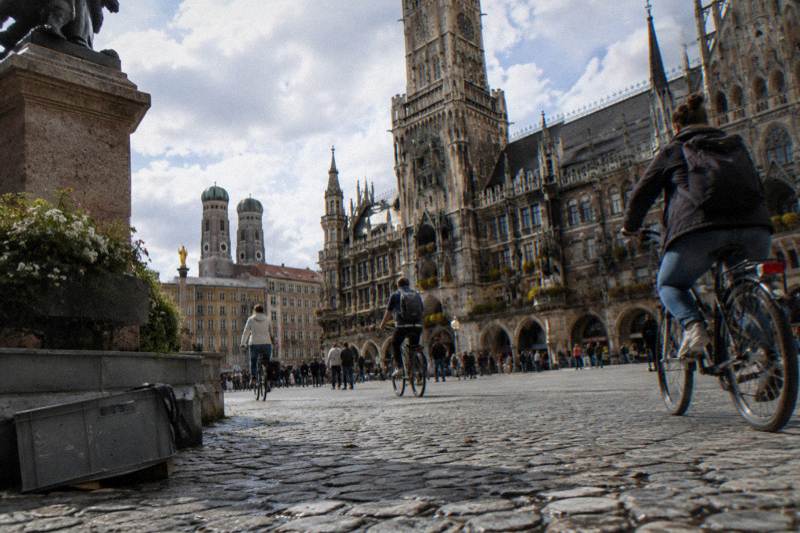
How Many Days In Munich Is Enough?
A practical day-count plan for Munich built around opening hours, tour durations and seasonal facts, with one guided bike ride and one day trip option.
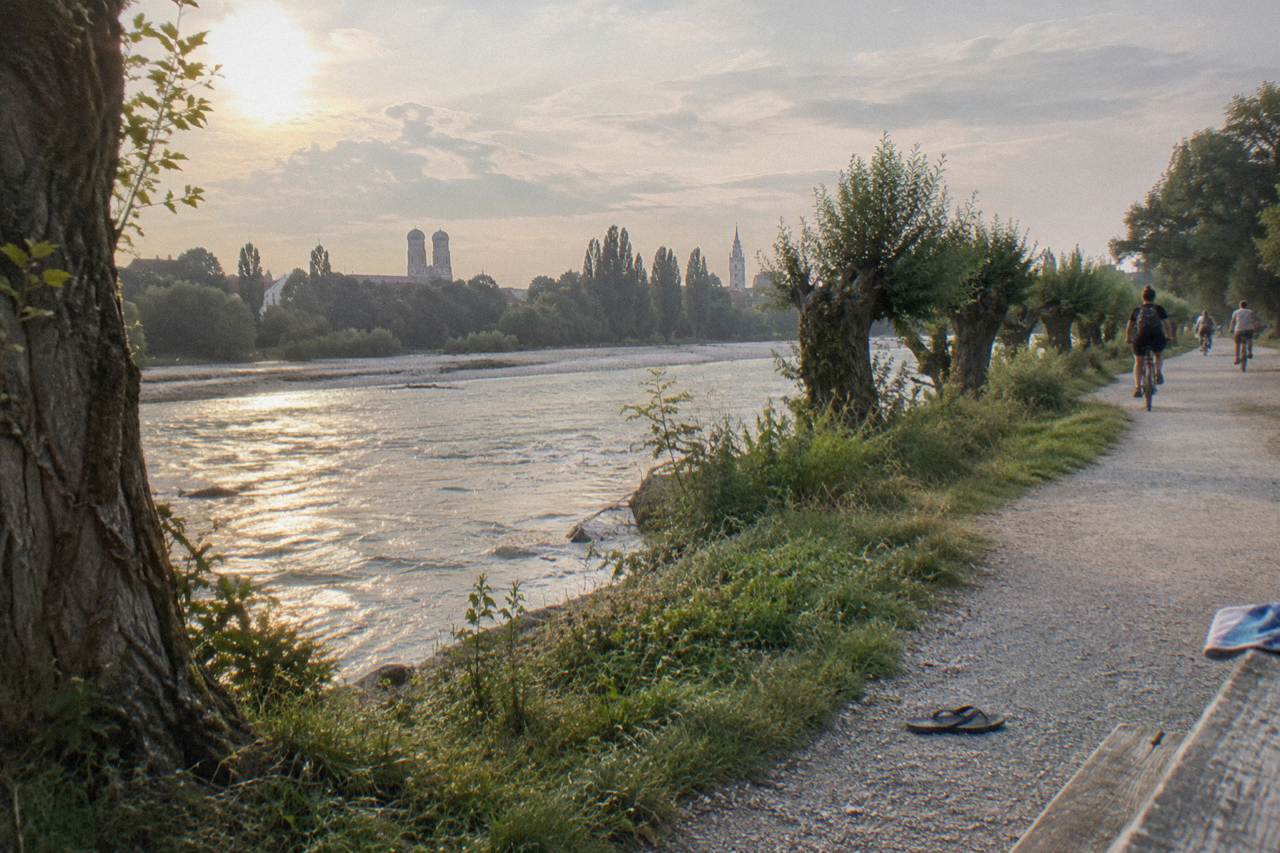
Two days is enough for the core Old Town, the English Garden and one beer garden stop; three days is the comfortable answer because it adds Nymphenburg or Olympiapark and slows the pace; four days buys a full day trip to the lakes or the Dachau Memorial. Anything beyond four is a choice, not a need. The day-by-day plan below fits around Munich's opening hours and tour lengths. If that comfortable middle answer appeals to you, the Munich bike itinerary splits the days across a guided ride, museum time and a cycling day trip.
Munich rewards walkers and punishes rushed ones. The Altstadt is compact, but the places people actually cross the city for, the English Garden, Nymphenburg, Olympiapark, sit at the edges, and that travel time is what eats a short visit. A bike collapses those distances, which is why this plan leans on two wheels for the spreading parts and feet for the medieval core.
Opening hours for each venue are listed below. The Marienplatz Christkindlmarkt, for example, runs 20 November to 24 December 2026, Monday to Saturday 10:00 to 21:00, so a December visitor can plan an evening market stop with confidence. The Viktualienmarkt sets minimum selling hours of 10:00 to 18:00 Monday to Friday from April to October, 10:00 to 17:00 in winter, and 10:00 to 15:00 on Saturdays year-round, with most stalls closed Sundays. Anchor your mornings on those windows rather than on guesswork.
A practical first move on day one is a guided ride that stitches the centre together. The Munich 3-Hour Guided Bike Tour runs 3.5 hours and is a shared city ride, and its pacing does the work of a half-day of solo navigation. Pair it with an afternoon on foot and an evening beer garden and day one is genuinely full. Check availability.
Two related reads help with the mechanics: renting versus taking a guided tour settles the bike question before day one, and what a guided ride actually covers sets expectations for the route. Plan your Munich days around the wheels, not the other way round: Bike Tours Munich has rides to match any length of stay.
What Can You Realistically See In One Day?
One day covers the Marienplatz core, the Viktualienmarkt in its opening hours, the Eisbach wave from the bank, and a loop into the southern English Garden, and that is genuinely the limit. The Altstadt pedestrian zone is walkable in a morning; the garden is not, at 376 hectares with 78 km of paths. A bike or the S-Bahn bridges that gap, but neither removes the time cost of the palace districts further out. If you plan to grab lunch at the market before pedaling into the garden, the guide to what to eat at Viktualienmarkt and when to go covers stall picks, the best timing, and where to lock up a bike.
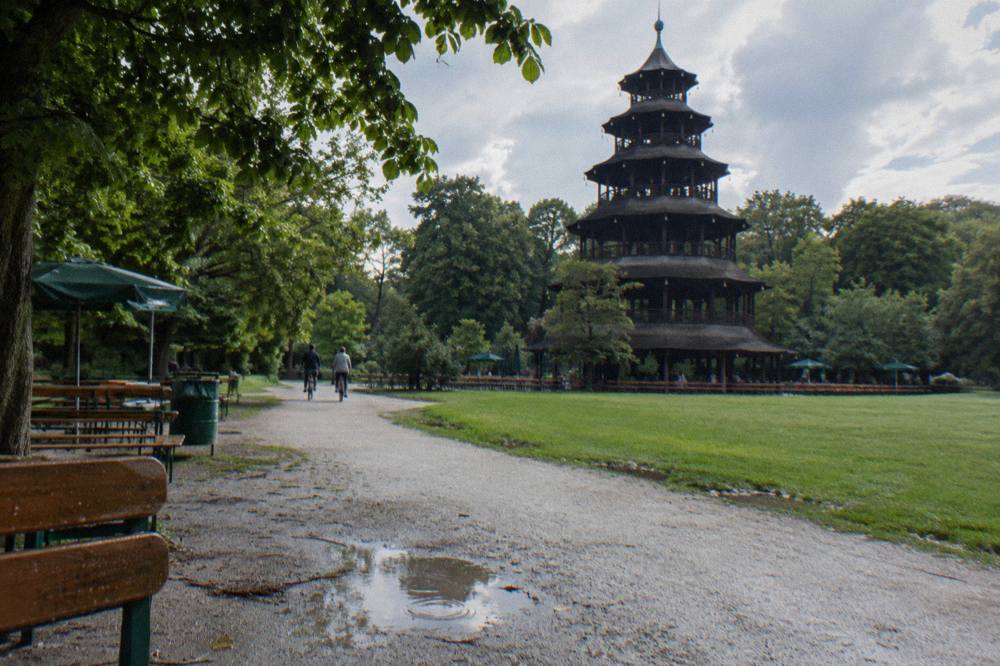
Start at Marienplatz before 10:00, when the market stalls open. The Chinese Tower beer garden in the English Garden opens at 11:00 Monday to Friday and 10:00 on weekends in good weather, so a midday ride north lands you at the first realistic serving time rather than before it. The Eisbach wave is on the garden's southern edge near Haus der Kunst, and watching from the bank costs nothing; the surfing rules, a self-releasing leash and a 22:00 ban, are the only details a spectator needs.
Lunch needs no research: a true Bavarian beer garden lets you bring your own Brotzeit and eat it at the tables with beer bought on site, which is the city's official guidance for genuine beer gardens. That quirk turns any garden into a budget option and keeps a one-day plan flexible, since you can picnic wherever the ride happens to end.
Is one day enough? For a first taste, yes. The NS-Dokumentationszentrum is free and open Tuesday to Sunday 10:00 to 19:00, and its free English tour of the Munich and National Socialism exhibition runs Sundays at 13:00, so even a single day can hold serious history alongside the beer garden. But one day forces hard cuts: Nymphenburg's palace interiors, the Olympiapark hill, and any lake beyond the city all drop off.
One-Day Munich Core Itinerary window:
| Time block | Activity | Source of the hours |
|---|---|---|
| 09:00 to 10:00 | Marienplatz and Altstadt on foot | Public square, always open |
| 10:00 to 11:30 | Viktualienmarkt browsing | Official minimum selling hours |
| 11:30 to 14:30 | Ride into the English Garden, Eisbach wave, Chinese Tower | Beer garden opens 11:00 weekdays |
| 15:00 to 17:00 | Museum choice: NS-Dokumentationszentrum (free, to 19:00) or Haus der Kunst | Official venue pages |
| Evening | Beer garden or, in late November and December, Christkindlmarkt to 21:00 | Market hours 2026 |
What Does A Two-Day Plan Add?
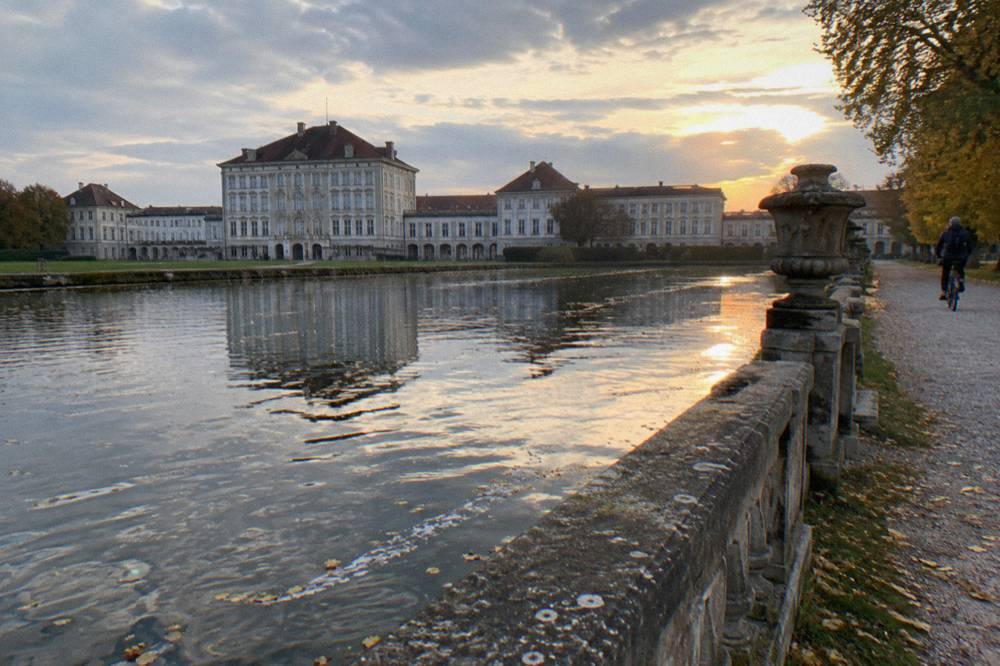
A second day adds the palace and park districts that day one cannot reach: Nymphenburg Palace, Olympiapark, and the northern English Garden as far as Aumeister. Aim to arrive at Nymphenburg in late morning, when the park fountains run daily from roughly 10:00 to 12:00 and 14:00 to 16:00 between Easter and mid-October; the Olympiapark grounds stay open, though the stadium interior is closed for renovation.
A guided option that matches this day exactly is the Munich: English Garden, Olympic Park and Nymphenburg Palace by Bike ride, a 3-hour shared tour that names all three districts in its title. It is one of the few listed rides that reaches Nymphenburg under guide power rather than relying on you to find the canal route alone. It has a small review pool, so judge it on its route and duration rather than on a rating; check the booking page for the current price and meeting details. To judge whether the park alone justifies a morning of your itinerary, the English Garden worth-visiting guide gives a grounded verdict along with free-entry facts and seasonal notes.
The combined Nymphenburg ticket is EUR 20 regular in summer and EUR 16 in winter, covering the palace, the Marstallmuseum and porcelain museum, plus the park palaces in summer only. Cyclists should note the canal route option: a documented 10 km one-way ride along the Nymphenburg canals to Blutenburg, or 16 km to the Hirschgarten, per the city's own tour tips. That last name matters, because the Hirschgarten beer garden seats about 8,000, the largest in Bavaria, and the Augustiner-Keller near the Hauptbahnhof holds around 5,000 under chestnuts.
Is Three Days The Sweet Spot?
Three days is where Munich stops being a checklist and starts being a place you know a little. Day three absorbs weather surprises, a long lunch, one museum on a rainy stretch, and the evening layer most visitors miss. It also makes a guided ride a pleasure rather than a race, because ground covered on two wheels on day one can be revisited on foot at leisure.
Museum hours anchor a flexible third day. The Lenbachhaus opens Tuesday to Sunday 10:00 to 18:00 with free entry the first Thursday of the month from 18:00 to 22:00. The Haus der Kunst is open Wednesday to Monday 10:00 to 20:00 and free the last Friday of the month from 16:00 to 22:00. The Residenz runs 09:00 to 18:00 with last entry 17:00 through 19 October, then 10:00 to 17:00 in winter. None of this needs booking weeks ahead, which is exactly why a third day works: it can be decided that morning.
The evening layer deserves its own sentence. The Hofbraukeller opens daily 12:00 to 22:00 and runs seasonal extras, including Eisstockschießen from 15 November 2025 to 31 January 2026, while the Seehaus beer garden in the English Garden serves until midnight on weekends and holidays, from 11:30. A visitor with only two days almost never sees the city after 21:00; a visitor with three usually does.
If three days includes a Sunday, use it well. The Glyptothek and Antikensammlungen at Konigsplatz charge EUR 1 per museum on Sundays, and the free English tour at the NS-Dokumentationszentrum runs at 13:00. Families may prefer the kid-friendly riding guide, which covers the gentle park circuits that suit slower days.
What About A Day Trip On Day Three Or Four?
A fourth day earns its keep only outside the city, and the two strongest bike-compatible options are the Starnberger See and the Dachau Memorial. The Starnberger See loop is about 50 to 59 km depending on the route, with 3 to 4 hours of pure riding and 150 to 300 m of elevation. Dachau Memorial is open daily 09:00 to 17:00, free to enter, with 2.5-hour tours at EUR 4 per person.
The distinction matters: Starnberger See is a leisure day, Dachau is a sober historical visit and should be planned as such, never as a stop on a fun circuit. Trains carry bikes with the right ticket; bikes need the MVV bike day ticket on S-Bahn, U-Bahn and approved regional trains, and the price should be checked on the official MVV pages, which also list the weekday blocking hours. The Starnberger See day trip guide covers the route in full, and the Dachau by bike and train guide handles the memorial logistics with the seriousness the site deserves.
Riders who want a guided version of a big outside day have one strong option: the Munich E-Bike Tour through the Isar valley, forests and Alpine foothill viewpoints, a 5-hour e-bike ride heading south along the river. Its review pool is small, so no rating claim is fair here, but the format, electric assistance over a full-day distance, suits exactly the visitor adding a fourth day to reach the landscape beyond the city. Check the booking page for the current price and seasonal departures. If you're weighing how this ride stacks up against other formats, the comparison of Munich's guided tours covers what each option actually includes.
How Does The Season Change The Answer?
Season reshapes how you spend each day rather than how many days you need: summer brings highs of about 24 to 25 degrees in July and longer evenings for outdoor sightseeing, winter drops to 2 to 4 degrees in January and pushes time indoors toward museums and Christmas markets, and the Oktoberfest weeks of 19 September to 4 October 2026 and 18 September to 3 October 2027 will claim roughly a full day on their own.
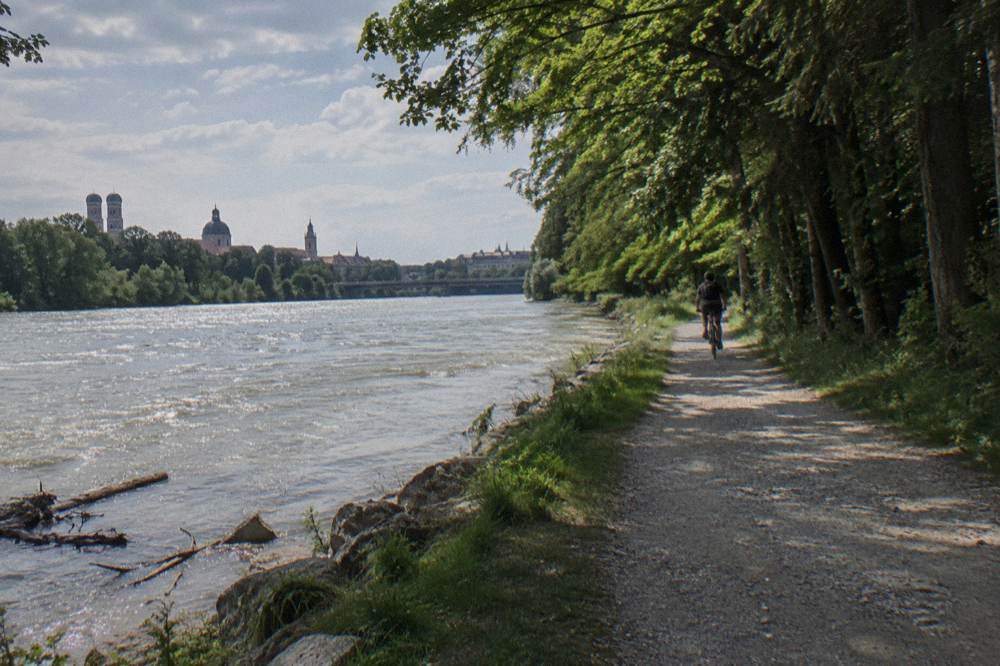
Winter riding is more viable than visitors assume. The city clears all bike paths from 3 cm of snow, with about 155 km of winter routes cleared within 2 hours, and there is no winter tyre obligation for bicycles. The winter cycling guide covers what that means in practice. Summer adds the Isar swimming season, allowed only in seven designated sections and prohibited when the water level passes 1.20 m at the Munich measuring point, with typical summer water temperatures of 14 to 22 degrees.
| Season | What fills the days | Dated anchors |
|---|---|---|
| Spring (April to May) | Frühlingsfest, park riding, longer evenings | Frühlingsfest 60th edition ran 17 April to 10 May 2026 |
| Summer (June to August) | English Garden, Isar swimming, Tollwood Summer | Tollwood Summer 19 June to 19 July 2026 |
| Autumn (September to October) | Oktoberfest, beer gardens, palace interiors | Oktoberfest 2026: 19 September to 4 October; Nymphenburg summer hours to 15 October |
| Winter (November to March) | Museums, Christkindlmarkt, Tollwood Winter, indoor hours | Christkindlmarkt 20 November to 24 December 2026; Tollwood Winter 24 November to 23 December 2026 |
Whichever count you settle on, the guided options scale with it: the 3.5-hour city ride fits day one, the 3-hour English Garden, Olympic Park and Nymphenburg ride anchors day two, and the 5-hour Isar e-bike ride turns day four into landscape. Booking ahead for the first is sensible in festival weeks, when about 7.4 million people visited Oktoberfest 2026 alone.
Common Questions About How Many Days In Munich Is Enough
How Many Days In Munich Is Enough?
Two days for the Old Town, English Garden and beer gardens; three for Nymphenburg, Olympiapark and museums at a humane pace; four if a day trip to Starnberger See or the Dachau Memorial is on the list. Every block of that plan is built on published hours and tour durations.
How Many Days In Munich Is Enough Without A Bike?
The same counts work, but days two and three get tighter. The English Garden alone spans 376 hectares with 78 km of paths, and the palace districts sit at the city's edges, so walkers should cut one district per day or lean on the S-Bahn, remembering that bikes need the MVV bike day ticket on board.
How Much Does It Cost To Rent A Bike In Germany?
Prices vary by city and shop. In Munich the official MyRadl share system charges EUR 1 per 30 minutes for a classic bike with a EUR 9 day cap, and EUR 3 per 30 minutes for an e-bike with an EUR 18 day cap, with the first 30 minutes free on a classic bike for eligible transit subscribers. Private shops set their own daily rates; check the operator directly.
How Many People Have Died In Eisbach?
No official death toll exists for the Eisbach wave, so treat any figure you come across as unofficial. What is documented: surfing is permitted again under an amended general decree, a self-releasing leash is mandatory, surfing is banned from 22:00, and the city states plainly that surfing the wave carries dangers and happens at the surfer's own risk. Swimming in the Eisbach is prohibited.
Is One Day In Munich Enough For Oktoberfest?
One day covers the Wiesn itself, which ran 16 days in 2026, but it consumes the whole day; the grounds and tent queues dominate the schedule. Add a second day for the city proper, and treat a third as the buffer that makes the trip feel like a holiday rather than a mission.
Do Munich Guided Bike Tours Run All Year?
City rides last 3 to 5 hours, but departure times vary by operator, especially between November and March. The beer garden stops are also weather-dependent: the Chinese Tower garden opens at 11:00 on weekdays only in dry, warm conditions. Check the booking page for the dates you have in mind.