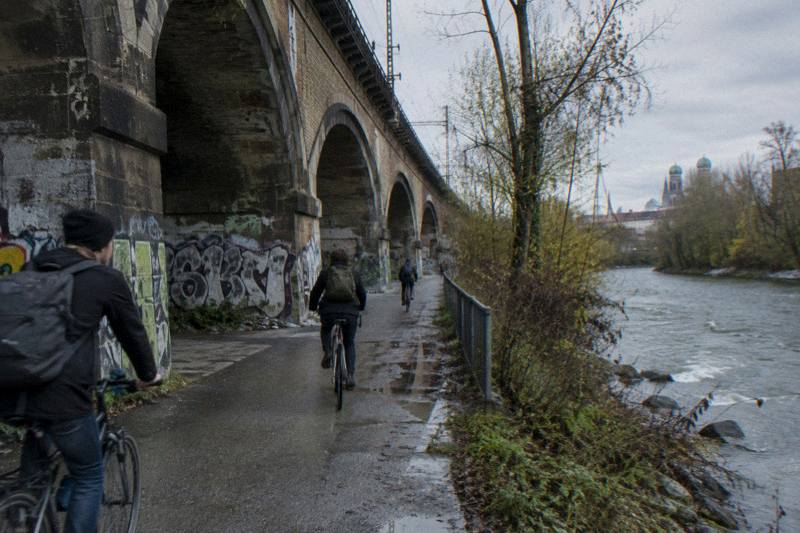
Rent A Bike Or Take A Guided Tour In Munich
Munich is flat, bike-friendly and criss-crossed by 1,200 km of signed cycling routes, which makes the rent-or-guide decision genuinely close. Here is how the two options compare on cost, coverage, navigation and the things a booking page cannot tell you.
Short answer
Rent if you already know what you want to see, are comfortable reading a city map from a bike saddle, and want the freedom to stop for an hour at a beer garden. Take a guided tour if it is your first visit, you want the history explained rather than guessed at, or you are short on time: a 3 to 4 hour guided ride links the old town, the English Garden and the Isar banks in one loop.
Munich earns its self-declared Radlhauptstadt title honestly: 21 percent of daily trips in the city are made by bike, the highest share of any large German city, and the signed Münchner Radlnetz runs to 1,200 km. That makes the city unusually forgiving for two-wheel visitors, and it also sharpens the question this guide answers. Should you rent a bike and invent your own day, or book a guided ride and let someone else hold the map? If you would rather not commit to a full rental day, our guide to Munich's public bike share explains how the system works and what a ride costs.
Both work. The honest answer is that each buys something the other does not, and the trade-off sits on four axes: what the day costs, how much ground you cover, how much context you leave with, and how much planning you want to do the evening before. Where a detail is not published, the answer here is to check the booking page rather than guess.
For readers who want the short version up front: renting suits repeat visitors, confident navigators and slow-day planners. Guiding suits first visits, tight schedules and anyone who wants the stories behind the facades. For more on riding in the city itself, Bike Tours Munich has every guided option gathered in one place.
Should You Rent A Bike Or Take A Guided Tour In Munich?
Rent a bike when you value route freedom over narrative, and take a guided tour when you value narrative, pace and logistics over freedom. Renting wins on flexibility and, for longer days, usually on price. Guiding wins on orientation, historical context and the certainty that a 3 to 4 hour loop already joins the old town, the river and the English Garden without you planning a metre of it.
Neither choice is the safe one and neither is the risky one. Munich's street layout, its network of bicycle streets and the dead-straight Isar corridor mean a competent cyclist with a paper map can reach every headline sight under their own steam. What self-guided riders miss is interpretation. A guide turns the Feldherrnhalle from a scaffolding-wrapped loggia into a story, and notes that the stone is under a multi-year renovation expected to run to around 2028. Nobody renting a bike learns that from the saddle alone.
The reverse gap is just as real. A guided ride runs on the operator's clock, not yours. If your ideal Munich afternoon is ninety minutes at the Viktualienmarkt followed by a nap in the English Garden, a fixed loop is the wrong instrument, however good the guide. The decision, in other words, is not which option is better but which failure mode you would rather avoid: an unexplained city, or an unscheduled one.
It helps to name the four questions before reading further. First visit or repeat visit? Confident navigator or map-apprehensive? Full day available or half day squeezed between other plans? Solo pair or a group with mixed stamina? Each answer pushes the fork one way, and the sections below take them in order. If you have already decided to ride solo, the practical route planning lives in the Munich city cycling route guide.
What Does Renting Bikes In Munich Actually Cost Per Day?
The public MyRadl system rents classic bikes at EUR 1 per 30 minutes with a EUR 9 day cap, and e-bikes at EUR 3 per 30 minutes with an EUR 18 day cap. MyRadl launched on 7 May 2026 with roughly 1,000 stations and more than 6,700 bikes planned across the MVV area, so a station is rarely far away.
Those tariffs come from the city's own announcement of the system, so treat them as the firm numbers when budgeting a rental. MyRadl replaced the earlier MVG Rad service, which ended on 30 September 2025. Holders of eligible transit subscriptions get a discount on the first half hour: free on a classic bike, EUR 1.50 on an e-bike, after which the base rate applies. Registration is free through the MVV app, and bikes must be returned to an official station, with a service fee if they are not.

| MyRadl tariff | Classic bike | E-bike |
|---|---|---|
| Per 30 minutes | EUR 1 | EUR 3 |
| Day cap (24 hours) | EUR 9 | EUR 18 |
| First 30 min with eligible transit subscription | Free | EUR 1.50 |
What the table cannot show is the rhythm of cost. A rider who unlocks a classic bike six times for short hops pays the same EUR 9 as someone who holds it all day, because the cap applies per 24-hour rental per bike. A tourist doing exactly that, hopping between the old town, the English Garden and the Isar banks, therefore has a hard ceiling of EUR 9 on a full day of classic riding. Two riders on e-bikes cap at EUR 18 each. Those are honest numbers to plan against, and they come from the city's MyRadl announcement page.
Private rental shops exist, including near the Hauptbahnhof, and some quote daily rates in the low tens of euros for city bikes. Private shop rates vary, so ask at the counter for current prices on the bike you want. The Munich bike rental prices guide covers pickup logistics and what to ask a shop before handing over a deposit. For renters who plan to put a bike on the S-Bahn or U-Bahn at any point, the bikes on trains and S-Bahn guide has the carriage rules and the restricted hours.
One structural point matters for the comparison. Sharing bikes are station-based, which is a strength for one-way riding, ride to the English Garden, dock the bike, walk the meadow, undock a different one for the return. A guided tour instead keeps one bike with you all day, with the operator handling the machine entirely.
What Do Guided Munich Tours Cost And What Is Included?
City-highlights rides run 2 to 5 hours, either as shared groups or private bookings; every guided tour includes the bike, and several build in a beer garden stop along the way. Prices vary by tour and are stated on each booking page rather than averaged here, because printing a blended figure would mislead more than it informs.
The honest way to compare guided options is on duration, format and inclusions, not on a single price line. The table below lists representative rides with exactly what each listing states. For any detail not covered above, check the live booking page before you book.
| Tour | Duration | Format | What the listing shows |
|---|---|---|---|
| Munich: 3-Hour Guided Bike Tour | 3.5 hours | Shared | Classic city-highlights loop, bike included |
| Munich by Bike: Half-Day Tour with Local Guide | 3 hours | Shared | Local guide, half-day city format |
| Munich: Bike Tour with Beer Garden Break | 4 hours | Shared | Beer garden stop built into the ride |
| Best of Munich Electric Bike Tour | 4 hours | Shared | E-bike format, city highlights |
| Munich Highlights Private Bike Tour with Licensed Guide | 2 hours | Private | Private group, licensed guide |
| Private Munich Bike Tour with Beer Garden Lunch Break | 4 hours | Private | Private group, lunch stop included |
Read the duration column closely, because it is the real price of a guided day. A 3.5 hour shared loop costs you half a day including check-in and any stop; the same half day on a rental is fully yours to shape. The counterweight is that the guided half day arrives pre-shaped: the route is ridden daily, the stops are chosen, and the guide carries the context. The featured 3-hour guided city ride is a fair example of the format, and its Guided Ride, 3.5 Hours link shows the current price and departure details straight from the operator's page.
Shared versus private is the other fork inside the guided fork. Shared rides suit solo travellers and pairs who want company and a fixed price per person; private tours suit families and groups who want the route bent around their interests, at a group price whose per-person maths depends entirely on headcount. Private tours carry a flat group price rather than a per-person rate, so divide by your headcount before comparing against a shared tour's per-person figure.
How Much Ground Can Each Option Cover?
A guided loop states its duration, not its distance, and Munich's guided rides deliberately trade kilometres for stops: expect a tight old-town-plus-English-Garden arc rather than a long-distance ride. Self-guided renting has no stated distance ceiling at all, which is its greatest strength and the easiest way to overreach on day one.
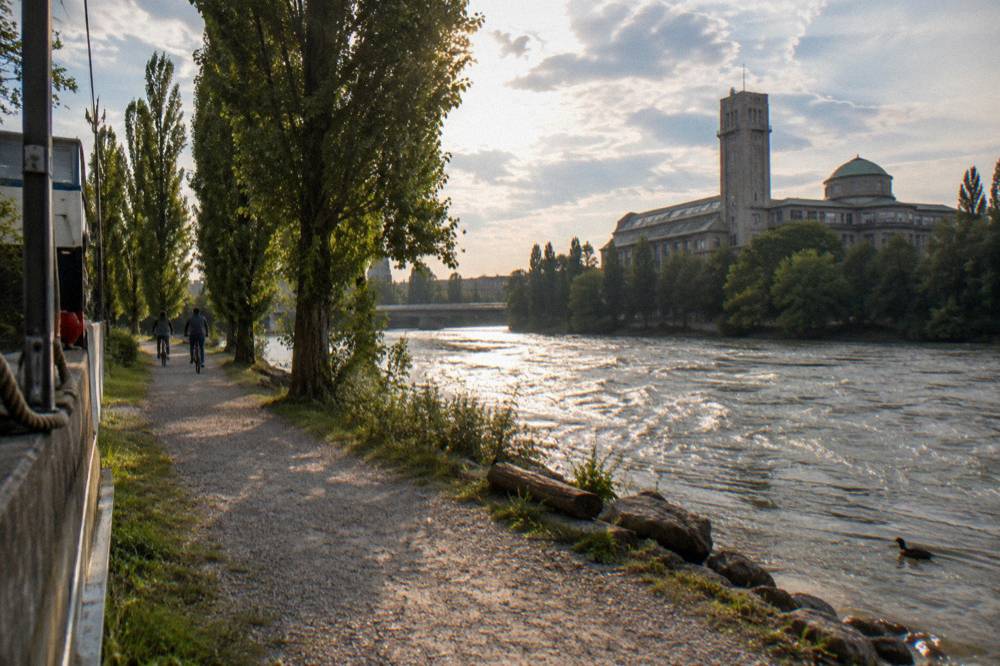
What can be said from published sources is instructive anyway. The city's own tourism body describes a self-guided English Garden and Isar circuit from Marienplatz of roughly 15 km and about 2 hours, following the river downstream and returning through the garden. That is the scale of terrain a first-visit guided loop typically works with: enough to link old town, riverbank and park without turning the day into endurance sport.
Renters can match that arc and then keep going. The Isar cycle path runs 299 km in full from Scharnitz in Tyrol to the Danube, and the Munich-to-Landshut section alone is about 77 km, largely flat. Nobody suggests a visitor rides it on day one, but it illustrates the asymmetry: a rental bike's range is limited by your legs and daylight, while a guided tour's range is limited by its stated duration. Day-trip riders will find the Isar cycle path guide the practical starting point.
| Dimension | Renting | Guided tour |
|---|---|---|
| Route length | Yours to decide | Set by the tour |
| Daily ceiling | Your stamina and daylight | The stated 2 to 5 hour duration |
| Stops | Wherever you lock | Chosen by the operator |
| Typical first-day arc | Old town, Isar, English Garden | Old town, Isar, English Garden |
| Long-distance options | Isar path, lake day trips | Not the format's purpose |
The practical takeaway is not that one side covers more ground; it is that they cover ground differently. A rental rider who plans badly can end up seeing less than a tour guest, because Munich's headline sights sit in an arc and a first-time navigator can spend the arc backtracking. The guided format removes that risk by design. Riders who want the DIY version with the guesswork taken out can lift the itinerary from the what a Munich bike tour covers guide.
Which Option Suits A First Visit To Munich?
For a first visit under three days, a guided ride early in the stay usually pays for itself in orientation: one loop teaches the city's geography, and the remaining days are navigated from memory. Renting on day one works better for visitors who already know the map or who simply prefer wandering to being led.
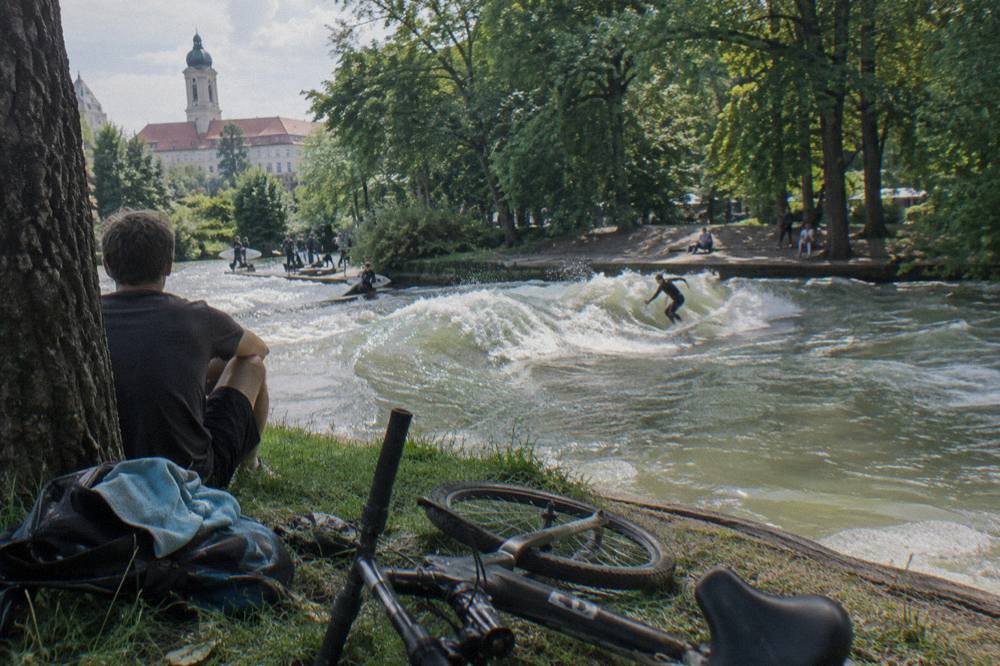
The reason guiding front-loads well on a first visit is that Munich's sights cluster. Marienplatz, the Viktualienmarkt, the Residenz quarter, the Eisbach wave and the English Garden sit in a continuous band a few kilometres long, and a guided loop stitches them into one coherent half day. Do that on day one and every later walk or ride has a frame. The English Garden alone holds 78 km of paths on 376 hectares, which is a lot of park to interpret unaided; the English Garden by bike guide maps the sensible line through it for renters who go alone.
Repeat visitors sit at the other end of the scale. Anyone who has already done the headline loop gains little from hearing it again, and gains a lot from the freedom a rental gives: a slow loop of the Nymphenburg canals, an afternoon on the Isar gravel banks, a detour to a beer garden the tours do not reach. For that traveller, renting is not the budget option, it is the better instrument.
Families straddle the line, and the deciding factor is usually the youngest rider. Guided family formats are among the options, and the bike tour with kids guide covers what to weigh, from children's bikes to pacing. A private tour bends the route around a child's attention span in a way a rental day only does if the parent is disciplined about turning back early.
What About Navigation And Local Rules?
Munich is navigable by bike but rule-dense: cycle paths marked with blue signs are compulsory, bicycle streets give riders priority, pedestrian zones are closed to bikes except where signed open, and the old-town pedestrian zone only permits cycling between 21:00 and 09:00. A guide absorbs all of this; a renter has to learn it before setting off.
The rules are not intimidating, but they are specific, and a visitor who rides as they would at home can collect a fine. Riding on the pavement starts at EUR 10, and skipping a signed compulsory cycle path starts at EUR 20. Children up to 8 must ride on the pavement, and up to 10 may. Bikes need working lights after dark and a bell. None of this is exotic; all of it is learnable in ten minutes, which is exactly what the cycling rules for visitors guide does. Renters should read it; tour guests effectively outsource it, since a local guide routes the group legally by habit.
Navigation itself is gentler than the rulebook suggests. The Radlnetz's 14 radial routes all start at Marienplatz, and the Isar is a compass: downstream is north-east toward the English Garden, upstream is south toward the zoo and the gravel banks. Still, first-day riders do get lost, usually in the old town's pedestrian maze where cycling is time-restricted anyway. That is the single most common argument for guiding on a first visit, and it should be stated plainly rather than dressed up.
Safety worries, for the record, are mostly misplaced framing rather than a real fork in the decision. The city's 21 percent bike modal share means drivers expect bicycles. A closer look at whether cycling in Munich is safe covers where caution genuinely belongs., chiefly tram rails crossed at shallow angles and the busy pedestrian edges of the old town.
How Does The Cost Compare Per Person?
A day of MyRadl classic riding caps at EUR 9 per bike, so two self-guided riders spend at most EUR 18 plus food; guided tours price per person on shared rides and per group on private ones, with each figure stated on its own booking page. The honest comparison is not a single number but a break-even question: how many rental days equal one guided ticket for the value you expect.
Stated that way, the maths becomes a planning tool instead of a slogan. If a shared guided ticket sits anywhere near a rental day's cost, the buyer is effectively paying the difference for the guide's commentary, the chosen route and the removed logistics. Whether that is cheap or dear depends on what the day is for. A visitor with one full day in Munich arguably cannot afford to lose a third of it to wrong turns and backtracking, which is the strongest case for the ticket. A visitor with five days can rent four times for the price of one guided loop and still come out ahead.
| Cost driver | Renting (MyRadl) | Guided tour |
|---|---|---|
| Basis | Per bike, per rental day | Per person (shared) or per group (private) |
| Known ceiling | EUR 9 classic / EUR 18 e-bike per day | Stated on each booking page |
| Bike | Included in tariff | Included in the tour |
| Helmet | Not part of sharing tariff | Included per the listing's inclusions |
| Food stops | Your choice, your budget | Beer garden stop on several listings |
| Damage or theft risk | Yours | The operator's |
Two lines in that table deserve emphasis. Helmets are not legally required for adults in Germany, and sharing systems do not hand them out, so renters who want one should plan for it; guided listings that include a helmet say so, and the listing's inclusions line is the place to confirm. And the risk line is real money: a rented sharing bike that is damaged or stolen is the rider's problem under the terms of use, while a tour bike is the operator's asset to manage.
The beer garden line is not a joke, by the way. Several shared listings build a beer garden stop into the ride, and in a true Munich beer garden you may bring your own food and eat it with purchased beer, a tradition with roots the city traces back to a 1812 decree. That is the kind of local knowledge guides hand out free at the stop, and it is also in the beer gardens by bike guide for renters.
What Does The Weather Do To Each Choice?
Munich's climate makes both options three-season propositions: July averages a high around 24 to 25 degrees Celsius, January around 2 to 4, and May is the wettest month with roughly 92 to 108 mm of rain, so renters should plan a rain margin and tour guests should check the operator's weather policy on the booking page.
Those normals come from long-term climate records, not forecasts, and they frame the decision honestly. Spring through early autumn rewards either choice. Winter riding is perfectly possible, and the city clears bike paths from 3 cm of snow within two to three hours on its winter routes, but short daylight and cold mornings push most visitors toward indoor sightseeing, a trade-off the Munich in winter guide treats at length. Timing the whole trip is covered in the best time for a Munich bike tour guide.
Weather interacts with the two options differently. A renter caught in a shower can dock the bike and wait it out in a café, which the station-based system makes genuinely easy. A tour guest rides the schedule they booked, and what happens in rain is the operator's call, a policy the do Munich bike tours run in the rain article unpacks. Neither vulnerability is fatal; both are worth knowing before you commit money. Weather thinking also scales up if you're plotting a bigger day out, and the guide to planning a Neuschwanstein day trip from Munich, bike included walks through trains, tickets, and where two wheels actually help.
Seasonal events tilt the fork in ways first-time visitors rarely anticipate. Oktoberfest 2026 drew approximately 7.4 million guests over its 16 days, and during those weeks the Theresienwiese end of any route is thick with crowds; the Munich by bike during Oktoberfest guide covers riding that window. In late November and December the Christkindlmarkt on Marienplatz runs daily into the evening, which makes the pedestrian core even more of a walk-only zone and pushes both renters and tours toward the river and park arcs.
E-bikes are the quiet weather answer for both sides of the fork. MyRadl rents pedelecs at the EUR 18 day cap, and the guided side includes a 4-hour electric option whose battery assistance flattens both Munich's modest hills and a warm afternoon. For older riders or anyone easing back into the saddle, the e-bike versus regular bike question has its own treatment in the e-bike or regular bike guide.
Can You Combine Both In One Trip?
Yes, and the combination is often the best answer of all: one guided loop on the first full day for orientation and stories, then one or more rental days to revisit what the tour passed at speed. The two options are complements with different jobs, not substitutes competing for the same day.
The sequencing argument is simple. A guided ride is dense by design; stops are short because the group is shared and the clock is fixed. Guests routinely leave with a list of places they want longer at, and a rental day is exactly the instrument for that list. Rent first and tour second, and the tour's commentary lands on terrain you have already half-learned, which is pleasant but less useful than the reverse order.
For a three-day stay the split writes itself: day one guided, day two rented with the Isar and English Garden as the spine, day three on foot for the museums the bike skimmed. The Munich in 3 days with a bike guide builds that itinerary hour by hour. Longer stays can push further afield on rental days, toward Starnberger See, whose full round tour runs about 50 km with pure riding time of 3 to 4 hours, a trip the Starnberger See day trip guide covers with the train-and-bike logistics.
Budget the combination the same way as the individual pieces: EUR 9 for a classic rental day, EUR 18 for an e-bike day, plus one guided ticket at whatever the chosen listing states. Everything else in the combined plan, food, beer garden stops, museum entries, is common to both modes and does not belong to this comparison.
Common Questions About Renting Or Guiding In Munich
Should You Rent A Bike Or Take A Guided Tour In Munich?
Rent if you know the city or want full control of the route and stops; take a guided tour on a first visit, a tight schedule, or when you want the history explained. Many travellers do one guided loop first, then rent for the rest of the stay.
What Does Renting Bikes In Munich Cost?
Munich's public bike-share, MyRadl, charges EUR 1 per 30 minutes for classic bikes with a EUR 9 day cap, and EUR 3 per 30 minutes for e-bikes with an EUR 18 day cap. Rental shops in Munich set their own rates, so ask the shop directly for current prices.
Yes. Every guided ride includes the bike, and several include a beer garden stop; some listings also include a helmet. Confirm the inclusions line on the booking page for the specific tour. The city-highlights rides run from 2 hours for a short private loop to 5 hours for the longest shared format, with most shared tours in the 3 to 4 hour band including stops. Not usually for a single day: a classic MyRadl day caps at EUR 9 while guided tickets price above that on most listings. The value question is different: you are paying for the guide, the route and the removed planning, not for the bike. Yes, and it works well: book a guided loop on day one for orientation, then rent on later days to revisit what the tour passed quickly. The modes complement rather than compete.Do Munich Guided Tours Include The Bike?
How Long Are Guided Rides In Munich?
Is A Guided Tour Cheaper Than Renting?
Can You Do Both In One Trip?