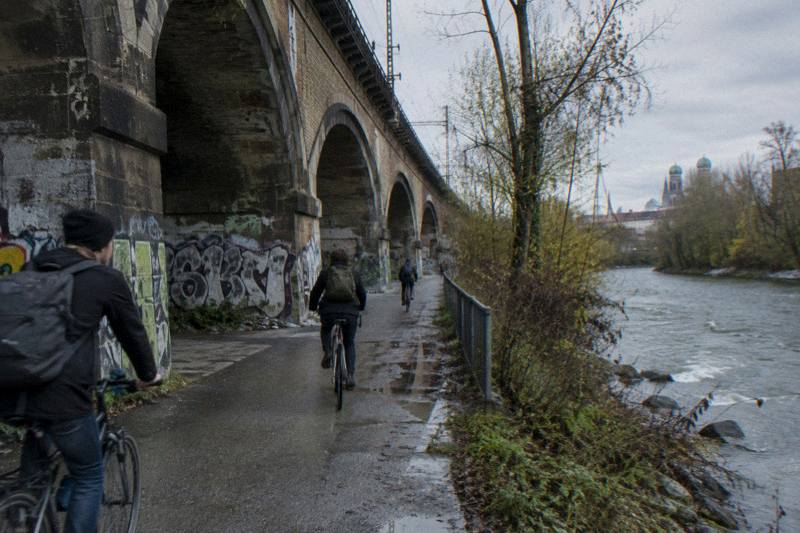
Does Munich Have Public Bikes?
Yes. Munich has MyRadl, a regional bike share with classic bikes and e-bikes at about 1,000 stations. Here is how it works, what it costs in euros, and when a guided ride fits better.
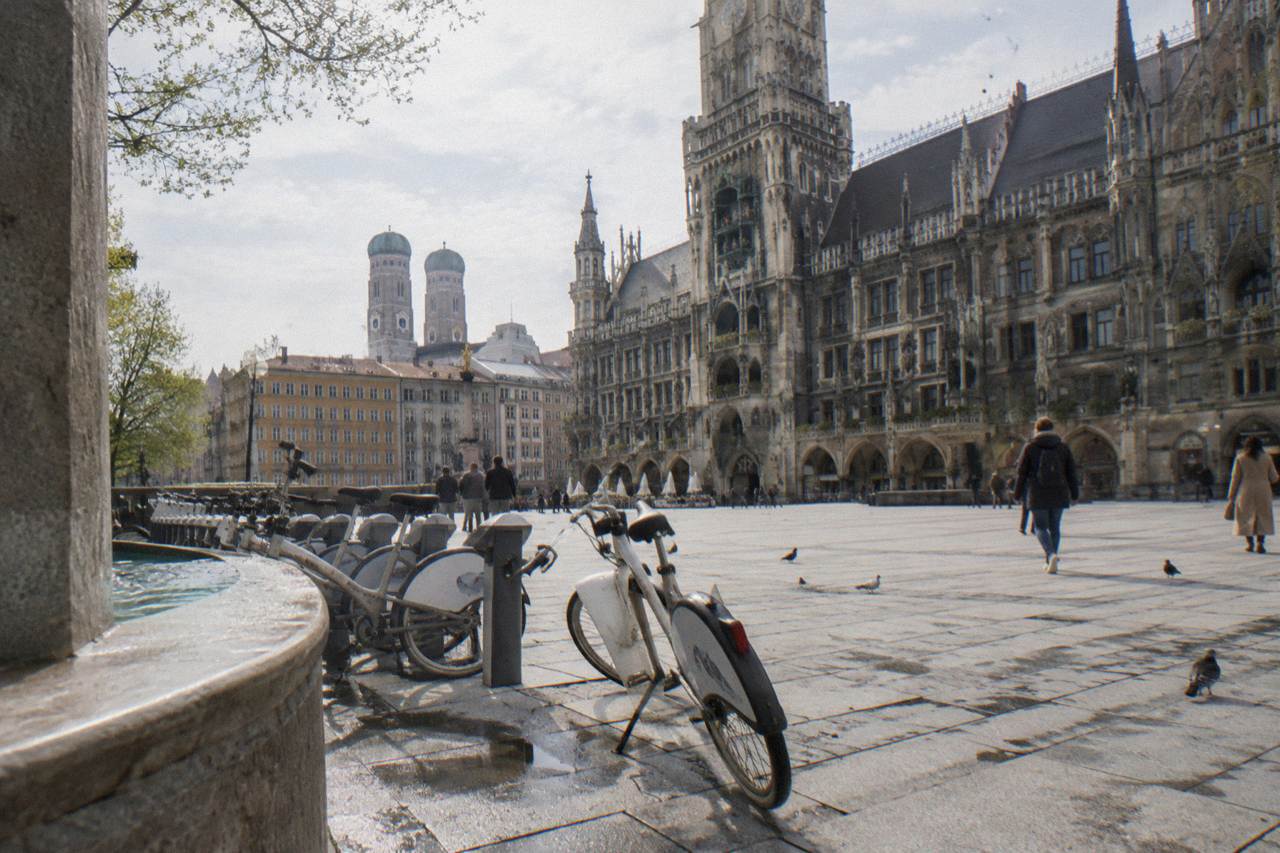
Yes, Munich has public bikes. The current system is called MyRadl, and it launched on 7 May 2026 as the successor to the old MVG Rad scheme, which ended on 30 September 2025. MyRadl is run as part of the MVV transport network and plans about 1,000 fixed stations with more than 6,700 bikes, both classic and electric, spread across Munich and 36 surrounding municipalities.
That scale is the headline change. The old MVG Rad system was city-only and comparatively small, and it switched off for good in late September 2025. For a few months Munich had no large public bike share at all, and visitors who remembered renting an MVG bike on a previous trip found the app empty. MyRadl filled that gap in May 2026 and went regional: the stations reach well past the city boundary, so a trip out to a lake-side suburb or a neighbouring town no longer requires you to own a bike or commit to a full-day rental from a shop. The city's own mobility pages describe the launch and the planned station network in detail, and it is worth skimming them before you arrive, because the registration step and the station map both live in the app rather than at a physical kiosk.
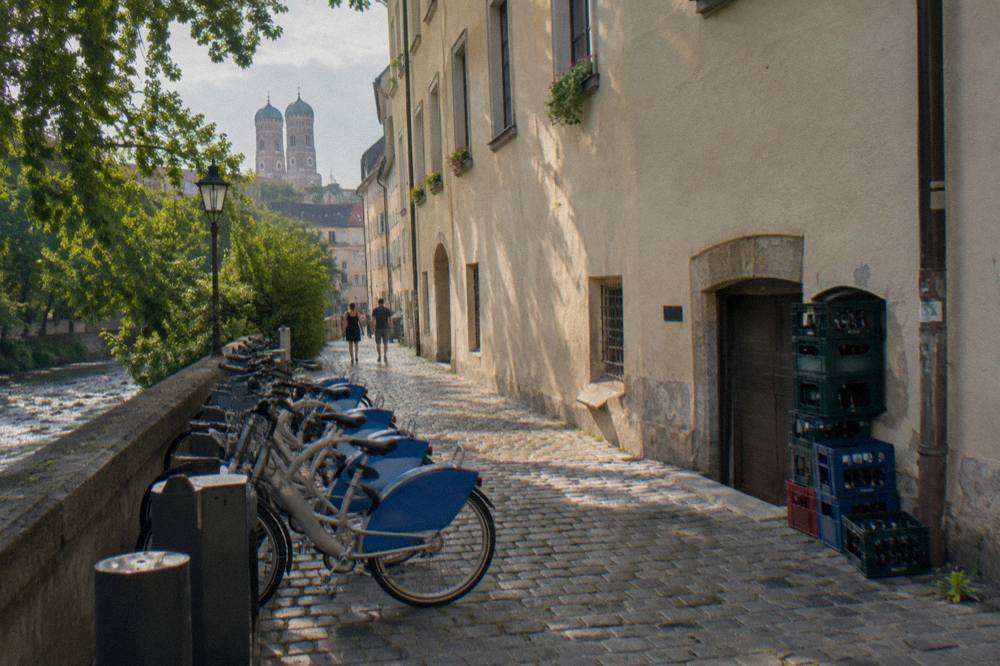
For visitors, the honest framing is this: a public bike is a tool for getting around, not a sightseeing plan. MyRadl works best when you already know where you are going, whether that is a museum, a beer garden or a stretch of the Isar. If what you actually want is someone to route you through the old town, the English Garden and the riverbanks while explaining what you are looking at, a guided ride does that job, and the guided side of this article covers it. Many first-time visitors do both: a couple of MyRadl hops for short errands, plus one booked ride for the day they want the full picture. The selection below shows three ways to spend that guided day, from a classic three-hour city ride to an electric version and a shorter half-day option with a local guide.
How Does The MyRadl Bike Share Work?
MyRadl is station-based, which means you unlock a bike at a fixed dock and return it to another official station. You register once for free through the MVV app, the MVGO app or the nextbike app, then scan a QR code to unlock the rear-wheel lock. Returns only count at official stations, and dropping a bike anywhere else triggers a 20 euro service fee. Each rental runs a maximum of 24 hours.
That last rule matters more than it sounds. Share systems in some cities let you abandon a bike on any corner, and MyRadl deliberately does not. The station discipline is what keeps bikes available where people actually need them, but it also means you should glance at the station map before you commit to a destination, especially at the edge of the network where docks are thinner. The system is live around the clock, so an evening ride back from a beer garden is normal use, and the app shows live availability at each station. Early usage was strong: city reporting counted about 116,200 journeys by mid-June 2026, roughly six weeks after launch.
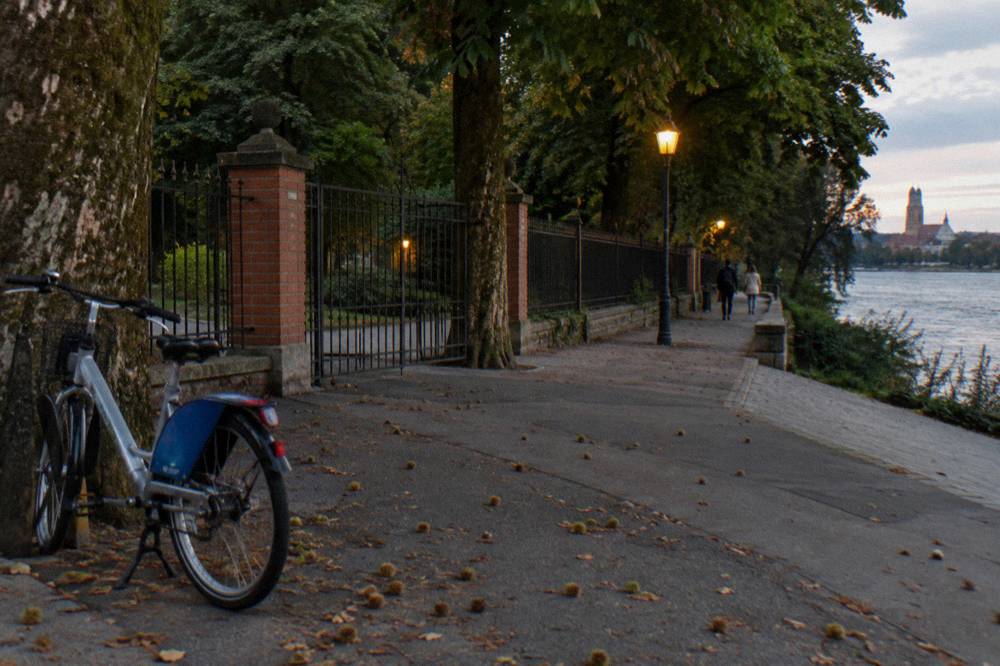
A few practical points from the operator's rules: you can pause a rental for up to 12 hours, though the pause is charged, and one account can run up to four bikes at once, which suits a family or a small group travelling together. If you hold an eligible transit subscription, the first 30 minutes of each classic rental are free, and the first 30 minutes on an e-bike cost 1.50 euros instead of the base rate. That detail alone makes MyRadl genuinely cheap for locals, and a pleasant surprise for visitors who buy a transit pass anyway. The full usage rules and the station map are published on the MVV's own bike-sharing pages, which also list the tariff details.
What Does MyRadl Cost Per Day?
A classic MyRadl bike costs 1 euro per 30 minutes, capped at 9 euros per 24-hour rental. An e-bike costs 3 euros per 30 minutes, capped at 18 euros per day. Those are euro prices paid in the app, not dollar conversions, so keep them separate from any tour prices quoted in dollars.
The cap is the number to remember for a day of sightseeing. If you pick up a classic bike four or five times across a day, dock to dock, you pay the per-minute rate each time but never more than 9 euros total on that bike within 24 hours. A full day on an e-bike tops out at 18 euros. Subscriptions exist as well, 10 euros a month or 60 euros a year, which only makes sense for residents or very long stays. The table below shows the tariff at a glance.
| Bike type | Per 30 minutes | Day cap (24 hours) | Notes |
|---|---|---|---|
| Classic bike | 1 euro | 9 euros | First 30 min free with eligible transit subscription |
| E-bike (pedelec) | 3 euros | 18 euros | First 30 min at 1.50 euros with eligible transit subscription |
| Subscription | Monthly 10 euros / annual 60 euros | Applies to first bike | Terms vary by bike type and rental time |
Set against a guided ride, the maths changes shape rather than producing a winner. A share bike charges you for time, not for guidance, and nobody on the app tells you which bridge leads into the English Garden or why the Chinese Tower beer garden looks the way it does. An e-bike share day caps at 18 euros, while a guided electric tour costs more per person but adds a route, a guide and a group., and the guided ones come with a route, a guide and a group. The Best of Munich Electric Bike Tour, for example, is a 4-hour shared electric ride through the city's headline sights, and its per-person price is on the booking page. If your day is really about seeing Munich rather than moving through it, that comparison is worth making before you tap the unlock button.
Is A Shared Bike Or A Guided Ride Better For Visitors?
For a first visit of one to three days, a guided ride usually delivers more per hour, because the guide supplies the route, the stops and the context. A shared bike wins on flexibility and price for short hops, museum-to-museum dashes and evenings. The two are complements: share bikes for the gaps, one booked ride for the day you want the whole city explained.
The reason is simple. Munich rewards local knowledge disproportionately. The city has 103 designated bicycle streets covering 47 km, a signed Radlnetz of roughly 1,200 km, and a bike modal share of 21 percent of daily trips, the highest among German large cities. All of that makes riding here comfortable once you know the pattern, but the pattern itself, which riverside path connects where, where the old town's pedestrian zone allows cycling between 21:00 and 9:00, takes a day or two to absorb. A guide compresses that learning into an afternoon. Our companion piece on renting versus taking a guided tour works through this trade-off in more depth.
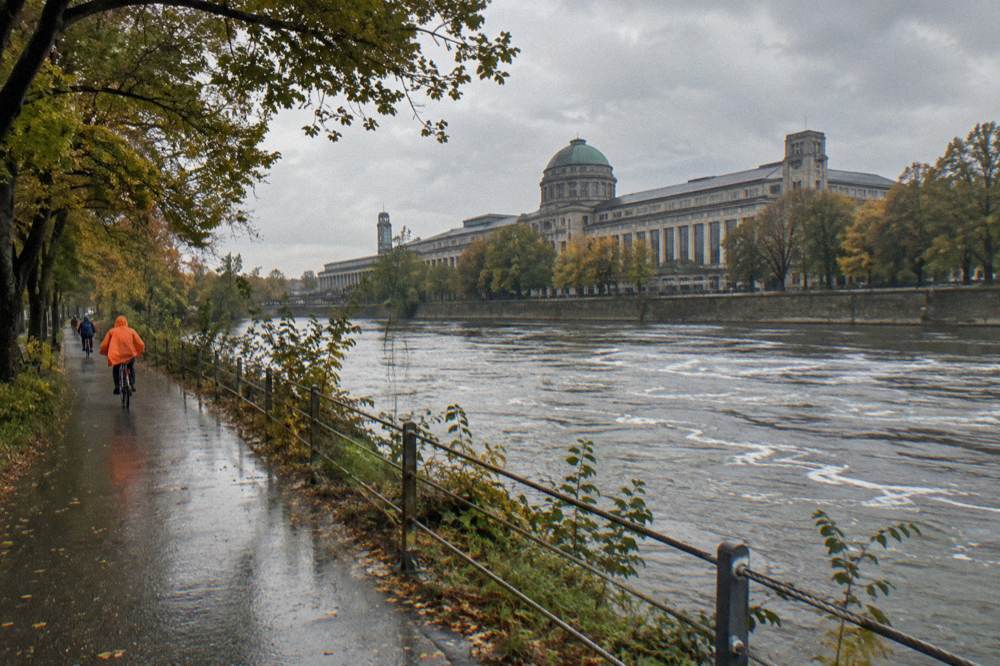
The classic shared option is the Munich: 3-Hour Guided Bike Tour, a 3.5-hour city ride built for exactly this kind of visitor, the one who wants the orientation ride on day one and a share bike afterwards. There is also a shorter option for anyone wary of a long first outing: Munich by Bike: Half-Day Tour with Local Guide runs 3 hours with a local guide in a shared group, and the per-person price is listed on its booking page. Both are shared rides, both include a stop pattern the operator sets, and neither asks you to plan anything, which after a long train ride into the city is precisely the point. Check availability on the half-day tour if the shorter format sounds like your speed.
Where Can You Ride A Public Bike In Munich?
Practically everywhere a normal bike goes, and that is a wide net: about 1,200 km of signed cycle routes, 103 bicycle streets where bikes have priority, and riverside corridors along the Isar that run out of the city almost traffic-free. The one rule to learn is sign discipline, because signed bike paths carry a duty to use them where the blue signs order it.
Two corridors show what the network does best. Following the Isar downstream from the city centre puts you on a flat, largely separated path, and the city's official English Garden loop from Marienplatz runs about 15 km over roughly 2 hours, taking in the river, the park and back through to Aumeister. That single loop is arguably the best first ride for anyone testing a MyRadl bike, because it needs no navigation talent and touches the park most visitors came to see. Our English Garden by bike guide maps it out stop by stop.
The second corridor is the canal country west of the centre, along the Nymphenburg and Biedersteiner canals, where a one-way ride of about 10 km reaches Schloss Blutenburg and longer versions connect toward the Hirschgarten. For any of these, remember the return rule: the fun ends when there is no station near your endpoint, so check the map before you ride past the last dock. And if you want to take a share bike on the S-Bahn or U-Bahn rather than ride it home, that does not work as you might hope: bikes in general need the MVV bike day ticket, follow the restricted hours on weekdays, and are not allowed on buses and trams at all except children's and folding bikes. The details are in our article on bikes on trains and the S-Bahn.
| Way of getting a bike | Best for | Watch out for |
|---|---|---|
| MyRadl classic | Short hops, flat routes, museum days | Returns only at official stations |
| MyRadl e-bike | Longer loops, hills at the city edge | Higher tariff, 18 euro day cap |
| Guided shared ride | First-day orientation, context, fixed timing | Set departure times, group pace |
| Private guided ride | Families, tight schedules, specific interests | Priced per private group |
Do You Need A Helmet Or Special Rules To Ride?
No helmet is legally required for adults on standard bikes or pedelecs in Germany, and MyRadl does not bundle one, so if you want head protection you carry your own. The legal rules that actually matter are lighting, the bell, and using signed bike paths where the signs order it. Children up to 8 must ride on the pavement, and up to 10 may.
The equipment law is specific: a bike used in public traffic needs prescribed lighting, at least one white headlamp at the front and a red rear light plus a red reflector at the back, and at least one clear-toned bell. Detachable battery lights are allowed under conditions, which is what most rental and share bikes rely on. Helmets aside, the behavioural rules are light: ride with constant caution, keep off pedestrian zones unless signs permit cycling, and remember that in the old town's pedestrian zone and Sendlinger Strasse cycling is allowed between 21:00 and 9:00 only. Alcohol is the quiet trap for beer-garden days, and German law treats riding while unfit as a criminal offence, so the safe rule after a couple of Masses is to walk the bike or take the S-Bahn. Our piece on beer and riding a bike covers the details.
One honest limitation of any share bike for guided-tour purposes: the fleet is standardised, and an e-bike share ride is a pedelec capped at normal pedelec speed, which is fine, but nobody hands you a helmet or adjusts a saddle to your height at a dock. Operators of guided rides typically supply the bike and, on many listings, a helmet as part of the package; the specific inclusions for any tour are stated on its booking page. For families weighing the difference, our bike tours with kids guide goes deeper than this article can.
Common Questions About Public Bikes In Munich
Does Munich Have Public Bikes?
Yes. The current system is MyRadl, launched on 7 May 2026, with classic bikes and e-bikes planned across about 1,000 fixed stations in Munich and 36 neighbouring municipalities. It replaced MVG Rad, which ended on 30 September 2025.
Does Munich Have A Bike Share
It does. MyRadl is a station-based bike share run within the MVV transport network: register in the app, scan to unlock, and return the bike to any official station. Returning outside a station costs a 20 euro service fee.
How Much Does A Public Bike In Munich Cost?
A classic MyRadl bike costs 1 euro per 30 minutes, capped at 9 euros per 24 hours. An e-bike costs 3 euros per 30 minutes, capped at 18 euros per day. Holders of eligible transit subscriptions get the first 30 minutes free on a classic bike.
Can I Take A Share Bike On The S-Bahn Or U-Bahn?
Bikes generally require the MVV bike day ticket on the S-Bahn, U-Bahn and approved regional trains, with weekday restricted hours, and they are not permitted on buses and trams except children's and folding bikes. Check the current price and rules on the MVV site before you travel.
Is A Share Bike Or A Guided Tour Better For A First Visit?
A guided ride usually gives first-time visitors more per hour, since the guide handles routing and context. A share bike wins for short hops and flexible days. Many visitors combine one guided ride with MyRadl trips in between; compare the guided options on Bike Tours Munich before booking, as routes, group sizes and prices vary.
Do I Need A Helmet To Use A Public Bike?
There is no legal helmet requirement for adults on standard bikes or pedelecs in Germany, and share bikes do not include one. If you want a helmet, bring your own or book a guided ride whose listing includes bike and helmet.