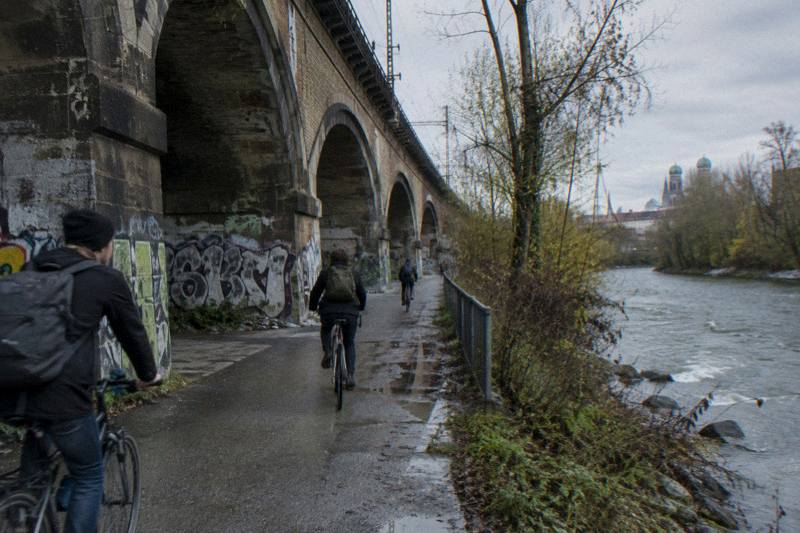
Munich Bike Rental: Prices, Deposits And Pickup Points
Munich makes renting a bike unusually easy, and unusually cheap if you use the city's own share system. Here is what the public MyRadl tariffs actually are, what a shop will ask of you at the counter, and where the pickup points cluster.
Short answer
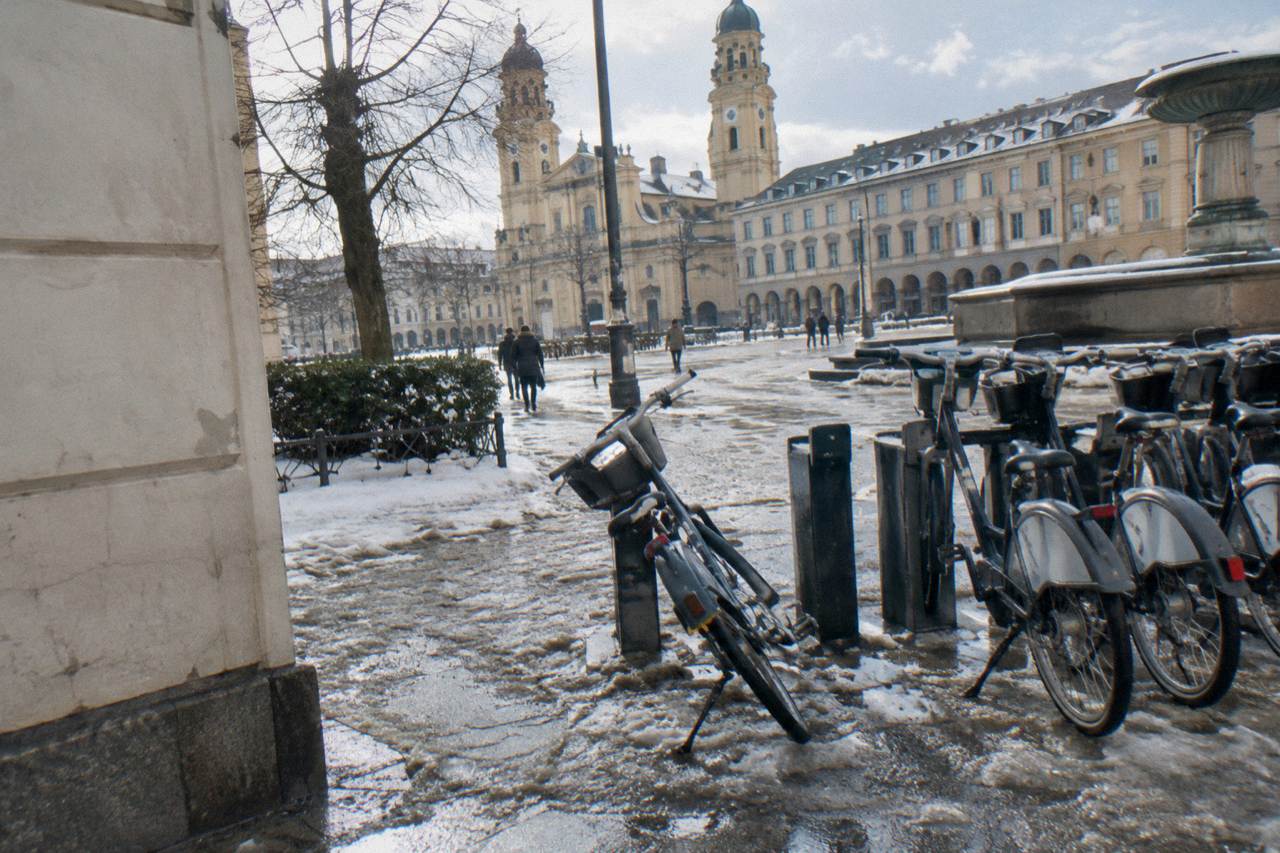
The city's MyRadl share system charges 1 euro per 30 minutes for a classic bike, capped at a 9 euro day tariff, and 3 euros per 30 minutes for an e-bike, capped at 18 euros a day. Shops set their own rates, deposits and ID rules, so check the shop directly. A guided ride bundles the bike into the ticket.
Munich is one of the easiest cities in Germany to end up on two wheels, and not only because the bike modal share here, 21 percent of daily trips, is the highest of any large German city. The practical reason for a visitor is simpler: since 7 May 2026 the region has run a public bike-share system called MyRadl, which replaced the old MVG Rad service that ended on 30 September 2025, and it puts a bike within a short walk of almost anywhere in the centre. Before that system existed, your only option was a private rental shop with its own prices, deposit and ID rules. Now you have three realistic paths: a share bike from a station, a shop rental by the day, or a guided ride where the bike comes with the ticket. This guide sets out what each path costs, what you need to bring, and where the pickup points actually are. If you are weighing the rent-versus-tour question more broadly, the companion piece rent a bike or take a guided tour walks through that decision in detail.
What Does A Munich Bike Rental Actually Cost?
MyRadl publishes its tariffs openly: a classic share bike costs 1 euro per 30 minutes, capped at a 9 euro day tariff, while an e-bike costs 3 euros per 30 minutes, capped at an 18 euro day tariff. Private shop rates in Munich vary from place to place, so treat any single figure as a quote to confirm at the counter. Those two scales, share tariff and shop day rate, are the whole cost picture. If those share tariffs appeal to you, the full guide to Munich's public bike share covers how to find a station, unlock a bike, and decide when a shop rental is the better call.
The euro figures above come from the city's own mobility pages, and they are the only rental prices in Munich you can plan a budget around without phoning anyone. A classic MyRadl bike used for a two-hour loop of the English Garden costs 4 euros if you keep it out the whole time; the same bike held for the full day can never cost more than 9 euros because the day tariff is a cap, not a separate product you have to choose in advance. E-bikes run on the same logic at triple the rate. If you hold a transit subscription that MyRadl recognises, the first 30 minutes are free on a classic bike or 1.50 euros on an e-bike, then the base rate applies.
These rental rates are quoted in euros, while guided rides are priced in dollars, so the two sets of figures do not compare directly. Tour tickets are priced per person in US dollars on each operator's booking page, and a rental day in euros is a different purchase altogether. Never let anyone convert one into the other for you; decide whether you are buying a bike or buying a route, then price that thing in its own currency.
| Option | Tariff | Day cap | Notes |
|---|---|---|---|
| MyRadl classic bike | 1 euro per 30 min | 9 euros | First 30 min free with an eligible transit subscription |
| MyRadl e-bike | 3 euros per 30 min | 18 euros | First 30 min at 1.50 euros with an eligible subscription |
| MyRadl monthly pass | 10 euros per month | terms vary | Applies to the first bike in multi-rentals |
| MyRadl annual pass | 60 euros per year | terms vary | Same first-bike condition |
| Private shop rental | set by each shop | set by each shop | Ask for the day rate, deposit and ID rule in writing |
The subscriptions in that table are aimed at residents, but they show the shape of the system: the per-minute tariff is the tourist product, and the caps protect you from a nasty surprise if a museum visit runs long. A pause function lets you hold a bike for up to 12 hours, charged, and a single rental cannot run past 24 hours.

Where Can You Pick Up A Rental Bike In Munich?
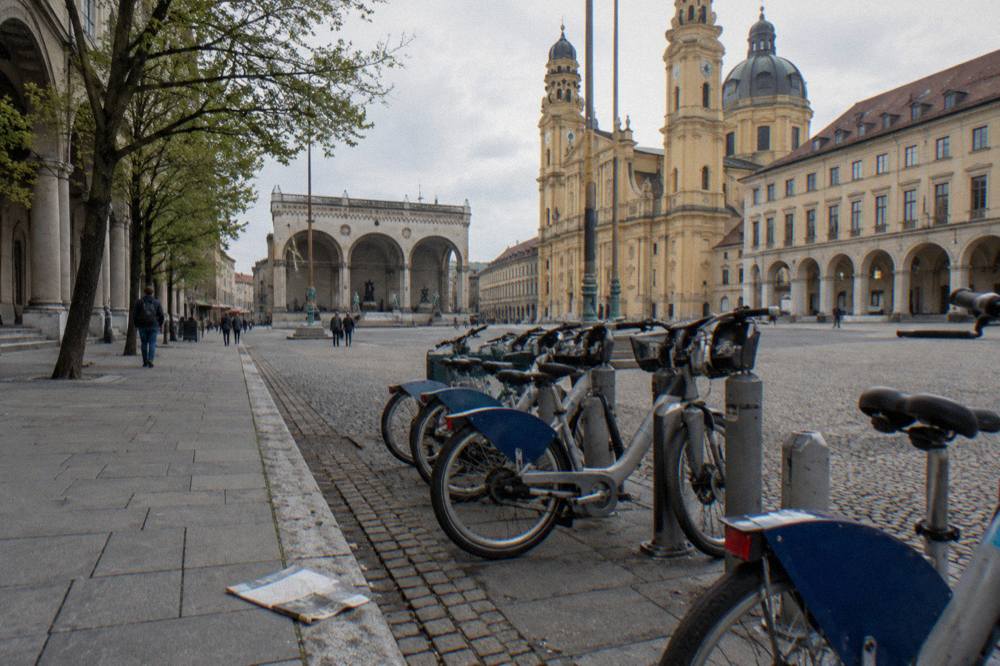
MyRadl stations are the backbone: about 1,000 fixed locations are planned across Munich and 36 neighbouring municipalities, with a reported fleet of more than 6,700 bikes, available around the clock. Shop rentals cluster around the Hauptbahnhof and the old town, and a free guarded bike garage opened on Hirtenstraße in January 2026 if you arrive with your own bike. Stations are fixed, so plan your return before you ride.
The station and fleet numbers are the planned scale for the 2026 rollout, not a guarantee of a free bike on every corner., so treat them as the planned scale rather than a guarantee of a free bike on every corner. What is certain is the mechanism: you register once, free, in the MVV app, the MVGO app or the nextbike app, scan the QR code at the rear wheel to unlock, and return the bike only at an official station. Returning outside the station network costs a 20 euro service fee, which is the single most expensive mistake in the whole system. Up to four bikes can run on one account, which matters for families.
Shop pickup is a different animal. Rental shops sit thickest between the Hauptbahnhof and the centre, and the practical differences from a station are the human ones: a fitted bike, a helmet if you want one, a lock and a map included or offered, and someone to ask about routing. None of that is free of ambiguity, though. As a rule of thumb reported across Munich listings, classic shop day rates tend to sit above the 9 euro MyRadl cap, and e-bike day rates above 18 euros, but confirm the actual figure at the counter.
| Pickup type | Where | Hours | Good for |
|---|---|---|---|
| MyRadl station | About 1,000 fixed stations, planned, across the MVV area | 24/7 | Short loops, spontaneous rides, cap-protected days |
| Private rental shop | Clustered near Hauptbahnhof and the old town | Set by each shop, one central shop reports 9:00 to 17:00 year-round | Fitted bikes, kids' bikes, trailers, advice |
| Guarded bike garage | Hirtenstraße, near the Hauptbahnhof | Free, video-surveilled, opened January 2026 | Parking a bike you already have |
| Guided ride meeting point | Stated on each operator's booking page | Stated on the booking page | Riders who want the bike included in the ticket |
If your day is really about the park rather than the city blocks, plan the pickup around it: the routes and stop options are laid out in the English Garden by bike, and starting from a station near the river saves you riding through the busiest pedestrian stretches first.
Between a station bike and a shop counter sits a third option that many visitors price last and should price first: the guided ride.
Shop Rental Or Bike-Share: Which Fits Your Day?
Bike-share wins on price and spontaneity: a capped 9 euro day, no deposit, no shop hours, unlock with an app. A shop wins on fit and equipment: children's bikes, trailers, helmets, a sized frame and a human to answer questions, at a day rate above the share cap. For a single long day of riding, a guided ride with the bike included undercuts both on hassle, and its price sits on the booking page.
The honest way to choose is by the shape of your day, not by the headline rate. If you are riding for two or three hours, mostly in the park and along the Isar, a MyRadl classic bike is close to unbeatable: 4 to 6 euros total, no deposit, and stations near both ends of the route. If your day involves a child who cannot yet ride far, or you want an e-bike for a longer reach without the per-minute e-bike tariff adding up, the shop counter earns its premium. And if what you actually want is to see the city rather than to have a bike, the guided ride hands you the route, the guide and the machine in one purchase.
Two traps sit in this comparison. First, the share e-bike tariff runs at 3 euros per 30 minutes, so the meter on a share e-bike reaches the 18 euro day cap after three hours; until then it charges 3 euros per 30 minutes, and a long e-bike afternoon costs more than most riders expect. Second, shop deposits are not standardised: at least one central Munich operator holds a government photo ID as the deposit and wants a credit card for bike security, while others take cash amounts. That is one shop's published rule, not a city rule, so check yours.
| Your day | Best fit | Why |
|---|---|---|
| 2 to 3 hours, park and river | MyRadl classic | 4 to 6 euros total, no deposit |
| Full day, own route, classic bike | MyRadl classic | Day cap at 9 euros |
| Long e-bike day, hills or distance | Shop e-bike day rate or guided e-bike ride | Metered share e-bikes hit the 18 euro day cap at three hours |
| Kids, trailers, fitted frames | Shop rental | Equipment and sizing a station cannot offer |
| First visit, want the highlights | Guided ride | Bike, route and guide in one ticket |
For riders whose interest in a rental is really an interest in the city, the featured 5-hour guided ride covers ground you would otherwise spend your rental day routing toward, and its listing states the inclusions and the meeting arrangements before you commit. The same logic runs through what a Munich bike tour covers if you want the fuller picture of what a ticket buys.
What Do You Need To Bring When Renting A Bike?
For MyRadl, bring a phone with the app, a payment method and a one-time free registration; no deposit and no ID handover. For a shop, expect a government photo ID, often held as the deposit, and a credit card; some shops take a cash deposit instead, and under-18s typically need an accompanying adult. Helmets are not legally required in Germany, though many shops supply them.
The share system's requirements are almost entirely digital. Registration is free and done once through the MVV app, MVGO or the nextbike app; unlocking is a QR scan at the rear wheel; payment runs to your stored card. Nothing is held, nothing is deposited, and the worst financial surprise is the 20 euro off-station return fee or a rental that runs past 24 hours. Your responsibilities are practical rather than contractual: check the brakes and lights before you ride off, and remember the return rule.
Shop paperwork is where visitors get caught out. The rules that recur across Munich listings are a photo ID held at the counter, a credit card for security, and an adult accompanying riders under 18. Those are operator policies, not laws, and each shop states its own, so confirm before you travel to the counter. What is law is equipment: German rules require bikes on public roads to carry prescribed lighting, at least one headlamp and a red rear lamp with a reflector, type-approved and powered by dynamo, battery or rechargeable store, and a clearly audible bell. Any legitimate rental, share or shop, should meet this. Helmets, by contrast, carry no general legal obligation for adults on standard bikes or pedelecs, though shops commonly offer them and guided rides often flag them in the listing.
| Item | MyRadl station | Private shop |
|---|---|---|
| Identification | App registration only | Photo ID, often held as deposit |
| Deposit | None | Cash or ID hold, set by the shop |
| Payment | Stored card in app | Card or cash, per shop policy |
| Minimum age | Account holder rules in app | Under-18s typically need an adult |
| Lock | Bike docks at station | Usually included |
| Helmet | Not part of the station offer | Usually offered, not required by law |
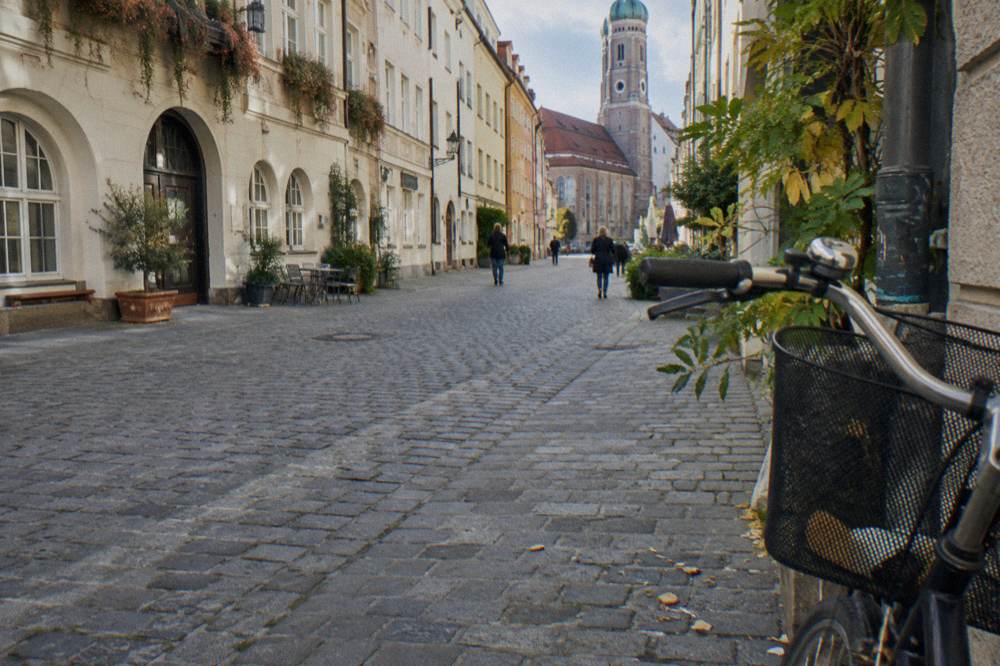
One riding rule worth knowing before your first pedal: children up to 8 must, and up to 10 may, use pavements, and bikes may ride side by side only where traffic is not obstructed. The fuller rulebook, from cycle-path signs to pedestrian-zone hours, is in cycling rules for visitors in Munich, and it answers most questions a first-day rider has.
Can A Guided Ride Replace A Rental Day?
Yes, and for many visitors it is the cheaper use of the day. A guided ride includes the bike, so the rental line disappears from your budget, and the operator's per-person dollar price, stated on the booking page, buys a route, a guide and a fixed duration of typically 2 to 5 hours. Rentals suit riders with their own plan; guided rides suit riders who want the plan made for them.
The arithmetic is not always obvious because the two products are priced in different currencies, but the structure is. Rent, and you pay euros by the half hour or day plus your own routing effort, food stops and any museum lock-ups. Book a guided ride, and the operator states the price per person in US dollars, the duration from 2 hours for a private highlights ride to 5 hours for the long Isar e-bike run, and the inclusions on the booking page. Of the 18 guided bike tours, three are e-bike rides, the only electric option if the metered share e-bike tariff puts you off, and each listing flags what is included.
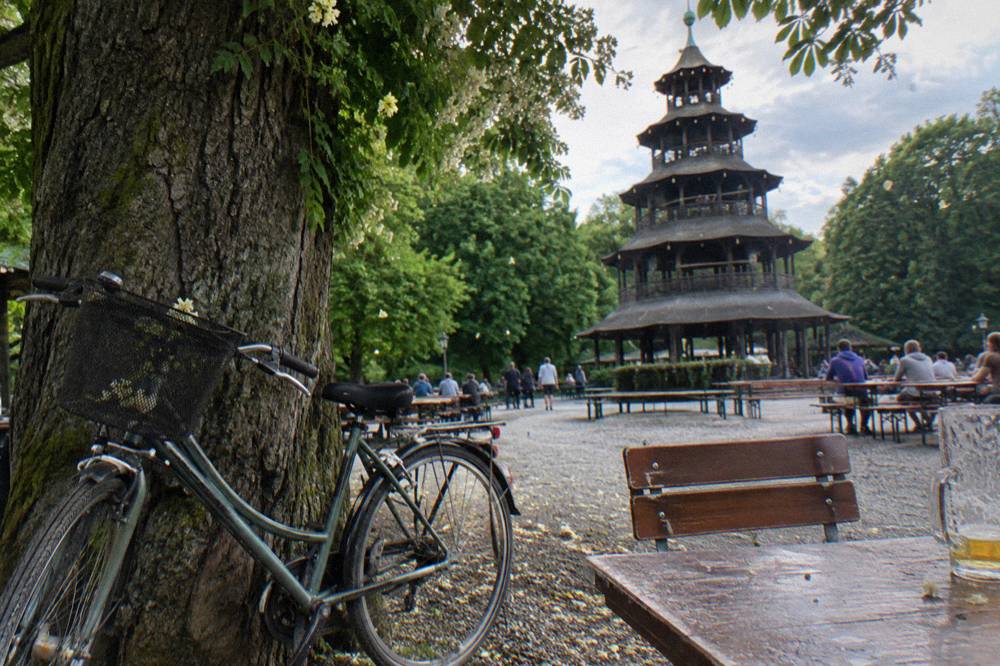
Timing matters as much as price. Munich's beer-garden season is weather-dependent: the beer garden at the Chinese Tower opens at Biergarten weather from 11:00 on weekdays and 10:00 at weekends, with only a kiosk running at cold or uncertain weather, and several guided rides build a beer-garden stop into their route at exactly the right hour. A rental rider can reach the same garden, but has to know which hour and which garden, which is precisely the knowledge a ticket buys.
Beyond the classic city rides, format variants fill gaps a rental cannot. A street-art ride, a treasure-hunt loop for families, a private highlights tour with a licensed guide in 2 hours: these are products, not bicycles, and they are priced and described on their booking pages.
The beer-garden ride above is the clearest single example of the substitution: 4 hours, a route that pairs city blocks with a proper garden stop, and a bike you never had to deposit for, unlock, cap or return to a station. If you are curious whether rain kills any of these plans, the answer is in do Munich bike tours run in the rain.
How Do You Ride Out Of The Centre And Back?
The signed city network totals 1,200 km of routes, built from 14 radial routes out of Marienplatz plus inner and outer rings and green corridors along the Isar, the Würm and the Nymphenburg canal path, and 103 bicycle streets give bikes priority at a 30 km/h ceiling. Bikes are banned from buses and trams, and on S-Bahn and U-Bahn they need the MVV bike day ticket, blocked in weekday rush hours.
That network description is the quiet argument for renting in Munich at all: the city has spent decades building routes that a first-time visitor can follow, and the radial structure means almost any ride out of the centre starts on a signed corridor. The classic first loop, described on the official tourism site, runs about 15 km from Marienplatz along the Isar and back through the English Garden, roughly two hours of riding. A canal alternative runs 10 km one way from Olympiapark toward Blutenburg, or 16 km to the Hirschgarten, home of one of the city's largest beer gardens.
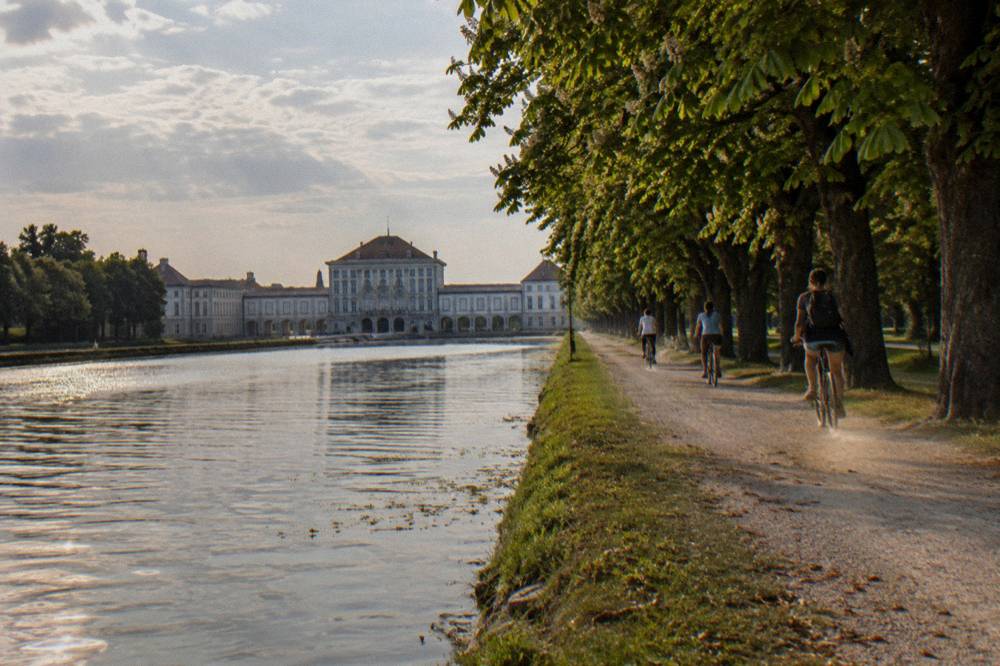
Transit is the part renters misjudge. Bikes are not permitted on buses or trams except children's and folding bikes, and on the S-Bahn, U-Bahn and approved regional trains a bicycle day ticket is required, valid across MVV zones M to 12 until 6 a.m. the following day; check the MVV's carry-on rules for the current price. Blocked periods apply on weekdays: U-Bahn 6 to 9 and 16 to 18, with the afternoon block lifted in Bavarian school holidays, and S-Bahn 6 to 9. The full picture, including the BahnCard 100 quirk, is in bikes on trains and S-Bahn in Munich.
| Way out of the centre | Signed route | Distance | Notes |
|---|---|---|---|
| Isar and English Garden loop | Isar corridor from Marienplatz | about 15 km, about 2 hours | Official tourism-site tour |
| Olympiapark to Blutenburg | Nymphenburg-Biedersteiner and Pasing-Nymphenburg canals | 10 km one way | Low-traffic canal riding |
| Olympiapark to Hirschgarten | Same corridor, extended | 16 km | Ends at Munich's biggest beer garden |
| Starnberger See day trip | Rail with bike ticket, then lake paths | about 50 km round the lake | Covered in the Starnberger See guide |
When Is Renting A Bike In Munich A Bad Idea?
Renting works against you in deep winter ice, in the densest pedestrian hours of the old town, and on days you plan to hop between museums by transit, since buses and trams refuse bikes. Winter service clears bike paths from 3 cm of snow, but short December days and cold-weather kiosk-only beer gardens change what a rental day is worth. The guided-ride calendar thins in winter too, so check dates either way.
The old town is the everyday friction point. Cycling in pedestrian zones is generally prohibited, allowed only where a supplementary sign permits it, and in the Munich old-town zone and Sendlinger Straße only between 21:00 and 9:00, at walking pace, with pedestrians having priority throughout. A rider who plans a loop that starts and ends on the ring roads rather than threading the pedestrian core saves themselves both fines and awkwardness. Fines for riding on the pavement start at 10 euros, and for not using a signed compulsory cycle path at 20 euros, per secondary legal guides to the German road code.
Season shifts the value of a rental more than most visitors expect. July, the warmest month, averages highs around 24 to 25 degrees with long evenings; January sits at 2 to 4 degrees, and May is the wettest month at roughly 92 to 108 mm of rain. None of that forbids riding, and German law imposes no winter-tyre duty on bikes, but a rented bike standing outside a three-hour museum in drizzle is a day-rate lesson. If you do ride through the cold months, city winter service clears all bike paths from 3 cm of snow, with priority routes handled within about two hours, and if a signed bike path is uncleared you may lawfully take the road.
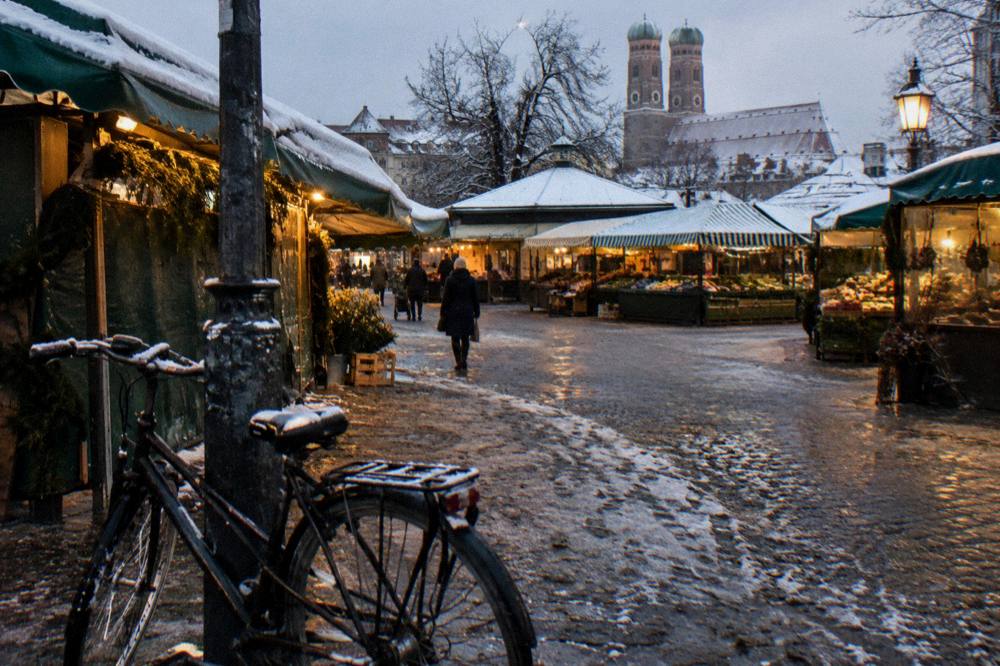
The seasonal calendar, from the Christmas market opening on 20 November 2026 to the spring festival and beyond, is laid out in the best time for a Munich bike tour, and it pairs naturally with rental planning because the same weeks that fill the streets thin the station docks. For the winter-specific picture, including lighting law and clearance rules, see Munich in winter on a bike.
A rental gives you wheels, not a route, a story, or a beer garden timed to the hour. For those, a guide on a bike is the answer: the three paid Bike Tours Munich rides below span the same spread as the top of this guide.
A private licensed-guide ride is the format to reach for when the rental-versus-tour question tips fully toward tour: two hours, your pace, your questions, and the machine included rather than deposited for. Before you decide, the short answers below cover the questions renters ask most.
Common Questions About Munich Bike Rental
How Much Is A Munich Bike Rental?
The public bike-share scheme MyRadl charges 1 euro per 30 minutes for a classic bike, capped at 9 euros a day, while e-bikes cost 3 euros per 30 minutes, capped at 18 euros. Private shops set their own day rates, deposits and ID rules, so ask at the counter.
Is Renting Bikes In Munich Difficult For Visitors?
No. MyRadl registration is free in the app, unlocking is a QR scan, and no deposit is held. Shops ask for photo ID and a card, which is standard counter paperwork rather than a barrier.
Do You Need A Helmet To Ride A Bike In Munich?
There is no general legal helmet requirement in Germany for standard bikes or pedelecs. Many shops supply helmets and recommend them, and guided rides state in the listing whether one is provided.
Can You Take A Rental On A Bike Ride Munich To The Lakes?
Share bikes must return to a station, so long lake rides suit a shop day rental or a rail trip with the MVV or DB bike ticket. The Starnberger See round ride is about 50 km on official regional figures.
Are There Public Rental Stations Near The Hauptbahnhof?
Yes. MyRadl runs fixed stations around the station area and across the centre, and a free guarded bike garage opened on Hirtenstraße in January 2026 for parking your own bike.
What Replaced MVG Rad?
MyRadl, launched 7 May 2026, is the successor after MVG Rad ended on 30 September 2025. It covers Munich and 36 neighbouring municipalities with classic bikes and e-bikes.