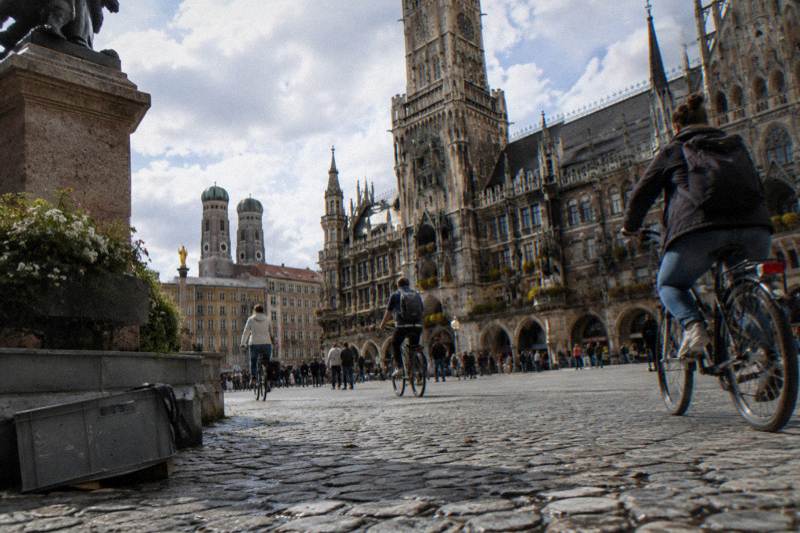
What Are The Best Tours In Munich?
A practical comparison of Munich's guided bike tour options, city highlights rides, e-bike days, themed routes and private guides, with what each format actually includes.
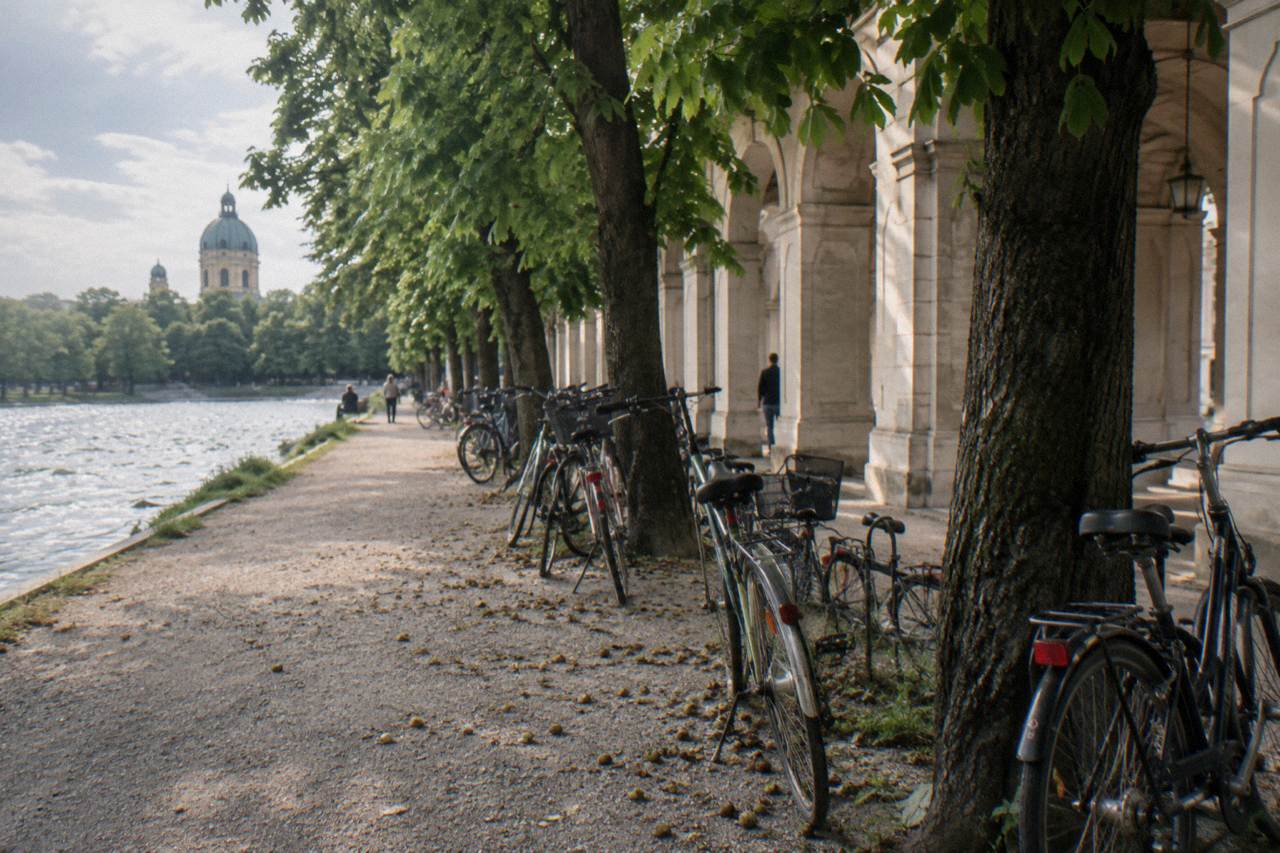
The best tour in Munich is whichever format matches your pace: a shared city-highlights ride of 2 to 5 hours, an e-bike day that stretches to the Alpine foothills, a themed route such as street art, or a private guide with a licensed expert. Munich's guided bike options split cleanly into those four families, and picking the family first, then the specific tour, is how you get a day you actually enjoy. Once you have settled on a route, our guide to where to base yourself in Munich for sightseeing by bike helps you pick a district that keeps your hotel, your meeting point, and your evening beer garden within easy rolling distance of one another.
That answer sounds evasive, so let us make it concrete. Munich has 1,200 km of signed cycling routes, a bike modal share of 21 percent of daily trips, the highest among German large cities, and a historic core that is compact enough to cross by pedal in well under an hour. Almost every guided ride in the city exploits the same geography: start near the centre, roll down the Isar embankments, cut through the English Garden with its 78 km of paths, and finish where the beer gardens are. What separates one tour from another is less the route than the bike under you, the group around you and the hours you are willing to spend.
The classic entry point is the shared city-highlights ride. The Munich 3-Hour Guided Bike Tour, listed at 3.5 hours, is the standard-shape version of this: a small-group pedal past the old town's squares and out along the river, with stops where the guide talks and everyone drinks water. Several other listings run the same family of route at different lengths, from a 2-hour private sprint to a 5-hour "vibrant city" loop. For most first-time visitors, a 3 to 4 hour shared ride is the sweet spot, long enough to reach the English Garden and a beer garden, short enough that nobody's legs give out before the stories do.
Which Tour Format Fits Your Day?
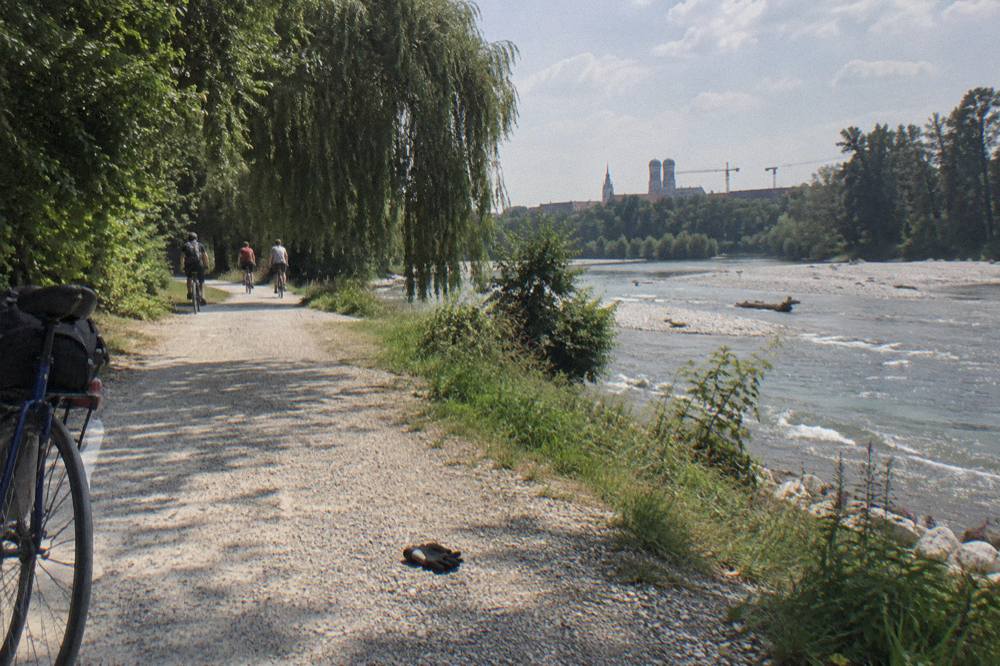
Pick by the time you have: shared city-highlights rides, running 3 to 5 hours, suit a first visit; e-bike tours, at 4 to 5 hours, cover distance without sweat; themed routes, about 3 to 3.5 hours, fit a repeat visit; and private options, 2 to 4 hours, give you control over pace and stops. Often, the clock alone decides.
Start with the honest question: how many hours do you want to spend on a saddle? A 3.5-hour classic covers the old town, the river and usually a slice of the English Garden. A 5-hour ride, like the Cycling Through Munich's Vibrant Life tour, buys you deeper districts and a longer break. The e-bike family, the Best of Munich Electric Bike Tour at 4 hours and the Isar valley full-day ride at 5 hours, trades pedal effort for reach; the listing describes the latter reaching forests, valleys and panoramic views of the Alps, which is simply not a same-day proposition on a regular bike for most visitors.
Themed rides are Munich's quiet strength. The Street Art Bike Tour, 3.5 hours, and a Guided Bike Ride and Treasure Hunt City Loop, 3 hours, replace the checklist of squares with something more specific. Private tours, from the 2-hour Munich Highlights ride with a licensed guide to the 4-hour Private Munich Bike Tour with a beer garden lunch break, are the format where the route bends to you.
| Format | Tour examples | Duration | Group type | Best for |
|---|---|---|---|---|
| City highlights classic | Munich 3-Hour Guided Bike Tour; Munich by Bike Half-Day Tour | 3 to 5 hours | Shared | First visit, the standard hits |
| E-bike | Best of Munich Electric Bike Tour; Isar full-day e-bike ride | 4 to 5 hours | Shared | Distance, hills, Alpine views |
| Themed | Munich Street Art Bike Tour; Treasure Hunt City Loop | 3 to 3.5 hours | Shared | Repeat visitors, families |
| Private | Private Munich Bike Tour with Beer Garden Lunch; Munich Highlights Private Tour | 2 to 4 hours | Private | Custom pace, families, small groups |
One structural point the table hides: several city-highlights rides appear as near-identical listings from different operators, sometimes with slightly different prices. That is a listing difference, not a quality ranking, and no review pool on any single listing is deep enough to prove one operator "better" than another. Where a listing's rating and review count are printed on the booking page, read them there, with the count beside the stars, rather than trusting summary claims anywhere else. If you are weighing a self-guided day against a guide at all, the rent a bike or take a guided tour comparison works through the trade-offs in detail.
What Does A Guided Ride Through The City Include?
A Munich guided bike tour typically includes the bike, a guide and the stated hours of riding, with inclusions such as helmets or food stops varying by listing; the 3.5-hour Munich 3-Hour Guided Bike Tour is a shared city-highlights format, and its booking page states the current price, meeting arrangements and exactly what is covered. Where a detail is not stated, ask the operator before booking rather than assuming.
The honest way to read any tour listing is to check three things: what the price is per, what is physically handed to you at the start, and what happens at the break. Shared tours in Munich are priced per person; the private tours are priced for the group. Bikes are the one inclusion you can rely on across the board, because the product is the ride. Helmets, according to German law, are not compulsory for adults on standard bikes or pedelecs, so some operators supply them and some treat them as optional extras; the listing flags this. Food and drink at a beer garden stop are almost always your own account, which is worth budgeting for, and a one-litre Maß at a beer garden runs at beer garden prices, not festival prices.
The shape of the day matters more than most visitors expect. A typical highlights ride starts mid-morning, one listing departs at 11.30, rolls through the old town while the guide sets the city's story in order, follows the Isar north, pauses at the Eisbach surf wave, threads the English Garden, and lands at a beer garden such as the one at the Chinese Tower, a 25 m structure from an 1789 design with roughly 7,000 seats at its foot, before looping back. Munich's own tourism office documents a similar self-guided version at about 15 km and 2 hours, which tells you how rideable the loop is even without a guide; what the guide adds is the stories, the pacing and the confidence.
If that classic format is the one for you, the 3.5-hour Munich 3-Hour Guided Bike Tour is the representative option, and check availability before you plan the rest of the day around it. For a fuller sense of what these rides pass, the guide to what a Munich bike tour covers lists the route families stop by stop.
Why Pick An E‑Bike Or A Themed Tour?
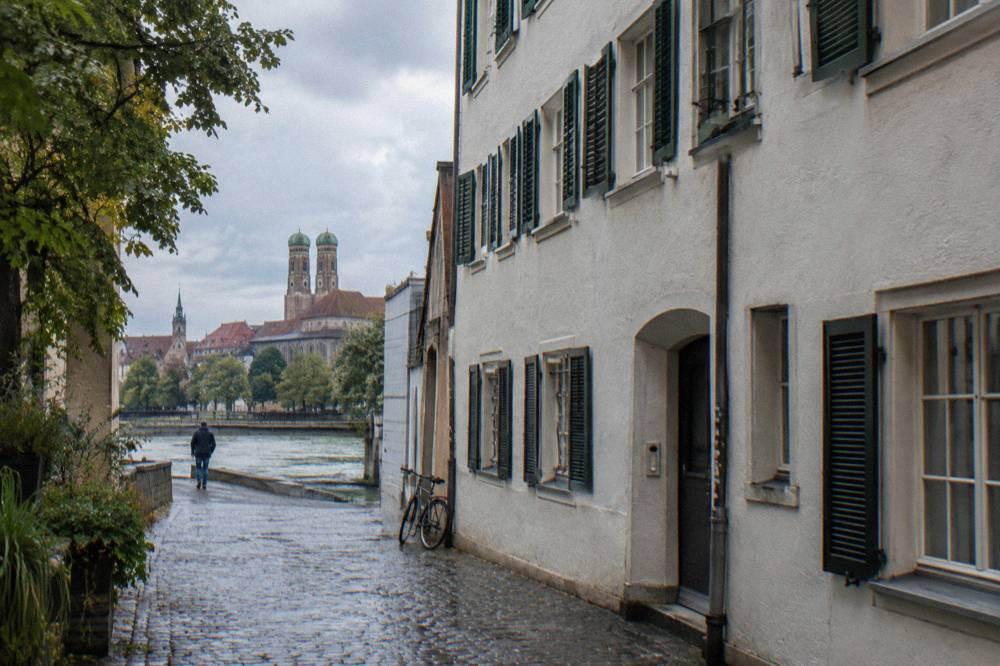
The e-bike tours, at 4 to 5 hours, reach places the classic rides cannot in a day, including the Isar valley and views of the Alps, while the themed tours, at 3 to 3.5 hours, trade breadth for depth on one subject such as street art; Munich has exactly two e-bike listings and a small set of themed rides, so the choice is narrow but real.
Electric assistance changes the mathematics of a Munich day. The Best of Munich Electric Bike Tour, 4 hours, is the battery-powered version of the highlights formula, and the Isar valley full-day ride, 5 hours, follows the river landscape south towards the Alpine foothills. The Castles Route listing covers 4 hours on a regular cross bike rather than an e-bike, despite the distance in its name. That leaves exactly two electric-assist options among the city's guided rides: the Best of Munich Electric Bike Tour over 4 hours, and the full-day Isar valley ride at 5 hours. So if distance or hills are the constraint, the decision has effectively been made for you. The Isar ride has only a handful of reviews, so treat both as route-driven choices, not review-driven ones. Other pages covering the same trip are gathered on Bike Tours Munich.
Themed rides work differently. The Munich Street Art Bike Tour spends its 3.5 hours on the city's walls and neighbourhoods rather than its royal squares, which is a genuinely different Munich, and the treasure hunt loop turns a 3-hour ride into a game, which is the format families with school-age children tend to forgive a long afternoon for. Both are shared tours.
If electric-assist sounds like cheating, it is worth knowing that Munich's own terrain is mostly flat and the classic rides rarely need the motor; the e-bike argument here is reach, not gradient. For a longer discussion of the trade-offs, including who actually benefits from a motor, see e-bike or regular bike for seeing Munich. The street-art format, meanwhile, rewards a second visit: if you have already done the squares, what you should not miss in Munich covers the corners a first loop skips.
What If You Want History Or Walking Instead?
For history specifically, no dedicated Third Reich or Dachau bike tour exists among Munich's guided rides, and the memorial and museum sites are better served on foot: the NS-Dokumentationszentrum is free to enter, and the Dachau Memorial, free to the grounds and exhibitions, offers guided walks for 4.00 euros per person. A bike tour frames the city's broader story, walking tours carry the difficult chapters.
This is the one place where steering matters. Several city-highlights rides pass sites central to the history of National Socialism, such as the Königsplatz area and the Feldherrnhalle, and a good guide will address them soberly, but there is no listing whose product is a history bike tour, and inventing one would mislead you. The serious material is concentrated in two places. The NS-Dokumentationszentrum on Max-Mannheimer-Platz is free entry for all visitors, open Tuesday to Sunday 10:00 to 19:00, and runs a free English-language guided tour of its permanent exhibition every Sunday at 13:00 with no registration, per its official site nsdoku.de. The Dachau Concentration Camp Memorial, reachable by S-Bahn and a short bus or a longer bike ride from Munich, is open daily 9:00 to 17:00, free to the grounds and exhibitions, with on-site guided tours in English at 11:00 and 13:00 for 4.00 euros per person and a 5.00 euro audio guide, minimum age 13.
The pointer, if history is your reason for travelling, is to pair formats: a general bike ride for the city's shape and its beer-garden sociability, and a walking visit to the documentation centre or the memorial for the history. Never treat a memorial site as a stop to tick off on a loop; the memorial's own guidance frames the visit as one that takes time.
Walking more broadly is where the free-to-you option lives, and it overlaps with cycling less than you would think. A pay-what-you-want walking tour covers the old town's lanes at pedestrian pace, while the city's free-to-enter public spaces, the English Garden, the Isar paths, the Eisbach wave watched from the bank, Viktualienmarkt's stalls, are all things you can reach by bike without a ticket, as the free things to do in Munich guide lays out. The bike-and-beer-garden culture that defines the city has its own write-up in Munich beer gardens by bike, which explains the bring-your-own-Brotzeit rule that applies in true beer gardens.
How Do Season And Weather Shape The Choice?
Munich's tour calendar bends around the seasons: July averages a high of about 24 to 25 C, January a high of 2 to 4 C, and May is the wettest month at roughly 92 to 108 mm, so e-bikes and long rides suit the warm half of the year while shorter city rides carry the winter. Beer garden stops, a fixture of the classic tours, are weather-dependent and largely a spring-to-autumn pleasure.
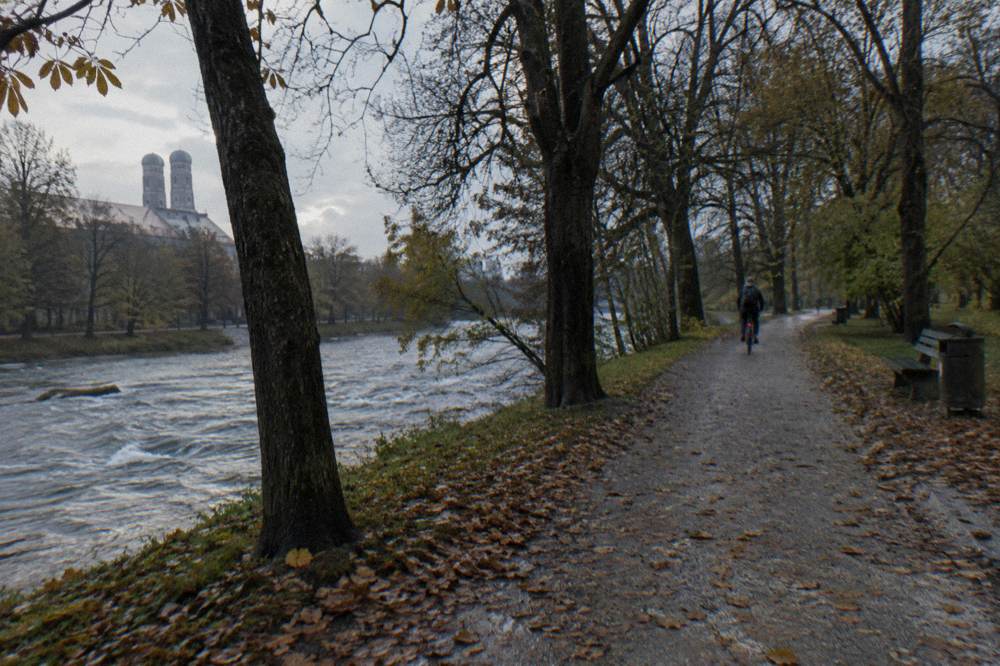
Here is what each season means for cycling in Munich. July, the warmest month, averages highs around 24 to 25 C and lows near 14 to 15 C; January sits at highs of 2 to 4 C; May peaks for rainfall. None of that forbids a winter ride, and the city clears its bike paths from 3 cm of snow within hours on winter routes, per the municipal winter service. What winter does change is the texture of the tour: the beer gardens at the Chinese Tower fall back to a kiosk in cold weather, and a 5-hour e-bike day in the Isar valley is a different proposition in February than in June. Operators run in rain more often than visitors expect, and the question of what happens to your booking in bad weather is answered per listing; check the booking page for the cancellation terms rather than assuming.
Big events also reweight the calendar. Oktoberfest 2026 has already run, 19 September to 4 October, drawing about 7.4 million guests; the 2027 edition runs 18 September to 3 October, and riding during those weeks means a livelier, more crowded city. The Christkindlmarkt on Marienplatz runs 20 November to 24 December 2026, which pairs well with a short city ride and a mulled wine rather than a full-day loop.
| Season | Typical conditions | Best tour fit |
|---|---|---|
| Spring | May wettest month, about 92 to 108 mm rain | Classic 3 to 4 hour rides, beer gardens reopening |
| Summer | July highs near 24 to 25 C | E-bike days to the Isar valley, early departures |
| Autumn | Oktoberfest window, cooler evenings | City highlights, themed rides, festival timing |
| Winter | January highs 2 to 4 C, paths cleared from 3 cm snow | Short 2 to 3 hour rides, private tours, Christmas market pairing |
Which Tour Should You Actually Book?
Book a 3 to 4 hour shared city-highlights ride if this is your first Munich visit, an e-bike day if reach and Alpine views are the goal, a themed 3-hour ride for a repeat visit or a family, and a private tour if you want the route bent around you.
Decision advice that survives contact with reality is short. If you have one day and no bike, take the classic highlights ride in the morning, keep the afternoon free for a museum or the English Garden on foot, and let the beer garden stop be the day's hinge. If you have two days, spend the second on a themed ride or an e-bike stretch, and split history off to a walking visit. If you are travelling with children who ride, the family angle, covered in Munich bike tours with kids and families, favours private or game-format tours over the long classics. Whatever you pick, confirm the meeting point, the bike type and the cancellation window on the booking page before the day, because those three details vary by listing more than the routes do.
Common Questions About The Best Tours In Munich
What Are The Best Tours In Munich?
There is no single best: shared city-highlights rides of 3 to 4 hours suit first visits, e-bike tours of 4 to 5 hours suit distance and Alpine views, themed rides such as the street art tour suit repeat visits, and private tours of 2 to 4 hours suit custom pacing. Pick the format first, then the specific listing.
How Long Do Munich Bike Tours Last?
Between 2 and 5 hours. The private highlights sprint runs 2 hours, the classic shared rides 3 to 5 hours, the e-bike rides 4 to 5 hours, and the themed rides 3 to 3.5 hours. The exact duration is stated on each booking page.
Do Munich Bike Tours Include The Bike And A Helmet?
The bike and the guide are included in every guided listing. Helmets are not legally required for adults in Germany, so provision varies by operator; check the listing's inclusions before booking, and ask the operator directly if it is unclear.
Is There A History Or Third Reich Bike Tour In Munich?
No dedicated history bike tour exists among the city's guided rides. General highlights rides pass relevant sites, but the NS-Dokumentationszentrum, free to enter with a free Sunday English tour, and the Dachau Memorial, free to the grounds, are better visited on foot with their own guided walks.
What Is The Best Area To Stay In Munich As A Tourist?
The Altstadt and areas within easy reach of the Isar put the classic tour meeting points, the old town and the English Garden closest. The fuller trade-offs, including quieter districts and transit access, are covered in the dedicated guide to the best area to stay in Munich as a tourist.
Do Munich Bike Tours Run In Bad Weather?
Many run in light rain, and operators set their own thresholds and cancellation terms. Munich's wettest month is May at roughly 92 to 108 mm of rain, so a shower-risk booking is common in spring; confirm the operator's weather and cancellation policy on the booking page.