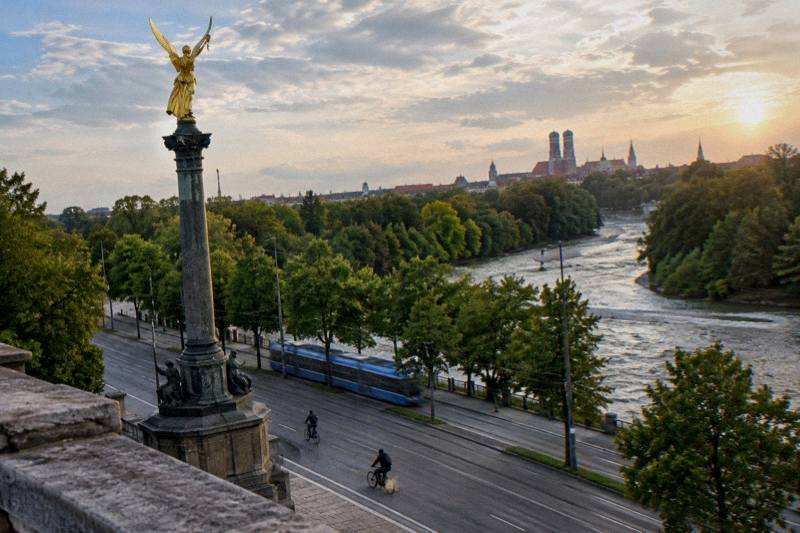
E‑Bike Or Regular Bike For Seeing Munich
Munich is famously flat, which is why most guided rides here run on regular bikes. But flat does not always mean effortless, and for some visitors the motor is the difference between a good day and a long one.
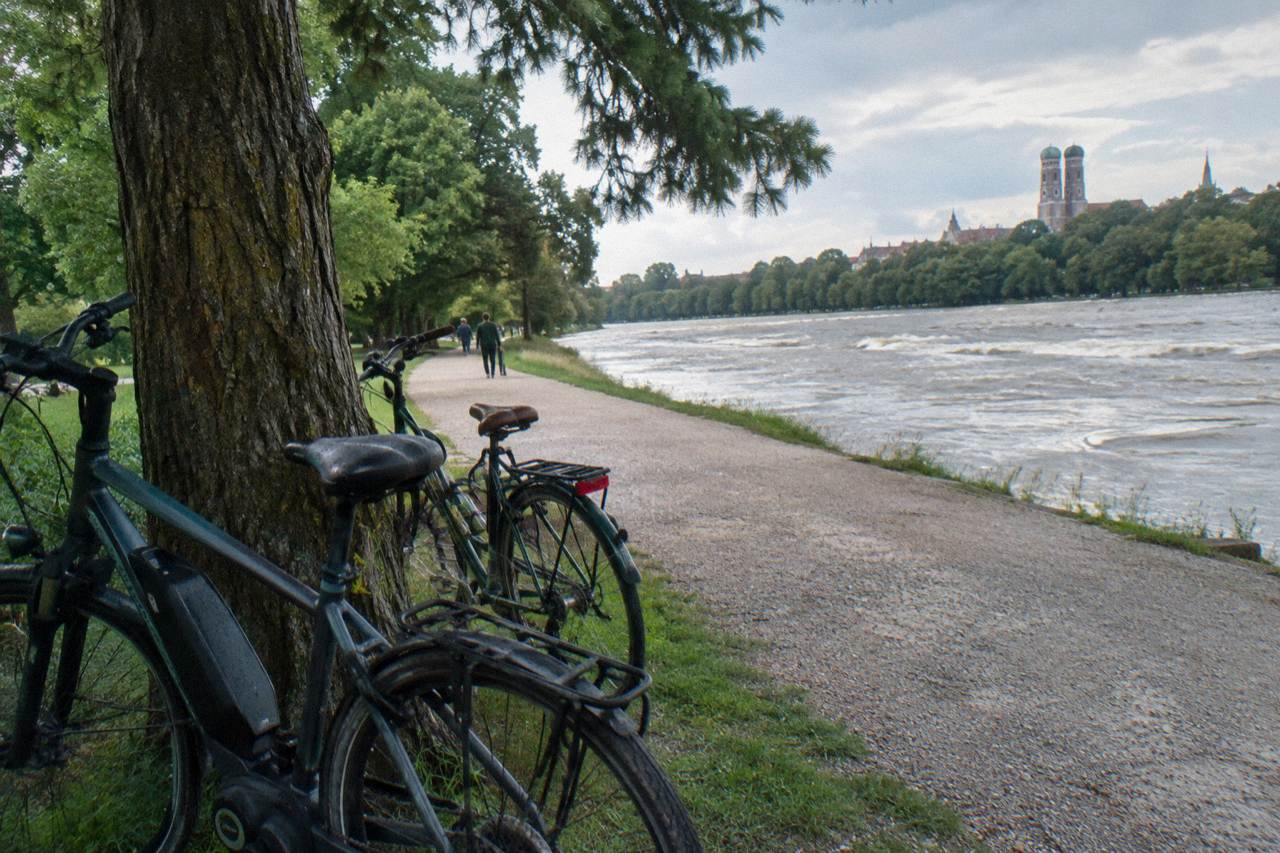
Short answer
A regular bike suits most Munich sightseeing: the centre is compact and the English Garden paths are level. An e-bike earns its keep on longer days, the Nymphenburg and Olympic Park loops, windy Isar stretches and mixed-ability groups. Two e-bike tours exist in the city alongside more than a dozen classic rides, and the MyRadl share system rents e-bikes at EUR 3 per 30 minutes or EUR 18 per day.
Munich earns its place among Germany's great cycling cities honestly. The city's bike modal share sits at 21 percent of daily trips, the highest of any large German city, on a signed route network of 1,200 km that radiates from Marienplatz. Almost none of it is steep. That flatness is the single strongest argument for a regular bike, and it is why the majority of guided rides in the city, from three-hour highlights loops to four-hour beer garden rides, run on classic bikes rather than motors.
Yet the e-bike question keeps coming up, and for good reasons. Flat cities still have long ones, headwinds still exist on open river banks, and a group of four rarely contains four identical engines. This guide sets out where the motor genuinely helps in Munich, what the price gap looks like across the tour options, and how to match the choice to your day. The short version: rent a regular bike for the centre and the beer gardens, and let the motor carry you on the long days.
Is Munich Flat Enough For A Regular Bike?
Yes, overwhelmingly. Munich sits on a gravel plain with no significant climbs between the centre, the English Garden and the river, and the city's own cycling network of 1,200 km of signed routes was built around that flatness. A rider of average fitness covers the classic sightseeing circuit on a regular bike without difficulty, which is why most guided city rides here use classic bikes and still finish inside three or four hours.
The practical geography backs this up. The old town is compact enough that much of it is walkable, so a bike covering the centre plus the southern English Garden is never working hard. North of the centre the garden rolls on for 376 hectares of level ground, with 78 km of paths shared between cyclists and joggers, according to the city's park information. The Isar corridors that frame the city east and west descend so gently that paddlers, cyclists and walkers share the same banks all summer.
What surprises first-time visitors is not climbing but distance. A loop that takes in Marienplatz, the Eisbach wave, the Chinese Tower and the northern end of the English Garden is a genuinely long ride on paper, yet none of it fights you. Riders who cycle weekly at home will finish it fresh. Riders who do not, or who are carrying a knee injury or simply want to save legs for the beer garden, are the people the e-bike conversation is really for.
If you want a sense of what a first ride in this city looks like, the first-timer city cycling route guide walks the standard loop stop by stop. Most people who read it conclude, correctly, that a regular bike is enough for that day.
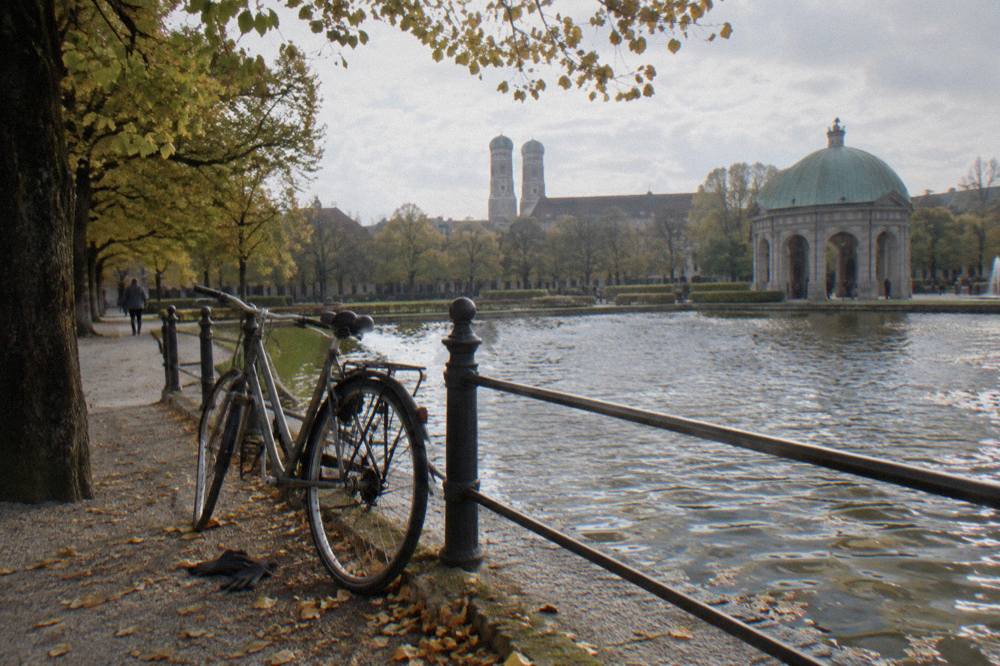
Where Does An E‑Bike Actually Help In Munich?
An e-bike helps in four specific situations: long days that string together the English Garden, Olympic Park and Nymphenburg; open stretches along the Isar where wind is a real factor; mixed groups whose fitness differs; and hot summer afternoons when riders arrive at the beer garden wanting to talk rather than pant. The motor does not help with hills, because Munich barely has any worth naming.
Start with the long day. Nymphenburg Palace sits west of the centre, the Olympic Park northwest, and the English Garden north. A rider who wants all three in one outing is covering a serious distance across town, then back, and the final stretch home is where a regular bike starts feeling honest about itself. That is exactly the shape of day where the motor pays for itself in mood alone. One classic ride on the options list, the English Garden, Olympic Park and Nymphenburg Palace loop, covers that triangle in three hours on a regular bike, and it works, but the e-bike version of the same ambition leaves more in the tank.
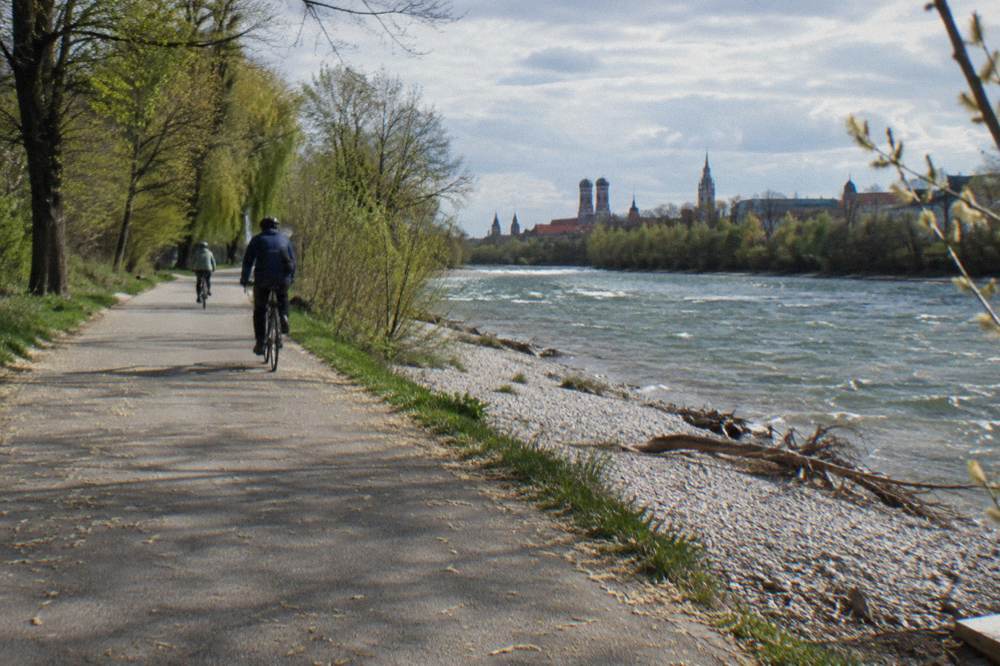
Then there is wind. The Isar banks and the northern English Garden are open ground, and a Bavarian headwind on a flat path is functionally a hill that follows you home. No number can capture how much speed a summer headwind takes from you, and none is needed: anyone who has ridden into one along the Isar knows the feeling. The motor flattens it.
The group-mix point matters more than visitors expect. Munich rides routinely pair a keen cyclist with a partner who last sat on a saddle years ago. On regular bikes, that ride is paced by the slower rider and both parties know it. On e-bikes, the gap closes, and the conversation at the lunch stop changes accordingly. The trade-off, per the tour listings' own flags, is that e-bike availability is far narrower: only two e-bike rides exist among the city's guided options, against more than a dozen classic ones.
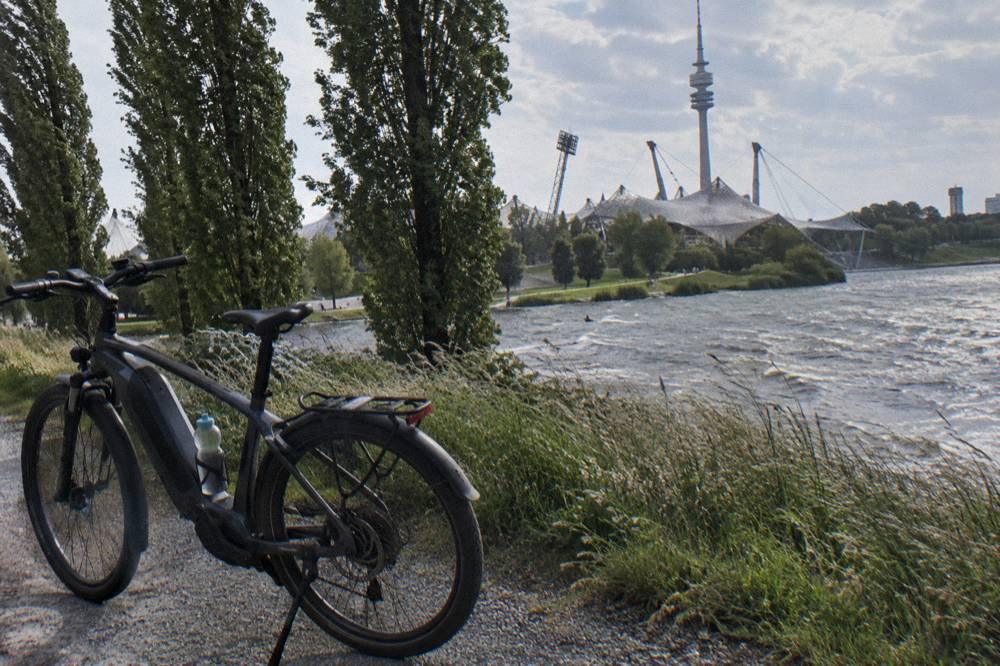
How Much More Does An E‑Bike Cost In Munich?
On the tour side, e-bike rides generally price above comparable classic rides, though exact figures sit on each booking page and shift with season. On the rental side the gap is firm and public: MyRadl, the city's share system, charges EUR 1 per 30 minutes for a classic bike against EUR 3 per 30 minutes for an e-bike, with day tariffs of EUR 9 and EUR 18 respectively.
That MyRadl spread is the cleanest public anchor for what the motor costs in this city, and it comes straight from the city's own mobility information. Registering is free, bikes unlock by QR code, and rides happen at roughly 1,000 fixed stations across Munich and its neighbouring municipalities, a network launched on 7 May 2026 with more than 6,700 bikes planned. Holders of eligible transit season tickets get the first 30 minutes free on classic bikes or at EUR 1.50 on e-bikes, which changes the arithmetic again for anyone already holding a monthly pass.

For guided tours, read each booking page rather than trusting a rule of thumb. Tour pricing moves with season, day and demand, and the listings show the current figure at the moment you book. What stays stable is the structure: a shared classic ride, a shared e-bike ride and a private ride occupy three clearly separated price tiers, with private group pricing quoted on a different basis entirely. The bike rental prices and pickup guide covers the rental-shop side of that ladder, including what a day of self-guided riding costs before you commit to any tour.
| Option type | Example from the tour options | Duration | Bike type | Typical buyer |
|---|---|---|---|---|
| Classic city ride | Munich: 3-Hour Guided Bike Tour | 3.5 hours | Regular | First visit, centre and garden |
| Classic with beer garden | Munich: Bike Tour with Beer Garden Break | 4 hours | Regular | Relaxed pace, food stop |
| E-bike city ride | Best of Munich Electric Bike Tour | 4 hours | E-bike | Longer reach, easier legs |
| Full-day e-bike | Isar, Forests, Valleys and Alpine Views | 5 hours | E-bike | Big day, out of town |
| Private classic | Munich Highlights Private Bike Tour | 2 hours | Regular | Families, tight schedules |
A useful honesty check when comparing: the cheapest option is not always the regular bike. A short private classic ride can outprice a shared e-bike ride, because you are buying exclusivity, not watts. Compare within a format first, then across formats.
What Does The Best Of Munich Electric Bike Tour Cover?
The Best of Munich Electric Bike Tour is a 4-hour shared ride that pairs the motor with a guided loop of the city's headline sights, the listing's format flag confirming it as the main e-bike option in the city-highlights mould. Riders who want the classic-bike version of a similar morning can take a standard 3.5-hour guided ride instead, and the beer-garden variants add a food stop on top.
The comparison worth making is against its classic sibling, the 3.5-hour Guided Bike Tour from Munich Walk Tours, a shared classic city-highlights ride, a similar shape of day. Both are shared, both are city-highlights tours, and the choice between them is almost purely the motor question. If you are still deciding after reading this far, that pair is the cleanest A/B test in the city: same format, same family of route, one with assistance. The booking pages for both show live pricing and departure details.
The four-hour e-bike format buys time as much as ease. An extra half hour over the classic ride is an extra sight, a longer garden stretch or a less hurried photo stop. On a first visit where you want the English Garden properly included rather than glimpsed, that buffer matters. Families weighing the same trade-off should also read the bike tour with kids and families guide, since the motor-versus-classic decision changes again when children set the pace.
E‑Bike Or Classic For The English Garden And The Isar?
For the English Garden alone, a regular bike is the better fit: the park is level, its 78 km of paths are made for wandering, and a motor adds weight and hesitation on shared paths. For the Isar corridors, especially the long downstream stretches or the full-day e-bike ride toward the Alpine foothills, the motor starts earning its place as distance and open wind exposure grow.
The garden case is simple. You will be slowing constantly, yielding to walkers near the Chinese Tower and the Seehaus, and rolling gently between beer gardens and river viewpoints. E-bikes shine at sustained effort, not stop-start garden cruising, and their extra weight is a minor annoyance when you are mounting and dismounting every few hundred metres. The city's park rules ask cyclists to respect shared use, dogs to stay leashed and swimmers to stay out of the Eisbach, none of which rewards speed. The English Garden by bike guide maps the standard route in detail.
The Isar flips the argument. South of the garden the river runs through long, open, straight banks where the wind funnels, and the full-day e-bike option on the tour list, a 5-hour ride titled around the Isar, forests, valleys and panoramic views of the Alps, is built precisely on that exposure. That is the one tour in the city where the motor is not a comfort choice but a design assumption. Its review pool is still small, so no rating claim is made here, but the format tells the story: five hours of river and forest riding on an e-bike is the product. Compare more Munich rides, from beer-garden stops to e-bike days out, on Bike Tours Munich.
| Riding day | Terrain character | Regular bike verdict | E-bike verdict |
|---|---|---|---|
| Old town plus south garden | Flat, stop-start, shared paths | Ideal | Unnecessary |
| Full English Garden to Aumeister | Flat, long, some gravel | Fine for most | Good for tired legs |
| Isar banks downstream | Open, wind-exposed, straight | Fine in calm weather | Clearly better into wind |
| Olympic Park and Nymphenburg loop | Flat but long across town | Doable, tiring | The motor's home ground |
| Alpine foothills full-day e-bike ride | Long, rural, varied | Not the intended tool | The listed format |
Does Weather Or Season Change The Choice?
Yes, in two directions. Winter shortens the useful case for the motor, since rides are shorter and cold riders dismount often, while summer strengthens it, because long warm days, beer garden stops and afternoon fatigue are exactly what assistance absorbs. Munich's wettest month is May, with roughly 92 to 108 mm of rain, and July averages around 24 to 25 degrees Celsius as the warmest month, so both extremes are in play across the season.
Winter riding in Munich is a real thing rather than a stunt. The city clears all bike paths, including its 103 bicycle streets, once snow passes three centimetres, and its winter routes, about 155 km of them, are cleared within two hours of snowfall. The Munich in winter on a bike guide covers the practicalities. In that season the shorter classic rides fit the daylight better, and an e-bike battery performs less happily in deep cold, so the default leans classic.
Spring through autumn is where the two formats genuinely compete. A May day can hand you both a shower and a headwind; a July day hands you heat and the temptation of every beer garden between Marienplatz and the Chinese Tower. The beer gardens themselves are weather-dependent: the Chinese Tower garden opens weekdays from 11:00 and weekends from 10:00 in proper beer garden weather, with brass bands on Wednesday, Friday, Saturday and Sunday afternoons, and falls back to a kiosk-only service in cold spells. Anyone planning a day around those stops, and most Munich rides do, is planning a long day, which quietly favours the motor for riders who are not regular cyclists.
| Season | Typical conditions from city data | Better fit | Why |
|---|---|---|---|
| Winter, December to February | January average high 2 to 4 degrees Celsius | Regular bike | Shorter rides, frequent stops, cold batteries |
| Spring, March to May | May averages 92 to 108 mm of rain | Either | Showers matter more than the motor choice |
| Summer, June to August | July average high 24 to 25 degrees Celsius | E-bike for long days | Heat, long daylight, beer garden fatigue |
| Autumn, September to November | Cooling, weather-dependent garden openings | Regular bike | Classic ride pace matches shorter days |
The seasonal timing question has its own answer in the best time for a Munich bike tour guide, but the short version for this decision: the further your trip sits from midsummer, the more a regular bike looks like the right call, and the closer it sits, the more the e-bike earns its tariff.
Which Should You Actually Book?
Book a regular bike if your day is the classic one: centre, garden, one beer garden, three to four hours, average fitness. Book an e-bike if any of these apply: you want the Nymphenburg or Olympic Park legs included, your group has uneven fitness, or you are riding a full day toward the Isar valley and the foothills. Most first-time visitors land on the regular bike and regret nothing.
The three-tour spread below is the decision in miniature: the electric city tour for the motor-assisted version of the classic day, the standard 3.5-hour classic ride as the benchmark, and the full-day Isar e-bike ride for the big outing. Prices, departure times and cancellation terms sit on each booking page, and all three are shared rides, so the comparison is clean.
A few closing heuristics help. If you own a bike and ride it monthly, book classic. If the last time you cycled was another city's tour two years ago, and this trip includes a full day of walking before or after, the motor is cheap insurance. If children are coming, the rent a bike or take a guided tour question matters more than the motor question, so settle that first.
For self-guided riders the MyRadl mathematics are simple enough to decide on the street corner: EUR 1 versus EUR 3 per half hour, EUR 9 versus EUR 18 per day, with a discount for eligible transit pass holders. Whether a guided classic ride beats two rented bikes for a couple is exactly the kind of sum the rental prices guide works through, and it often lands closer than people expect.
What About Battery Range And Charging?
Battery range, speed and consumption vary by bike, and each operator quotes its own numbers, so treat any figure a shop gives as that company's claim rather than a city standard. Check the live booking page for the bike model and specifics. What is verifiable is structural: tour e-bikes are charged by the operator between departures, so a guided ride never asks you to manage the battery yourself.
That distinction does more work than it sounds like it does. On a guided e-bike tour the battery question is the operator's problem: the fleet is charged overnight and swapped as needed, and if a cell underperforms mid-ride the guide handles it. On a MyRadl or shop rental, you inherit whatever charge the previous rider left, and the app's indicator is your only forecast. For a beer-garden afternoon that is a trivial risk. For a self-planned day out to Nymphenburg and back it is worth two minutes of attention at the station before you unlock.
Ask the operator one direct question when booking any e-bike ride: what happens if a battery runs flat mid-tour? Every established operator has an answer, usually a spare bike or a gentle pace home, and the answer tells you how often the question comes up. Beyond that, do not put much stock in printed kilometre ranges; real-world range varies with rider weight, wind and how much of the day you spend on the highest assist level.
Common Questions About E‑Bikes In Munich
Is Munich Too Flat To Need An E-Bike?
For the classic sightseeing day, yes, a regular bike is enough: the centre is compact and the English Garden is level throughout. The e-bike case rests on distance and wind, not hills, so it matters on long days that reach Nymphenburg or the open Isar banks rather than on any climb.
How Much Does The Best Of Munich Electric Bike Tour Cost?
The Best of Munich Electric Bike Tour starts from $67 per person, with the exact price for your date on the live booking page. As a structural guide, shared e-bike rides generally price above comparable shared classic rides and below private tours, and the booking page shows the exact per-person amount at the moment you book.
Can I Rent An E-Bike In Munich Without A Tour?
Yes. MyRadl, the public share system launched in May 2026, rents e-bikes at EUR 3 per 30 minutes with an EUR 18 day tariff, from roughly 1,000 stations across the city and surrounding municipalities. Private rental shops also rent e-bikes by the day; check each shop for its current rate and deposit terms.
Do Munich Bike Tours Include The E-Bike In The Price?
For the guided e-bike rides, the bike is included with the tour, per the listings' inclusion flags, and the same generally holds for classic tours. Confirm inclusions on the booking page before you pay, since operators occasionally adjust what is bundled.
Are E-Bike Tours In Munich Good For Older Riders Or Beginners?
Often, yes. The motor removes the fitness variable that makes group rides stressful for irregular cyclists, and Munich's flat terrain plus separated paths keep the traffic complexity low. Riders entirely new to cycling may still prefer a classic bike for its simpler handling, and a short private tour is a gentle format for a first ride.
Which Is Better For The English Garden, E-Bike Or Regular Bike?
A regular bike. The garden is level, paths are shared with walkers, and the riding is stop-start between sights, beer gardens and the Eisbach wave. An e-bike's assistance is least useful exactly here and most useful on the long, open stretches that lead away from it.