Free Things To Do In Munich
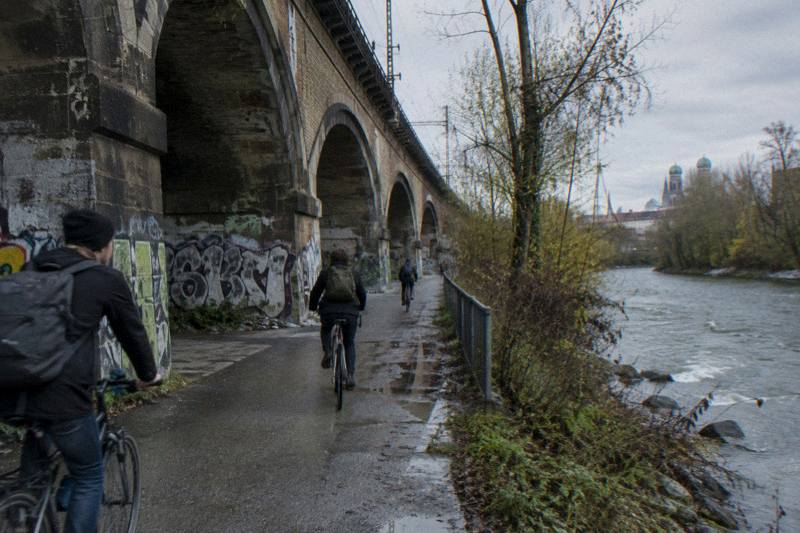
Munich gives away an unusual amount for nothing: a 376-hectare park, river paths through the middle of town, a standing surf wave you can watch from the bank, free memorials and one genuinely free guided walk. Here is what costs nothing, what quietly does not, and where a guided bike ride earns its price.
Short answer
Yes, Munich can be enjoyed largely for free. The English Garden is open year-round with free entry across 376 hectares, the Isar river paths are free, watching Eisbach surfers from the bank costs nothing, Viktualienmarkt is free to browse, and the NS-Dokumentationszentrum and Dachau Memorial grounds charge no admission. A pay-what-you-want walking tour covers the Old Town in about 2 hours 30 minutes.
Munich hands out free experiences in the places visitors actually go, not on its outskirts. The English Garden, charges nothing at its 376 hectares of meadows, streams and beer-garden shade. The Isar river runs through the centre with free paths on both banks. A standing wave under a bridge draws surfers you can watch for hours without spending a cent, and two of the city's most sobering and most important sites, the NS-Dokumentationszentrum and the Dachau Memorial grounds, admit everyone free of charge. Once you have covered the free side of the city, a guide to the sights first-time visitors should not skip in Munich fills in the rest of the itinerary.
The catch is distance. The free things are spread across a city that is bigger on the ground than the map suggests, from Marienplatz in the south to Aumeister at the top of the English Garden. Walkers cover a fraction of it. Cyclists, using a park with 78 km of paths, cover nearly all of it, which is why this guide ends where the free options meet their natural limit and a paid guided ride takes over.
What Can You Do In Munich Without Spending Anything?
The core free list is short and strong: the English Garden park, the Isar river paths, the Eisbach surf wave viewed from the bank, Viktualienmarkt browsing, the NS-Dokumentationszentrum, the Dachau Memorial grounds and the Glyptothek on Sundays for one euro per museum, which is close enough to free to plan around. Add a pay-what-you-want Old Town walking tour and the city's own free guided bike tours in summer, and a full free itinerary exists.
Most of these cluster in a band you can trace on a map in one line: Marienplatz and Viktualienmarkt at the southern end, the Eisbach wave where the river enters the English Garden, then the park stretching north for kilometres. The memorials sit slightly off that line, the NS-Dokumentationszentrum at Königsplatz and Dachau a train ride out of town, but both are reachable without a ticket barrier of any kind.
What is genuinely not free matters just as much. Bike share is a paid service, the MVV bike day ticket for trains costs money, and palace interiors such as Nymphenburg charge admission even though the park's outdoor areas can be approached freely. Getting the free and the paid straight before you plan the day saves the small disappointments that add up.
| Free activity | Area | What you get |
|---|---|---|
| English Garden | Northeast of the centre | 376-hectare park, open year-round, 78 km of paths |
| Isar river paths | Through the city centre | Riverside cycling and walking on both banks |
| Eisbach surf wave | South edge of the English Garden | Standing-wave surfing, viewable from the bank |
| Viktualienmarkt | Marienplatz | Food market browsing, free to enter |
| NS-Dokumentationszentrum | Königsplatz | Permanent exhibition, free entry |
| Dachau Memorial grounds | Dachau, outside Munich | Grounds, visitor centre and exhibitions, free entry |
The city also runs things visitors rarely hear about. In the 2026 season from April to October, the Mobilitätsreferat offered cost-free guided bike tours under the name München neu entdecken, roughly 2.5 hours each with a maximum of 20 participants, registration through muenchenunterwegs.de opening two weeks ahead. Those tours are district rides rather than sightseeing rides, but free is free, and they pair well with a paid classics loop on another day.
Is The English Garden Really Free To Visit?
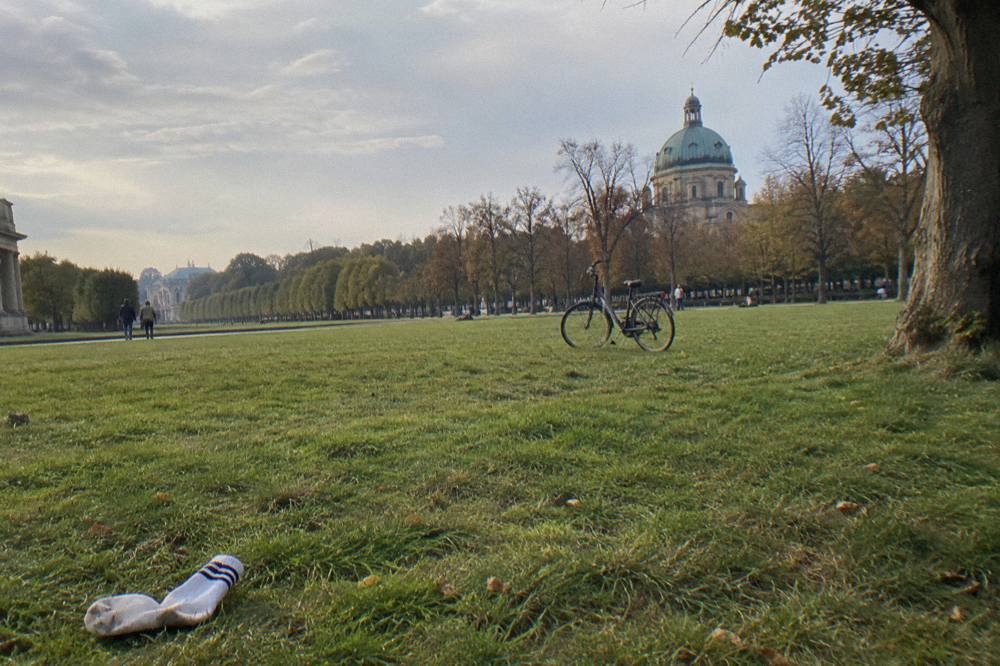
Yes, completely. The English Garden is open year-round with free entry, and its 78 km of paths, meadows, streams and monuments cost nothing to use. The charges begin only at the beer gardens and at any rented bike you ride in on, and even the beer gardens follow the true beer-garden rule that lets you bring your own food and buy only the beer.
The park's scale is the free gift that keeps giving. Designed in 1789, it runs from the Prinzregentenstrasse edge near the city centre up to Aumeister in the north, and its network of 78 km of paths serves cyclists and joggers alike. The Chinese Tower, a 25-metre wooden structure, stands roughly in the middle with a beer garden at its foot; the tower itself is free to look at, and the beer garden at its base is where the costs start, on your terms.
Rules are few but firm, and they come from the park's own administration. Dogs are allowed but must stay leashed. Barbecues, open fires and camping are prohibited, and swimming in the Eisbach within the park is banned as life-threatening. Designated nude sunbathing zones exist at the Schönfeldwiese and the Schwabinger Bucht, marked on the city's own FKK page, so nobody is surprised mid-ride. The official park page lists the current rules in full: the English Garden rules on muenchen.de.
For cyclists the park is the highlight of any free day, and it deserves a proper route plan rather than a vague roll north. The companion guide to cycling the English Garden loop covers the paths, the monuments and where the beer gardens sit along the way, and it pairs with the deeper detail in riding through the park on two wheels.
One honest note on beer gardens, since they sit inside the free park but are not free themselves: in true Munich beer gardens you may bring your own Brotzeit, the bread-and-snack plate, and buy only the beer. That rule is stated by the city itself and it turns a beer-garden stop from a restaurant bill into the price of one drink. Opening hours are weather-dependent, with the Chinese Tower garden typically opening from 11:00 on weekdays and 10:00 on weekends in good weather, and reduced to a kiosk in bad. Full detail lives in the beer gardens by bike guide.
Where Can You Watch The Eisbach Surfers For Free?
Watching the Eisbach surfers costs nothing and needs no ticket, no timing guarantee and no gear: the wave sits on the Eisbach at the southern edge of the English Garden, next to the Haus der Kunst, and the bank is public. Surfing itself is regulated under an amended city decree, with a mandatory self-releasing leash and a ban from 22:00, but spectators on the bank simply stand and watch.
The wave is a Munich original, a standing wave on a man-made river channel that surfers ride in wetsuits a few metres from a busy road. It was closed for a period and has been allowed again under an amended general decree issued by Lord Mayor Dominik Krause; the conditions that came with it are the leash requirement, the 22:00 cutoff and the instruction to follow posted signs. Surfers surf at their own risk. The decree's wording and the current status are on the city's own page, which is the source to trust: the Eisbach wave rules on muenchen.de.
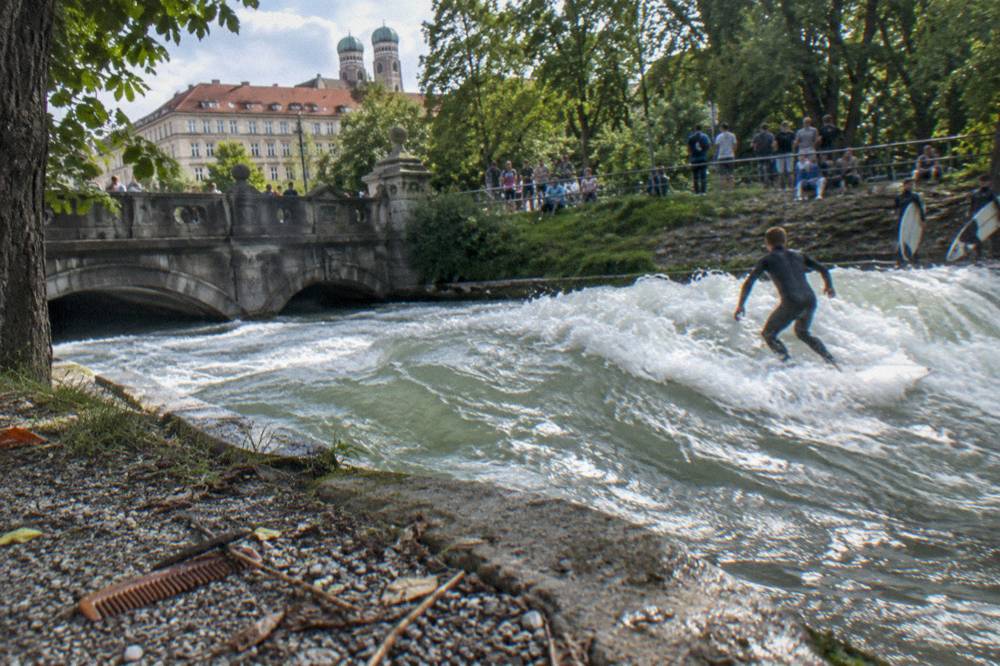
Spectators should know what they are looking at. The wave is surfed continuously in shifts whenever conditions allow, and the bank and bridge above it give a proper view. There is no viewing fee, no queue and no schedule, because the surfers come and go on their own; the realistic expectation is that someone is riding it most daylight hours in warmer months, and the city makes no promise beyond that.
| Eisbach wave fact | Detail |
|---|---|
| Cost to watch | Free, public bank and bridge |
| Surfing status | Allowed again under an amended general decree |
| Required equipment for surfers | Self-releasing leash, mandatory |
| Time limit for surfing | Ban from 22:00 |
| Risk | Surfing is at the surfer's own risk |
The wave's backstory, including why it closed and what changed, is covered in the guide to the Eisbach wave and its surfers. For this page the point is simpler: it is one of the few world-famous sights anywhere that you can stand a metre from, for free, for as long as you like.
Can You Ride Or Walk Along The Isar For Free?
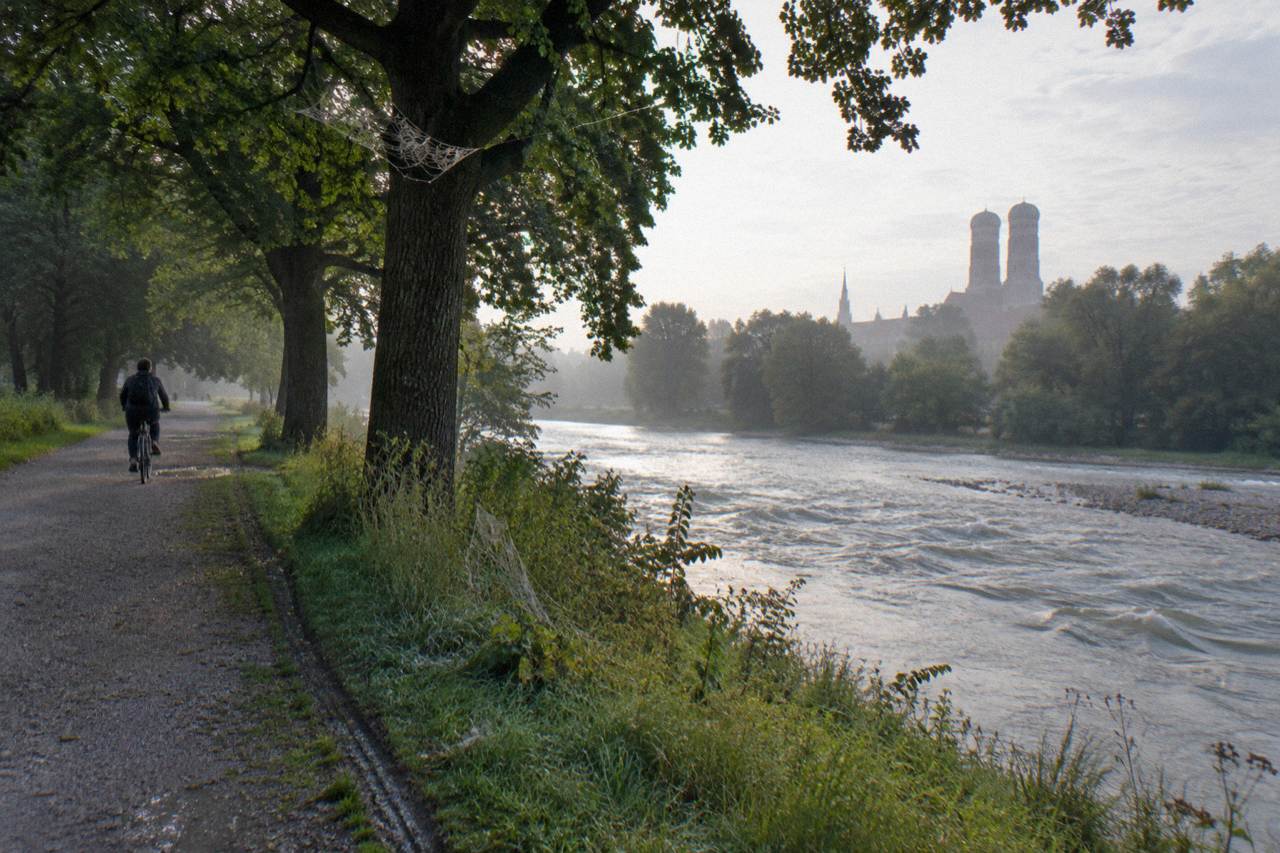
Yes, the Isar paths are free public riverside trails running through the centre of Munich on both banks, and they connect the English Garden to the southern districts in one continuous green corridor. Cyclists and walkers pay nothing. Swimming in the Isar is free too, but only in seven designated sections, never when the water level exceeds 1.20 m at the Munich measuring point, and always at your own risk.
The Isar is the free spine of the city. Its gravel and paved paths carry commuters and day-trippers from the southern suburbs up to the Deutsches Museum and on into the English Garden, and the city's signed cycle network uses the corridor as one of its green radial routes. No section of it charges, no permit exists, and the only rules worth knowing are the swimming ones: seven named sections where swimming is allowed, a closure threshold of 1.20 m water level, and no official bathing-water monitoring, so the city states plainly that you swim at your own risk. Typical summer water temperature sits between 14 and 22 degrees C, which tells you what you are getting into.
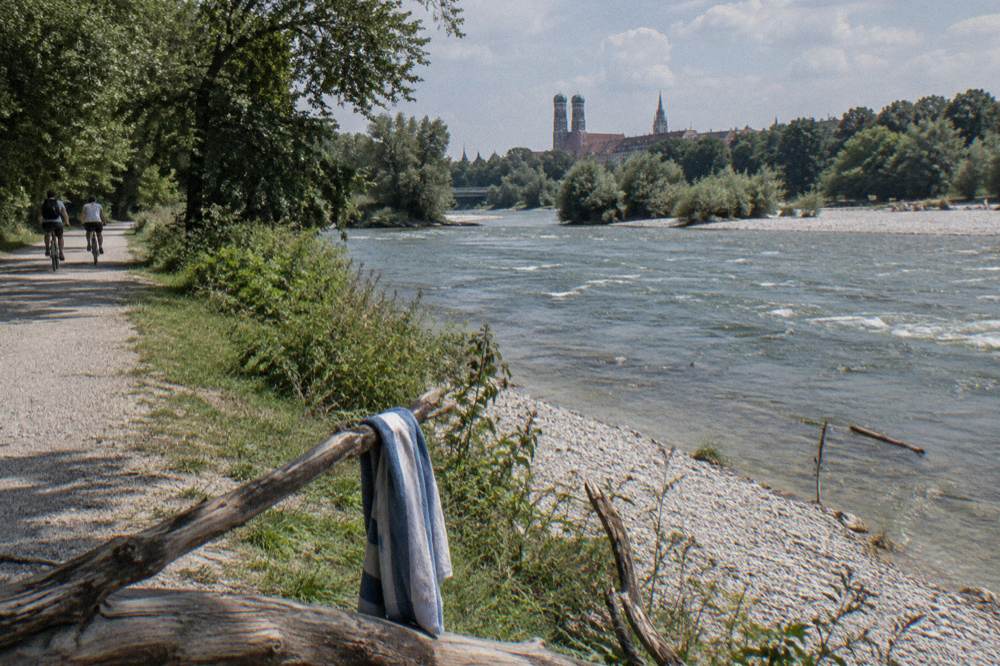
For riders who want to turn the river into a route rather than a stroll, the Isar cycle path guide traces the corridor and its onward connections, including the long-distance Isar route that runs far beyond the city. Within Munich itself the river and the park together form a free loop that most visitors never complete on foot simply because it is long.
This is also the honest place to name the gap in a purely free day. The free sights along the Isar and inside the English Garden are spread over several kilometres, and a walking pace covers the park's southern half while missing its north entirely. A guided ride such as the 3-hour city highlights tour exists precisely for that: the operator's listing describes 3.5 hours of guided riding with bike and helmet included, connecting the Old Town to the river and the garden in one loop, with free cancellation if the weather turns.
| Isar fact | Rule or detail |
|---|---|
| Path access | Free, both banks, through the city |
| Swimming sections | Seven designated sections only |
| Swimming ban trigger | Water level above 1.20 m at the Munich measuring point |
| Monitoring | No official EU bathing-water monitoring, swim at own risk |
| Typical summer water temperature | 14 to 22 degrees C |
Is The Viktualienmarkt Free To Browse?
Yes, Viktualienmarkt is a public market and browsing costs nothing; you pay only for what you buy. Required selling hours run 10:00 to 18:00 Monday to Friday from April to October, with shorter winter hours, and Saturdays until 15:00, while individual stalls set their own opening times within that frame and most close Sundays and public holidays.
The market sits a block from Marienplatz and it is the easiest free stop in the city, because the experience is the browsing: the stalls, the produce, the beer garden at the centre of it, and the constant turnover of a working market rather than a museum piece. Nothing stops you walking the full length of it, reading every sign and photographing every cheese wheel, without buying a thing. What to actually eat, and what the market's own specialties are, fills a whole companion piece: the guide to Viktualienmarkt and what to eat there.
Timing matters more here than anywhere else on the free list. The market's minimum selling hours are set by the city: 10:00 to 18:00 Monday to Friday from 1 April to 31 October, 10:00 to 17:00 in winter, and 10:00 to 15:00 on Saturdays year-round. Individual stalls commonly open earlier and close later than the minimum, but the later you arrive on a Saturday, the more shutters you will find down, and on Sundays the market is largely closed. A free morning itinerary that pairs Marienplatz, the market's stalls and a walk up to the Eisbach wave works with the market's rhythm rather than against it.
How Does A Free Walking Tour In Munich Work?
A free walking tour in Munich works on a pay-what-you-want basis: the tour itself costs nothing, and you simply tip the guide at the end whatever the walk felt worth to you. The Free Tour of Munich's Old Town runs about 2 hours 30 minutes in English and Spanish, meets at the Fischbrunnen on Marienplatz, where the guide holds a green umbrella, and is rated 4.55 across 2,140 English reviews on GuruWalk.
The walk covers the Old Town's core, and it is a walking tour rather than a ride: the two and a half hours stay inside the compact centre, which is exactly where walking beats cycling, on pedestrian squares and narrow lanes where bikes give way anyway. For first-time visitors getting their bearings on day one, before spending anything on tours, it is the most efficient free orientation in the city.
See this free tour on GuruWalk
"Free" here always means pay-what-you-want, in Munich as everywhere, so budget a tip rather than a zero. The walk's natural limit is equally clear: it stays in the Old Town, while the English Garden and the Isar side of the city, the parts that make Munich distinctive, lie outside its reach. That is the single gap where a paid guided bike ride adds something real. A ride covers far more ground in comparable time, reaches the English Garden and the river in the same outing, and comes with bike and helmet included per the listing's inclusions. The 3-hour English Garden, Olympic Park and Nymphenburg ride is built exactly on that gap:
| Option | Cost basis | Time | Coverage |
|---|---|---|---|
| Free Old Town walking tour | Pay what you want, tip the guide | About 2 hours 30 minutes | Old Town centre, on foot |
| City free guided bike tours (city-run, summer) | Free, registration required | About 2.5 hours | Individual districts, e.g. 13 to 15 km routes |
| Guided 3.5-hour city ride | From the price on the operator's listing | 3.5 hours | Old Town, river and English Garden loop |
The city's own free bike tours, mentioned earlier, fill a similar niche in a different way: district rides of roughly 13 to 15 km, capped at 20 participants, run April to October with registration through muenchenunterwegs.de. They are a local's tool for seeing neighbourhoods, not a highlights tour, and between the free walk, the free city rides and one paid loop, most visitors can build a complete week on very little.
Which Munich Museums And Memorials Cost Nothing?
Two heavyweights are free: the NS-Dokumentationszentrum admits everyone free, Tuesday to Sunday 10:00 to 19:00, with a free English-language guided tour of the permanent exhibition every Sunday at 13:00, and the Dachau Concentration Camp Memorial admits free to the grounds, visitor centre and exhibitions, daily 9:00 to 17:00. The Glyptothek charges one euro per museum on Sundays, and under-18s are free at several major museums.
The NS-Dokumentationszentrum, at Max-Mannheimer-Platz 1 beside Königsplatz, documents the city's Nazi past in a permanent exhibition that the centre states is free for all visitors, no ticket and no booking required. The Sunday 13:00 English tour needs no registration either. Its location matters: Königsplatz was staged by the regime as a showcase, and the documentation centre stands as the counterweight. Handle these sites as places of remembrance, not items on a sightseeing list.
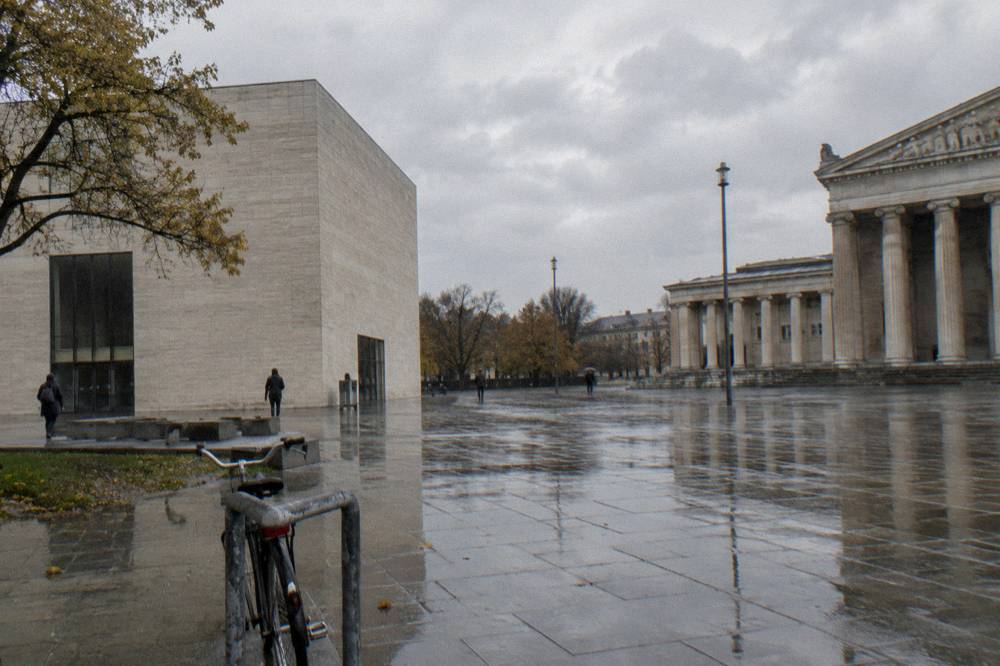
The Dachau Memorial, a train ride from the centre, is free to the grounds, visitor centre and exhibitions, closed only on 24 December, with last entry to the former crematorium area at 16:30. Guided tours for individual visitors cost 4.00 euros per person and run about 2.5 hours, and audio guides cost 5.00 euros, but admission itself is nothing, and the memorial's own pages carry the current detail: Dachau Memorial visitor information. For the logistics of reaching it, the guide to Dachau from Munich by bike and train covers the route soberly.
Elsewhere the free edges thin out but do not vanish. Under-18s enter the Residenz and the Glyptothek free., Sundays at the Glyptothek cost one euro per museum, and the Lenbachhaus opens its doors free on first Thursdays from 18:00 to 22:00. The Haus der Kunst shuts nothing behind a full ticket but opens free on the last Friday of the month from 16:00 to 22:00. Nymphenburg Palace is the counter-case: interiors charge a combined ticket, 20 euros regular in summer and 16 euros in winter, so treat Nymphenburg as a paid stop, or approach the park's outdoor edges as the free portion.
| Site | Entry cost | Notes |
|---|---|---|
| NS-Dokumentationszentrum | Free | Tue to Sun 10:00 to 19:00, free English tour Sundays 13:00 |
| Dachau Memorial grounds | Free | Daily 9:00 to 17:00, tours 4.00 euros, audio guide 5.00 euros |
| Glyptothek | 1 euro on Sundays | Under-18s free |
| Lenbachhaus | 10 euros, free first Thursday 18:00 to 22:00 | Tue to Sun 10:00 to 18:00 |
| Haus der Kunst | Free last Friday monthly 16:00 to 22:00 | Closed Tuesdays |
| Nymphenburg interiors | 20 euros summer, 16 euros winter | Not a free stop |
What Is Actually Free And What Quietly Is Not?
Everything under open sky on this list is free, while anything behind a ticket barrier, rental fleet or seat quietly is not: public bike share runs at 1 euro per 30 minutes for a classic MyRadl bike or 9 euros for its day tariff, bikes on S-Bahn and U-Bahn need the MVV bike day ticket, which you should price on mvv-muenchen.de, and beer gardens, market snacks and palace interiors each charge their own way.
The bike-share point trips people up because the bikes sit in public space. MyRadl, the regional system that launched on 7 May 2026 with around 1,000 stations and more than 6,700 bikes planned across Munich and 36 neighbouring municipalities, is a commercial service: 1 euro per 30 minutes for a classic bike, 9 euros for a 24-hour day tariff, 3 euros per 30 minutes for an e-bike or 18 euros for its day tariff, with the first 30 minutes free on a classic bike for holders of eligible transit subscriptions. Useful, cheap by tour standards, but not free. The tariffs are published by MVV: MyRadl bike-share tariffs on mvv-muenchen.de.
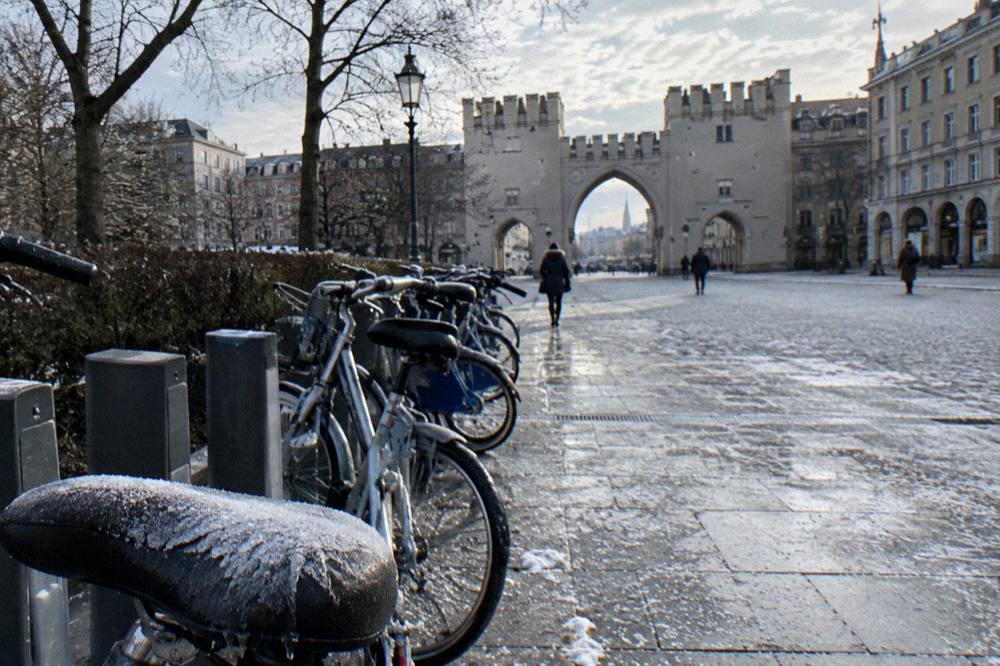
Train carriage is the same story. A bike on the S-Bahn, U-Bahn or approved regional trains inside the MVV area needs its own bike day ticket, valid across zones M to 12 until 6 a.m. the following day, with weekday blocked hours on the U-Bahn from 6 to 9 and 16 to 18, the afternoon block lifted during Bavarian school holidays. Buses and trams take no standard bikes at all. The price belongs on the operator's own page rather than in second-hand print, so check mvv-muenchen.de before you buy; the guide to bikes on Munich trains walks the whole rule set.
| Item | Free or paid | Detail |
|---|---|---|
| English Garden | Free | Open year-round, 376 hectares |
| Isar paths | Free | Both banks |
| Eisbach viewing | Free | Public bank |
| Viktualienmarkt browsing | Free | Pay only for purchases |
| Dachau grounds and NS-Doku | Free | Exhibitions included |
| MyRadl classic bike | Paid | 1 euro per 30 min, 9 euros per day |
| MVV bike day ticket | Paid | Price on mvv-muenchen.de |
| Nymphenburg interiors | Paid | 20 euros summer, 16 euros winter |
| Beer gardens | Beer paid, own food allowed | Brotzeit may be brought in true beer gardens |

By this point the pattern is clear enough to plan around. A visitor with a MyRadl day tariff or a spot on a guided ride can hit every free item on this page in a single long day: the market in the morning, the wave at midday, the park through the afternoon, a beer garden with brought-along Brotzeit to finish. A visitor determined to pay nothing at all can still do the walking version, minus the park's northern half, and the free Old Town walk covers the centre properly. For an electric-assist version of the same big day, the e-bike option below stretches the range without stretching the legs:
And for families who want the highlights loop without the group pace, a private guide with a licensed city qualification shortens the same ground to two hours, which is the format that suits younger riders best:
Common Questions About Free Things In Munich
What Can You Do In Munich Without Spending Anything?
Walk the English Garden, ride or stroll the Isar paths, watch the Eisbach surfers from the bank, browse Viktualienmarkt, and visit the NS-Dokumentationszentrum and the Dachau Memorial grounds, all free of charge. A pay-what-you-want Old Town walking tour of about 2 hours 30 minutes rounds out the free itinerary.
Is The English Garden Free To Enter?
Yes, free and open year-round across its 376 hectares and 78 km of paths. Charges apply only inside the beer gardens, and even there you may bring your own food to a true beer garden and buy only the beer.
Is It Free To Watch The Eisbach Surfers?
Yes, the bank and bridge beside the wave are public and viewing costs nothing. Surfing itself is regulated, with a mandatory self-releasing leash and a ban from 22:00, but spectators simply watch from the bank at their own pace.
Are Munich's Bike-Share Bikes Free?
No. MyRadl is a paid service: 1 euro per 30 minutes for a classic bike or 9 euros for a day tariff, 3 euros per 30 minutes for an e-bike or 18 euros per day, with the first 30 minutes free on a classic bike for holders of eligible transit subscriptions.
Which Munich Museums Are Free?
The NS-Dokumentationszentrum is free to all visitors, Tuesday to Sunday 10:00 to 19:00, and the Dachau Memorial grounds and exhibitions are free daily. The Glyptothek costs one euro per museum on Sundays, and the Lenbachhaus and Haus der Kunst each open free on set days each month.
Can You See Munich For Free In One Day?
Largely, yes, on foot or by bike: Viktualienmarkt and Marienplatz in the morning, the Eisbach wave and the southern English Garden at midday, the Isar paths in the afternoon, and Königsplatz's free documentation centre to close. The park's north and the Olympic Park area push the day beyond walking range, which is where a guided ride or a MyRadl day tariff earns its price.