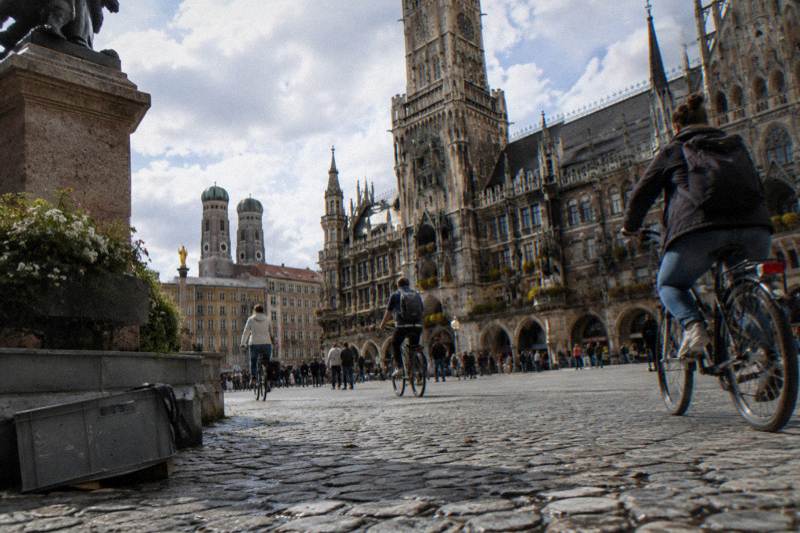
Which European City Is Best For Cycling?
What makes a European city great for cycling, where Munich sits among them, and how to see the city's bike network on a guided ride.
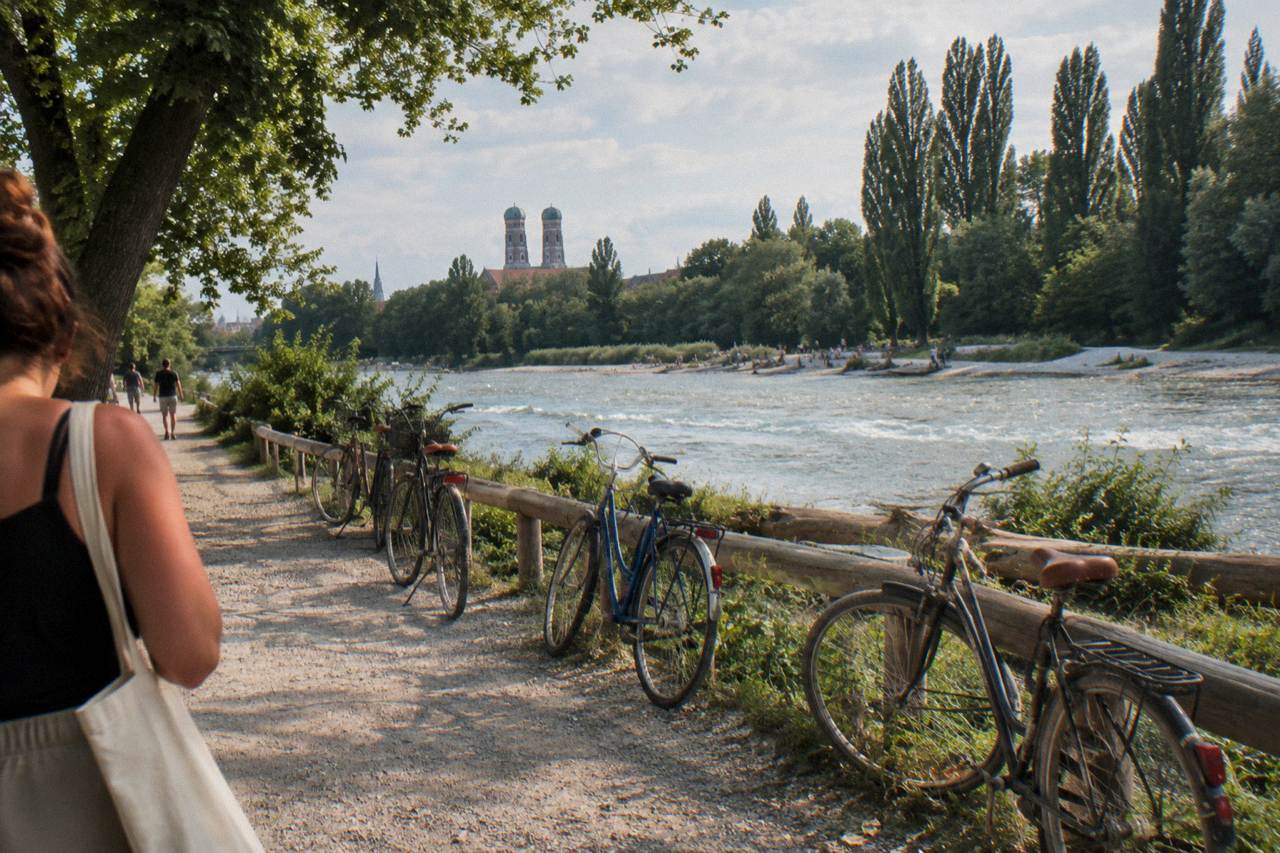
No European city can honestly be crowned the best for cycling: league tables rarely compare like for like on network quality, street safety or how many people actually ride, so the answer comes down to what you value as a rider. What can be measured are the traits that make a city good to ride: signed route networks, high bike modal share, protected bike streets, secure parking and traffic-free green corridors. Munich holds up strongly on all five. The city's transport department reports a bike modal share of 21 percent of daily trips, the highest among German large cities, a figure the city itself leans on for its Radlhauptstadt, or cycling capital, branding. That number matters more than any glossy ranking, because it says people who live here actually choose the bike for everyday trips, not just weekend leisure. If that cycling capital branding makes you curious how Munich compares on a world stage, our guide to the true cycling capital of the world weighs it against the usual contenders.
Ask ten riders to name Europe's best cycling city and you will get several answers, each defensible and none provable. Rather than pick a winner, this article sets out the criteria that genuinely decide whether a city is good to ride, then checks Munich against them using the city's own published figures. If you are planning a trip, the practical question is not which city tops a leaderboard, it is whether the place you are visiting rewards you for being on two wheels. If Munich is the city you have in mind, our verdict on Munich as a place to ride answers the question directly, lays out the rules visitors need to follow, and explains where a guided ride fits in.
For Munich the answer is clearly yes, and a guided ride is the fastest way to find that out for yourself.
What Makes A City Good For Cycling?
Five measurable things separate a genuinely bike-friendly city from one that merely markets itself as one: the share of daily trips made by bike, the extent and quality of the signed network, legal protection such as bike streets where bikes have priority, secure parking, and car-free green space that lets riders cross the city without mixing with heavy traffic. Munich publishes figures on all five, and they are strong across the board. A high modal share is the most telling, because it can only be earned. Munich's 21 percent of daily trips by bike, reported by the city in late 2025, means the infrastructure is used, not decorative. Network size comes next: the Münchner Radlnetz, the city's signed route system, totals 1,200 km of routes built from 14 radial routes starting at Marienplatz, an inner and outer ring, and green corridors along the Isar, the Würm and the Nymphenburg canal path.
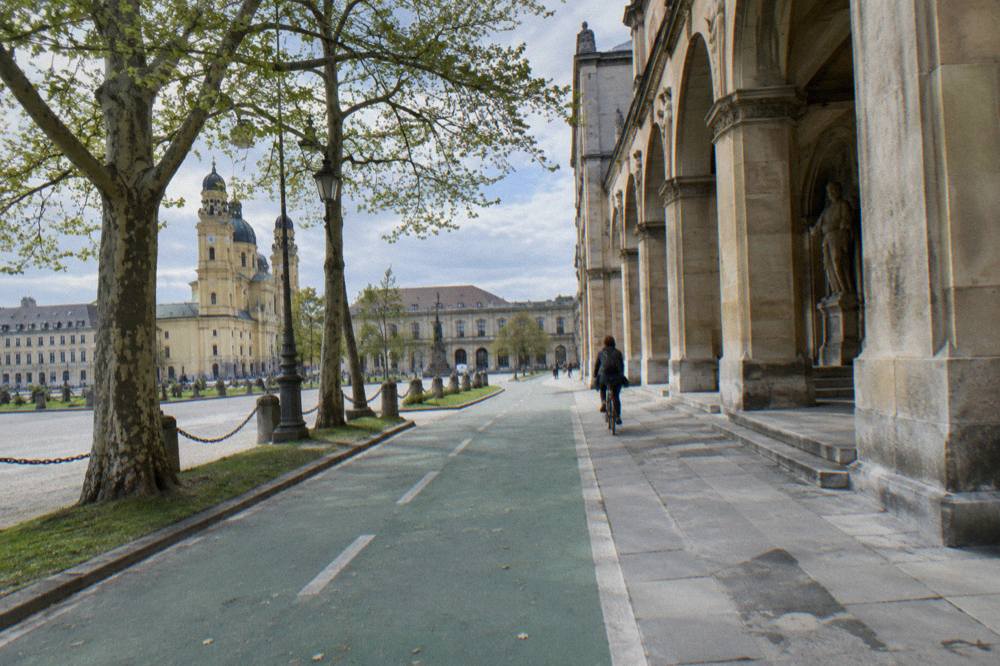
Legal design matters too. Munich counts 103 designated Fahrradstraßen, bike streets, with a combined length of just over 47 km. On these streets the whole roadway is legally the bike lane, riders have priority, riding side by side is allowed, and motor traffic is limited to 30 km/h. The city also continues to invest: 1,500 new bike parking spaces were installed at 66 locations in 2025 alone, and a free, video-surveilled 24-hour bike garage opened near the Hauptbahnhof in January 2026.
Where Munich genuinely distinguishes itself is the green corridor through the middle. The Isar and the English Garden give riders a continuous, largely car-free north-south spine that few European cities can match in the middle of a million-person metropolis. The corridor keeps going beyond the city limits, too. The Isar cycle path runs 299 km from Scharnitz in Tyrol to the Danube confluence near Deggendorf, and the Munich to Landshut section of about 77 km is largely flat and intersection-free, which makes it a realistic day ride for a reasonably fit visitor with a full day to spare.
Where Does Munich Sit Among Europe's Cycling Cities?
**Munich sits in the top tier of European cycling cities on the measurable indicators, with a 21 percent bike modal share that the city states is the highest of any German large city, a 1,200 km signed route network, and 78 km of paths inside the English Garden alone. There is no single best cycling city in Europe, and anyone who crowns one is really offering an opinion. What holds up is simpler: Munich behaves like a cycling city, not a city that merely tolerates bikes. The riding culture is visible at rush hour: commuters on city bikes, parents with child trailers, and riders of every age using the bike streets and canal paths as ordinary transport.
The comparison that matters for a visitor is practical. In some celebrated cycling cities the bike network is dense but the terrain, wind or weather punishes casual riders. Munich is largely flat at its core, the Isar valley gives the city its natural south-to-north gradient of green space, and the worst of the summer heat rarely reaches the levels of southern Europe. The city's July averages, the warmest month, run to daytime highs of about 24 to 25 degrees, which is comfortable riding weather for most people. May is the wettest month with roughly 92 to 108 mm of rain on average, so spring riders should pack a light rain layer. January, the coldest month, averages highs of only about 2 to 4 degrees with lows a few degrees below freezing, which tells you why the winter service matters as much as it does here.
Munich's place in the cycling-city conversation also rests on its park. The English Garden is a large inner-city park, and several Munich bike tours ride through it, open year-round with free entry, and its 78 km of paths are shared between riders and joggers. A car-free corridor of that size, ten minutes from Marienplatz by bike, is the kind of asset other cities attempt to retrofit and rarely achieve. The Isar cycle path guide covers how the city's spine connects to that 299 km long-distance route toward the Danube.
How Does Munich's Bike Network Measure Up?
**Munich's published network numbers stand comparison with any large European city: 1,200 km of signed routes, 103 bike streets totalling over 47 km, 1,500 new parking spaces added in 2025, and a new 1.85 km separated bike path corridor delivered on the Altstadtring Nordwest. The table below gathers the key numbers in one place, including the newest of them, the Altstadtring project, so you can take in the full picture at a glance. This is live investment, not legacy infrastructure.
| Measure | Figure | What it means for a visitor |
|---|---|---|
| Bike modal share | 21% of daily trips | Highest among German large cities; drivers expect bikes |
| Signed route network | 1,200 km (14 radial routes, two rings, green corridors) | You can cross the city on signed, mostly quiet routes |
| Bike streets | 103 streets, over 47 km | Riders have legal priority; motor traffic capped at 30 km/h |
| Bike parking | 1,500 new spaces at 66 locations in 2025 | Secure parking near stations and destinations |
| English Garden paths | 78 km, park is 376 hectares, free entry | Car-free green corridor minutes from the centre |
| Separated path build | 1.85 km on Altstadtring Nordwest | Wide, separated paths with clear pedestrian zones |
The density of this network is why so many visitors end up riding in Munich even when they arrived with no such plan. The Radlnetz's radial design means that from almost any hotel you are never far from a signed route pointing back toward Marienplatz or out toward the Isar. The city also publishes its own cycling map, the Radlstadtplan, and the English Garden tour route described by the official tourist board runs about 15 km in roughly two hours, following the Isar downstream and looping back through the garden to Aumeister.
Winter riders get support most cities do not offer. Munich's municipal winter service clears all bike paths, including bike streets, from 3 cm of snow, with the roughly 155 km of winter routes cleared within two hours and the rest within three, operating between 2:00 and 22:00. There is no winter tyre obligation for bicycles in Germany, and the ADFC notes that if a signed bike path is not cleared, riders may legally take the road instead. The details are in the cycling in winter guide.
Beyond the city itself, the network plugs into regional riding. A canal route from the Olympiapark along the Nymphenburg and Biedersteiner canals runs about 10 km one way to Schloss Blutenburg, or 16 km to the Hirschgarten, and the Munich cycling club ADFC lists more than 100 day tours in its 2026 programme across touring, racing and mountain bike categories. The infrastructure does not stop at the city boundary, and neither does the riding culture.
What Does A Guided Ride Add Over Exploring Alone?
A guided ride adds three things self-guided riding cannot: a local guide's route decisions, a bike arranged for you, and the pacing that comes from someone who rides the route regularly. Munich's shared guided tours run about 3 to 5 hours depending on the option, which comfortably covers the old town, the Isar banks and the English Garden in one outing. For a first visit this matters, because Munich's best riding is on the far side of the river, and a visitor who stays in the pedestrian-zone streets around Marienplatz never discovers it.
The listing for the 3-hour guided city tour describes a roughly 3.5 hour shared ride through the city's core sights, and it is the natural first ride for anyone testing whether Munich lives up to its cycling reputation. Check the booking page for the current price, departure times, and exactly what is included, since inclusions and meeting details are set by the operator. If you would rather keep the effort low, the e-bike options change the equation: the Best of Munich Electric Bike Tour is a 4 hour shared ride, and the full-day Isar e-bike ride stretches to 5 hours into the Alpine foothills, an option we cover in rent a bike or take a guided tour.
Beer garden stops are a Munich institution rather than a tourist add-on, and several guided rides build one in. The classic rides with a beer garden break run about 4 hours, and true beer gardens operate under a Bavarian rule worth knowing: you may bring your own food, the Brotzeit, and eat it at your table with beer you buy there. That rule, still stated on the city's own portal, dates the institution back to a royal decree of 1812. You can read more in the beer gardens by bike guide.
When Is The Best Season To Cycle In Munich?
The best cycling season in Munich runs from late April through early October, when the beer gardens are open, the Isar swimming sections are in use and daylight is long. July is the warmest month with average highs around 24 to 25 degrees, May the wettest at roughly 92 to 108 mm of rain, and winter riding stays viable because the city clears bike paths from 3 cm of snow. Those figures come from long-term climate averages and the city's own winter service policy, not from a forecast, so treat them as planning normals.
Summer brings the calendar anchors. The Tollwood summer festival ran in the Olympiapark in June and July 2026, and Oktoberfest filled the Theresienwiese from 19 September to 4 October 2026 with about 7.4 million guests, which is a period when riding near the festival grounds is busy but the rest of the network behaves normally. For 2027, the 192nd Oktoberfest runs 18 September to 3 October. Spring has the Frühlingsfest on the same meadow, its 60th edition ran 17 April to 10 May 2026, and the Isar's seven designated swimming sections open the river to a post-ride dip, with typical summer water temperatures of 14 to 22 degrees. Swimming is banned when the water level at the Munich measuring point exceeds 1.20 m, and always at your own risk.
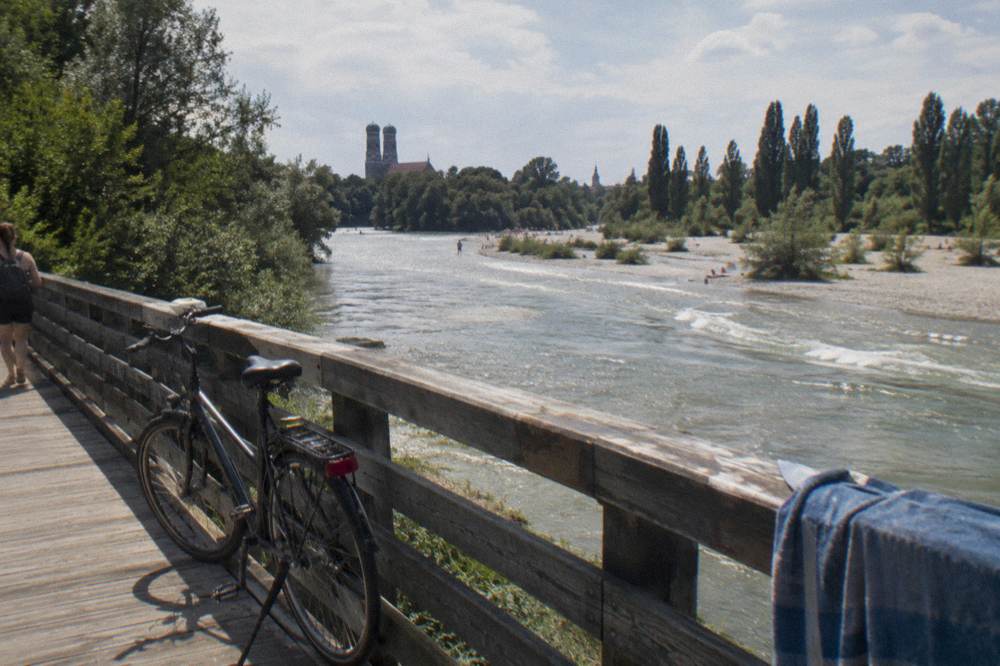
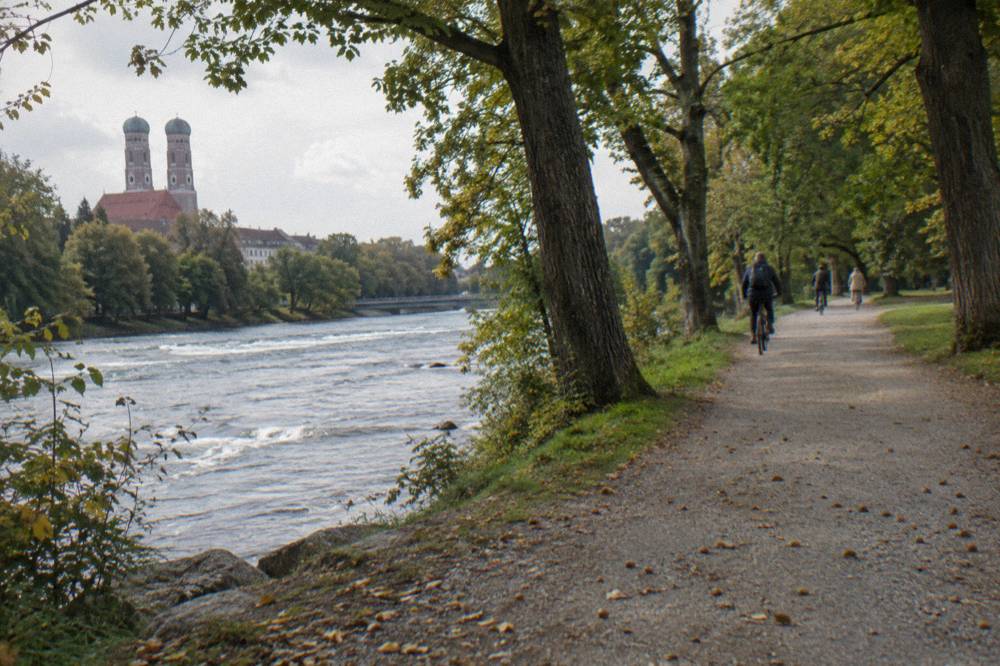
Autumn is arguably the sweet spot for riding: the chestnut trees along the canal paths turn, the beer gardens still open in fine weather, and the October light on the English Garden's meadows is at its best. Winter riders should read the best time for a tour guide for the full picture, and note that tours do run through the colder months, with rain policy details in do tours run in the rain.
If you are weighing Munich against another cycling city for a trip, the honest test is simple. Look at the modal share, the network, the green corridors and the transit rules for bikes, and see how many of those numbers the destination publishes at all. The official city transport pages carry the network and winter service figures at stadt.muenchen.de, and the park rules for the English Garden are on the city portal.
Common Questions About The Best European Cycling City
Which European City Is Best For Cycling?
There is no single winner: the best city depends on the kind of riding you enjoy. The measurable indicators, a 21 percent bike modal share, a 1,200 km signed network, 103 bike streets and a 376-hectare car-free park through the middle, put Munich in the top tier of European cycling cities.
Is Munich Good For Cycling Compared To Other Cities?
Yes. The city reports the highest bike modal share of any German large city at 21 percent of daily trips, and its signed route network totals 1,200 km. The English Garden adds 78 km of park paths with free entry year-round.
Can Tourists Ride Bikes In Munich Easily?
Yes. The MyRadl bike share system, launched on 7 May 2026, offers classic bikes from EUR 1 per 30 minutes and e-bikes from EUR 3 per 30 minutes at around 1,000 stations, and guided tours supply the bike as part of the ride.
What Is A Bike Street In Munich?
A Fahrradstraße is a street where the entire roadway is legally a bike lane. Riders have priority, may ride side by side, and motor traffic is capped at 30 km/h. Munich has 103 of them, totalling just over 47 km.
When Is The Best Month To Cycle In Munich?
May through September offers the most reliable riding weather, with July average highs around 24 to 25 degrees. May is the wettest month at roughly 92 to 108 mm of rain, so pack a rain layer in spring.
Do Munich Guided Bike Tours Include The English Garden?
Several do, and the listings describe routes through the city and the garden. Tour lengths run from about 3 hours for a half-day city ride to 4 or 5 hours for the e-bike options. Check the booking page of each tour for its exact route and inclusions.