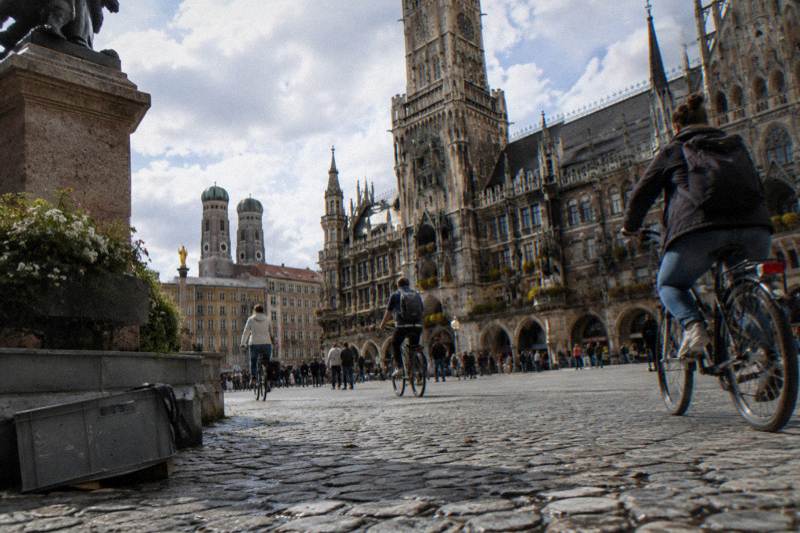
What Is The Best Month To Visit Munich?
A month by month look at Munich weather, crowds, festivals and cycling conditions, with honest trade-offs for each season and how guided bike tours fit in.
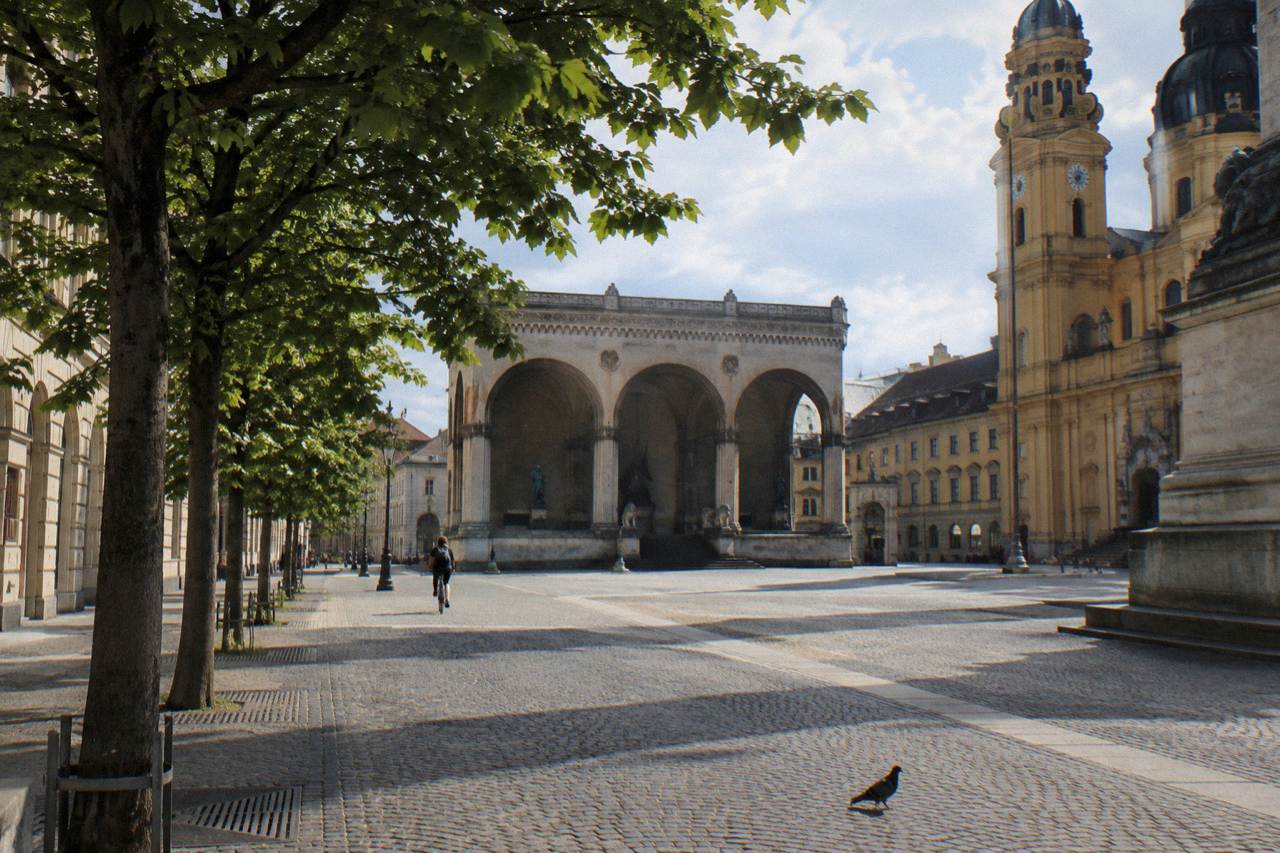
September is the strongest single answer for most visitors: the 191st Oktoberfest ran 19 September to 4 October 2026 and drew about 7.4 million guests, beer gardens are in full swing, and days are still warm enough for long rides. The honest trade-off is that September is also the most crowded and expensive month of Munich's year. If you want the same parks and beer gardens with far fewer people, late May through June or the first half of September before the festival opens are the smarter picks.
There is no single month that wins every category, so this article breaks the year down honestly: what the weather actually does, what the big events cost you in crowds, and which months suit a visit built around cycling. The city's own climate record gives some clear anchors. July, the warmest month, averages a high of about 24 to 25 degrees C; January, the coldest, averages a high of just 2 to 4 degrees C. May is the wettest month, with roughly 92 to 108 mm of rain.
If a guided ride is part of your plan, the classic morning tour is a good lens for the whole question, because its beer garden stop and its surfers-and-highlights route are at their best in exactly the months most people would call the city's finest.
Which Months Have The Best Weather In Munich?
July and August are the warmest months, with July averaging highs of about 24 to 25 degrees C and lows of 14 to 15 degrees C, but May is statistically the wettest month at roughly 92 to 108 mm of rain across 16 to 17 rain days. June through early September is the window where warm afternoons, long daylight and open beer gardens overlap. Winter is a different city: January highs sit around 2 to 4 degrees C with lows between minus 2 and minus 5 degrees C.
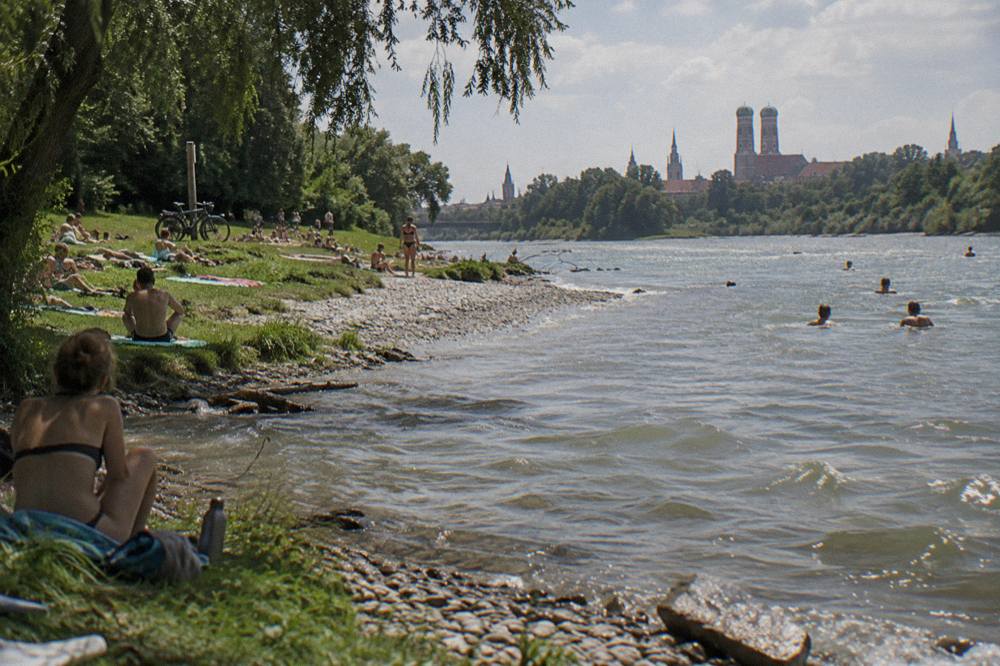
The climate pattern rewards late spring and early summer. May and June give you the greenest version of the English Garden and the longest evenings, though May showers are a real factor and a rain layer is wise. July and August bring the most reliable warmth, and the Isar becomes a genuine swimming option: typical summer water temperatures run 14 to 22 degrees C, with a recorded maximum of 22.4 degrees C since 2011.
One point that matters for cyclists: swimming in the Isar is only allowed in seven designated sections, is prohibited when the water level exceeds 1.20 m at the Munich measuring point, and is always at your own risk, as the city's Isar swimming guide explains. So a hot August day and a bike path along the river add up nicely, provided you swim where it is permitted.
Shoulder months deserve more credit than they get. Late September after the festival, and late May before peak summer, often deliver the best balance of comfortable temperatures, green parks and manageable crowds. The weather is less predictable than in July, but the city is noticeably calmer, and that affects everything from hotel rates to how much space you have on a bike path.
What About Crowds And Prices Across The Year?
Crowds peak hard twice across the year, and these are the windows to plan around if you want thinner crowds and better value: during Oktoberfest, which drew about 7.4 million visitors in 2026, including 447,000 at the Oide Wiesn, and during the Christmas market run from late November to 24 December. Outside those windows, Munich's visitor pressure eases considerably, and the quietest months are January, February and March, when cold weather does the crowd control for you.
The festival weeks change the whole city, not just the Theresienwiese. Hotel prices climb, tables need planning, and central streets fill. If Oktoberfest is your reason to come, that is a fair trade. If it is not, the weeks immediately before the festival opens in mid-September give you nearly the same weather, open beer gardens and green parks with a fraction of the crowds.
A quick reality check on guided tours here: tour prices vary by season and demand, and the exact figure for any given date is on the booking page, not something to guess at. The same applies to meeting points and what each ride includes; the listing states those details, and they can shift between the summer season and the winter reduced schedule.
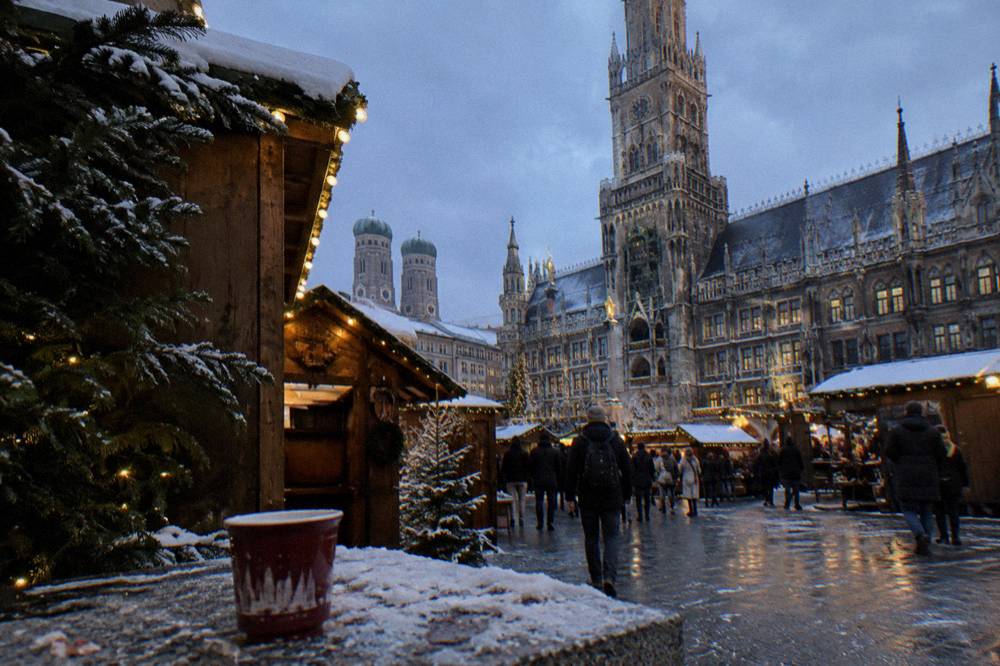
The winter low season has its own rewards. The Munich Christkindlmarkt on Marienplatz runs 20 November to 24 December 2026, open Monday to Saturday 10:00 to 21:00 and Sundays to 20:00, and the Tollwood Winter Festival follows on the Theresienwiese from 24 November to 23 December. Between the markets, the city is quiet, cheap and atmospheric, if cold.
Is September The Best Month Because Of Oktoberfest?
Yes, September is the best month, though not only because of Oktoberfest: it pairs the world's biggest festival with warm days, open beer gardens, and full tour schedules, delivering the strongest overall package of the year, but that popularity comes at a cost, since the festival drives crowds and prices to their peak across the entire city. The 191st Oktoberfest ran 19 September to 4 October 2026 and the 192nd is set for 18 September to 3 October 2027, so the festival straddles the month boundary every year.
The distinction that matters: early September, before the tents open, is arguably the single best-value stretch of Munich's year. You get September weather, the parks still green, beer gardens at full tilt, and none of the festival crush. Once the Wiesn opens, central Munich belongs to the visitors, and everything from beds to bikes is in higher demand.
For riders, there is a seasonal detail worth knowing. A guided morning ride such as the classic 3 to 4 hour tour with its beer garden stop works beautifully in September, since the beer garden is actually open and the stop is part of the point. In deep winter, that stop may look different, and the seasonal departure schedule is on the booking page. For a broader look at how the whole guided-versus-independent question plays out across the year, see our piece on whether to rent or take a guided tour.
Beer gardens themselves are weather-dependent rather than calendar-dependent. The beer garden at the Chinese Tower, for instance, opens weekdays from 11:00 and weekends from 10:00 in proper beer garden weather, but in cold or uncertain conditions only a kiosk runs from 12:00, per the operator's own site. So "September beer garden weather" is a probability, not a promise, and late warm spells in October can extend the season just as a cold June week can cut it short.
What Are Munich's Winter Months Like For Visiting?
December is the best winter month to visit, because the Christkindlmarkt and Tollwood Winter Festival are both running, but January and February are the quietest and cheapest months of the year, with January highs of only 2 to 4 degrees C. Winter Munich is real Munich: locals, chestnut-free boulevards, glühwein instead of Maß, and museum weather.
Cycling in winter is entirely doable, with caveats. There is no winter tyre obligation for bicycles in Germany, and the ADFC notes that if a signed bike path is uncleared, cyclists may ride on the road instead; Munich's winter service clears bike paths from 3 cm of snow, with about 155 km of priority winter routes cleared within 2 hours and the rest within 3, per the city's winter service policy. The practical takeaway: the network is maintained, but a warm layer and lights matter, and lighting is legally required equipment after dark anyway.
Tours do keep running, on reduced schedules. Some guided rides pare back to weekends only in the quieter shoulder and winter weeks, and the exact departure days for any given month are on the booking page. If a winter visit hinges on a specific tour, check that first before booking the flight.
Spring deserves a fuller hearing than it usually gets. The Frühlingsfest, Munich's spring festival on the Theresienwiese, ran 17 April to 10 May 2026 in its extended 60th edition, and April and May bring the parks back to life. If you want the beer garden culture without the Oktoberfest price tag, the stretch from late April into May is the honest alternative, packed with locals rather than visitors.
How Does The Tour Season Line Up With The Best Months?
The core guided riding season tracks the warm half of the year: the months from roughly April through October offer full departure schedules, open beer garden stops and the best weather odds, while winter months run reduced schedules and colder, shorter routes. The trade-off is simple, peak season means peak demand for the most popular time slots, especially mornings.
The morning slot deserves a specific mention. A ride that starts late morning, like the classic 11.30 departure, uses the warmest part of the day and still leaves the afternoon free, which matters more in October than in July. On the seasonal question generally, our guide to the best time of year for a Munich ride goes deeper on tour scheduling.
Here is how the year's main windows compare for a visit built around riding:
| Period | Weather | Events | Crowds | Riding conditions |
|---|---|---|---|---|
| Jan to Feb | Highs 2 to 4 degrees C in January | Christkindlmarkt ends 24 Dec; Tollwood to 23 Dec | Lowest of the year | Maintained winter paths; lights and layers needed |
| Mar to Apr | Warming, changeable | Park fountains from Easter | Low to moderate | SpringVariable; check departure days |
| May to Jun | Warm, green; May wettest month at 92 to 108 mm | Frühlingsfest (17 Apr to 10 May in 2026) | Moderate | Excellent; longest daylight |
| Jul to Aug | Highs about 24 to 25 degrees C in July | Tollwood Summer (19 Jun to 19 Jul 2026) | Moderate to high | Excellent; Isar swimming possible |
| Sep | Warm days, cooling evenings | Oktoberfest 18 Sep to 3 Oct in 2027 | Very high during festival | Excellent; beer garden stops at their best |
| Oct to Dec | Cooling to cold | Christkindlmarkt from 20 Nov 2026 | Low, rising in Dec | Fine early Oct, then winter riding |
Two honest notes on that table. First, the crowd column is a pattern, not a measurement, and school holidays and trade fairs shift individual weeks. Second, the riding column assumes a standard city tour; the full-day options, like a 5 hour ride through the city's districts, ask more of the weather than a 3 hour loop, so late-season bookings should lean shorter.
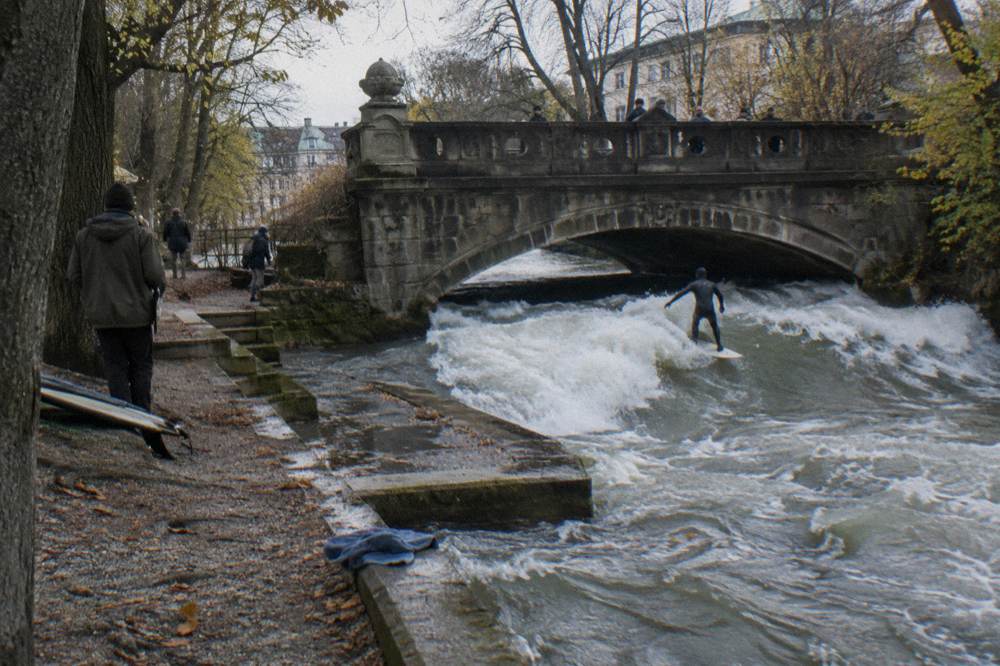
The related morning tour here is a good example of seasonality in one product: its surfers stop on the Eisbach works year-round, since the wave runs in all seasons, but the beer garden stop is only a full experience in the warm months. The Eisbach wave itself reopened to surfers on 8 May 2026 under an updated general decree with a mandatory self-releasing leash and a 22:00 curfew, as the city's wave page documents. Our piece on the Eisbach wave and its surfers covers what changed.
What Is The Worst Month To Visit Munich?
No month is genuinely bad, but November is the weakest link for most visitors: the beer garden season has wound down, the Christmas markets open only in the last third of the month, daylight is short, and the weather sits in a grey in-between that is neither festive nor warm. February is the other honest low, cold and dark, though it is quiet and cheap.
November does have one thing going for it: the Christkindlmarkt opens 20 November and Tollwood follows on 24 November, so a late-November visit catches the start of the festive season with fewer visitors than December brings. Early November, between the beer garden close and the market opening, is the city's quietest, greyest stretch.
For cyclists, the shoulder into winter is also when departure schedules thin out. As covered above, some rides drop to weekend-only departures in the quiet weeks, so if November or February is your only window, confirm the days your chosen tour actually runs before locking in travel dates.
So Which Month Should You Actually Pick?
Pick early September before Oktoberfest opens, or late May into June, for the best balance of weather, green parks, open beer gardens and manageable crowds; pick the Oktoberfest weeks only if the festival itself is your goal, and pick December if markets and atmosphere matter more than warmth. Every one of those answers is honest about what it excludes.
The decision really comes down to what you want the city for. Festival energy and the biggest beer tents in the world: late September to early October, at full price and full crowds. Cycling, parks and river swimming: July and August, or June if you accept rain risk. Museums, markets and empty streets: December for atmosphere, January and February for pure calm. Spring warmth on a budget: late April into May, with the Frühlingsfest as a bonus.
Whatever month you land on, Munich rewards being seen at handlebar pace in every season. Pick the month that matches your priorities, check the departure days for the tours you want on their booking pages, and the rest of the trip tends to arrange itself.
Common Questions About The Best Month To Visit Munich
What Is The Best Month To Visit Munich?
For most visitors, early September before Oktoberfest opens, or late May into June. Both combine comfortable weather, green parks and open beer gardens without the festival's peak crowds. Late September brings Oktoberfest itself, which is worth the crowds only if the festival is your reason for coming.
What Is The Best Month To Go To Munich For Good Weather?
July is the warmest month, averaging highs of about 24 to 25 degrees C, and August is similar. The trade-off is that these are busier months. June is nearly as warm with longer evenings, though May and June carry the year's highest rainfall, with May averaging 92 to 108 mm.
Is Munich Too Cold To Enjoy In Winter?
January highs average only 2 to 4 degrees C, so it is a real winter city. But the Christkindlmarkt runs 20 November to 24 December and Tollwood follows from 24 November, museums are uncrowded, and bike paths are cleared from 3 cm of snow. December offers atmosphere; January and February offer quiet.
Does Oktoberfest Make September A Bad Month To Visit?
Only if you do not want the festival. Oktoberfest 2026 drew about 7.4 million guests, so the whole city gets crowded and expensive during the roughly two festival weeks. Early September, before the tents open, gives you nearly the same weather and beer garden culture with far fewer people.
When Can You Swim In The Isar In Munich?
In the warm months, typically June to early September, when water temperatures run 14 to 22 degrees C. Swimming is allowed only in seven designated sections, is banned when the water level exceeds 1.20 m, and is always at your own risk, per the city's official Isar swimming guidance.
Do Bike Tours In Munich Run All Year?
Most run through the warm half of the year with full schedules, and continue in winter on reduced schedules, with some rides dropping to weekend-only departures in the quiet months. Exact departure days and seasonal limits for any specific tour are on its booking page.