Munich And The Third Reich: Sites You Can Cycle To
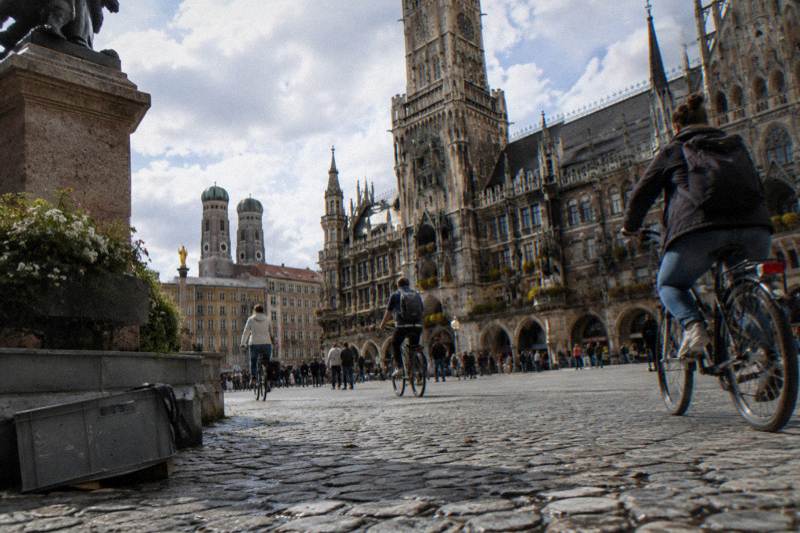
Munich is where the Nazi party began, and the physical evidence of that era still sits in the city centre, within easy riding distance of each other. This guide sets out what you can cycle to, what each site actually was, and how guided bike rides treat the subject.
Short answer
No dedicated Third Reich bike tour exists among Munich's bookable rides. The practical route is a city-highlights bike tour of about 3 to 3.5 hours whose guide touches on the history, plus your own visit to the NS-Dokumentationszentrum, which is free and open Tuesday to Sunday until 19:00.
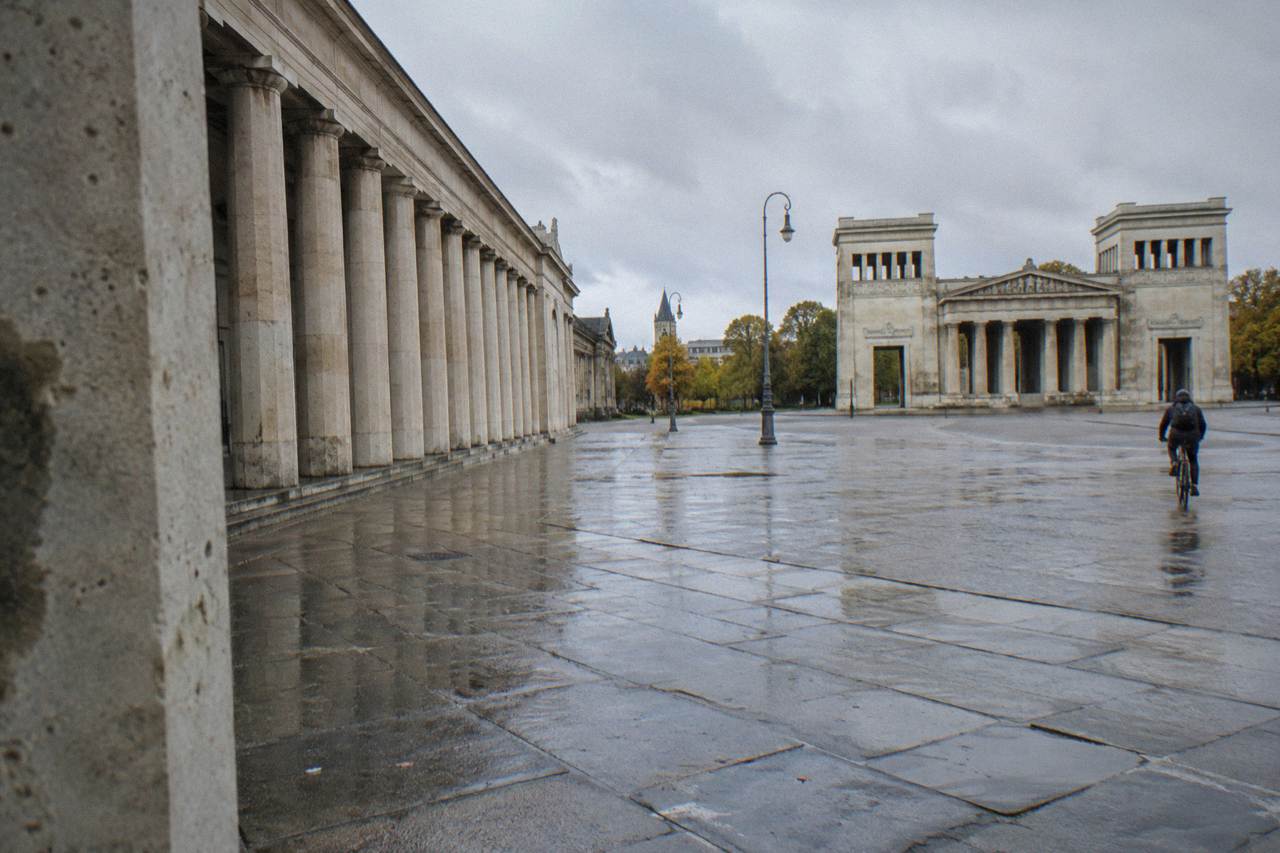
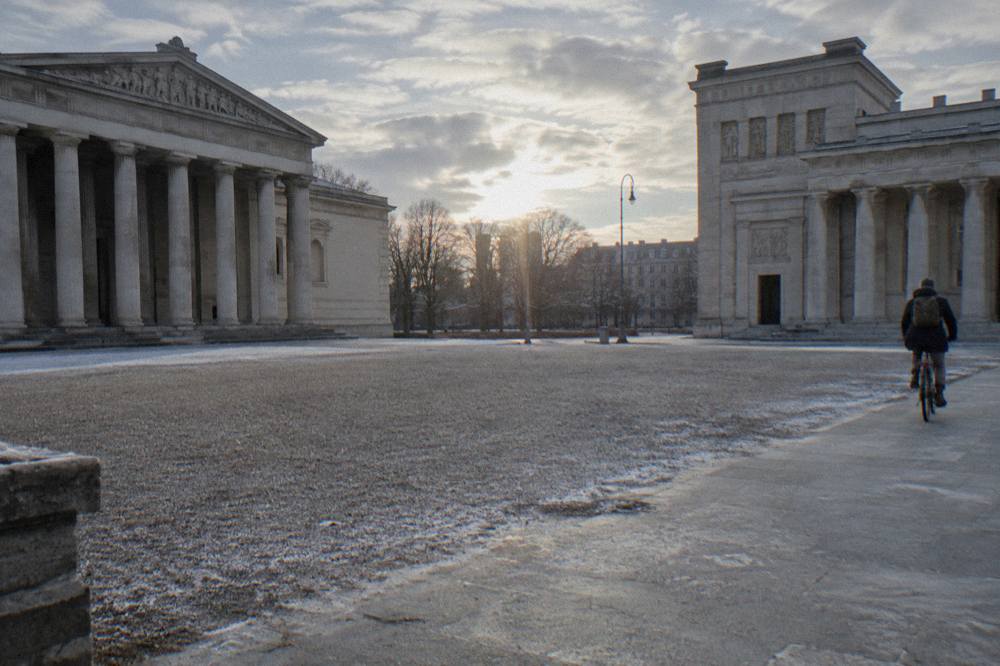
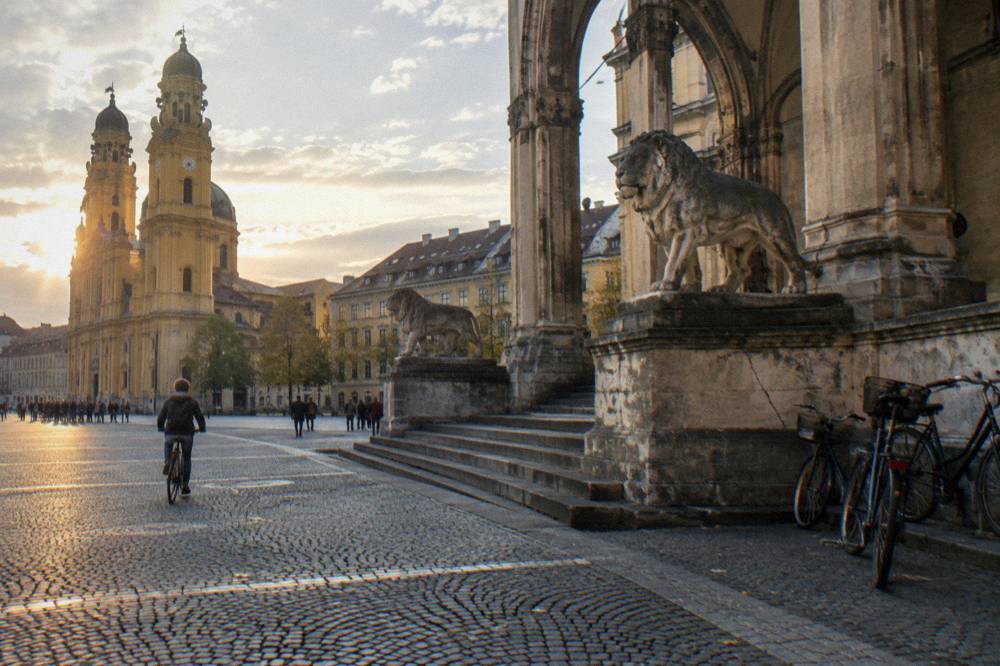
Munich is where the Nazi party was founded, and the city centre still carries the geography of that period in plain sight. Koenigsplatz was repurposed as a parade ground, the Feldherrnhalle became a site of enforced salute, and the building now called Haus der Kunst opened as the regime's showcase museum for state-approved art. Unlike Berlin, Munich does not market this layer of its past aggressively, which is exactly why a cyclist with a map and a couple of free afternoons can piece it together at their own pace.
Start planning your Munich ride with Bike Tours Munich. The sites below are treated as places of memory, not photo stops, and Dachau, which sits outside the city, is addressed once, soberly, near the end. Nothing here is sensationalised, because nothing here needs to be.
What Third Reich History Can You Actually See In Munich?
Four central sites carry most of the story, and all of them sit inside a compact ride of roughly two to three kilometres: Koenigsplatz, the Feldherrnhalle, Haus der Kunst and the NS-Dokumentationszentrum. Each is publicly visible or freely enterable today, and none of them requires a ticket just to stand in front of and look. Koenigsplatz anchors the museum quarter, the Feldherrnhalle stands at the southern end of Odeonsplatz, Haus der Kunst faces the southern edge of the English Garden, and the NS-Dokumentationszentrum sits on Max-Mannheimer-Platz, directly beside the Koenigsplatz U-Bahn station. A loop linking all four takes in the old Koenigsplatz parade square, the former party district around Karolinenplatz, and the riverside park where the regime's art politics played out.
Munich is unusually easy to cycle around. Three of the four sites sit within a ten-minute pedal of Marienplatz, and the fourth, Haus der Kunst, sits where the city meets the English Garden, so the history loop doubles as a tour of Munich's most pleasant cycling terrain. The city's signed bike network alone totals 1,200 km of routes, so even the short hop between these neighbourhoods runs on marked lanes almost the whole way. If you are building your own route, the first-timer city cycling route covers the practical side of riding between these districts.
| Site | What it was | What it is today | Entry |
|---|---|---|---|
| Koenigsplatz | Parade ground for mass rallies under the Nazi regime | Museum square, Glyptothek and Lenbachhaus nearby | Square free, museums ticketed |
| Feldherrnhalle | Site of the putsch clash, later a shrine with enforced salute | Monument, under renovation until around 2028 | Free, externally visible |
| Haus der Kunst | The regime's state art museum | Contemporary art museum | Ticketed, free last Friday of the month 16:00 to 22:00 |
| NS-Dokumentationszentrum | Former party headquarters site (Brown House) | Documentation centre on the rise of Nazism | Free entry |
The renovation note matters for planning. The Feldherrnhalle has been scaffolded since spring 2025 for a 12.2 million euro renovation expected to last about three years, according to muenchen.de. You can still see the structure and read it for what it was, but the square photography will show hoarding.
Is There A Dedicated Third Reich Bike Tour In Munich?
No. Among the guided bike rides currently bookable in the city, none is marketed as a dedicated Third Reich or history tour, and it would be dishonest to claim otherwise. What exists instead are city-highlights rides of about 3 to 4 hours whose licensed guides typically pass Koenigsplatz, Odeonsplatz and the Feldherrnhalle and comment on the history as part of the wider city story. How much depth you get depends on the individual guide and the departure, so if the Nazi-era layer is your main interest, the right move is to check the booking page for the specific tour and ask the operator what their guide covers before you ride. Some guides give the subject several minutes at each stop; others fold it into a sentence and move on.
That variability is not a flaw, it is a feature of shared city tours. The three-hour guided ride, for example, is built as a general city tour, and the topic of the Third Reich comes up where the route physically crosses it. On a private ride, you set how long each historical stop gets. A shared tour keeps everyone on the same schedule. The rent a bike or take a guided tour guide breaks down the difference.
The honest framing, repeated once and then left alone: book a city-highlights ride for the riding and the overview, and book nothing at all for the deep history, because the deep history is free and self-guided. The NS-Dokumentationszentrum charges no admission, runs a free English-language guided tour of its permanent exhibition every Sunday at 13:00 with no registration needed, and stays open until 19:00, per its own visitor page. No bike tour can beat that price or that level of curation.
Which Guided Bike Tours Handle The Topic Best?
For history-minded riders the practical choice is a shared city-highlights ride of 3 to 3.5 hours that passes the royal squares and the museum quarter, taken at a departure time that leaves you the afternoon for the NS-Dokumentationszentrum. The 3-hour guided bike tour, the half-day tour with a local guide and the daily city tour with beer garden stop all fit that shape, with licensed guides and standard bikes. None of them promises a set historical script, which is why the comparison below sticks to what the listings state: duration, format and character. Check the booking page for each to see what the guide actually covers on the day.
| Tour | Duration | Format | What the listing emphasizes |
|---|---|---|---|
| Munich: 3-Hour Guided Bike Tour | 3.5 hours | Shared, classic bike | City overview with a licensed guide |
| Munich by Bike: Half-Day Tour with Local Guide | 3 hours | Shared, classic bike | Local-guide perspective on the city |
| Munich: Daily City Bike Tour with Beer Garden Stop @ 11.30 | 3.5 hours | Shared, classic bike | Classic sights plus a beer garden break |
| Private Munich Bike Tour with Beer Garden Lunch Break | 4 hours | Private, classic bike | Flexible pacing, your group only |
The private option deserves one line: if the Third Reich sites are the reason you are riding, a private guide lets you weight the route toward Odeonsplatz, Koenigsplatz and Max-Mannheimer-Platz, and to slow down where a shared tour would roll on. Prices and meeting points are on the booking page for each ride.
For riders who want the morning on a bike and the afternoon in the archive, the daily city tour with beer garden stop at 11.30 sketches a workable day: ride the centre in the late morning, eat at a beer garden, then walk the documentation centre at your own speed before it closes at 19:00. Check the booking page for the current departure schedule across the seasons.
What Should You Know At Each Of The Four Sites?
Each site answers a different question about the period, and knowing which is which turns a loose ride into an itinerary: Koenigsplatz shows the regime's staging of power, the Feldherrnhalle shows its cult of martyrdom, Haus der Kunst shows its cultural policy, and the NS-Dokumentationszentrum explains, in documented detail, how all of it happened in a functioning democracy. Ride them in that order and the story builds on itself. All four sit on flat terrain, and three of the four are within a short pedal of an S-Bahn or U-Bahn station if you want to bail out partway.
Koenigsplatz first. The square was laid out as a neo-classical museum plaza in the kingdom era and was later paved over to serve as a parade ground for the party's mass rallies, with two temples flanking it. The paving is gone and the square is a museum space again. The Glyptothek on its north side is open Tuesday to Sunday 10:00 to 17:00, Thursdays until 20:00, with a combined ticket with the Antikensammlungen at 6 euros regular and free entry for under-18s, per muenchen.de. The Lenbachhaus, a few minutes' ride away in the Kunstareal, opens its doors free of charge from 18:00 to 22:00 on the first Thursday of each month.
The Feldherrnhalle next. The beer hall putsch of the party's early years collapsed here in a shootout between marchers and police, and the regime later turned the spot into a shrine that passers-by were required to salute. That enforced ritual is the reason this monument, rather than some castle, is the single most loaded stone in central Munich. It is scaffolded for renovation until roughly 2028, per muenchen.de, but remains externally visible.
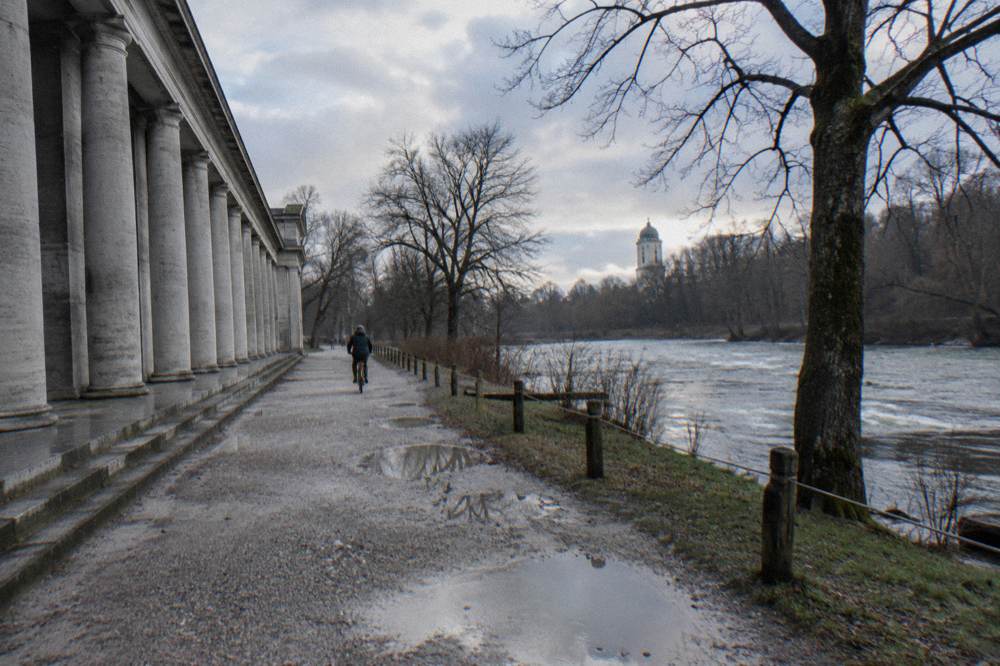
Haus der Kunst faces the English Garden. It opened as the host of the Great German Art Exhibition, the regime's answer to the modernist art it condemned, and the parallel degenerate art show ran that same summer in the Hofgarten. Today the building is a contemporary art museum open Wednesday to Monday 10:00 to 20:00, closed Tuesdays, with large tickets at 15 euros regular, per its visitor page. Because the museum sits at the park's southern gate, it pairs naturally with a lap of the English Garden by bike.

For planning your stops around the buildings' opening days, the table below pulls the current hours and free-entry moments together in one place. Note that the squares themselves, Koenigsplatz and Odeonsplatz, are public space with no hours at all, so they work as evening or early-morning stops when the museums are shut.
| Building | Open | Closed | Free entry window |
|---|---|---|---|
| NS-Dokumentationszentrum | Tue to Sun, 10:00 to 19:00 | Mondays | Always free |
| Haus der Kunst | Wed to Mon, 10:00 to 20:00 | Tuesdays | Last Friday of the month, 16:00 to 22:00 |
| Glyptothek | Tue to Sun, 10:00 to 17:00, Thu to 20:00 | Mondays | Sundays at 1 euro per museum |
| Lenbachhaus | Tue to Sun, 10:00 to 18:00, Thu to 20:00 | Mondays | First Thursday of the month, 18:00 to 22:00 |
How Does A Bike Tour Treat This History Responsibly?
Well-run Munich bike tours treat the Nazi era as context, not content: guides stop at the Feldherrnhalle and Koenigsplatz, state plainly what happened there, and resist turning either site into entertainment. Riders should expect factual commentary measured in minutes, not a narrated history seminar, and anyone wanting depth should pair the ride with a self-guided visit to the NS-Dokumentationszentrum. That split, riding for geography, walking for depth, matches how the city itself handles the period. Munich keeps its memorials quiet and its documentation meticulous, and the best guides follow that register.
There are a few tells of a responsible operation. The guide names events and outcomes rather than dwelling on imagery. The stop at the Feldherrnhalle addresses the putsch and the later salute ritual without mythologising either. And the tour does not sell Dachau as a destination, because the Dachau Memorial is a place of remembrance with its own visitor infrastructure, not a cycling stop. If a booking page leans on dramatic language about the era, that is a reasonable signal to ride with someone else.
The site voice here matters enough to repeat: Munich has no dedicated history bike tour, and any listing that implies otherwise should be read closely. The three-hour guided ride and its city-highlights siblings are honest products because they claim to be city tours and behave like city tours. Check the booking page, ask the operator what the guide covers, and set your expectations accordingly.
How Do You Ride Between The Sites Safely?
The history loop runs almost entirely on Munich's calm central streets and park paths, and the three rules that matter most to a visitor are these: ride on signed bike paths where the blue signs order it, walk your bike in pedestrian zones unless the signs permit cycling, and keep lights and a bell on the bike after dark. The loop from Koenigsplatz to Odeonsplatz to Haus der Kunst and back touches pedestrianised streets around Marienplatz, where cycling is banned outright between 9:00 and 21:00 in the old-town zone and allowed only at walking pace where signs say Radfahrer frei. The cycling rules for visitors guide covers the full legal picture.
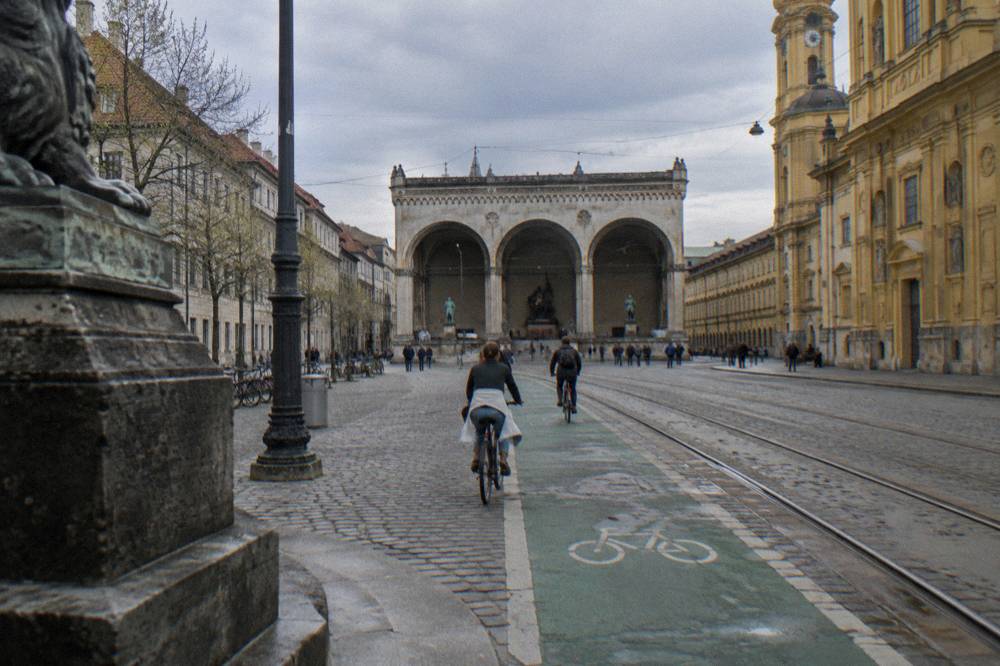
A practical note on pace. The distances involved are short: the four sites sit within a few minutes of each other by bike, so the temptation is to rush. Resist it. The value of this loop is standing still at each site, and the bike is simply the tool that gets you between them without hunting for parking or squeezing onto a U-Bahn. If you would rather fold the history into a bigger day, the three-day bike itinerary slots the documentation centre into day one.
Lighting is a legal point, not a style point. Bikes ridden in public traffic in Germany must carry type-approved lights, a white front lamp and a red rear lamp plus reflectors, and at least a bell, under the road licensing rules. Rentals from tour operators come equipped. If you are riding your own or a share bike after dark in late autumn, check the lights before you leave, because daylight in November ends well before the museums close.
When Is The Best Season For This Ride?
Late spring through early autumn is the comfortable window, but this particular loop is unusually winter-proof: every site on it is either an open square or a heated building, and the NS-Dokumentationszentrum closes only for regular days off, not for weather. The two seasonal facts worth planning around are the Munich Christkindlmarkt, which runs 20 November to 24 December 2026 on Marienplatz and adds crowds to the old-town pedestrian zone, and the city's winter service, which clears bike paths from 3 centimetres of snow within roughly two to three hours on cleared routes. Riders who want the fuller seasonal picture can read the best time for a Munich bike tour guide. If handling a winter loop feels manageable, the natural next question is how far the riding can stretch, and our guide to cycling around the whole city answers it in detail.
One honest seasonal caveat: the beer garden break that many city tours include is weather-dependent, because Munich's beer gardens open their garden seats only in dry, warm conditions and fall back to kiosk service otherwise. The historical sites have no such dependency. A grey November day is arguably the right register for this itinerary anyway.
Can You Visit The Dachau Memorial From Munich?
Yes, and the right way to think about it is as a separate half-day by train, not a bike tour extension: the Dachau Concentration Camp Memorial is open daily 9:00 to 17:00, admission is free, and English-language guided tours run about 2.5 hours for 4 euros per person, on a first-come basis. The memorial sits about 20 kilometres northwest of the city and is reached by S-Bahn and a short bus or walk, with the full logistics laid out in the Dachau from Munich by bike and train guide. Treat it as a place of remembrance in its own right, with its own documentation and its own guides, and give it the whole morning or afternoon.
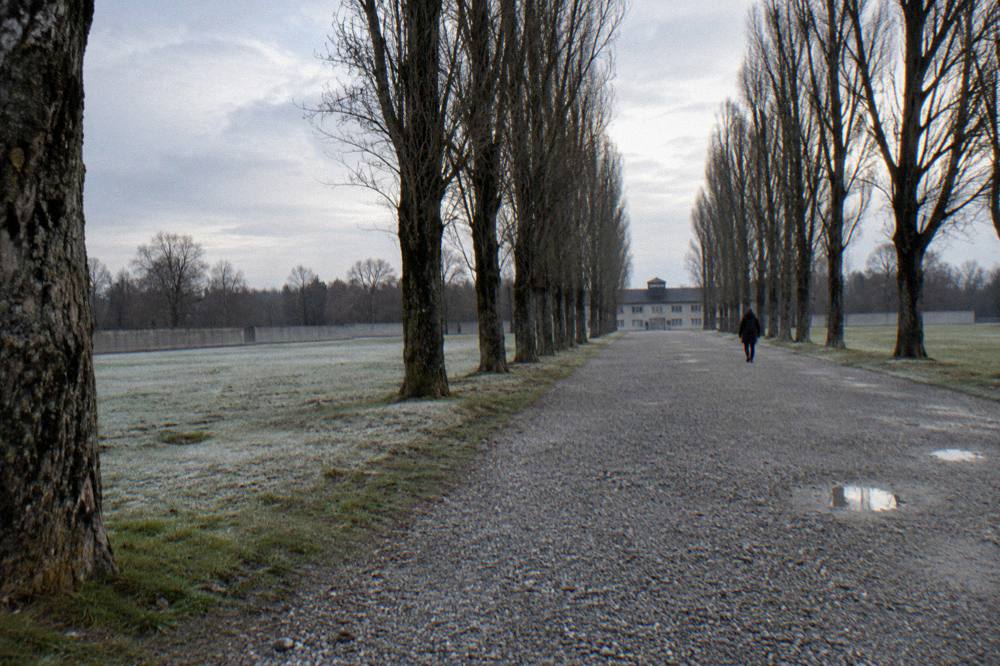
Two practical details from the memorial's own information: the site closes only on 24 December, and guided tours for individual visitors require buying a ticket on site at least 30 minutes before the start, with no reservations. Audio guides cost 5 euros. Minimum age for the guided tours is 13. Nothing about the site is staged for tourism, and that is deliberate.
Common Questions About Munich Third Reich Tours
Is There A Munich Third Reich Tour By Bike?
No bookable bike tour in Munich is dedicated to the Third Reich. City-highlights rides of about 3 to 3.5 hours pass the key sites with a licensed guide and cover the history as part of the city story; check the booking page to see what each departure includes.
What Is The NS-Dokumentationszentrum And What Does It Cost?
It is Munich's documentation centre on the rise of Nazism, built on the site of the former party headquarters. Entry is free, it opens Tuesday to Sunday 10:00 to 19:00, and a free English-language tour of the permanent exhibition runs every Sunday at 13:00 with no registration.
Can You See The Feldherrnhalle Right Now?
Yes, externally. The monument is scaffolded for a renovation that began in spring 2025 and is expected to run about three years, but it remains visible from Odeonsplatz at all times.
How Long Does A Self-Guided History Ride Take?
The four central sites sit within a few minutes' riding of each other, so the cycling itself takes under an hour. Plan half a day if you want to enter the NS-Dokumentationszentrum properly, and longer if you add Haus der Kunst.
Is Haus Der Kunst Connected To The Nazi Era?
Yes. The building opened to house the regime's state-approved art exhibition, in direct opposition to the modernist art it condemned. Today it operates as a contemporary art museum, open Wednesday to Monday and closed Tuesdays.