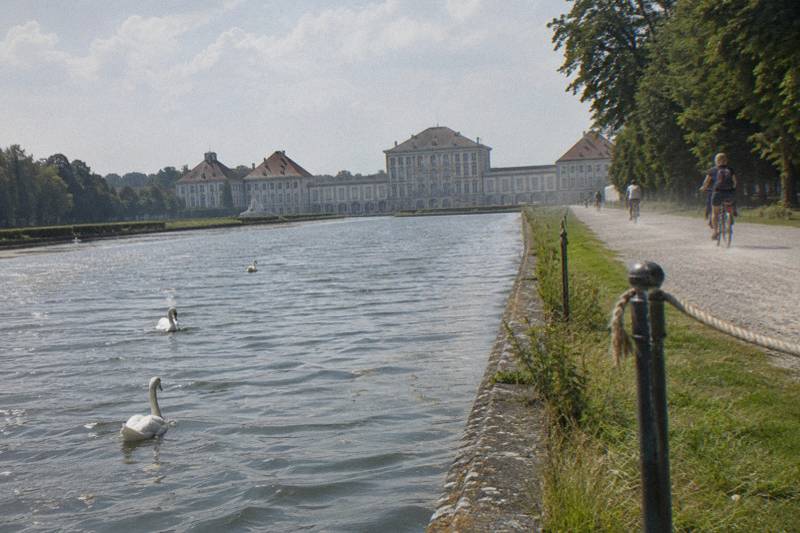
Nymphenburg Palace By Bike
The canal route to Nymphenburg is one of Munich's flattest, greenest rides, and a guided bike tour can bundle the palace with the English Garden and Olympic Park in a single morning.
Short answer
Nymphenburg Palace sits about 10 km west of the centre, reachable on signed canal-side paths from Olympiapark in roughly an hour of easy riding. The palace opens 9:00 to 18:00 in summer and 10:00 to 16:00 in winter; a combined ticket costs 20 euros in summer, 16 euros in winter.
Nymphenburg Palace is the western anchor of Munich's green corridor network, and the ride out to it follows water almost the whole way. The city's signed route system, the Münchner Radlnetz, totals 1,200 km of routes including green corridors along the Isar, the Würm and the Nymphenburg canal path, so a visitor with a bike and half a day can leave the old town, follow the Nymphenburg-Biedersteiner-Kanal and the Pasing-Nymphenburg-Kanal, and arrive at the palace's long baroque frontage without ever fighting heavy traffic. This guide lays out the route, the cycling rules inside the park, the palace's opening hours and ticket prices, and the guided tours that include Nymphenburg in a bigger loop. For a more somber half-day outing, our guide to reaching the Dachau Memorial from Munich by bike and train covers the S-Bahn carriage rules, the bus connection, and how the memorial's opening hours shape the day.
How Do You Ride From Central Munich To Nymphenburg Palace?
The standard approach rides out via Olympiapark and follows the Nymphenburg-Biedersteiner-Kanal and the Pasing-Nymphenburg-Kanal west. Official city route tips put the canal option at 10 km one way to Schloss Blutenburg, or 16 km to Hirschgarten on a related variant, both starting from Olympiapark, and the terrain along the canals is flat towpath riding the entire way.
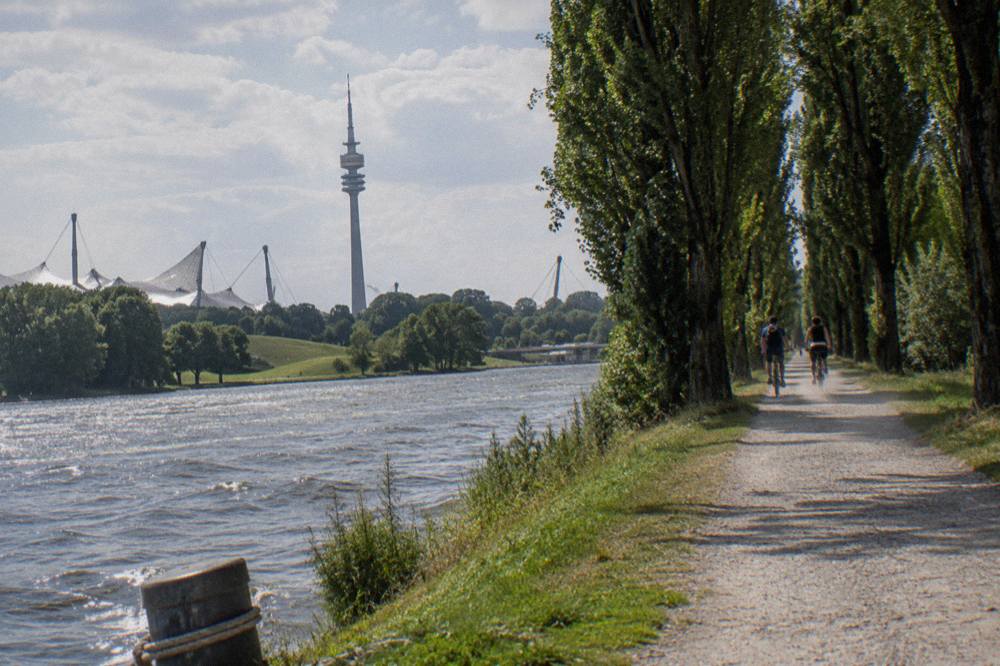
The starting point matters less than the corridor. From the centre, most riders head northwest through the university quarter or along the Isar's west bank toward Olympiapark, then pick up the canal. Munich's bike modal share sits at 21 percent of daily trips, the highest among German large cities, which shows in the infrastructure: 103 designated bicycle streets totalling 47 km, and a continuous programme of separated paths such as the 1.85 km Altstadtring Nordwest section delivered as part of the city's transport transition projects. Since so many riders pass through it anyway, our guide to reaching Olympiapark by bike covers what is still open there now that the stadium has closed, plus where the canal paths lead next.
Once you are on the canal, navigation is simple: the water runs straight, trees line both banks, and the path surface is rideable on any city bike. The palace park's main entrance lies off the canal's western reach, and the grand canal inside the park continues the same axis toward the palace facade, which is the view most visitors come for. For planning, the official Radlnetz page maps the 14 radial routes from Marienplatz plus the inner and outer ring routes.
A rider leaving from Marienplatz has two reasonable shapes for the first leg. The northern option cuts through Maxvorstadt and Schwabing toward Olympiapark, passing the Kunstareal museum quarter, and suits riders who want a look at the Feldherrnhalle side streets along the way. The southern option follows the Isar's west bank north from the Deutsche Museum reach, joins the river corridor and peels off west near Olympiapark's southern edge; it adds a little distance but keeps traffic out of the picture almost entirely. Either way, the canal is the reward: from the moment the path meets the water, the ride becomes a straight, shaded cruise with the city noise gone.
A few practical notes for the ride out:
| Leg | What to expect | Watch for |
|---|---|---|
| Centre to Olympiapark | City streets and bike lanes, some tram tracks | Cross rails at a right angle |
| Olympiapark onto the canal | Flat towpath, trees, few junctions | Pedestrians sharing the path |
| Canal to the palace park entrance | Straight water-side riding | Park rules apply once inside |
If you would rather not plan the route at all, the guided option is real: the 3-hour English Garden, Olympic Park and Nymphenburg Palace bike ride covers the whole corridor as a loop with a guide. Details are on the booking page, and our overview of what a Munich tour covers explains what a typical half-day loop includes and leaves out.
One more thing worth knowing before you set out: Munich's bike parking programme added 1,500 new spaces at 66 locations in 2025 alone, so finding somewhere to lock up near the palace approach is rarely a problem, and the city's Radlstadtplan maps the official facilities. Lock the frame, not just a wheel, take lights if there is any chance you will ride back after dark, since German law requires type-approved lighting on any bike used in public traffic, and carry a basic repair kit or the number of a rental shop if you are on your own machine. None of this changes the route; it just makes the return leg as relaxed as the ride out.
Can You Cycle Inside Nymphenburg Park?
Yes, the park paths are open to bikes, and the park is free to enter at any time of year. Cycling is on a par with other Munich green spaces: ride at walking pace where pedestrians dominate, dismount in the busiest zones near the palace frontage, and expect dogs to be leashed and lawns to be off-limits for bikes under the same general park rules that apply across the city's state-run gardens.
Nymphenburg Park is administered by the Bavarian Palace Administration, the same body that runs the English Garden's neighbour institutions, and its status as a garden monument and landscape protection area shapes the rules. Barbecues, open fires and camping are prohibited in Munich's parks, and the same conservation logic applies here: stay on the path network, leave the meadows alone, and give walkers priority. The palace park is at its quietest in the early morning and in the colder months.
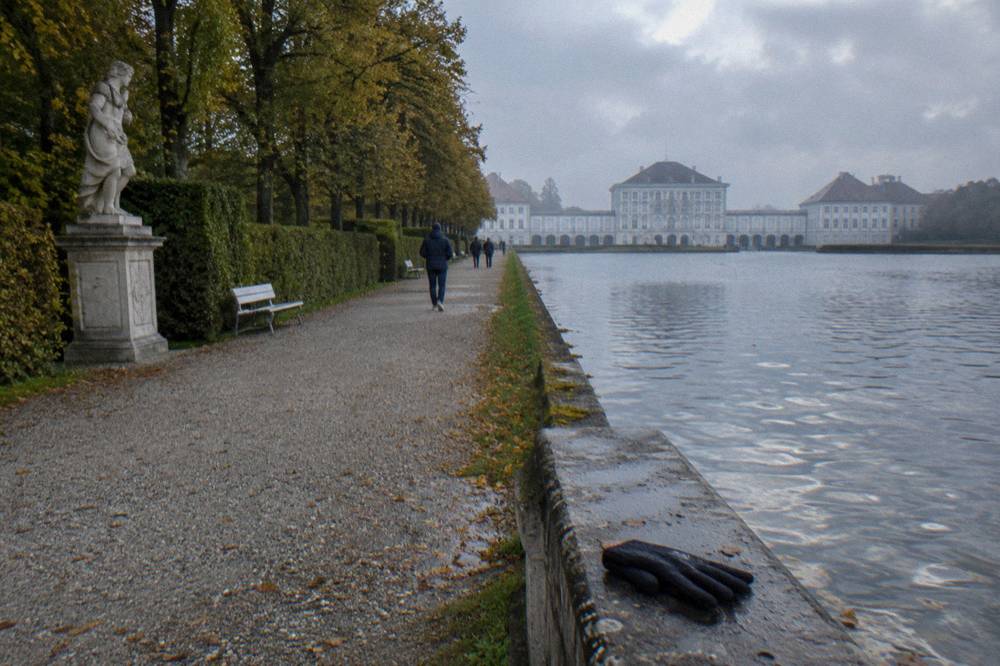
Two features inside the park are worth timing a ride around. The canal gondolas, small boats poled along the central canal, run early in the year through to mid-October, Friday to Sunday from 11:00 to 18:00, with Monday to Thursday by arrangement. The park fountains operate from Easter to mid-October, daily from about 10:00 to 12:00 and again from 14:00 to 16:00, so a mid-morning or mid-afternoon arrival catches the water displays.
| Park feature | When it runs | Where |
|---|---|---|
| Canal gondola rides | Early year to mid-Oct, Fri to Sun 11:00 to 18:00 | Central palace canal |
| Park fountains | Easter to mid-Oct, 10:00 to 12:00 and 14:00 to 16:00 | Parterre and side basins |
| Park grounds | Year-round, free entry | Whole park |
The interplay with pedestrians is the main thing to manage. On weekends in good weather, the stretch between the palace frontage and the grand canal is one of the most walked strips in western Munich. Ride it slowly, or lock up at the racks near the entrance and walk the last few hundred metres. Our guide to cycling rules for visitors covers the German road-law basics, including where riding side by side is allowed and when a signed cycle path becomes compulsory.
The park's size rewards the bike. The grounds stretch well beyond the formal baroque parterre into an English-style landscape section with winding paths, wooded reaches and the canal's far basin, and seeing all of it on foot in one visit is a serious walk. On a bike, the same network becomes a relaxed circuit: a loop from the main entrance along the grand canal to the Badenburg pavilion and back through the woods covers the highlights without backtracking. Keep the speed down on the wooded paths, where sightlines are short and joggers are common, and walk the bike through the tight spots around the pavilions rather than threading between walkers.
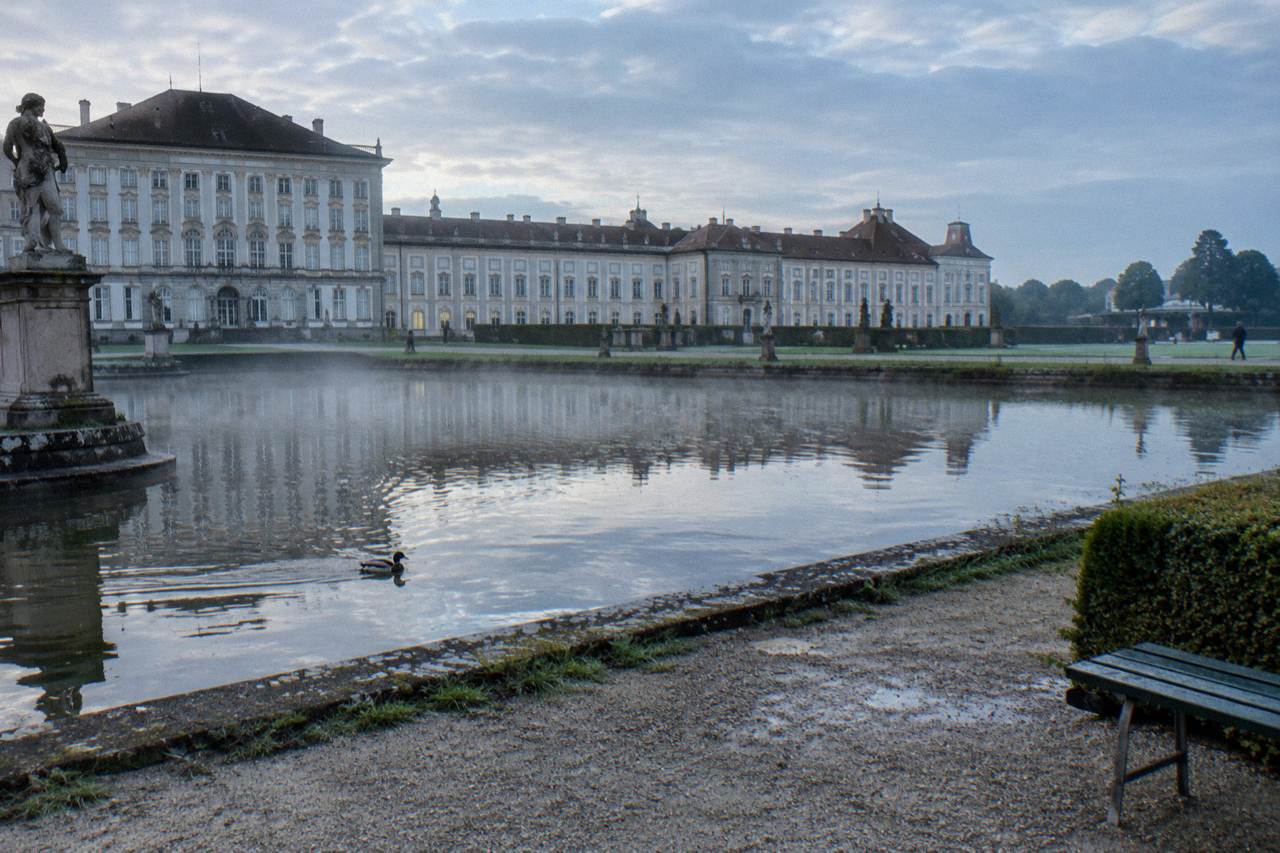
Photographers and painters set up along the central canal, especially in the morning when the facade faces the light, and the swans that patrol the water cross the path without warning. Give them the same space you would give a pedestrian, and expect small children to run toward the water's edge without looking. If you are riding with a group, spread out on the narrow sections rather than riding two abreast, since German road law allows side-by-side riding only when traffic is not obstructed and the spirit of that rule matters even more inside a park.
Which Guided Bike Tours Include Nymphenburg Palace?
One shared 3-hour ride, the English Garden, Olympic Park and Nymphenburg Palace tour, names the palace as a headline stop alongside two other big green spaces. Beyond it, the Fairy-Tale Castles ride covers palace-scale architecture on a regular cross-bike, and the half-day tour with a local guide pairs Nymphenburg with the classic city highlights for visitors who want the old town in the same morning.
The English Garden, Olympic Park and Nymphenburg Palace ride is the natural pick for palace-seekers. The listing states 3 hours on a classic bike in a shared group, and the three-stop structure means you see the surfers' stretch of the English Garden, the 1972 Olympic grounds with the stadium exterior, and the palace park in one loop, distances a solo rider would struggle to string together without route knowledge. The tour is a newer listing with 9 reviews, so the review pool is too small to support a rating claim; the booking page shows the current price and the meeting arrangements.
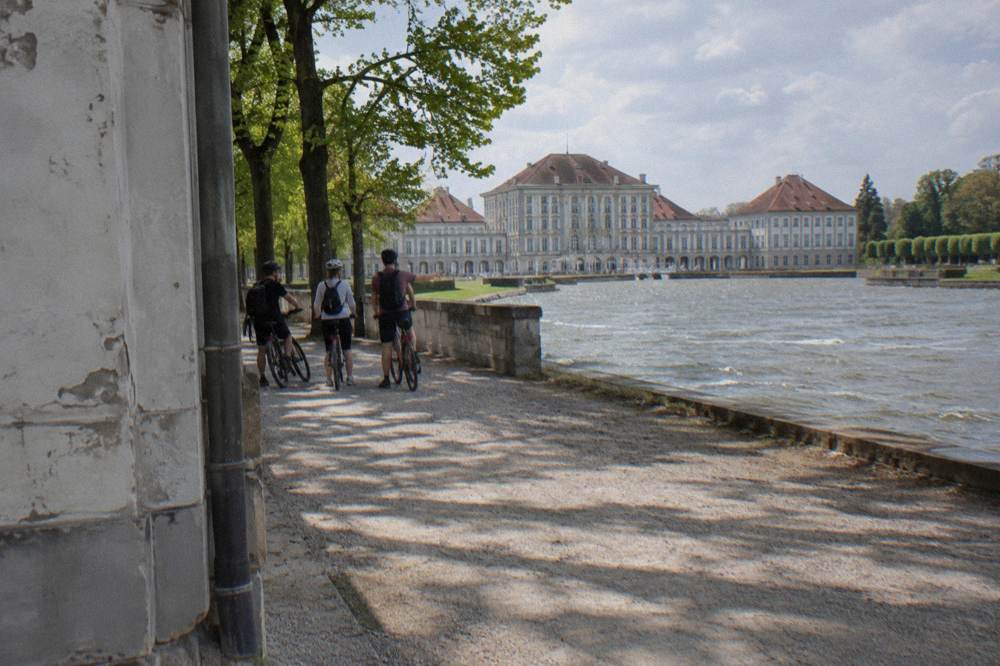
The e-bike contrast is worth understanding before you choose. Exactly two of the guided rides are e-bike tours: the Best of Munich Electric tour, 4 hours, and the full-day Isar valley e-bike ride, 5 hours, and only these list pedal assist. The Fairy-Tale Castles route, despite the e-bike wording in its name, is a regular city-highlights ride on a cross bike. It runs 4 hours and suits visitors whose main interest is palace and castle architecture rather than park riding, though as a brand-new listing with no reviews yet, its descriptions are the operator's own. Our comparison of e-bike versus regular bike for seeing Munich walks through who actually benefits from the assist.
For a first-time visitor who wants both the old town and the palace, the half-day tour with a local guide, 3 hours on a classic bike, splits the difference. It is a shared ride in the city-highlights family, and Nymphenburg fits as the western extension of that loop rather than the headline. If you are weighing guided versus independent, renting a bike or taking a guided tour in Munich sets out the honest trade-offs.
What each option does with its palace time differs, and that is the real decision. The three-park loop treats Nymphenburg as a park-and-facade stop: you ride the grounds, see the frontage from the canal side, and keep moving, with the interiors left for another visit unless the listing says otherwise. The Fairy-Tale Castles ride leans into the architecture itself, spending its hours on buildings rather than lawns. The half-day city ride may reach the palace district briefly or skip the interiors entirely, depending on the day's route. If stepping inside the state rooms is your priority, none of these replaces the palace's own entry; if the ride and the grounds are the point, the loop delivers all three green spaces in the time an independent rider would spend on route-finding alone.
A note on what the listings do not say. Meeting points differ by ride, so check the booking page rather than assuming a Marienplatz start; the booking page states where each departure gathers, what the bike and equipment situation is, and whether a beer garden or rest stop is built into the pace. Group sizes, helmets and cancellation windows vary by operator and are stated at booking, not in marketing copy. Checking those lines before paying is the difference between a smooth morning and an unwelcome surprise at the meeting point.
What Are Nymphenburg Palace's Opening Hours And Ticket Prices?
The palace opens daily 9:00 to 18:00 from April to 15 October, and 10:00 to 16:00 from 16 October to March, with last admission 30 minutes before closing. A combined Nymphenburg ticket costs 20 euros regular, 18 euros reduced in summer, and 16 euros regular, 14 euros reduced in winter, covering the palace, the Marstallmuseum with the porcelain museum, and, in summer only, the park palaces.
The prices come from the palace administration's own admissions page, and they cover the interiors; the park itself, as above, is free. Two caveats for planners: the Lacquer Cabinet, room 13 inside the palace, is closed for restoration until the end of 2027, though the other state rooms are open without restriction, and the summer/winter ticket split means an October visitor's price depends on which side of the 15th they arrive. The official admissions page carries the current figures and any short-notice changes.
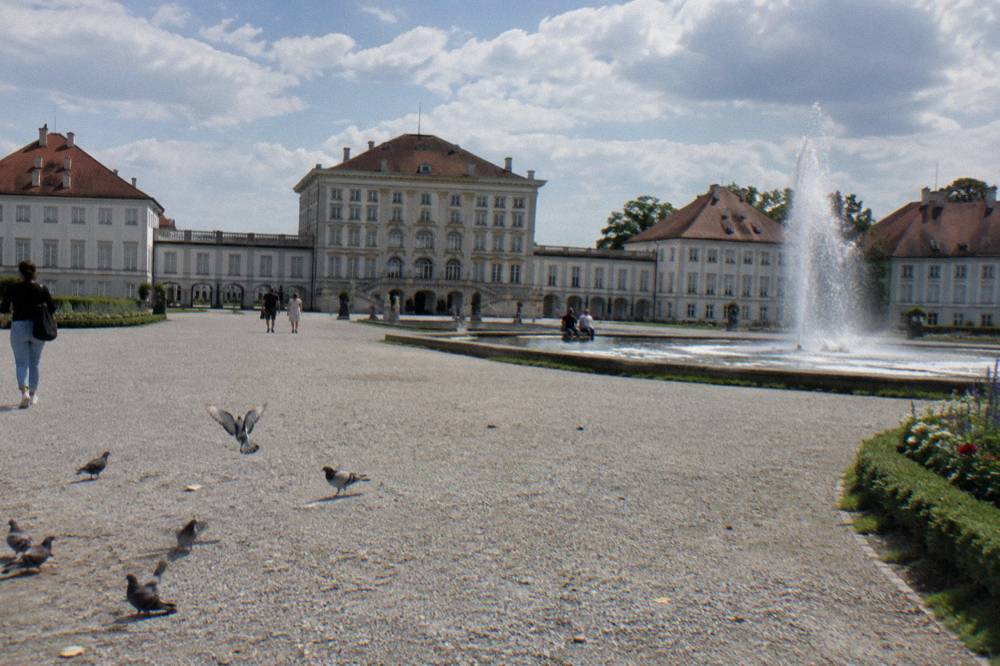
| Period | Opening hours | Combined ticket |
|---|---|---|
| April to 15 October | Daily 9:00 to 18:00 | 20 euros regular, 18 euros reduced |
| 16 October to March | Daily 10:00 to 16:00 | 16 euros regular, 14 euros reduced |
| Included | Palace, Marstallmuseum, porcelain museum | Park palaces in summer only |
Note that these are palace figures, not tour prices. A guided bike ride that stops at Nymphenburg does not include palace admission unless the booking page says so explicitly; check the inclusions line before you assume. Interiors aside, the free layer is generous: the park, the canal, the fountains in season and the building exteriors cost nothing, which is why a bike-and-palace day can be as cheap or as expensive as you make it. Our rundown of free things to do in Munich has more of this free layer, much of it reachable by bike. Pair the free palace park with a lunch stop in town, and our Viktualienmarkt eating guide covers what to order, when the stalls open, and where to leave the bike.
The reduced rates deserve a closer look, because many visitors qualify without realising. Students, seniors and groups typically fall into the reduced bracket at Bavarian palace sites, and under-18s enter free at the state-run museums in the same administration, so a family with children pays only the adult tickets. If you are visiting other palace sites in the same trip, check whether a multi-site pass applies to your itinerary before buying single tickets here, and ask at the desk, since the palace administration's combined options are listed on its own pages rather than in third-party summaries. None of this affects the bike: the park, the paths and the exterior views stay free in every season and every ticket scenario.
Timing the interior visit around a ride needs a little arithmetic. In summer, the 9:00 opening and the 18:00 close give a wide window, so a morning loop that finishes at the palace around 13:00 leaves hours for the interiors and the Marstallmuseum. In winter the 16:00 close is tighter: a rider who leaves the centre after lunch will want to arrive by 14:30 at the latest to see anything inside, and last admission sits 30 minutes before closing in both seasons. The park itself has no closing time at all, which makes a winter ride to the floodlit facade a genuine evening option, provided your lights are fitted and working.

When Is The Best Season For The Nymphenburg Ride?
Late April to mid-October is the full-experience window: fountains running, gondolas on the canal, park palaces open and the summer ticket in force. Winter riding is still possible on cleared paths, since Munich's winter service clears bike routes from 3 cm of snowfall, but shorter opening hours, the 16 euro winter ticket and the dormant gardens narrow what the visit itself offers.
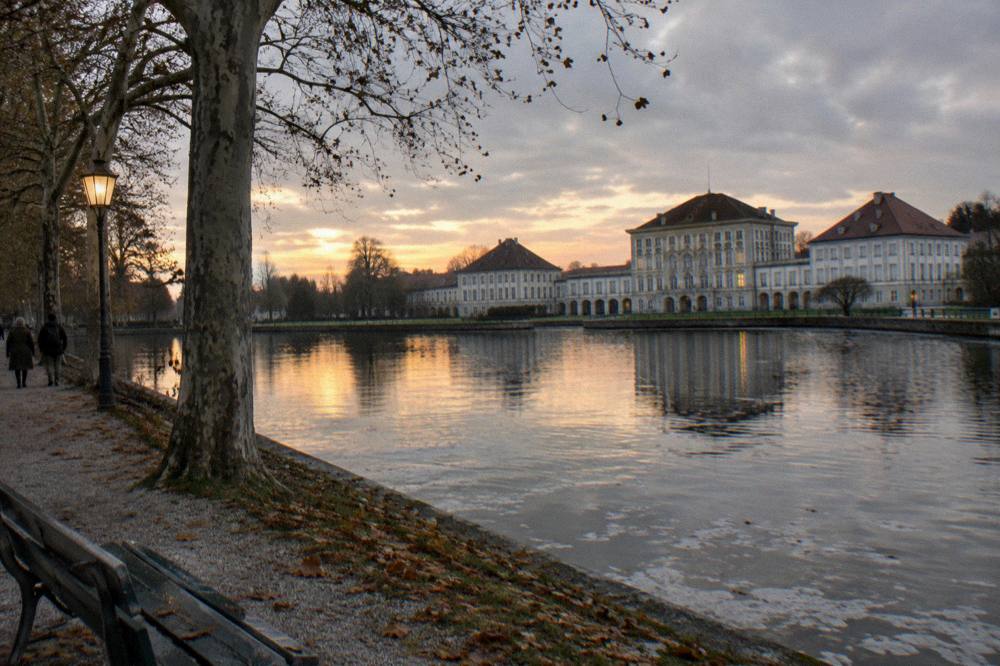
Seasonal specifics, where the city states them: Munich's Christkindlmarkt on Marienplatz runs 20 November to 24 December 2026, which makes a winter palace ride a quiet counterweight to the market crowds. Oktoberfest 2026 is already over, having drawn about 7.4 million guests from 19 September to 4 October, and the 2027 edition runs 18 September to 3 October; palace-goers in those windows should expect a busier western city. Rain matters more than cold on this route: canal paths drain well but the park's gravel goes soft, and guided rides generally run in light rain, a question our post on whether Munich tours run in the rain answers in detail. If you're curious how Munich stacks up against other bike-friendly destinations, our guide to Europe's best cycling cities ranks the competition and explains where the Bavarian capital fits.
Climate shapes the ride more than most visitors expect. July, Munich's warmest month, averages highs around 24 to 25 degrees with lows near 14 to 15, comfortable riding weather by any standard, while January, the coldest, averages highs of only 2 to 4 degrees and lows below freezing. May is the wettest month on the long-term record, with roughly 92 to 108 mm of rain across 16 to 17 rain days, so spring riders should carry a layer against showers rather than a plan that assumes dry paths. These are long-term averages, not forecasts; check the current outlook in the days before your ride.
The question of timing a guided ride follows the same logic. The English Garden, Olympic Park and Nymphenburg loop spends most of its three hours outdoors, so the May to September window gives the most value from the park stops. In November through March the loop still works, the park never closes, but the fountains and gondolas do. Ask the operator about winter departures before booking; the listing states what is currently scheduled.
How Does Nymphenburg Fit Into A Bigger Munich Cycling Day?
Nymphenburg works best as the western leg of a three-green-space day: English Garden in the morning, Olympic Park at midday, the palace park after lunch. Done independently that is a long, route-finding-heavy day on a classic bike; done as the 3-hour guided loop it fits inside a single morning, leaving the afternoon for the palace interiors or a beer garden stop on the way back east.
The geometry favours bikes. The three spaces sit on a rough arc from northeast to west, and the connecting routes are the Radlnetz's radial and ring routes rather than arterial roads. Riders who want to extend further west can continue past the palace along the canal system toward Blutenburg castle, the 10 km official variant mentioned above, or turn south toward Hirschgarten, whose beer garden is among the city's largest and makes a natural reward stop. The city's own cycling day-trip tips describe both canal variants.
Riders with more ambition can head north from the palace district toward the Würm, another of the Radlnetz's green corridors. The mapped routes keep to the canal variants and Schloss Blutenburg. Go beyond them and you are exploring on your own rather than following a set day ride. For most visitors the honest advice is simpler: three green spaces is a full and satisfying day, and a fourth turns a holiday ride into an endurance event. The beer garden stop solves the energy problem better than extra kilometres do, and Munich's beer garden culture, with its bring-your-own-Brotzeit custom in the traditional gardens, pairs naturally with a day on the bike.
Practical pieces for the bigger day:
| Option | Time needed | Bike | Best for |
|---|---|---|---|
| Independent palace out-and-back | Half day | Classic | Park and exteriors at your pace |
| Guided three-park loop | 3 hours | Classic, shared | First visit, no route planning |
| Castles by bike | 4 hours | Cross-bike, shared | Architecture over park time |
| Palace plus Blutenburg extension | Full day | Classic or e-bike | Confident riders |
Riders extending west on their own bike should know the transit rules in case of a change of plans: bikes need the MVV bicycle day ticket on S-Bahn, U-Bahn and approved regional trains, U-Bahn carriage is blocked on weekdays 6 to 9 and 16 to 18 except in Bavarian school holidays, and bikes are not allowed on buses and trams. Our fuller explanation of bikes on trains and the S-Bahn in Munich covers the details, including where to check the current ticket price.
Families have a workable version of this day too. The canal path is flat and traffic-light, which is why it appears in our Munich bike tour with kids and families planning; children up to 8 must use pavements under German road law, and up to 10 may, so pace the city legs accordingly and save the free-running for the park. A child seat or trailer changes the calculus only slightly, since the towpath surfaces suit both, though cargo bikes are generally not permitted on MVV trains if your fallback plan involved transit, and private rental shops state their own child-equipment options on their pages.
Whatever the shape of the day, the pairing of local route knowledge with the palace's own free park is the honest headline: the ride is the easy part, the interiors are the part worth timing.
Common Questions About Nymphenburg Palace By Bike
How Far Is Nymphenburg Palace From Central Munich By Bike?
Following the canal corridor from Olympiapark, the official route variant measures 10 km one way toward Schloss Blutenburg past the palace, on flat towpath the whole distance. Most riders reach the palace park from the centre in about an hour at a relaxed pace on a classic bike.
Can You Cycle Inside Nymphenburg Park?
Yes, the park paths are open to bikes and park entry is free year-round. Ride at walking pace where pedestrians dominate, especially near the palace frontage, and follow the general Munich park rules: no barbecues, no open fires, dogs leashed.
What Does A Nymphenburg Palace Ticket Cost?
The combined Nymphenburg ticket costs 20 euros regular and 18 euros reduced from April to 15 October, and 16 euros regular and 14 euros reduced from 16 October to March. It covers the palace, the Marstallmuseum with the porcelain museum, and, in summer only, the park palaces.
Is There A Guided Bike Tour To Nymphenburg Palace?
Yes. A 3-hour shared classic-bike ride links the English Garden, Olympic Park and Nymphenburg Palace in one loop. It is a newer listing with 9 reviews, so check the booking page for the current price, meeting arrangements and inclusions.
When Are The Nymphenburg Fountains And Gondolas Running?
The park fountains run from Easter to mid-October, daily from about 10:00 to 12:00 and 14:00 to 16:00. Canal gondola rides run early in the year to mid-October, Friday to Sunday 11:00 to 18:00, with weekday rides by arrangement.