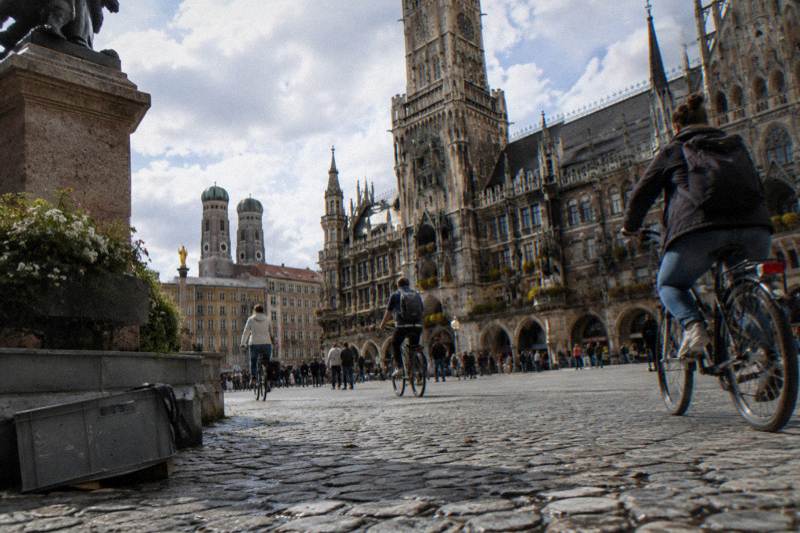
Munich By Bike During Oktoberfest
Oktoberfest closes a huge slice of central Munich to cars and fills the rest with seven million visitors. A bike is one of the few things that still moves quickly, as long as you know the dates, the rules and what the law says about beer and handlebars.
Short answer
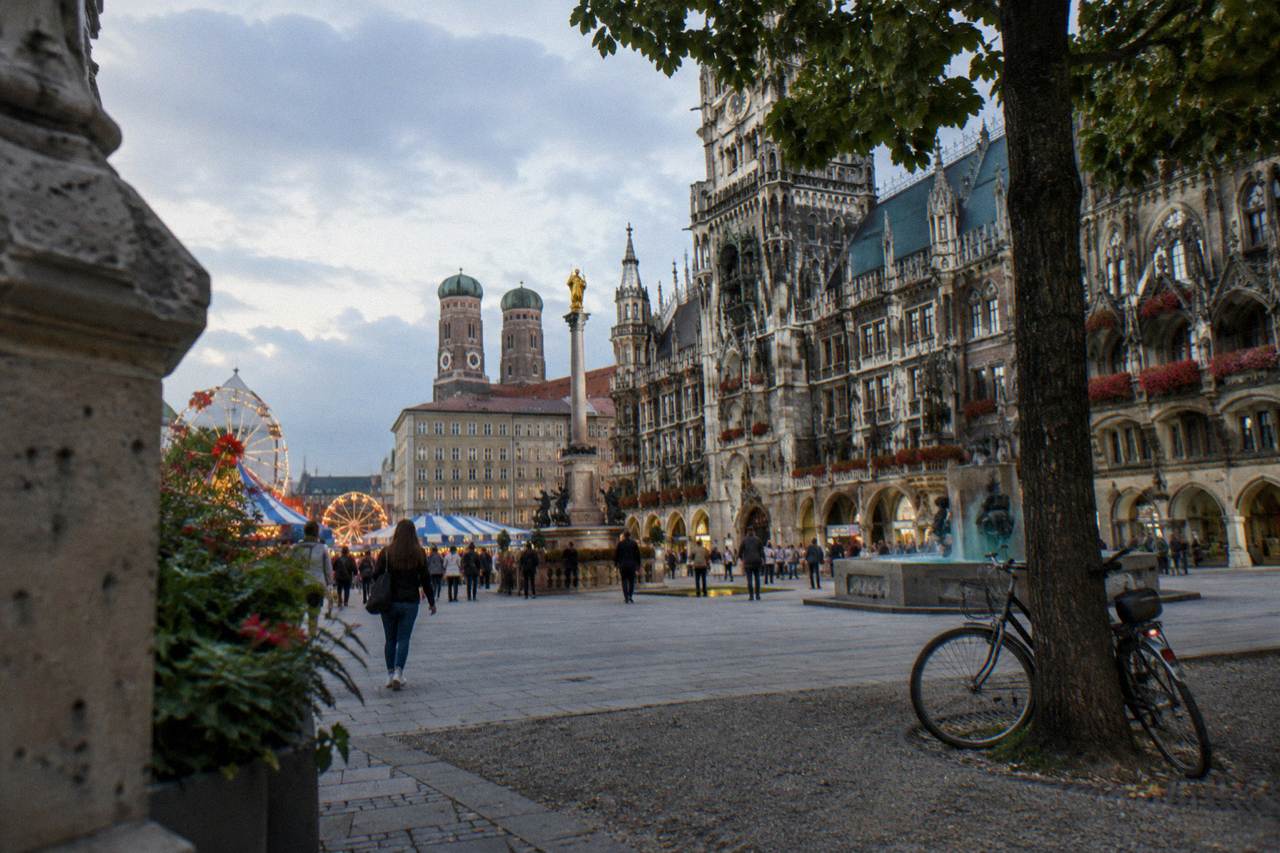
The 191st Oktoberfest ran 19 September to 4 October 2026 and drew about 7.4 million guests; the 192nd runs 18 September to 3 October 2027. Cycling stays legal around the edges of Theresienwiese, drink riding laws apply exactly as on any other day, and several guided bike tours keep running through the festival.
Oktoberfest turns the southern edge of Munich's centre into a sixteen day city within a city. Roughly 7.4 million guests came to the 2026 festival, including 447,000 who visited the Oide Wiesn heritage section, and every one of them arrived and left through streets that were already busy. For cyclists the festival is a mixed blessing: the roads around Theresienwiese jam with pedestrians, but the rest of Munich keeps its 1,200 km signed cycling network, its bike lanes and its beer gardens, all of them quieter than the fairground itself.
This guide covers the facts a rider needs. The Oktoberfest dates for 2026 and 2027, what happens to the streets around the festival ground, where the drink riding law stands, and which guided rides operate while the tents are open. The 2026 festival is already over, so everything about it is written in the past tense; the 2027 dates are the ones to plan around.
What Are The Munich Oktoberfest Dates?
The 191st Oktoberfest ran from 19 September to 4 October 2026 on the Theresienwiese, sixteen days in total, and drew about 7.4 million visitors including 447,000 to the Oide Wiesn. The 192nd edition runs 18 September to 3 October 2027 on the same ground, again roughly two and a half weeks. Both festivals sit either side of the calendar turn into October, which is high autumn cycling weather in Munich.
Those dates come from the official festival and city sources, and they matter for riders because the entire rhythm of central Munich bends around them. Hotel prices climb, the U-Bahn and S-Bahn near Theresienwiese fill to the doors in the evenings, and the walk from the station to the fairground becomes a slow moving crowd. Anyone planning to combine a bike with a tent visit should treat the festival fortnight as its own season, distinct from the rest of September.
The festival is also not the only event on the Theresienwiese calendar, and riders who dislike crowds sometimes plan around the smaller festivals instead. The 60th Frühlingsfest, the spring festival, ran 17 April to 10 May 2026, extended by a week for its anniversary. In winter the same meadow hosts the Tollwood Winter Festival from 24 November to 23 December 2026, with free market access. None of these draw anything like seven million people, and the surrounding bike infrastructure stays usable all year.
| Event | Ground | Dates | Scale notes |
|---|---|---|---|
| Frühlingsfest 2026 (60th) | Theresienwiese | 17 April to 10 May 2026 | Extended one week for the anniversary |
| Oktoberfest 2026 (191st) | Theresienwiese | 19 September to 4 October 2026 | About 7.4 million guests, 447,000 at Oide Wiesn |
| Tollwood Winter Festival 2026 | Theresienwiese | 24 November to 23 December 2026 | Market access free, Silvesterparty on 31 December |
| Christkindlmarkt 2026 | Marienplatz | 20 November to 24 December 2026 | Mon to Sat 10:00 to 21:00, Sun to 20:00 |
| Oktoberfest 2027 (192nd) | Theresienwiese | 18 September to 3 October 2027 | Dates confirmed by the city |
The closing weekend of Oktoberfest is traditionally the densest. If you want to ride during the festival at all, the weekday afternoons are the calmest window: tents fill from late afternoon, so mornings belong largely to cyclists and locals. For a wider picture of how the festival weeks change the city, the Oktoberfest pages of the city's official site carry the current details, and the festival's own opening hours page states the daily tent and ride times.
Can You Still Ride Around Munich During The Festival?
Yes, cycling remains fully legal and practical during Oktoberfest; the festival closes the Theresienwiese fairground itself and strains the streets around it, but Munich's 1,200 km signed cycle network, its 103 bicycle streets and the English Garden paths keep running exactly as normal. The pinch points are the approaches to the fairground, where riders should expect to walk the bike through dense crowds.
The honest picture is one of two cities during the festival. Within a few hundred metres of Theresienwiese, pavement and roadway blur into a single pedestrian stream in the evenings, and no sane rider fights it. Everywhere else, Munich in late September behaves much as it does in August. Commuters still ride, the Isar paths still carry recreational traffic, and the beer gardens in and around the English Garden fill with a mix of locals and festival refugees who have discovered that a Maß tastes the same under chestnut trees as it does in a tent.
Riders who want the calm side of festival Munich have an obvious route. The English Garden offers 78 km of paths, no entry fee, and two of the city's best known beer gardens; our English Garden bike route guide covers the detail. The park prohibits barbecues and open fires, dogs must stay leashed, and swimming in the Eisbach is banned, all of which keeps the garden orderly even at festival time. A loop from the centre out through the garden and back along the Isar is the classic escape, and it needs nothing more than a bike and an afternoon.
If riding solo through festival crowds sounds like work, a guided ride takes the route decisions off your plate. The Munich 3-Hour Guided Bike Tour keeps to the classic centre-and-garden formula, and the listing states its 3.5 hour duration; check the booking page for departure times during the festival weeks, since schedules shift with demand. The Beer Garden Break version adds a proper stop, which pairs naturally with the season.
One planning note that surprises first time visitors: festival afternoons end early enough for a second act. Tents wind down through the evening, and the city's night riding scene wakes up afterwards; our evening and night bike rides guide explains lighting rules and the quieter night routes. Lights are not optional: German law requires type approved front and rear lighting on any bike used after dark.
Where Do You Park A Bike Near The Oktoberfest Ground?
Bike parking around Theresienwiese works like street parking anywhere else in Munich. Use official racks where you find them, expect spots near the fairground to be taken on festival evenings, and consider locking up a little further out and walking the last stretch. The city's bike share system also gives a fallback, since MyRadl bikes can be returned at any of its stations rather than at the fairground's edge.
Munich has been adding bike parking steadily. In 2025 the city installed 1,500 new bike parking spaces across 66 locations, and a free, video surveilled 24 hour bike garage opened near the Hauptbahnhof in January 2026, with more capacity planned for 2027. That garage sits a reasonable ride from the festival ground and is the most secure option an overnight visitor has. Since Oktoberfest weather can turn wet without much warning, it also helps to know whether Munich bike tours still run in the rain before you plan a full day around riding.
Theft is the real risk at festival time, simply because of the volume of people. A decent lock, a lit rack and nothing valuable left on the bike are the standard precautions anywhere in Munich during the festival. Riders using the share system should note that MyRadl bikes must be returned at official stations; leaving one elsewhere triggers a service fee. The system launched on 7 May 2026 with roughly 1,000 stations and more than 6,700 bikes planned across the region, with classic bikes at EUR 1 per 30 minutes and a EUR 9 day tariff, e-bikes at EUR 3 per 30 minutes and EUR 18 for the day.
| Option | What is known | What to check yourself |
|---|---|---|
| Street racks near Theresienwiese | Ordinary city racks exist in surrounding streets | Exact locations and evening availability |
| Hauptbahnhof bike garage | Free, video surveilled, 24 hour access, opened January 2026 | Capacity on peak festival evenings |
| MyRadl share bikes | About 1,000 stations region wide, return at stations only | Nearest station with free docks |
| Hotel or accommodation | Varies by property | Whether the property offers secure storage |
For riders staying further out, the S-Bahn and U-Bahn remain an option with a bike outside blocked hours, subject to the bike day ticket; the rules and restrictions are covered in detail in bikes on trains and S-Bahn in Munich. During festival evenings the trains near Theresienwiese are simply packed, which is one more argument for riding the whole way.
What Does The Law Say About Drinking And Cycling?
German law treats a bicycle as a vehicle and riding one while unfit through alcohol as a criminal offence, exactly as on any other day of the year; Oktoberfest changes nothing about the legal position. The safe statement is that beer and riding do not mix legally, so keep the beer and the bike on separate days, and police are visibly present during the festival.
The trap at Oktoberfest is logistical, not legal subtlety. A rider who finishes an evening in a tent faces a bike parked somewhere in the thickest crowd of the German year. Plenty of visitors solve this by walking the bike to a quieter street before mounting, by using the share system and simply walking instead, or by leaving riding for the next morning. Others plan the day so the beer garden stop and the riding never share the same hours.
Guided tours handle this differently: the beer garden stops on the standard city rides are short and moderate, and operators describe them as breaks rather than sessions. The listing for the Munich Bike Tour with Beer Garden Break names the stop as part of its 4 hour format, and the morning classic ride from the same family pairs a surfers stop with a beer garden visit on its 3 to 4 hour route. Check each booking page for how the operator frames the stop, and for whether minors are welcome, since policies differ. Beer garden stops also depend on when you ride, since outdoor seating thins out once the weather turns, so our month by month guide to visiting Munich can help you pick dates when that break is still part of the route.
German cycling law in general is worth a primer before festival riding, since rules on cycle path use, pavement riding and lighting all apply with police attention heightened around the Wiesn. The cycling rules for visitors guide explains what applies in practice, and the road traffic regulations state the underlying law directly.
Do Guided Bike Tours Run During Oktoberfest?
Yes, Munich's shared and private bike tours keep running through the festival weeks, with departure times that usually shift rather than pause. The classic city highlights rides run year round, and the festival period is high season rather than a closure. Meeting points and departure times are set by each operator, so the booking page is the source of truth for a specific festival date.
The reason tours run is also the reason they are useful. During the festival the centre is full of visitors who want orientation fast, and a guided ride delivers the old town, the English Garden and the river in a single morning, leaving the afternoon free for the fairground. The morning classic ride departing around 11.30 is built exactly around that pattern: it is a 3 to 4 hour shared ride with a surfers stop and a beer garden stop, finishing with time to spare before the tents reach full voice.
E-bike options extend the reach. The Best of Munich Electric Bike Tour covers the city in 4 hours with motor assistance, which matters for riders saving legs for the evening, and the full day Isar e-bike ride heads out of the city entirely, toward the Alpine foothills on a 5 hour route. Neither is a festival tour in theme, but both ran through the 2026 season, and 2027 availability is listed on each booking page as operators confirm their calendars.
| Ride | Format | Stated duration | Festival angle |
|---|---|---|---|
| Munich: 3-Hour Guided Bike Tour | Shared, classic bike | 3.5 hours | Compact centre orientation before an afternoon at the Wiesn |
| Munich: Bike Tour with Beer Garden Break | Shared, classic bike | 4 hours | Longer garden stop, fits the season's mood |
| Munich Classic Bike Tour with Surfers and Beer Garden Stop | Shared, classic bike | 3 to 4 hours | Late morning departure pairs with an evening tent visit |
| Best of Munich Electric Bike Tour | Shared, e-bike | 4 hours | Saves legs on a festival day |
| Private Munich Bike Tour with Beer Garden Lunch | Private, classic bike | 4 hours | Own group, own pace, timed around tent reservations |
The private options are priced per group, and the unit is confirmed on the booking page rather than assumed.
How Bad Are The Crowds, Really?
About 7.4 million people attended the 2026 Oktoberfest, and the crowd pressure is concentrated in the evenings and weekends around Theresienwiese, the Hackerbrücke area and the main station; the rest of Munich, including the English Garden and the Isar banks, stays markedly calmer, and weekday mornings are quiet almost everywhere. Riders who time around the peak flows barely notice the festival except at its edges.
The crowd pattern follows the tent hours. Mornings belong to the city: commuters, deliveries, school runs. By early afternoon the festival crowd moves toward the Wiesn, and from roughly 17:00 the streets within a kilometre of the fairground are slow walking pace. After the tents close, the surge reverses toward the station, then dissipates. A cyclist crossing that zone at the wrong hour ends up walking anyway, which is why the practical advice is to route around it: the Isar path corridor east of the centre, or the bicycle streets of the outer districts, keep you moving.
Late September weather adds a second variable. July is Munich's warmest month, with average highs around 24 to 25 degrees. May is the wettest. September sits somewhere in between, generally mild but capable of wet days, so a light layer and a quick forecast check are standard practice. ADFC guidance notes there is no winter tyre obligation for bikes and that cyclists may use the road if a signed bike path is uncleared, which is useful knowledge that carries into the colder festival edges.
What Should A Festival Day On A Bike Look Like?
A workable pattern is a guided morning ride finishing by early afternoon, a walk into the festival from a bike parked outside the crowded core, and an evening either in a tent or back along the Isar; the reverse order also works, riding out in the late morning while the festival crowd is still arriving. The single most useful habit is never planning to ride through the Theresienwiese approaches at peak hours.
Concretely: a rider books the classic morning tour, meets in the centre, spends three to four hours on the old town, the surfers wave and a beer garden, and is back by mid afternoon. The bike then either stays parked while they walk to the Wiesn, or the rider heads the other way, into the English Garden, where the Chinesischer Turm beer garden serves the same litre Maß culture without a tent reservation. That garden opens at 11:00 on weekdays and 10:00 on weekends in good weather, with brass band music several afternoons a week, and it sits inside a park with 78 km of paths to explore.
The evening decision is the real fork. Staying for the tents means leaving the bike locked well outside the crowd zone and accepting a walk. Riding instead means the Isar at dusk, dinner at a garden away from the fairground, and a city that, two kilometres north, feels like ordinary Munich. Riders wanting the full spectrum of garden options will find the routes in Munich beer gardens by bike.

Is A Bike The Best Way To See Munich During Oktoberfest?
For everything outside the fairground itself, a bike is arguably the best tool during the festival: it bypasses the transit crush, reaches the English Garden and the Isar quickly, and turns the crowded centre into a morning excursion rather than an obstacle. Inside the fairground's edge, no vehicle helps, and walking is the only realistic mode.
The comparison with alternatives is not close. Taxis during festival evenings sit in the same pedestrian jam at walking speed. The U-Bahn and S-Bahn work but require queueing patience at the peak. A bike moves at its own pace through all of it, provided the rider accepts the one rule of festival cycling: dismount and walk when the crowd thickens, and route around the Wiesn rather than through it.
For visitors who want that mobility without the planning overhead, a guided ride bundles the route, the bike and the local context. Compare all 18 guided rides on Bike Tours Munich: prices from $42, durations and free cancellation, side by side. The classic 3-Hour Guided Bike Tour is the natural fit for a festival day, compact enough to leave the afternoon free; its full details are on the Munich 3-Hour Guided Bike Tour page, with Guided Ride, 3.5 Hours showing live festival week slots. Visitors with more time can piece together a fuller plan with Munich in 3 days with a bike.
Common Questions About Munich By Bike During Oktoberfest
What Are The Munich Oktoberfest Dates?
The 191st Oktoberfest ran 19 September to 4 October 2026 on the Theresienwiese. The 192nd runs 18 September to 3 October 2027 on the same ground.
Can You Ride A Bike To The Oktoberfest Grounds?
You can ride to the edge of the festival area, but the streets around Theresienwiese become pedestrian dominated in the evenings, so riders should expect to walk the final stretch and park outside the crowded core.
Do Bike Tours Run During Oktoberfest?
Yes. The city's shared and private guided bike tours operate through the festival weeks, with schedules that shift with demand; check each tour's booking page for festival week departures.
Can You Drink Beer And Ride A Bike In Munich?
Riding a bike while unfit through alcohol is a criminal offence in Germany, on festival days like any other. Drink-drive limits in Germany apply to cars, not bicycles, but riding unfit is still an offence. The safe rule: keep drinking and riding apart.
About 7.4 million people attended the 2026 festival, with pressure concentrated evenings and weekends near Theresienwiese and the main station. Weekday mornings and the English Garden stay comparatively calm. Ordinary street racks exist around the fairground but saturate in evenings, and no festival specific bike parking plan is published. The free 24 hour video surveilled bike garage near the Hauptbahnhof, opened January 2026, is the most secure option.How Crowded Is Cycling In Munich During Oktoberfest?
Where Can You Park A Bike Near The Theresienwiese?