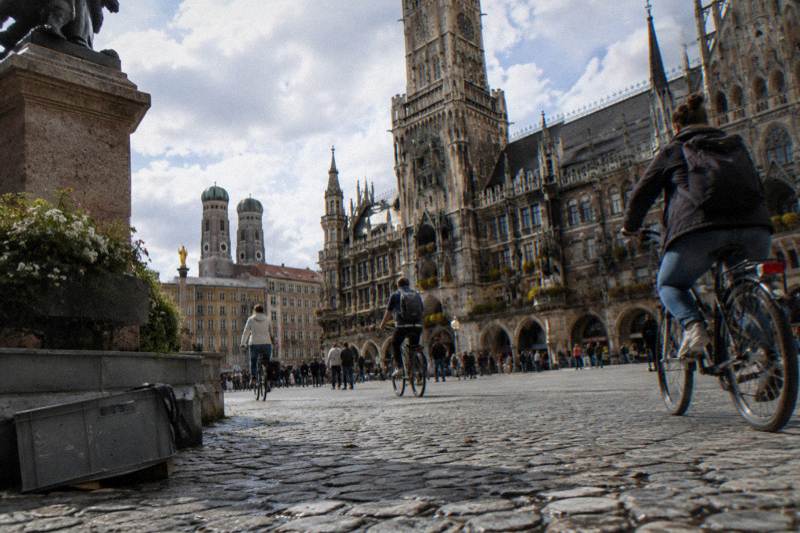
Do Munich Bike Tours Run In The Rain?
Yes, most guided bike rides in Munich still roll in light rain, and this guide explains what changes, what to pack, and when rescheduling makes more sense.
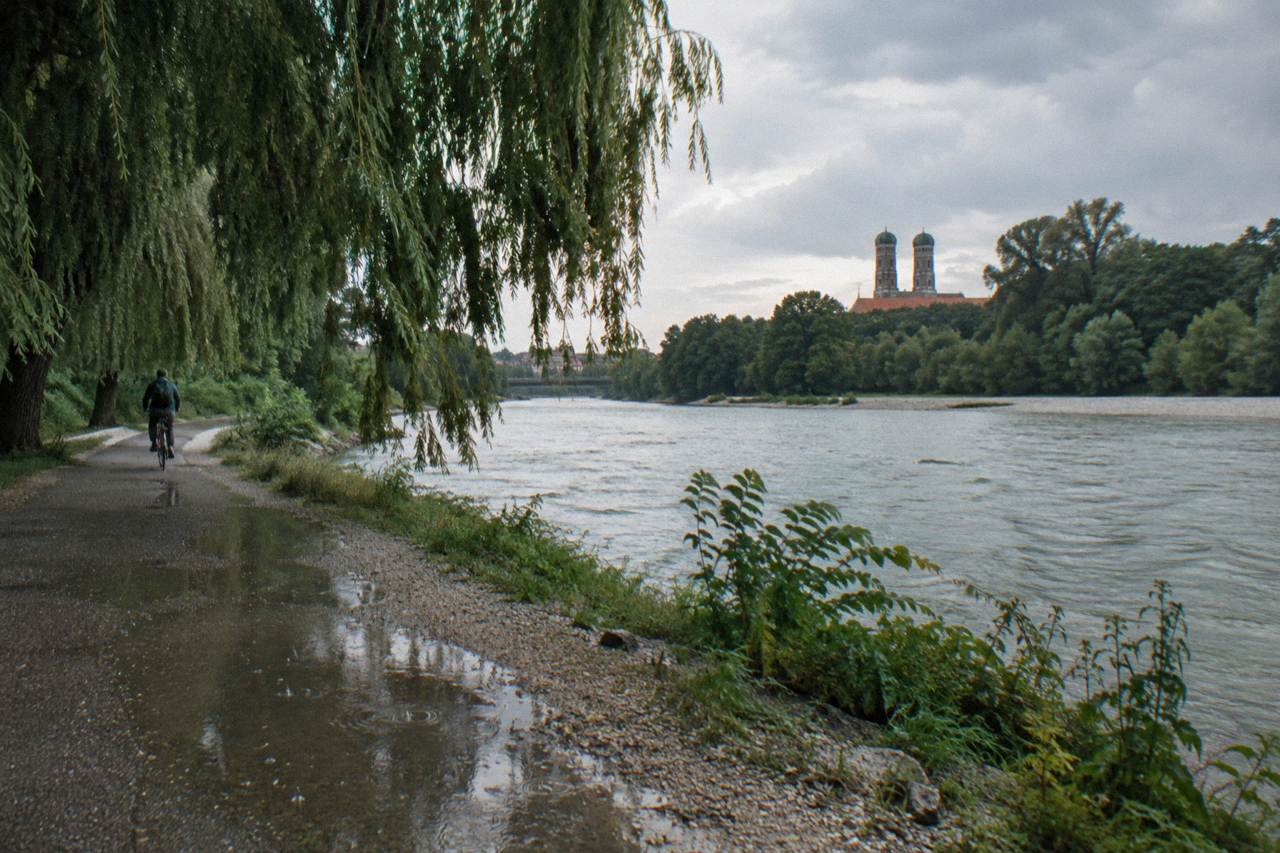
In almost every case, yes. Guided bike rides in Munich run in light rain and grey weather, because the city's operators treat a shower as normal Bavarian conditions rather than a reason to cancel. Only genuine safety events, thunderstorms, ice or storms, stop a departure, and the decision sits with the operator on the day. Individual listings state their own bad-weather terms, so read the booking page before you assume anything. Rain is only one planning variable, so if your visit lands during the Wiesn, our guide to cycling in Munich while Oktoberfest is on explains how the festival changes routes, rules, and which tours still operate.
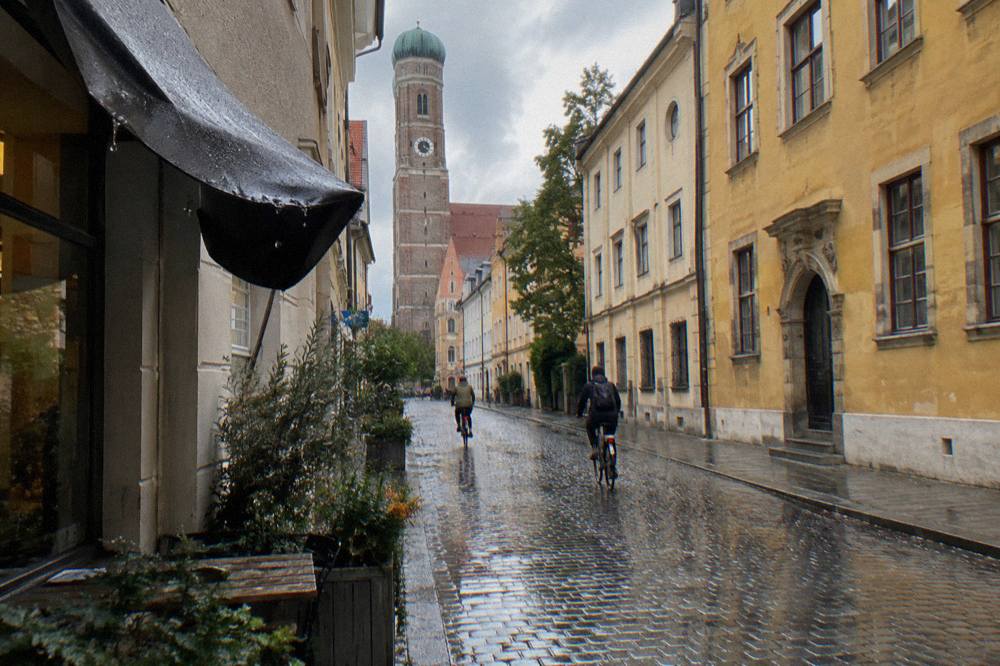
That answer surprises visitors from drier climates. Munich sits at the northern edge of the Alps, where weather fronts roll through quickly and a morning of steady drizzle can clear into a golden afternoon. Operators here plan for that rhythm. A three or four hour ride through the centre rarely collapses because of a bit of water, and guides simply adjust the pace, shorten the beer garden stop or route along the covered arcades of the Altstadt for a while.
The distinction that matters is between rain and danger. Steady rain means wet clothes and a good story. Thunderstorms, hail, icy roads or the kind of downpour that floods bike lanes mean the operator will delay, reroute or cancel, and a responsible one will contact booked guests early. Because policies differ between operators and are set per listing, the booking page is the authoritative source for what happens to your money if a ride is called off.
If you are comparing options for a visit where the forecast looks shaky, these three city rides are the natural starting point, all operated as shared group tours with a guide:
The featured pick for this question, Munich by Bike: Half-Day Tour with Local Guide, is a good fit precisely because it is short. The listing states 3 hours, which limits how long you are exposed if the sky opens halfway through. The price and current cancellation terms are on the booking page, and checking them before a rainy-season booking is simply good planning.
What Happens If It Rains On The Day Of The Tour?
Expect the tour to run, possibly with a modified route or a longer indoor stop. Operators generally do not cancel for rain alone, guides may add sheltered pauses, and the beer garden stop that many Munich routes include often becomes an extended warm-up break. If conditions become dangerous, the operator decides, and cancellation terms on the booking page determine what you pay or get back.
The practical reality of a wet departure is less dramatic than people fear. Munich's summer rain is usually moderate, and the rides that weave through the old town pass under archways, museum colonnades and the Viktualienmarkt's awnings, which gives a guide places to regroup. The Isar and English Garden stretches are more exposed, so a guide in rain will typically trade distance for comfort and skip the optional loops.
What you should do before the ride: check the listing's cancellation window, ask whether the operator supplies rain ponchos or whether you bring your own, and confirm the meeting point in writing, since standing at the wrong square in the rain is miserable. Operators communicate changes through the contact details on the booking, so keep your phone reachable on the morning.
One more thing worth knowing: Munich's guides ride these streets in all seasons professionally. Rain is not an emergency for them, it is a Tuesday. Guests who arrive dressed for it, with a shell jacket and normal shoes, almost always finish the tour glad they went.
How Does Munich Weather Behave Month By Month?
July is the warmest month with average highs around 24 to 25 degrees Celsius, January the coldest with highs of 2 to 4 and lows of minus 2 to minus 5, and May is the wettest with roughly 92 to 108 mm of rain across 16 to 17 rain days. These are long-term averages, not forecasts, so treat them as a planning baseline for when rain is statistically likely.
The pattern behind those numbers is continental with an Alpine edge. Summer rain arrives as showers and thunderstorms, often short and heavy in the late afternoon, which favours morning departures. Winter precipitation is lighter but lingers, and from November through February the odds of dry pavement improve while the odds of warm fingers fall. May combines pleasant temperatures with the highest rainfall of the year, the classic Munich month where a rain shell earns its place in the bag.
| Month | Typical conditions | Rain consideration for a bike tour |
|---|---|---|
| January | Highs 2 to 4 °C, lows minus 2 to minus 5 °C | Cold more than wet; dress in layers |
| May | Wettest month, 92 to 108 mm over 16 to 17 rain days | Highest rain-day odds; book flexible |
| July | Highs 24 to 25 °C, lows 14 to 15 °C | Short heavy showers; morning rides safer |
For a deeper seasonal read, the guide to the best time for a Munich bike tour breaks the whole calendar down, and the question of the best month to visit Munich covers the same ground from a trip-planning angle.
What Does Rain Actually Change On A Bike In Munich?
Rain changes three things: grip, visibility and the surfaces you choose. Cobbles and tram rails become slippery, painted lane markings lose traction, and drivers see cyclists later, so guided groups ride slower, keep tighter formation and cross rails at a right angle. Munich's network of 103 bicycle streets and separated paths gives guides calmer routes when the busy streets get unpleasant.
None of this is unique to Munich, but the city's layout helps. The Münchner Radlnetz totals about 1,200 km of signed routes, including the Isar and Nymphenburg corridors, and much of it runs away from motor traffic. A guide will use those corridors in wet weather instinctively. The city's own rules require cyclists to use a signed cycle path where signs 237, 240 or 241 order it, and where a signed bike path is uncleared or icy in winter, cyclists may lawfully ride on the road instead, which is worth knowing even on a guided ride.
For visitors weighing whether pedalling themselves is wise in bad weather, the comparison of renting a bike versus taking a guided tour is relevant: a guide absorbs the routing decisions that rain makes harder. Riders who prefer a motor assist on heavy days should look at the e-bike options, since the two e-bike tours are the only rides with a motor:
The Best of Munich Electric Bike Tour lists 4 hours and covers the major sights with pedal assistance, which in practice means arriving at each stop less drained when the weather is fighting you. Its price and availability sit on the booking page. Whether electric or standard, the bike and helmet come per the listing's inclusions, so check what is included before assuming.
What Should You Wear And Pack For A Wet Ride?
Pack a proper rain shell, something with a hood or collar that works under a helmet, plus a warm layer, since Munich rain often arrives with a temperature drop. Avoid cotton, bring gloves even in summer showers, and consider a dry bag for your phone and documents. Layers beat a single heavy coat, because guided rides alternate between pedalling warmth and standing still at stops.
Shoes matter more than people expect. Wet flat pedals in smooth-soled shoes are a slipping hazard, so anything with a textured sole works better. A cheap poncho fits over everything, but it behaves badly at speed, billowing and catching wind, so a fitted cycling or hiking shell is the better tool on a moving bike. Helmets, where the listing includes them, still fit over a thin cap.
The German law angle is small but real: lights are mandatory equipment under StVZO section 67, and removable battery lights are permitted, so if your ride might stretch into a dark, overcast late afternoon, a small rear light in your pocket is sensible even on a guided tour. Beyond that, the packing list is ordinary: spare socks in a plastic bag, a zip lock for the phone, and nothing you would mourn if it got muddy.
When Is Rescheduling Or A Different Tour The Smarter Choice?
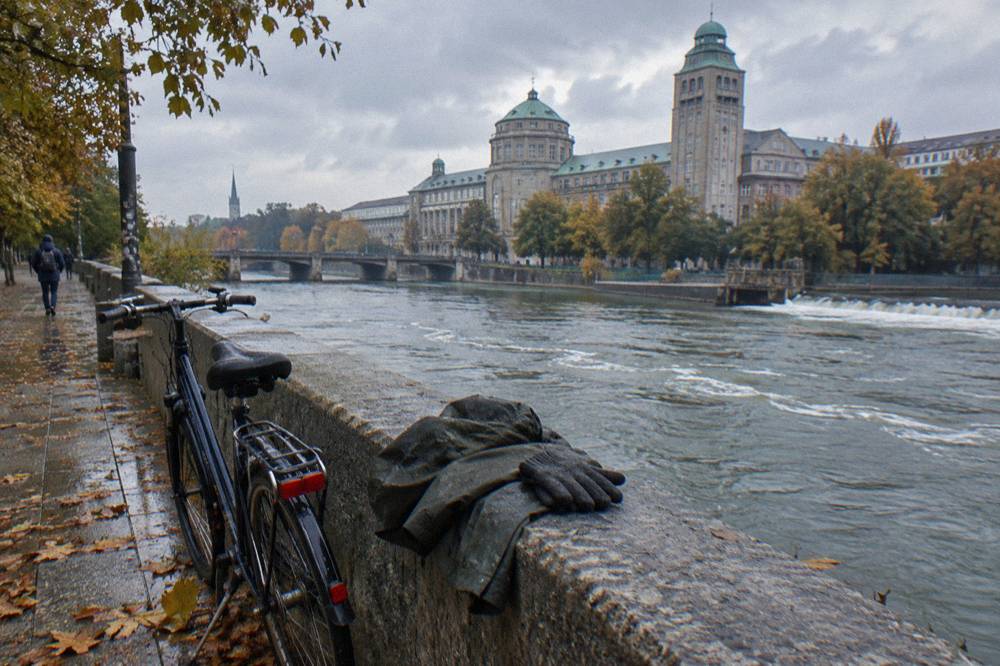
Reschedule when the forecast shows thunderstorms, sustained heavy rain, or winter ice, since those are the conditions under which operators themselves cancel or reroute. Otherwise, consider swapping a long, exposed ride for a shorter city tour rather than abandoning the day. If your travel dates have no flexibility, pick a tour whose format tolerates weather rather than one that depends on distant viewpoints.
The format point deserves emphasis. A 5 hour ride to panoramic Alpine foothills is magnificent in clear weather and punishing in murk, while a 3 hour centre ride loses far less to drizzle. Distance and view-dependent tours pay the highest weather tax. Some listings also carry cancellation flexibility flags, and the booking page states them per tour; where a listing shows free cancellation up to a stated window, that is your insurance against a forecast that deteriorates after you book.
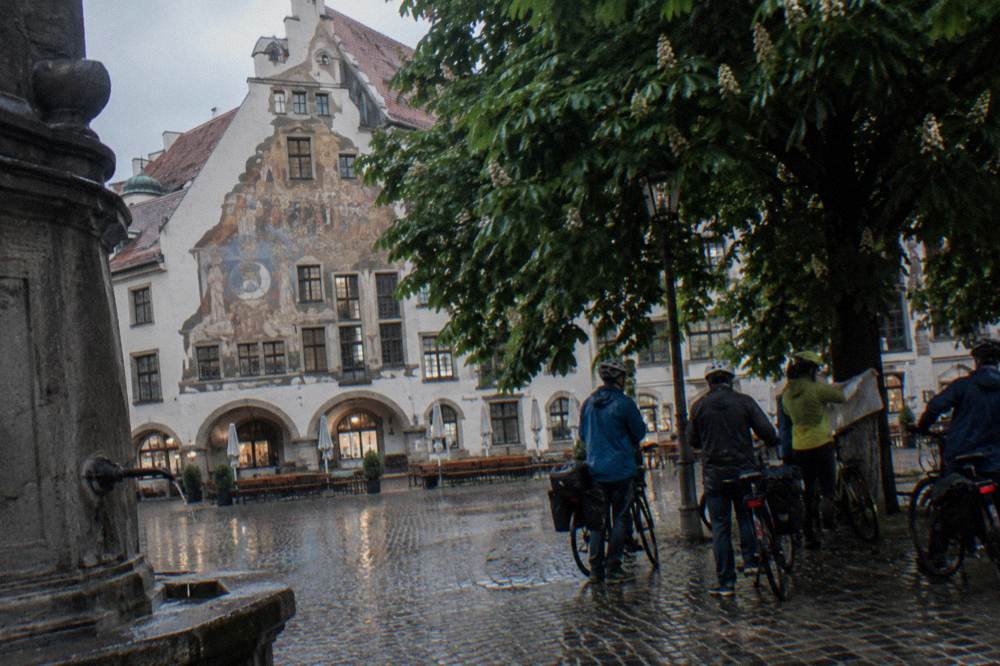
Beer garden tours deserve a special mention in this discussion. Munich's beer garden culture is, in effect, the city's native bad-weather plan: a roof of chestnut trees, hot food and a litre Maß served fast. The traditional rule even lets guests bring their own Brotzeit snack to a true beer garden and buy only the beer, as the city's own beer garden guidance records. A ride with a beer garden stop turns a soggy hour into the highlight of the route:
Munich: Bike Tour with Beer Garden Break lists 4 hours with the pause built in. On a dry day it is a treat; on a wet one it is a strategy. Price and departure details are on the booking page.
Do Tours Also Run Through Munich Winters?
Yes, winter tours run, and rain in the cold months shifts from a comfort problem to a caution problem. The city clears bike paths from 3 cm of snow with winter routes cleared within about 2 hours, cyclists may use the road when a signed path stays uncleared, and there is no winter tyre obligation for bicycles. Operators keep running through the cold season at reduced frequency, so check the booking page for winter departures.
The ADFC, Germany's cycling club, confirms the practical winter rules in its winter cycling guidance, and the city's clearing policy is published by the winter service for bike paths. Together they describe a city that expects people to keep pedalling from November through March. Spiked tyres are permitted on bicycles, unlike the winter tyre rules for cars, which tells you how normal cold-weather riding is here.
Christmas-market season adds a reason to ride rather than retreat. The Marienplatz Christkindlmarkt runs 20 November to 24 December 2026 with evening hours, and the Tollwood Winter Festival followed on the Theresienwiese. A winter city ride between lights and stalls is a genuinely different product from the summer beer garden loop, and rain, by December, has usually made up its mind and turned to something colder.
Common Questions About Rain On Munich Bike Tours
Do Munich Bike Tours Run In The Rain?
Yes, in light rain and normal grey weather nearly all guided rides depart as planned. Operators cancel for safety reasons, thunderstorms, ice or storms, not for showers, and the guide may adjust the route or extend an indoor stop. Cancellation and refund terms are stated on each booking page, so check them when the forecast looks uncertain.
What Does Munich Weather By Month Look Like For Planning A Ride?
July averages highs of 24 to 25 °C, January highs of 2 to 4 °C with lows of minus 2 to minus 5 °C, and May is the wettest month with 92 to 108 mm of rain over 16 to 17 rain days. These are long-term averages, not forecasts. Mornings beat afternoons in summer, and May bookings should carry the most schedule flexibility.
Do Munich Bike Tours Get Cancelled For Bad Weather?
Only for genuinely unsafe conditions. Rain alone almost never cancels a departure; thunderstorms, hail, ice and storm warnings do. The operator makes the call on the day and contacts booked guests through the details on the booking. Whether you pay, reschedule or get refunded depends on the cancellation terms of the specific listing.
Should I Still Take A Bike Tour If Rain Is Forecast?
Usually yes, if the forecast shows light or passing rain and you dress for it: a fitted rain shell, warm layer, gloves and dry storage for your phone. Shorter city tours lose the least to bad weather, and routes with a beer garden or indoor stop give the group shelter mid-ride. Consider rescheduling when thunderstorms dominate the forecast.
What Should I Wear On A Rainy Munich Bike Tour?
A fitted waterproof shell rather than a poncho, a warm mid-layer, gloves, and shoes with textured soles for wet pedals. Avoid cotton. Pack spare socks and a waterproof bag for your phone and documents. If the ride may run into a dark afternoon, a small battery rear light is a sensible addition, since approved lights are mandatory equipment for bicycles in Germany.
Are E-Bike Tours A Better Option In Wet Weather?
They can be, mainly because pedal assistance reduces fatigue when you are pushing through wind and rain, not because they handle differently in the wet. Only three Munich tours run on e-bikes, including the 4 hour Best of Munich Electric Bike Tour. Grip and visibility concerns are the same as on a standard bike, and guides ride accordingly.
Whichever way the forecast bends, the guided ride you pick for the season, not just the sights, is the one that survives the weather. These three city tours are the dependable picks when the sky will not commit: