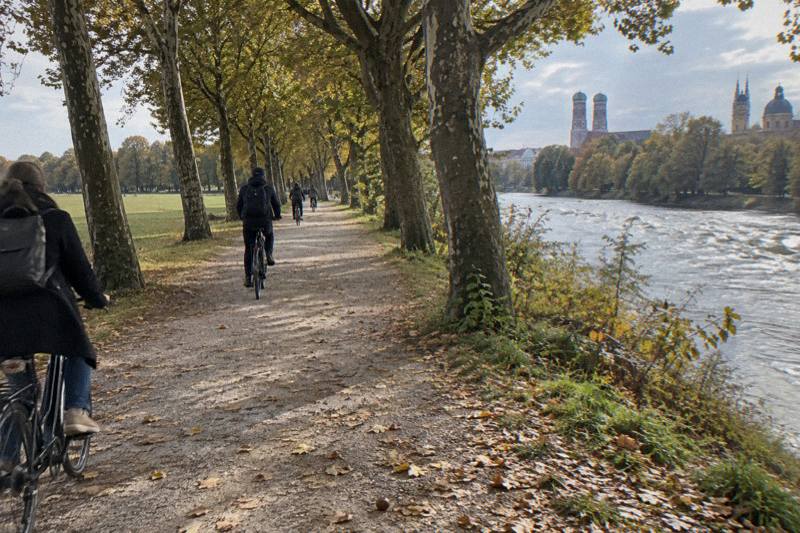
Can You Still Swim In The Eisbach?
No, swimming in the Eisbach is prohibited, but the Isar beside it has seven designated swimming sections. Here are the rules and how to see the wave by bike.
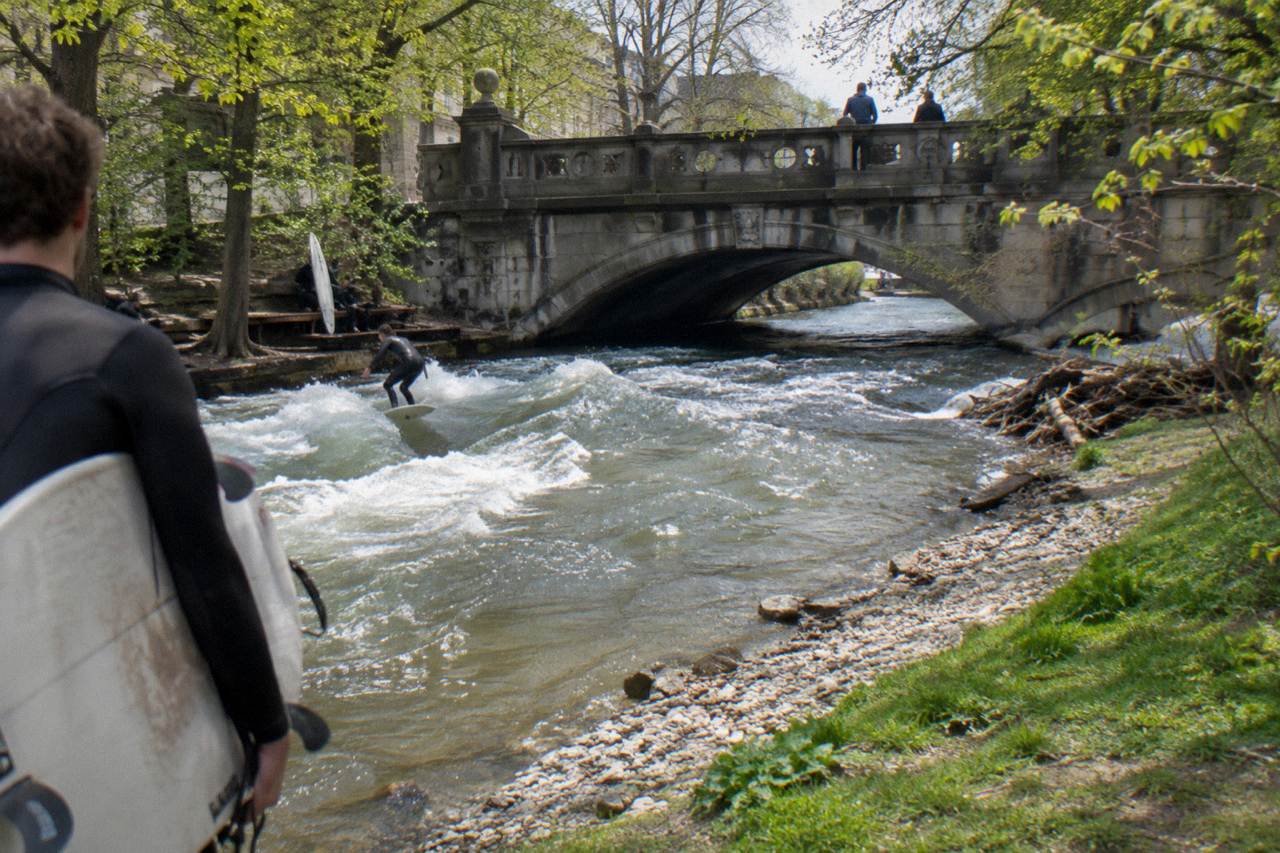
No, and that has not changed: swimming in the Eisbach is prohibited, full stop. The city's park rules for the English Garden state the ban plainly, and the narrow, fast channel beneath the surf wave would be dangerous even without it. What the rules do allow, a short distance away, is swimming in the Isar, the larger river the Eisbach flows through, but only inside seven designated sections.
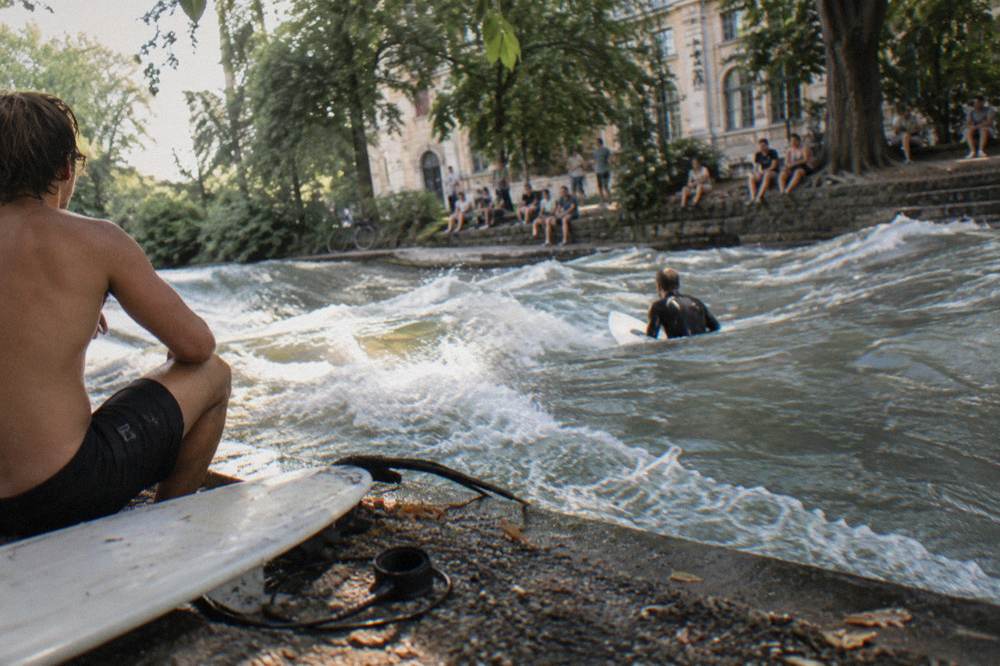
That distinction trips up a lot of visitors, and it is worth unpacking. The Eisbach is the small, artificially channelled stream that pushes through the English Garden on Munich's northeast edge, and its most famous feature is the standing wave at the southern tip of the park, next to the Haus der Kunst. Surfers ride it. Swimmers may not enter it, and the prohibition applies along the stream through the park, not just at the wave itself. The rule comes from the city's own park regulations for the English Garden, which also ban barbecues, open fires and camping, and require dogs to stay leashed.
The Isar is a different story. It is the broad gravel-bedded river that runs just east of the park, and the city maintains a map of seven official swimming sections along its Munich stretch. So if your plan was a hot-afternoon dip somewhere near the surfers, the workable version is: watch the wave from the bank, then ride down the Isar paths a few minutes to a designated swimming area.
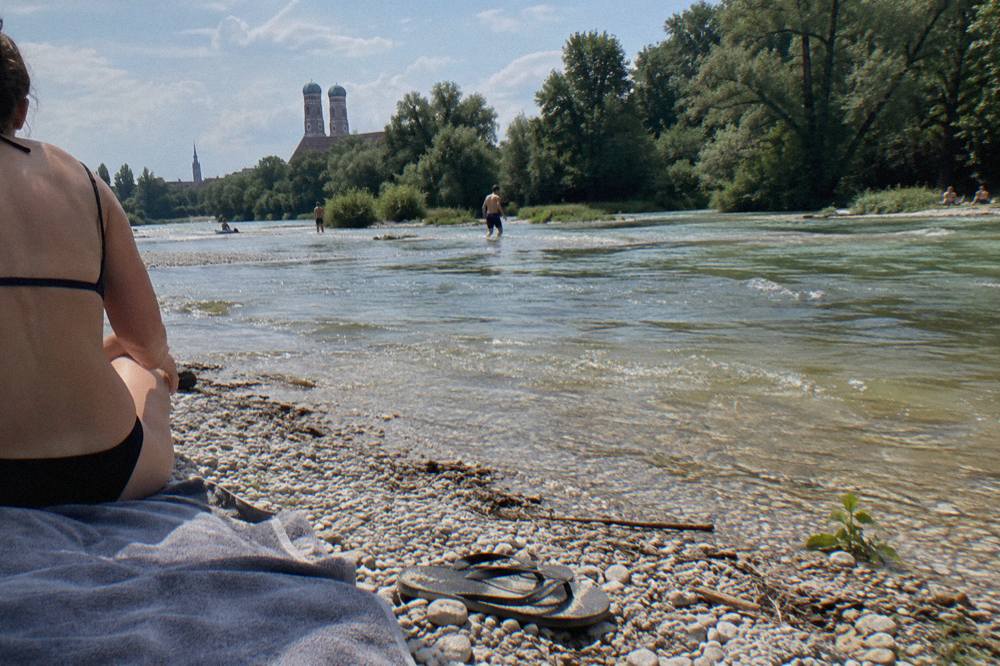
A bike is genuinely the right tool for this plan. The English Garden and the Isar corridors together carry roughly 78 km of paths for cyclists and joggers, and a loop that starts at Marienplatz, follows the Isar downstream and cuts back through the garden is a documented official route of about 15 km. Our guide to riding the English Garden end to end covers that loop in detail if you want to do it self-guided.
Munich earns its cycling capital credentials in the numbers behind that loop. The city's signed route network, the Münchner Radlnetz, totals 1,200 km, built from fourteen radial routes starting at Marienplatz plus inner and outer rings and green corridors along the Isar, the Würm and the Nymphenburg canal. On top of that sit 103 designated bicycle streets with a combined length of about 47 km, where bikes have priority and cars are limited to 30 km/h. A visitor riding from the centre out to the wave benefits from all of it without ever needing to notice it.
If you would rather have someone else lead the way past the wave, a shared guided ride is the low-effort option:
Where Can You Legally Swim Near The Eisbach?
Swimming is legal in seven designated sections of the Isar, the river the Eisbach feeds, and nowhere in the Eisbach or the English Garden's other waters. The city publishes the section boundaries, which include stretches such as the one from the Grosshesseloher bridge to the Braunauer railway bridge on both banks, with listed exceptions around weirs and bridges. A further rule closes even those sections when the water level at the Munich measuring point exceeds 1.20 m.
Those two conditions, location and water level, are the whole legal picture. The location rule is permanent and mapped; the level rule is dynamic and enforced with reference to the Bavarian flood information service. There is no EU bathing-water monitoring on the Isar, so you swim at your own risk, a point the city states openly. Water temperature through a typical summer sits between 14 and 22 C, with the maximum recorded since 2011 at 22.4 C, which tells you this is a mountain river even in August.
The practical reading for a cyclist: check the level before you ride, pick a section from the official map, and treat the Eisbach entirely as something to look at, not get into. The city's Isar swimming page carries the current rules and the section list, and it is the source to trust on the day: Munich's official Isar swimming information.
| Water | Swimming allowed? | Key condition |
|---|---|---|
| Eisbach channel and surf wave | No | Prohibited under English Garden park rules |
| English Garden ponds and streams | No | Swimming in park waters is banned outright |
| Isar designated sections (7 mapped) | Yes, at own risk | Closed when the level exceeds 1.20 m at the Munich measuring point |
| Isar outside designated sections | No | Boundaries marked on the official map |
One more nuance worth knowing: the English Garden's designated nude sunbathing zones, the Schoenfeldwiese behind the Haus der Kunst and the Schwabinger Bucht further north, are sunbathing areas on the banks, not swimming exceptions. The water ban still applies there.
A word on why the Eisbach ban is not bureaucratic fuss. The channel is narrow, the current is strong and constant, and the banks are steep stone or concrete for much of its length through the park. Weirs sit along the wider Isar system, and the exceptions listed around them on the official swimming map exist precisely because the water near them behaves differently from the water in the calm gravel stretches. Local swimmers respect the section map the way skiers respect piste markers, and visitors should copy them. If in doubt on the day, ask at any of the kiosks along the Isar or simply watch what the regulars are doing; an empty bank on a warm afternoon usually means the level rule has bitten.
What Are The Current Rules For The Eisbach Surf Wave?
**Surfing is allowed again: the wave reopened on 8 May 2026 under an amended general decree issued by Lord Mayor Dominik Krause, and the conditions that matter are a mandatory self-releasing leash, a surfing ban from 22:00, and a duty to follow the signs posted at the site. Surfing is at each rider's own risk. Those are the rules in force today, and the signs posted at the bank are the ones to follow. If you're curious how the wave ended up closed in the first place, the full story behind the Eisbachwelle closure explains what happened and what has changed since.
The wave had been closed before that, which is why so much conflicting advice circulates online. The current legal basis is the amended decree, and the leash requirement in particular is written into it rather than left to etiquette. The 22:00 cutoff exists in part because the site sits at the edge of a residential and museum quarter. The official page for the wave states the conditions plainly: the city's Eisbach wave page.
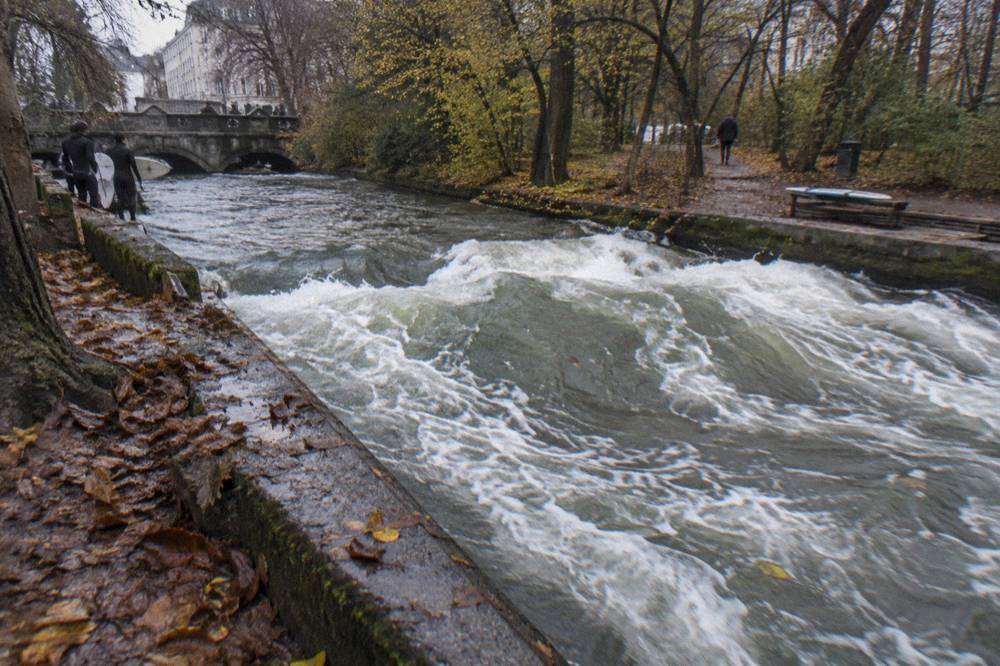
For a visitor on a bike, the decree changes nothing about the viewing experience, which remains free and remarkable. Riders queue on the bank, take turns on a wave maybe a metre wide, and the whole thing happens a two-minute ride from the Pinakothek museums. If the history of the closures and reopenings interests you, our longer piece on the wave and its surfers goes into it.
Viewing etiquette deserves a sentence, because the site is small and popular. Stand back from the water's edge on the bridge side, keep the bike off the narrow bank path if it is busy, and expect a short queue of riders waiting their turn rather than a continuous show. The wave works best for photography from the downstream side in morning light, which is one quiet argument for the 11.30am departures: you arrive as the light has turned and the regulars are warmed up.
Because this is a question page rather than a pure planning page, here is the one booking suggestion that fits: the morning classic ride.
What Does The Classic Morning Bike Tour Pass?
The Munich Classic Bike Tour at 11.30am is a 3 to 4 hour shared ride whose route takes in the surfers on the Eisbach and includes a beer garden stop, which makes it the most direct guided way to combine the wave, the English Garden and a sit-down in one morning. The booking page carries the current price per person and the meeting arrangements.
The "surfers and beer garden stop" in the tour's own title is the reason it pairs so well with this question. You ride to the bank, watch the wave for as long as the group's schedule allows, and continue into the park rather than turning back. Reviews on the booking page give a sense of how guides handle the stop; check them there, since the review pool changes. For what the tour includes, bike and helmet details and any age guidance all live on the operator's page. Compare more guided rides around the city at Bike Tours Munich.
Two comparable shared rides exist if the 11.30am slot does not suit your day. A daily city ride with a beer garden stop, listed at 3.5 hours, covers similar central ground. A 3-hour option pairs the English Garden with the Olympic Park and Nymphenburg Palace, which spreads further west and north; it has only a small number of reviews so far, so judge it by its route and description rather than any rating.
| Tour | Length | Format | Why it fits this question |
|---|---|---|---|
| Munich Classic Bike Tour @ 11.30am with Surfers & Beer Garden Stop | 3 to 4 hours | Shared | Wave viewing plus beer garden finish |
| Munich: Daily City Bike Tour with Beer Garden Stop @ 11.30 | 3.5 hours | Shared | Same neighbourhood, classic format |
| Munich: English Garden, Olympic Park and Nymphenburg Palace by Bike | 3 hours | Shared | Park plus palaces if you want range |
Prices for all three are shown on their booking pages; per-person pricing applies on the shared rides. If you want to see how these compare against going it alone, our breakdown of renting versus taking a guided tour is the honest comparison.
The differences between the three are about range and appetite rather than quality. The classic morning ride is the shortest distance between you and the wave with a guide narrating. The palaces variant trades beer garden time for Nymphenburg and the Olympic Park, and one thing to know there: the Olympic Stadium itself has been closed to visitors since September 2025 for a renovation expected to run two to three years, though the wider park and the Olympiaberg viewpoint remain open. Whichever you choose, check the booking page for the day's departure status, since seasonal schedules trim some winter dates.
When Is The Best Season For The Wave And The River?
Summer is when both halves of this plan work at once: July, Munich's warmest month, averages a high of about 24 to 25 C, the wave is busy from late morning, and the Isar sits at its most swimmable. May is the wettest month at roughly 92 to 108 mm of rain, so spring rides carry more weather risk, and in winter the wave still runs but the swimming sections are theoretical for most people.
The seasonal logic is simple. The wave depends on flow, not weather, and it operates under the decree year-round outside the 22:00 ban. The swimming sections depend on warmth and water level, and the level rule bites hardest during snowmelt in late spring. Combine the two and the sweet spot is a dry July or August day: ride out in the morning, watch the surfers around midday, then continue down the Isar to a designated section in the afternoon heat.
January, by contrast, averages a high of only about 2 to 4 C and a low of around -2 to -5 C. The dedicated winter piece on cycling Munich in the cold months covers what still works then, and swimming is not one of those things. Beer gardens also operate on weather-dependent schedules: the one at the Chinese Tower, a 25 m structure from an 1789 design, opens its full garden in dry, warm conditions and runs a reduced kiosk otherwise.
Rain matters to this plan in two separate ways, and it helps to keep them apart. A wet morning makes the ride itself less pleasant but changes nothing at the wave. A heavy rain or snowmelt upstream raises the Isar level, and past 1.20 m at the Munich measuring point the swimming sections close regardless of how warm the afternoon is. May's 16 to 17 average rain days make it the month most likely to hand you a warm day with a closed river. July and August, with their long sunny stretches, are when the two halves of the plan line up most reliably.
How Do You Turn This Into A Day On Two Wheels?
The cleanest plan is a morning loop: start at Marienplatz, ride the roughly 15 km official English Garden route that follows the Isar downstream and returns through the park, stop at the wave around midday when surfers are most active, then finish at one of the park's beer gardens or a designated Isar swimming section. Every leg of that is on signed, traffic-calmed paths, and none of it costs anything beyond the bike.
Getting a bike for the day is straightforward if you arrive empty-handed. The MyRadl share system, running since 7 May 2026 across Munich and 36 neighbouring municipalities, rents classic bikes at EUR 1 per 30 minutes capped at EUR 9 per day, and e-bikes at EUR 3 per 30 minutes capped at EUR 18 per day, with discounts for holders of eligible transit subscriptions. Returns only work at official stations, so plan the loop around them; our bike rental prices and pickup guide covers the options in full. Taking a bike onto the S-Bahn or U-Bahn instead requires a separate MVV bike day ticket, with rush-hour restrictions on weekdays; the details are in our page on bikes on Munich trains.
If that self-guided version appeals, the Isar route has its own guide: the Isar cycle path from Munich explains how the city stretch connects to the long-distance route. If you would rather fold the wave into a broader first-day orientation, the guided trio below covers the range of formats and routes, from the beer-garden classic to the palaces-and-park option, and each booking page states its current price and departure details.
Common Questions About Swimming In The Eisbach
Can You Still Swim In The Eisbach?
No. Swimming in the Eisbach is prohibited under the English Garden's park rules, and that ban applies along the channel, not only at the surf wave. Swimming is allowed instead in seven designated sections of the nearby Isar, subject to the water-level rule.
Is Surfing At The Eisbach Wave Allowed?
Yes. Surfing resumed on 8 May 2026 under an amended general decree, with a mandatory self-releasing leash, a ban from 22:00 and a requirement to follow the posted signs. Riding is at each surfer's own risk.
Where Can You Swim Near The English Garden?
In the designated Isar sections only. The city maps seven of them, including a stretch from the Grosshesseloher bridge to the Braunauer railway bridge, with exceptions around weirs and bridges. Swimming closes when the Isar level exceeds 1.20 m at the Munich measuring point.
Can You Watch The Surfers For Free?
Yes, viewing from the bank is free and needs no booking. The wave sits at the southern edge of the English Garden near the Haus der Kunst, and tour groups stop there regularly, but nothing stops you walking or riding up on your own.
How Warm Is The Isar In Summer?
The river typically runs between 14 and 22 C through summer, with a maximum of 22.4 C recorded since 2011. There is no official EU bathing-water monitoring, and swimming is at your own risk.