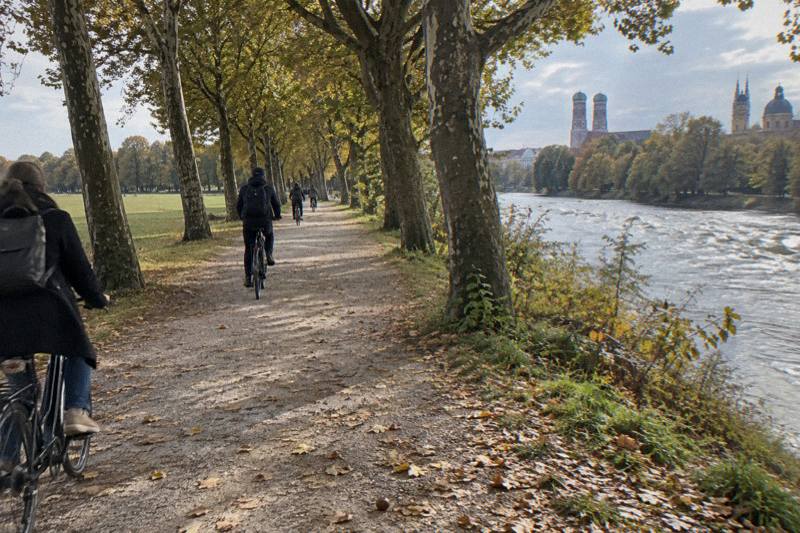
Starnberger See Bike Day Trip From Munich
Starnberger See sits close enough to Munich for a full day out by bike and train. Here is how the ride, the distances and the season work in practice.
Short answer
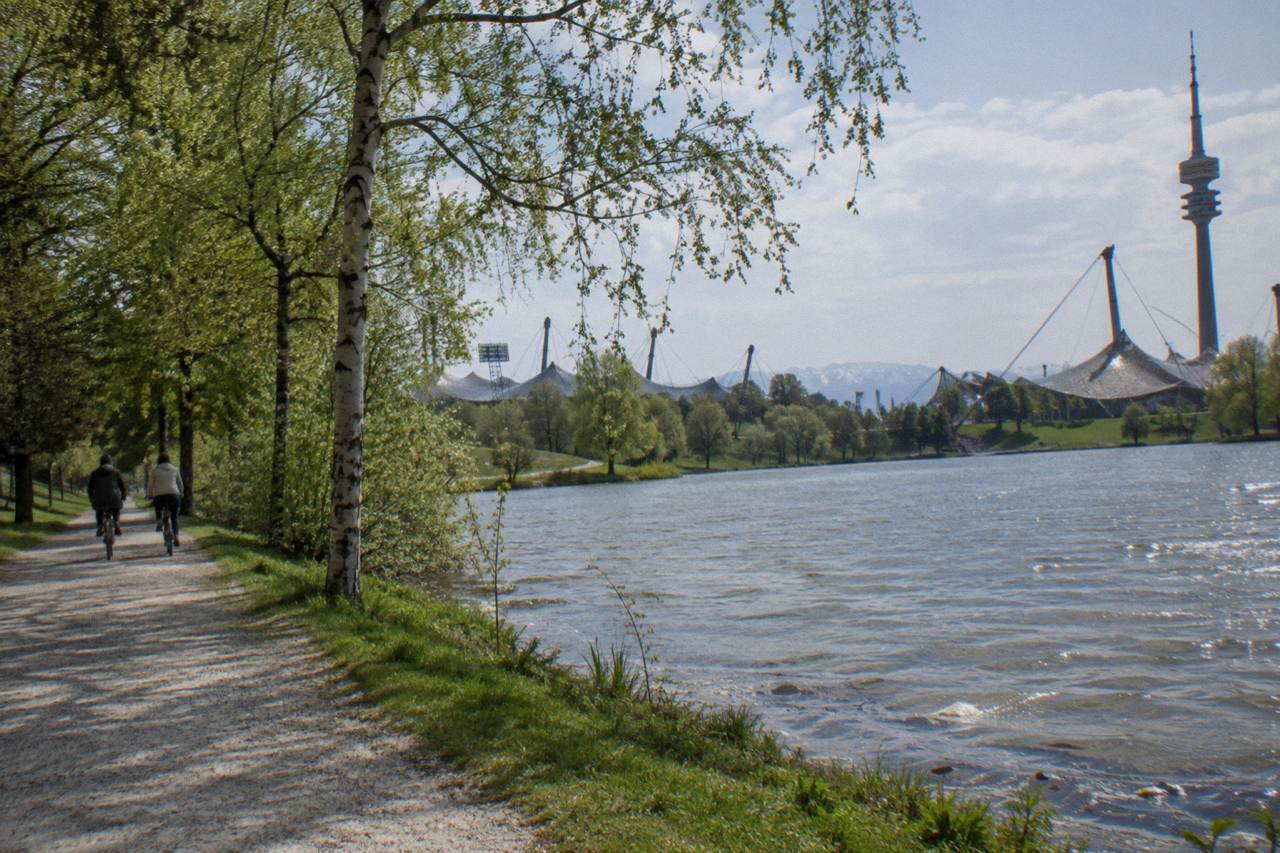
Starnberger See lies roughly 40 km southwest of Munich and is reachable by S-Bahn with a bike day ticket. The full round ride of the lake runs 50 to 59 km with 150 to 300 m of climbing, about 3 to 4 hours of pure riding. No guided Munich tour rides the lake; the closest bookable full-day ride is an Isar e-bike tour.
Where Is Starnberger See And Why Ride There?
Starnberger See is a large lake about 40 km southwest of Munich, close enough that a documented cycling route from the city to the town of Starnberg measures roughly 39.6 km with about 181 m of ascent. The lake itself is an Alpine-foothills destination with a full round ride of 50 to 59 km, and the regional tourism office publishes those figures as its official cycling guidance, which makes planning straightforward.
The lake belongs to the Alpine foothill belt that gives Munich its weekend landscape: water on one side, mountains on the horizon when the air is clear. For a cyclist based in the city it solves a real problem, namely that a satisfying long ride out of Munich usually ends in suburbs unless you commit to a proper distance. Riding toward Starnberger See turns that distance into scenery.
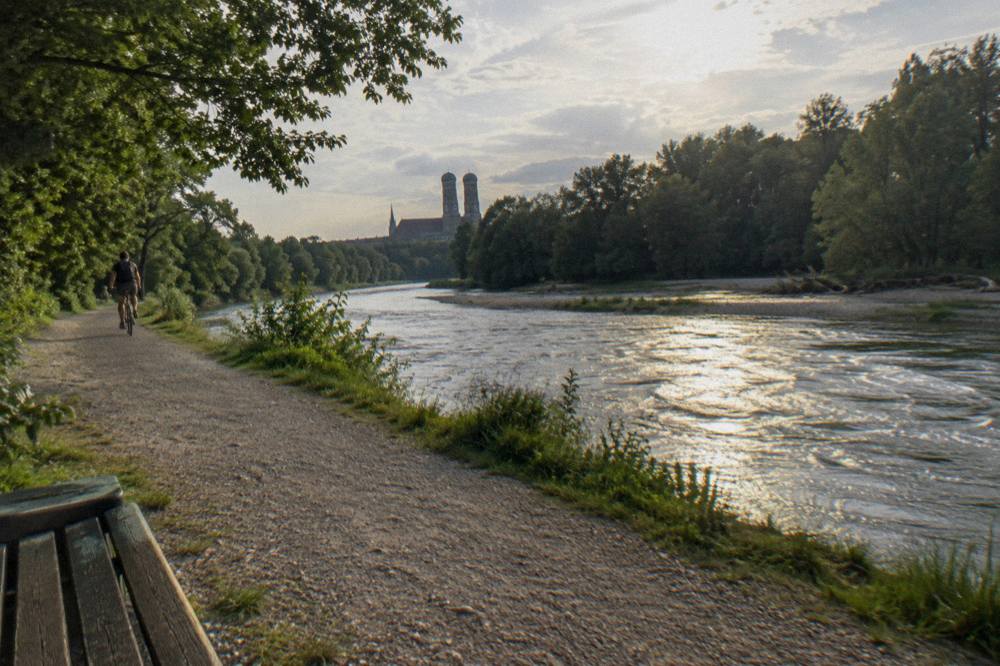
The regional tourism site for Starnberg and the Ammersee area, which publishes the route figures used in this guide, frames the lake as a cycling destination in its own right, with short and long variants starting from the town of Starnberg. That matters for planning, because it means you can either ride out from Munich under your own power or take the train to the lake and ride there, and both are documented options rather than guesswork.
One honest caveat: none of the guided Munich bike tours compared here rides to Starnberger See. If you want the lake, you organise it yourself. If you want a guided full-day Alpine-foothills ride from Munich, the nearest bookable option follows the Isar valley instead, and it is covered later in this guide.
How Do You Take A Bike On The Train From Munich?
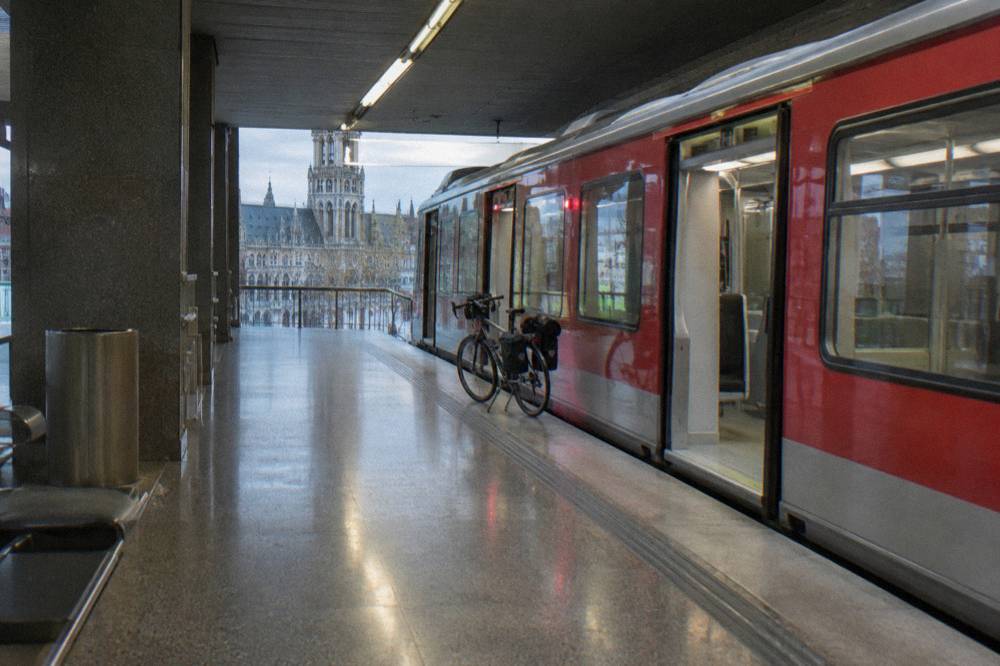
A bicycle on the S-Bahn or U-Bahn needs its own bike day ticket alongside your own ticket, valid in zones M to 12 until 6 a.m. the following day. Bikes are never allowed on buses and trams except children's bikes and folded bikes, and on weekdays the U-Bahn blocks bikes from 6 to 9 and 16 to 18, the S-Bahn from 6 to 9, with the blocks lifted during Bavarian school holidays.
Those rules come from the transit authority's own carriage conditions, and they shape a lake day trip more than you might expect. The morning block on the S-Bahn means a bike-and-train start before 9 a.m. on a weekday is not possible; either travel after 9, go on a weekend, or ride out of the city and only use the train for the return. On a summer Saturday none of the blocked hours apply, which is why lakeside trains on fine weekends fill up with bikes.
| Rule | Detail |
|---|---|
| Ticket needed | Bike day ticket, zones M to 12, valid until 6 a.m. next day |
| U-Bahn block | Monday to Friday 6 to 9 and 16 to 18, afternoon block lifted in Bavarian school holidays |
| S-Bahn block | Monday to Friday 6 to 9 with the MVV bike ticket |
| Buses and trams | Bikes not permitted, except children's and folding bikes |
| Price | Check the current fare at the MVV ticket page |
The transit authority notes that space and safety always decide whether a bike is carried, so a packed July train can simply be full. Riders who plan to combine bike and train regularly in Munich will find more detail in the guide to bikes on Munich trains and S-Bahn, including the regional rail options and the BahnCard 100 exception.
If you arrive in Munich without a bike at all, the MyRadl share system, launched on 7 May 2026 with around 1,000 planned stations and more than 6,700 bikes across the region, rents classic bikes at 1 euro per 30 minutes or a 9 euro day tariff, and e-bikes at 3 euros per 30 minutes or an 18 euro day tariff. It is station-based, which matters for a lake trip: you must return the bike at an official station, so check whether the Starnberg end of your route has one before committing. For a deeper comparison of renting against a guided ride, see rent a bike or take a guided tour.
Since no guided lake ride exists, riders who prefer a guide on a long day out usually pick one of the full and half-day e-bike rides that start in Munich instead:
How Far Is The Ride Around The Lake?
The official regional tourism guidance gives a full round of Starnberger See as 50 to 59 km depending on the route, with about 3 to 4 hours of pure riding and 150 to 300 m of climbing. A documented route from Munich into Starnberg measures roughly 39.6 km one way with 181 m of ascent, and the tourism office also lists shorter variants of about 22.7 km and a longer 57.6 km loop starting from Starnberg.
Those numbers come from starnbergammersee.de, the official regional tourism site, which is the right source for lake distances; ride times for any other segment are not published there, so do not trust round numbers you see elsewhere without checking. What the figures describe is a moderate day ride, not a sportive. A cyclist of average fitness riding out from Munich, around part of the lake and back by train has a full but manageable day.
| Route | Distance | Climbing | Source |
|---|---|---|---|
| Munich to Starnberg, documented one-way | about 39.6 km | 181 m ascent | Regional tourism route data |
| Full lake round | 50 to 59 km | 150 to 300 m | starnbergammersee.de |
| Short variant from Starnberg | about 22.7 km | Not stated | starnbergammersee.de |
| Long loop from Starnberg | about 57.6 km | Not stated | starnbergammersee.de |

The practical shape of the day follows from the arithmetic. Ride the 39.6 km out, roll around a stretch of shore, and take the S-Bahn home with the bike. Or take the train out in the morning after the blocked hours end, ride the full 50 to 59 km round at a leisurely pace with long lunch and swimming stops, and let the train absorb the fatigue on the way back. Both are legitimate readings of the same numbers.
Climbing of 150 to 300 m spread over 50 km is gentle, but it is not flat, and the return into Munich, if you ride it, comes at the end of an already long day. An e-bike, whether rented through MyRadl or otherwise, removes that question entirely at the cost of a higher day tariff.
Can You Shorten The Day With Train And Bike Combinations?
Yes, and it is the standard approach: the S-Bahn link to Starnberg puts the lake a short hop from central Munich, and since the bike day ticket covers zones M to 12 until 6 a.m. the next day, you can ride out one way and take the train back, or the reverse. Just mind the weekday blocked hours and the rule that buses and trams never carry bikes.
The single-direction strategy deserves emphasis because it halves the planning risk. Weather on a lake day can turn, legs can turn with it, and knowing the train back runs all evening turns a possible ordeal into a flexible day. The S-Bahn morning block applies only until 9 on weekdays, so a 9:15 departure with a bike is legal even on a Tuesday in term time, though the train may be busy with commuters for the first stations.
A second combination worth knowing is riding only part of the way and training the rest. Nothing in the carriage rules prevents boarding mid-route at any S-Bahn station with a bike outside the blocked hours, subject to space. That gives you a bail-out at every station between Munich and Starnberg, which is a genuinely useful thing on a hot afternoon. The same part-ride, part-train logic works on bigger outings too, and the Neuschwanstein by bike and train guide shows exactly where it pays off.
Riders who enjoy rivers more than timetable arithmetic might instead look at the Isar cycle path from Munich, which delivers a comparable full-day outing with no train leg at all, since it starts in the city and follows the river.
Where Do You Stop For Food And Beer Gardens?
Beer garden openings along the lake are weather-dependent and no stop is fixed in advance, so treat food as something to check locally in Starnberg, Possenhofen or Tutzing on the day. What is firmly documented is the wider beer garden tradition you are riding into: Munich's own gardens open from late morning and close their outdoor seasons on weather, not on a fixed calendar.
That last point is a Bavarian reality worth knowing before you go, because it applies across the region's traditional gardens. In an echt Biergarten you buy the beer and may bring your own Brotzeit, the snack that goes with it, a custom the city's official portal documents as part of Bavaria's long-running beer garden tradition. Whether a specific lakeside garden follows the custom is a question for the garden itself.
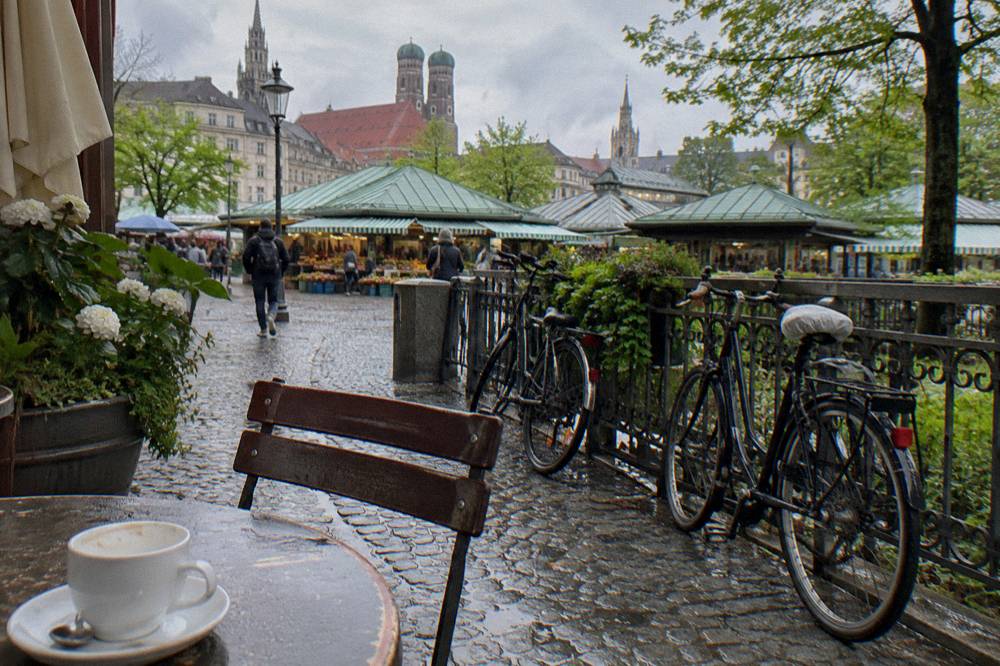
For comparison of scale within day-trip range of the lake ride, the Hirschgarten in Munich holds about 8,000 seats, the beer garden at the Chinese Tower in the English Garden about 7,000, and the Augustiner-Keller around 5,000 under chestnut trees. These Munich figures are documented; lakeside beer gardens around Starnberger See vary a great deal in size, and the popular terraces fill up on warm afternoons, so arrive early if you want a table.
Practical advice that stays inside the facts: budget a long midday stop, carry water for the 50 km round, and check opening times of any specific lakeside venue before relying on it, since beer garden hours across the region follow the weather. The Chinese Tower's own operator, for instance, publishes different hours for what it calls Biergarten weather versus cold days, and that pattern of weather-dependent opening is typical rather than exceptional.
If you want a beer garden stop that is fully documented instead, the guide to Munich beer gardens reached by bike lists the gardens with their opening patterns, and several sit directly on cycling routes.
What Season Should You Ride To The Lake?
Summer is the natural season for a lake day, and Munich's July normals, the warmest month, average a high of about 24 to 25 C with lows near 14 to 15 C, while May is the wettest month with roughly 92 to 108 mm of rain across 16 to 17 rain days. Winter riding is possible, and the city clears bike paths from 3 cm of snow, but daylight and temperature make a 50 km lake round a summer project.
A May day can be superb, but it carries the highest rain-day count of the year, which matters when your day is built around one long ride.
| Season factor | Figure | Note |
|---|---|---|
| July average high | 24 to 25 C | Warmest month, long-term normals |
| January average high | 2 to 4 C | Coldest month, lows around -2 to -5 C |
| May precipitation | 92 to 108 mm | Wettest month, 16 to 17 rain days |
| Winter path clearing | from 3 cm of snow | City clears winter routes within about 2 hours |
Swimming in the region's rivers and lakes carries its own rules: in the Isar in Munich, swimming is allowed only in seven designated sections and is prohibited outright when the water level passes 1.20 m at the city measuring point.
For timing a visit around the whole calendar, including festival crowds and market seasons, the month-by-month breakdown in the best month to visit Munich applies to lake trips as much as city ones: the same S-Bahn carries both audiences, and the same summer weekends that fill the beer gardens fill the lakeshore.
Is A Guided Tour An Alternative To The Self-Organised Lake Ride?
Yes, with one clear limitation: no guided ride from Munich covers Starnberger See, so a guided day means choosing a different destination, and the nearest bookable full-day option is a 5-hour e-bike tour through the Isar valley toward the Alpine foothills. It is sold as a shared e-bike ride, the bike type is confirmed by the tour data, and its rating pool is small, with 5 reviews, too few to support any rating claim.
That Isar e-bike ride is the natural substitute when the appeal of the lake day is the long Alpine-foothills ride rather than the lake itself. The listing describes 5 hours on an e-bike following the Isar through forests and valleys toward panoramic views of the Alps, which is the same landscape band Starnberger See sits in, reached from the city without a train ticket or a timetable.
Shorter guided alternatives exist if a full day feels like too much. The Best of Munich Electric Bike Tour runs 4 hours on an e-bike as a shared ride and stays within the city and its immediate green spaces; the Explore Munich's Fairy-Tale Castles by E-Bike listing is, despite the name, a classic guided bike ride, 4 hours toward castle country rather than the lake. The castles ride has no reviews yet, so treat it as an unproven option rather than a proven one.
| Tour | Duration | Bike type | Format |
|---|---|---|---|
| Isar valley full-day e-bike ride | 5 hours | e-bike | shared |
| Best of Munich Electric Bike Tour | 4 hours | e-bike | shared |
| Fairy-Tale Castles by Classic Bike | 4 hours | classic bike, guide included | shared |
Prices and meeting-point details for all three sit on their booking pages rather than in this guide, and cancellation terms are stated there too; check them before committing, since terms vary between operators. If you are still weighing whether an e-bike suits you at all, the comparison in e-bike or regular bike for Munich walks through the trade-offs for exactly this kind of foothills riding.
For readers who want the guided experience but with a more casual castles-and-palaces flavour closer to Munich, the fairy-tale castles option fills that niche:
A self-organised lake day and a guided Isar day are not really competitors; they serve different appetites. The lake rewards riders who enjoy route-finding, swimming stops and the independence to linger, at the cost of doing their own logistics. The guided e-bike day hands the logistics to an operator and spends the planning effort you save on riding. Riders who want both can even do the lake by bike in one summer week and the guided Isar valley ride in the next, since neither duplicates the other's scenery.
Common Questions About Starnberger See
Starnberger See
Starnberger See is a lake in the Alpine foothills about 40 km southwest of Munich, with a documented cycling route of roughly 39.6 km from the city to the town of Starnberg and a full published round of 50 to 59 km. It is reached by S-Bahn with a bike day ticket.
How Far Is The Bike Ride Around Starnberger See?
The regional tourism office gives the full round as 50 to 59 km depending on the route, with 150 to 300 m of climbing and about 3 to 4 hours of pure riding time. Shorter variants from Starnberg of about 22.7 km and a longer 57.6 km loop are also published.
Can You Take A Bike On The Train To Starnberger See?
Yes, with a bike day ticket valid in MVV zones M to 12 until 6 a.m. the next day. On weekdays the S-Bahn blocks bikes from 6 to 9 and the U-Bahn from 6 to 9 and 16 to 18, with blocks lifted during Bavarian school holidays. Check the current ticket price on the MVV site.
Is There A Guided Bike Tour From Munich To Starnberger See?
No. No guided ride from Munich covers the lake. The nearest bookable full-day option is a 5-hour shared e-bike tour through the Isar valley toward the Alpine foothills, with panoramic views of the Alps as its endpoint theme.
What Is The Best Season For The Ride?
Summer. July normals average a high of 24 to 25 C in the region, while May, the wettest month, averages 92 to 108 mm of rain across 16 to 17 rain days. A 50 km round is realistically a May to September project.
Can You Rent A Bike For The Trip?
Yes. The MyRadl system rents classic bikes at 1 euro per 30 minutes or 9 euros per day and e-bikes at 3 euros per 30 minutes or 18 euros per day, but it is station-based, so confirm a station exists at your turnaround point before relying on it.