What Is The Biggest Beer Garden In Munich?
The Hirschgarten holds about 8,000 seats, making it the biggest beer garden in Munich and Bavaria. Here is how it compares with the Chinese Tower and Augustiner-Keller, and how to reach them by bike.
The biggest beer garden in Munich is the Königlicher Hirschgarten, with about 8,000 seats, which also makes it the largest in Bavaria according to the city's own tourism pages. The Chinese Tower beer garden in the English Garden is second at roughly 7,000 seats, and Augustiner-Keller near the Hauptbahnhof holds around 5,000 under its chestnut trees. All three are large enough that you will almost always find a free table on a weekday.
Those figures come from the city's tourism information and the operators themselves, and they are the numbers worth remembering, because "biggest" claims float around Munich conversation constantly and are often wrong. Some visitors assume the beer garden at the Chinese Tower is the largest because it sits in the most famous park and gets the most foot traffic. It is close, but it is not first. The Hirschgarten, out in the west of the city near Nymphenburg, quietly outranks it by about a thousand seats. Size and fame clearly pull in different directions in Munich, and if reputation matters more to you than raw seat count, our guide to Munich's most famous beer garden explains why the Chinese Tower draws so much of the attention.
The Hirschgarten also offers something few other Munich beer gardens can: a deer enclosure. The garden's history as a royal hunting ground is reflected today in the fallow deer that still live in a paddock beside the beer garden. Families with children tend to rate the place highly for that reason alone, and the scale of the garden means the playground, the deer and the beer taps never feel crowded on top of each other.
Here is how the three biggest gardens compare on the basics:
| Beer garden | Approximate seats | Location character | Notable detail |
|---|---|---|---|
| Königlicher Hirschgarten | About 8,000 | West Munich, near Nymphenburg Palace | Deer enclosure beside the garden, largest in Bavaria |
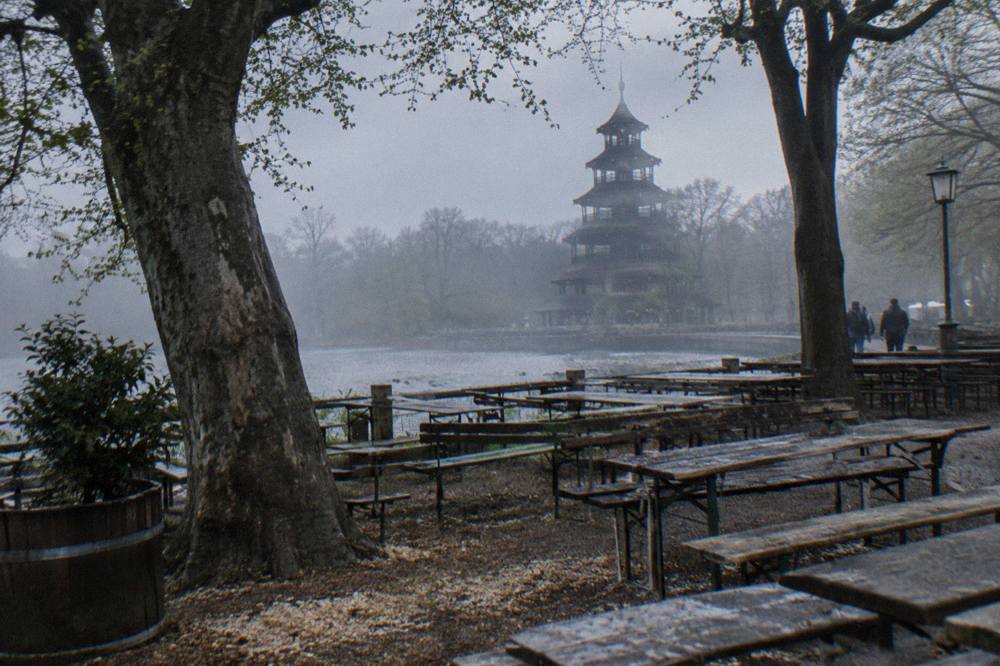
| Chinesischer Turm (Chinese Tower) | About 7,000 | Centre of the English Garden | 25 m tower of 1789 design, brass band music |
| Augustiner-Keller | About 5,000 | North of the Hauptbahnhof | Chestnut shade, beer from wooden barrels |
Scale matters differently depending on when you visit. On a Tuesday afternoon in May, a 7,000-seat garden feels almost empty, with whole rows of benches to yourself. On a Saturday evening in July, even the Hirschgarten fills up around the food stalls, though its sheer size means the far corners usually stay calm. If a quiet table matters more than the spectacle, arrive before 17:00 or aim for the perimeter benches.
If you would rather let someone else handle the route between gardens, a guided ride does the planning for you:
Where Is The Hirschgarten And What Makes It Different?
The Hirschgarten sits in the west of Munich, a short distance from Nymphenburg Palace, and it combines the largest beer garden in Bavaria with a deer enclosure, a playground and large chestnut-shaded lawns. The beer garden typically opens around 11:30 and runs to midnight in good weather, per the current listings. Its character is local and family-heavy rather than tourist-central.
What separates the Hirschgarten from the downtown gardens is atmosphere. Marienplatz is twenty minutes away by bike or S-Bahn, but the crowd here skews toward families from the surrounding neighbourhoods, couples with dogs on leashes, and groups who arrive with their own Brotzeit baskets. The garden keeps the classic Munich structure: a central self-service area where you buy beer and food at the counter, and rows of long tables where you sit with whoever is already there.
The deer enclosure runs along one side. You can walk to the fence and watch the herd, which makes the garden a two-stop visit for parents: animals first, then a table. Nymphenburg Palace and its park are close enough that many visitors pair the two in one afternoon, and there is a well-documented canal-side cycling route in that part of the city; the route network around Nymphenburg is covered in detail in the Nymphenburg Palace by bike guide.
A guided half-day ride that ends at a beer garden also fits this itinerary well. The Munich: Daily City Bike Tour with Beer Garden Stop @ 11.30 runs 3.5 hours in a shared group and builds the beer garden pause into the middle of the ride, so the guide picks the timing around the day's traffic and weather. Check the booking page for the current price and inclusions.
Can You Reach The Big Beer Gardens By Bike?
Yes, and a bike is arguably the best way to link them. The Hirschgarten, the Chinese Tower and Augustiner-Keller sit in three different corners of the central city, and Munich's signed cycling network of roughly 1,200 km connects all three with mostly flat, separated paths. A loop visiting two of the three gardens is a comfortable half-day ride.
Munich's bike modal share is 21 percent of daily trips, the highest among German large cities, and the infrastructure reflects it. The city counts 103 designated bicycle streets covering 47 km where bikes have priority and cars are guests, plus a web of radial routes signed out from Marienplatz. Practically, that means the ride from the city centre to the Chinese Tower runs through car-light park paths, and the run west to the Hirschgarten follows canal-side routes that feel nothing like urban traffic.
The classic pairing is the English Garden. A documented official route from Marienplatz follows the Isar downstream and then loops through the English Garden toward Aumeister and back, about 15 km and two hours of riding, passing the Chinese Tower and its 7,000 seats on the way. The English Garden itself has 78 km of paths, so the beer garden stop is really just one waypoint on a much bigger riding network; the English Garden by bike guide maps the options.
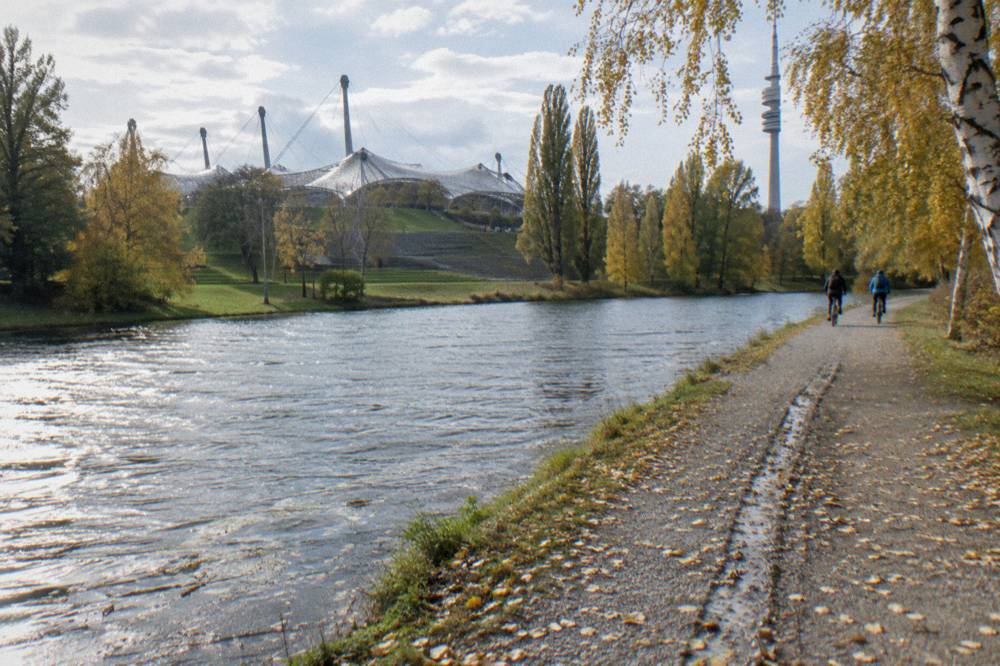
Westward, the Hirschgarten anchors another documented corridor: canal routes from the Olympiapark area run 10 km one way toward Schloss Blutenburg, or 16 km to the Hirschgarten itself, along the Nymphenburg and Biedersteiner canals. If you want both of the two biggest gardens in one day, ride the English Garden loop in the morning, then roll west in the afternoon, though splitting them across two days is the more relaxed choice with a beer in each.
Guided rides cover this ground without any route-finding. The Munich City Bike Tour + Beer Garden Lunch Stop is a four-hour shared ride that builds a longer lunch stop into the day, a good fit if you want the beer garden to be a proper meal rather than a quick pour. As with any tour, the exact garden visited depends on the day; check the booking page for what the operator currently includes.
When Are Munich Beer Gardens Open?
Beer garden season in Munich is weather-driven, not calendar-driven. The Chinese Tower opens at 11:00 on weekdays and 10:00 on weekends in fine weather but drops to a kiosk-only service from 12:00 in cold or uncertain conditions; the Hirschgarten typically runs 11:30 to midnight in good weather; Seehaus opens at midday on weekdays and 11:30 on weekends.
This is the part visitors underestimate. There is no fixed opening date printed on a city sign, because the operators watch the sky. A warm spell in March can bring the gardens to life weeks before Easter, while a grey, wet April can keep half the benches stacked. The beer itself always flows somewhere, since every major garden has an indoor restaurant or kiosk that runs year-round, but the chestnut-shaded beer garden experience is a fair-weather product.
Summer is the dependable window. July averages a high of about 24 to 25 C in Munich, with long evenings, and the gardens fill from late afternoon onward. The Hirschgarten in particular earns its size in July, when 8,000 seats still fill on Saturday evenings. May is the wettest month on the climate record, with roughly 92 to 108 mm of rain, so a May visit can be glorious or soggy, sometimes both in one afternoon.
One beer that travels with the season rather than against it: the brass bands. At the Chinese Tower, when the weather cooperates, a band plays Wednesday from 16:00, Friday from 15:00, Saturday from 14:00 and Sunday from 12:00, per the operator's own schedule. Sunday lunch under the chestnuts with the band playing is about as close to the postcard version of Munich as the city offers.
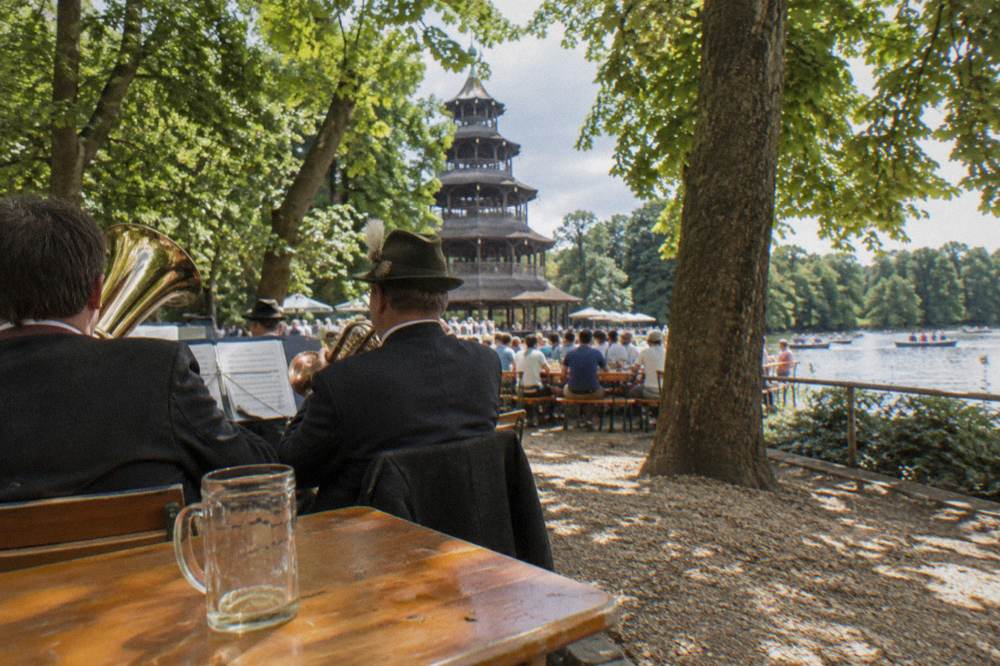
Winter does not shut the gardens down entirely, it just moves them indoors. Several operators run winter programming, from fondue evenings to ice-stock shooting, and the kiosk service keeps a smaller outdoor option alive for hardy locals. If you are visiting between November and February and a beer garden is the goal, check the operator's site for the day's status rather than assuming.
Can You Bring Your Own Food To A Munich Beer Garden?
Yes, in a true Munich beer garden you may bring your own Brotzeit, the bread-and-snack basket, and eat it at the tables while buying your beer from the garden's taps. The city's tourism office states this plainly for genuine beer gardens, and the Hirschgarten, the Chinese Tower and Augustiner-Keller all follow the tradition. The rule of thumb: bring food, buy the beer.
This custom confuses first-time visitors, who assume the benches belong to the kitchen. They do not. The beer garden historically existed to sell brewery beer served in the shade, and the food tradition grew up around it. The practical etiquette is simple: set up at a self-service table, buy your beer (and ideally at least something small from the food stalls), and unpack your basket. Sitting with a full picnic and no brewery beer breaks the social contract.
The division is also visible in the layout. Every big garden has two zones: the self-service area with communal benches, where Brotzeit is welcome, and a served restaurant section, where it is not. At the Chinese Tower, the kiosk marks the boundary in poorer weather. If in doubt, look at what the people around you are doing; the locals will show you where each rule applies.
For the specifics, the city's own beer garden guidance covers the Brotzeit rule and the history behind it on muenchen.de's beer garden pages, and the Hirschgarten's details are on the city's Hirschgarten page. Opening hours shift with the weather, so treat the operator's own site as the word of record; the Chinese Tower's operator page posts its current daily status.
Which Big Beer Garden Should You Pick?
Pick the Hirschgarten for the biggest scale, the deer and a local crowd, the Chinese Tower for park scenery and brass bands mid-ride, and Augustiner-Keller if you are staying near the Hauptbahnhof and want a short walk instead of a ride. For most visitors with a bike and an afternoon, the Chinese Tower wins on convenience because it sits inside the English Garden loop.
Honest framing helps here. The three gardens overlap heavily: chestnuts, one-litre Maß, self-service counters, communal benches. What actually differentiates them is setting and logistics. The Hirschgarten is a destination you ride to; the Chinese Tower is a stop that happens mid-route through Munich's biggest park; Augustiner-Keller is the one you can reach on foot from the main station in minutes, pouring beer from wooden barrels that give it a loyal following among Augustiner fans.
If you are touring with a guide, you do not choose the garden, the operator's schedule does, and that is a reasonable trade. The Munich: Bike Tour with Beer Garden Break runs four hours with the break built in, and guides time the stop to the day's flow. For a fuller comparison of touring options across the city, the Munich beer gardens by bike guide covers the full circuit, including gardens beyond the big three.
Whichever you choose, size is the least interesting metric once you are seated. An 8,000-seat garden and a 200-seat one serve the same litre in the same glass under the same trees. What the big gardens add is the crowd energy on a good evening, and the near-certainty of finding a table. On that score, the Hirschgarten delivers exactly what its reputation promises.
Common Questions About The Biggest Beer Garden In Munich
What Is The Biggest Beer Garden In Munich?
The Königlicher Hirschgarten, with about 8,000 seats, is the biggest beer garden in Munich and, according to the city's tourism pages, the largest in Bavaria. The Chinese Tower beer garden in the English Garden is second at roughly 7,000 seats.
How Many Seats Does The Chinese Tower Beer Garden Have?
About 7,000, per the city's tourism information, which makes it the second-largest in Munich after the Hirschgarten. It sits at the foot of the 25 m tower in the English Garden.
Can I Bring My Own Food To The Hirschgarten?
Yes. In true Munich beer gardens, including the Hirschgarten, you may bring your own Brotzeit and eat it at the self-service tables while buying your beer there. The custom dates back to a royal decree tradition of 1812.
When Do Munich Beer Gardens Open For The Season?
There is no fixed date. Opening is weather-driven: the Chinese Tower opens at 11:00 on weekdays and 10:00 on weekends in fine weather, and the Hirschgarten typically runs 11:30 to midnight in good conditions. Check the operator's site on the day.
Can You Cycle Between Munich's Big Beer Gardens?
Yes. The Hirschgarten, the Chinese Tower and Augustiner-Keller are linked by Munich's roughly 1,200 km signed cycling network, and a loop through the English Garden passing the Chinese Tower is about 15 km. Several guided city rides build a beer garden stop into the route.